Monosacáridos
Los monosacáridos son la forma más simple de los carbohidratos y sirven como bloques fundamentales para azúcares más complejos y polisacáridos. Estas moléculas de azúcar única juegan roles críticos en el metabolismo energético, la comunicación celular y los componentes estructurales de las células. En esta sección, encontrará una amplia variedad de monosacáridos esenciales para la investigación en bioquímica, biología molecular y glicociencia. Estos compuestos son cruciales para estudiar las rutas metabólicas, los procesos de glucosilación y el desarrollo de agentes terapéuticos. En CymitQuimica, ofrecemos monosacáridos de alta calidad para apoyar sus necesidades de investigación, asegurando precisión y fiabilidad en sus investigaciones científicas.
Subcategorías de "Monosacáridos"
- Allosas(11 productos)
- Arabinosas(21 productos)
- Eritrosas(11 productos)
- Fructosas(9 productos)
- Fucosas(36 productos)
- Galactosamina(41 productos)
- Galactosa(261 productos)
- Glucosas(365 productos)
- Ácidos glucurónicos(51 productos)
- Glico-sustratos para enzimas(77 productos)
- Gulosas(6 productos)
- Idosas(4 productos)
- Inositoles(15 productos)
- Lyxosas(4 productos)
- Manosas(65 productos)
- O-glicanos(48 productos)
- Psicosas(3 productos)
- Ramnosas(10 productos)
- Ribosas(61 productos)
- Ácidos siálicos(100 productos)
- Sorbosas(4 productos)
- Azúcares(173 productos)
- Tagatosis(4 productos)
- Taloses(8 productos)
- Xilosas(20 productos)
Mostrar 17 subcategorías más
Se han encontrado 6088 productos de "Monosacáridos"
Ordenar por
Pureza (%)
0
100
|
0
|
50
|
90
|
95
|
100
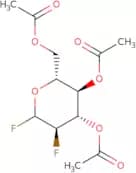
3,4,6-Tri-O-acetyl-2-deoxy-2-fluoro-D-glucopyranosyl fluoride
CAS:<p>3,4,6-Tri-O-acetyl-2-deoxy-2-fluoro-D-glucopyranosyl fluoride is a fluorine containing compound. It has been analyzed using spectroscopic techniques and found to be a white crystalline solid with an empirical formula of C12H14F3O11.</p>Fórmula:C12H16F2O7Pureza:Min. 95%Peso molecular:310.25 g/mol3,4:5,6-Di-O-Isopropylidene-L-idonic acid methyl ester
<p>3,4:5,6-Di-O-Isopropylidene-L-idonic acid methyl ester (DIPIM) is a synthetic carbohydrate that is used in the modification of saccharides and oligosaccharides. DIPIM is a fluorinated monosaccharide that can be synthesized by the click chemistry reaction. It is highly pure, with a purity level of 99.9%. DIPIM has been shown to react with glycosyl acceptors to form glycosyl derivatives. This compound also has potential in the design of new therapeutic agents for cancer treatment.</p>Pureza:Min. 95%Methyl 2,3-di-O-benzyl-a-D-galactopyranoside
<p>Methyl 2,3-di-O-benzyl-a-D-galactopyranoside is a fluorination reagent that can be used to introduce fluorine atoms in the sugar backbone of a carbohydrate. It has been used for the synthesis of complex carbohydrates and oligosaccharides. Methyl 2,3-di-O-benzyl-a-D-galactopyranoside can also be used to modify glycosylation or polysaccharide structures by methylating or chlorinating the sugar moiety. The chemical is available from various suppliers at different purity levels.</p>Pureza:Min. 95%1-Deoxygalactonojirimycin
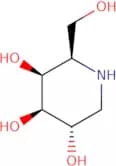
CAS:<p>Specific and potent inhibitor of lysosomal α-galactosidase with IC50 in nanomolar range. It acts as pharmacological chaperone and assists folding of the wild type and mutant versions of the enzyme. It places itself in the instable active site and prevents the damage to the enzyme during the passage through Golgi apparatus, endoplasmatic reticulum and lysosome axis. The exposure to this compound leads to increased levels of functional α-galactosidase in models for lysosomal storage disorders and brings therapeutic benefits to patients with Fabry disease.</p>Fórmula:C6H13NO4Pureza:Min. 95%Peso molecular:163.17 g/mol1,2:5,6-Di-O-isopropylidene-D-mannitol
CAS:<p>1,2:5,6-Di-O-isopropylidene-D-mannitol is an organic compound that belongs to the group of mesoporous materials. It has a high surface area and is capable of absorbing large amounts of water. 1,2:5,6-Di-O-isopropylidene-D-mannitol has been shown to be able to absorb chloride ions in acidic environments due to its acidic hydrolysis properties. The water that is absorbed by this material can then be released when the solution becomes neutral again. This material can also act as a proton sponge and may have applications in the treatment of acid mine drainage or other industrial pollution. 1,2:5,6-Di-O-isopropylidene-D-mannitol may be used for chromatography techniques such as gas chromatography and liquid chromatography due to its functional groups that are sensitive to changes in pH levels.</p>Fórmula:C12H22O6Pureza:Min. 97 Area-%Peso molecular:262.31 g/mol3-Deoxy-D-glucose
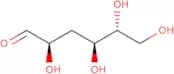
CAS:<p>3-Deoxy-D-glucose (3DG) is a molecule that belongs to the class of carbohydrates. It is an analog of D-glucose, which is the key substrate for the production of energy in mammalian cells. 3DG has been shown to inhibit the uptake of glucose by trypanosomes and also inhibits glycolysis in mammalian cells. The inhibition of glycolysis may be due to its ability to prevent the phosphorylation of glucose by hexokinase, thus blocking the conversion of glucose into glucose 6-phosphate. 3DG is biosynthesized from d-xylose, which is a five carbon sugar that can be oxidized to form CO2 and H2O.</p>Fórmula:C6H12O5Pureza:Min. 98 Area-%Forma y color:White Off-White PowderPeso molecular:164.16 g/mol1,,2-ene-glucose
<p>1,2-ene-glucose is a methylated glucose that can be custom synthesized. It has been modified with a click modification and fluorination. It is an Oligosaccharide and Polysaccharide that is used as a Carbohydrate in the synthesis of complex carbohydrates. The purity of 1,2-ene-glucose is high and it can be modified with Monosaccharides or sugar.</p>Fórmula:C6H10O5Pureza:Min. 95%Peso molecular:162.14 g/molMethyl 3-azido-3-deoxy-2,4-di-O-acetyl-b-D-xylopyranoside
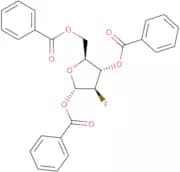
<p>Methyl 3-azido-3-deoxy-2,4-di-O-acetyl-b-D-xylopyranoside is a synthetic compound that can be used in glycosylation reactions to introduce an azido group at the reducing end of a glycose. This product has been shown to react with the thiol group on cysteine residues and undergoes click chemistry with maleimide groups. It is also useful for the synthesis of polysaccharides and oligosaccharides. The purity of this product is over 99%.<br>Methyl 3-azido-3-deoxy-2,4,-di-(O)-acetyl -b-(D)-xylopyranoside</p>Pureza:Min. 95%1,3,5-Tri-O-benzoyl-2-deoxy-2-fluoro-α-L-arabinofuranose
CAS:<p>Intermediate in synthesis of clevudine</p>Fórmula:C26H21FO7Pureza:Min. 98 Area-%Forma y color:PowderPeso molecular:464.44 g/molN-[2-(4'-Chlorophenylacetonitrile)]-2,3,4,6-tetra-pivaloyl-D-glucopyranoside
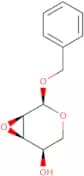
CAS:<p>N-[2-(4'-Chlorophenylacetonitrile)]-2,3,4,6-tetra-pivaloyl-D-glucopyranoside is a synthetic monosaccharide that has been modified with fluorine. The synthesis of this compound involves the glycosylation of 2,3,4,6-tetra-pivaloyl-D-glucopyranoside with methyl 3-(4'-chlorophenyl)acetonitrile. This product is an oligosaccharide that has been used as a model for complex carbohydrates and as a sugar donor in click chemistry. It is soluble in water and ethanol and has a purity level of ≥98%.</p>Fórmula:C34H49ClN2O8Pureza:Min. 95%Peso molecular:649.23 g/molBenzyl-2,3-anhydro-a-D-ribopyranoside
CAS:<p>Benzyl-2,3-anhydro-a-D-ribopyranoside is a monosaccharide that is synthesized by the modification of the sugar benzyl 2,3-anhydro-a-D-ribofuranose. It is a white powder. Benzyl-2,3-anhydro-a-D-ribopyranoside is used as a reagent in glycosylation and methylation reactions. It has CAS No. 61134–24–5 and molecular weight of 230.22 g/mol. The molecule contains an anhydro group at C1 and hydroxyl groups at C6 and C8 positions. This product is soluble in water and ethanol.</p>Fórmula:C12H14O4Pureza:Min. 95%Peso molecular:222.24 g/mol3-Deoxy- 3- fluoro- 1, 2- O- isopropylidene - D- allofuranose
<p>3-Deoxy-3-fluoro-1,2-O-isopropylidene-D-allofuranose is an oligosaccharide that has been fluorinated at the 3 position and 3' position of the allofuranose moiety. It is a synthetic monosaccharide that belongs to a family of complex carbohydrates. The modification of this sugar with fluorine atoms is done by click chemistry, which entails the use of copper (II) ions. This sugar can be used for glycosylation and polysaccharide synthesis. Its high purity makes it ideal for use in laboratory settings.</p>Fórmula:C9H15FO5Pureza:Min. 95%Peso molecular:222.21 g/mol3,5-Di-O-benzoyl-2-C-methyl-D-ribonic acid-1.4-lactone
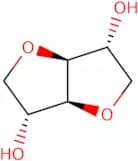
<p>3,5-Di-O-benzoyl-2-C-methyl-D-ribonic acid-1.4-lactone is a custom synthesis that can be modified to suit your needs. Glycosylation, Oligosaccharide, sugar, Synthetic, Fluorination, Custom synthesis, Methylation, Monosaccharide, Polysaccharide, saccharide Click modification and complex carbohydrate are some of the modifications that can be done. 3DMBRL is a high purity product with CAS No.</p>Pureza:Min. 95%1, 4:3, 6- Dianhydro-D- iditol
CAS:<p>1,4:3,6-Dianhydro-D-iditol is an organic compound. It is the L-enantiomer of 1,4:3,6-dianhydro-L-iditol. This compound can be used as a substrate for the cytochrome P450 system and soluble guanylate cyclase. 1,4:3,6-Dianhydro-D-iditol has been shown to have an inhibitory effect on both tissues and guanylate cyclase in vitro. This compound also inhibits the production of reactive oxygen species by oxidases.</p>Fórmula:C6H10O4Pureza:Min. 95%Peso molecular:146.14 g/molAllyl 2,3,4-tri-O-benzyl b-D-galactopyranoside
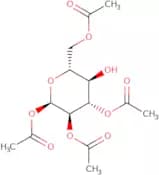
<p>Allyl 2,3,4-tri-O-benzyl b-D-galactopyranoside is a custom synthesis of an oligosaccharide with a complex carbohydrate and a high purity. Allyl 2,3,4-tri-O-benzyl b-D-galactopyranoside can be used for a variety of applications including as an intermediate for the production of other chemicals or as a food additive. It is also used in the synthesis of other carbohydrates and saccharides. This compound has been shown to be effective in methylation reactions and glycosylation reactions.</p>Pureza:Min. 95%1,2,3,6-Tetra-O-acetyl-α-D-glucopyranose
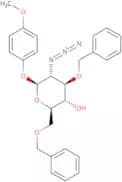
CAS:<p>1,2,3,6-Tetra-O-acetyl-a-D-glucopyranose is a high purity chemical that can be custom synthesized. It is a sugar that has been fluorinated and glycosylated with a Click modification. It is a synthetic compound that contains methylation and modification. It has CAS No. 55286-97-0, which indicates its oligosaccharide and monosaccharide saccharide composition. This product can be used for complex carbohydrate synthesis in the laboratory or for research purposes.</p>Fórmula:C14H20O10Pureza:Min. 98 Area-%Forma y color:PowderPeso molecular:348.3 g/mol4-Methoxyphenyl 2-azido-3,6-di-O-benzyl-2-deoxy-b-D-glucopyranoside
CAS:<p>4-Methoxyphenyl 2-azido-3,6-di-O-benzyl-2-deoxy-b-D-glucopyranoside is a supramolecular compound that belongs to the group of curcumin analogs. It has shown anticancer activity against human papilloma virus and intestinal papilloma. 4-Methoxyphenyl 2-azido-3,6-di-O-benzyl-2-(2′,4′,6′)triphosphate is a hybridized compound with low bioavailability. This compound can be used for the treatment of cancers and other diseases as an anticancer agent.</p>Fórmula:C27H29N3O6Pureza:Min. 95%Forma y color:White PowderPeso molecular:491.54 g/mol5-Azido-5-deoxy-2,3-O-isopropylidene-L-lyxofuranose
<p>5-Azido-5-deoxy-2,3-O-isopropylidene-L-lyxofuranose (AIL) is a synthetic molecule that belongs to the group of carbohydrates. It is synthesized by the glycosylation and methylation of 5-(azido)-5,6-dideoxyglucose. AIL has been shown to have anti-inflammatory effects in cell culture models and in mice with inflammatory bowel disease.</p>Pureza:Min. 95%Methyl 2-O-methyl-α-D-xylofuranoside
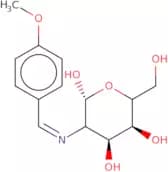
CAS:<p>A partially protected methyl xyloside</p>Fórmula:C7H14O5Pureza:Min. 95%Forma y color:PowderPeso molecular:178.18 g/molN-(4-Methoxybenzylidene)-b-D-glucosamine
CAS:<p>N-(4-Methoxybenzylidene)-b-D-glucosamine is a fluorinated synthetic monosaccharide. It is used in the synthesis of oligosaccharides and polysaccharides. N-(4-Methoxybenzylidene)-b-D-glucosamine can be modified with methyl groups, which are important for glycosylation, or click modification (a reaction in which a carbon atom and an oxygen atom are covalently bonded through a single bond). The sugar also has high purity and can be used as an analytical reference standard.</p>Fórmula:C14H19NO6Pureza:Min. 95%Peso molecular:297.3 g/mol


![N-[2-(4'-Chlorophenylacetonitrile)]-2,3,4,6-tetra-pivaloyl-D-glucopyranoside](/_next/image/?url=https%3A%2Fstatic.cymitquimica.com%2Fproducts%2F3D%2Fthumb-webp%2FMC08449.webp&w=3840&q=75)