Monosacáridos
Los monosacáridos son la forma más simple de los carbohidratos y sirven como bloques fundamentales para azúcares más complejos y polisacáridos. Estas moléculas de azúcar única juegan roles críticos en el metabolismo energético, la comunicación celular y los componentes estructurales de las células. En esta sección, encontrará una amplia variedad de monosacáridos esenciales para la investigación en bioquímica, biología molecular y glicociencia. Estos compuestos son cruciales para estudiar las rutas metabólicas, los procesos de glucosilación y el desarrollo de agentes terapéuticos. En CymitQuimica, ofrecemos monosacáridos de alta calidad para apoyar sus necesidades de investigación, asegurando precisión y fiabilidad en sus investigaciones científicas.
Subcategorías de "Monosacáridos"
- Allosas(11 productos)
- Arabinosas(21 productos)
- Eritrosas(11 productos)
- Fructosas(9 productos)
- Fucosas(36 productos)
- Galactosamina(41 productos)
- Galactosa(260 productos)
- Glucosas(365 productos)
- Ácidos glucurónicos(51 productos)
- Glico-sustratos para enzimas(77 productos)
- Gulosas(6 productos)
- Idosas(4 productos)
- Inositoles(15 productos)
- Lyxosas(4 productos)
- Manosas(65 productos)
- O-glicanos(48 productos)
- Psicosas(3 productos)
- Ramnosas(10 productos)
- Ribosas(61 productos)
- Ácidos siálicos(100 productos)
- Sorbosas(4 productos)
- Azúcares(173 productos)
- Tagatosis(4 productos)
- Taloses(8 productos)
- Xilosas(20 productos)
Mostrar 17 subcategorías más
Se han encontrado 6088 productos de "Monosacáridos"
Ordenar por
Pureza (%)
0
100
|
0
|
50
|
90
|
95
|
100
Phenyl 2,3,4,6-tetra-O-benzyl-a-L-thioglucopyranoside
<p>Phenyl 2,3,4,6-tetra-O-benzyl-a-L-thioglucopyranoside is a complex carbohydrate that can be modified with methylation, glycosylation, or click modification. It has a CAS number of 62790-21-8 and is a member of the Polysaccharides class. The main function of this compound is as an Oligosaccharide. This compound is Fluorinated and Synthetic.</p>Fórmula:C40H40O5SPureza:Min. 95%Peso molecular:632.81 g/mol1,2,3,4-Tetra-O-acetyl-b-L-rhamopyranose
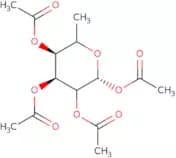
CAS:<p>1,2,3,4-Tetra-O-acetyl-b-L-rhamopyranose is a fluorinated monosaccharide that is synthetically produced. It can be used in the synthesis of oligosaccharides and complex carbohydrates. 1,2,3,4-Tetra-O-acetyl-b-L-rhamopyranose is an important chemical intermediate for glycosylation reactions. This product has been modified with methyl groups and click chemistry to produce a reactive site for subsequent glycosylation reactions. 1,2,3,4 Tetra -O -acetyl -b -L -rhamopyranose has been shown to be stable to heat and acid conditions as well as high purity.</p>Fórmula:C14H20O9Pureza:Min. 95%Peso molecular:332.3 g/molAllo-3a-tetrahydro cortisol 21-O-b-D-glucuronide
CAS:<p>Allo-3a-tetrahydro cortisol 21-O-b-D-glucuronide (A4C21) is a complex carbohydrate with a high degree of modification. The A4C21 is synthesized by the glycosylation and methylation of 3,5,6,7,8,9,10,11-hexahydrodehydrocortisol 21-O-b-D-glucuronide. The synthesis starts with the formation of an acetal between the two hydroxyl groups on one side of the steroid nucleus and two chloroform molecules in order to protect the reactant from further reactions. The reaction product is then subjected to a ketalization reaction with thioglycolic acid to yield an alpha/beta unsaturated ketone which is then reacted with ethylene diamine to produce an amide linkage. This amide linkage is then cleaved to yield an aldol condensation product</p>Fórmula:C27H42O11Pureza:Min. 95%Peso molecular:542.62 g/molBenzyl 2-acetamido-3,4,6-tri-O-acetyl-2-deoxy-a-D-galactopyranoside
CAS:<p>Benzyl 2-acetamido-3,4,6-tri-O-acetyl-2-deoxy-a-D-galactopyranoside is a custom synthesis of a complex carbohydrate. It reacts with the terminal hydroxyl group of an oligosaccharide to form an ether bond and also has fluorescent properties.</p>Fórmula:C21H27NO9Pureza:Min. 95%Peso molecular:437.44 g/molMethyl a-L-acosamine hydrochloride
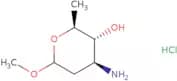
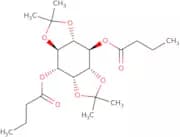
CAS:<p>Methyl a-L-acosamine hydrochloride is a custom synthesis that belongs to the class of complex carbohydrates. It has been modified with methylation, glycosylation, and carbocation modification. This product is also fluorinated and has a high purity level. It can be used as an intermediate in the production of saccharides and other products.</p>Fórmula:C7H15NO3·HClPureza:Min. 95%Peso molecular:197.66 g/mol3,6-Di-O-butanoyl-1,2:4,5-di-O-isopropylidene-D-myo-inositol
CAS:<p>3,6-Di-O-butanoyl-1,2:4,5-di-O-isopropylidene-D-myo-inositol is a custom synthesis of an oligosaccharide. It is a polymer of glucose with 3 to 9 residues, which may be modified by methylation and glycosylation. The chemical formula for 3,6-Di-O-butanoyl-1,2:4,5-di-O-isopropylidene is C(14)H(30)O(8). 3,6 Di O butanoyl 1 2 4 5 di O isopropylidene D myo inositol has a molecular weight of 790.3 g/mol. The CAS number for this compound is 1307298 34 5. This compound is readily soluble in water and methanol. The purity of the material exceeds 98%.</p>Fórmula:C20H32O8Pureza:Min. 95%Peso molecular:400.46 g/mol4-Isothiocyanatophenyl-a-D-glucopyranoside
CAS:<p>4-Isothiocyanatophenyl-a-D-glucopyranoside is a synthetic fluorinated glycosylated oligosaccharide. Its chemical formula is C16H13N3O7. It has a molecular weight of 392.</p>Fórmula:C13H15NO6SPureza:Min. 95%Peso molecular:313.33 g/mol1,2,3,4,6-Penta-O-acetyl-a-D-fructofuranose
CAS:<p>1,2,3,4,6-Penta-O-acetyl-a-D-fructofuranose is a glycosylation product that is created by the reaction of 1,2,3,4,6-penta-O-acetylglucose and D-fructose. It is an oligosaccharide that belongs to the class of complex carbohydrates. This compound can be customized to have any desired substitution pattern or modification. 1,2,3,4,6-Penta-O-acetyl-a-D-fructofuranose has been shown to have high purity and can be used in a wide range of applications.</p>Fórmula:C16H22O11Pureza:Min. 95%Peso molecular:390.34 g/mol3,5-O-Isopropylidene-D-arabinfuranose
<p>3,5-O-Isopropylidene-D-arabinfuranose is a Modification of an oligosaccharide. It is a methylated monosaccharide that is synthesized in the laboratory. This product has been shown to have a CAS number, which is used to uniquely identify substances and establish their quality and purity. 3,5-O-Isopropylidene-D-arabinfuranose can be used as a raw material in the synthesis of complex carbohydrates such as polysaccharides or glycosylation with other compounds.</p>Pureza:Min. 95%4-Methylphenyl 2,3,4,6-tetra-O-benzyl-b-D-thiogalactopyranoside
CAS:<p>4-Methylphenyl 2,3,4,6-tetra-O-benzyl-b-D-thiogalactopyranoside is a synthetic saccharide set up to be an oligo-saccharide building block.</p>Fórmula:C41H42O5SPureza:Min. 95%Peso molecular:646.84 g/molD-Allose-13C
CAS:<p>Please enquire for more information about D-Allose-13C including the price, delivery time and more detailed product information at the technical inquiry form on this page</p>Fórmula:C6H12O6Pureza:Min. 95%Peso molecular:181.15 g/molD-Lyxose-1-C-D
CAS:<p>Please enquire for more information about D-Lyxose-1-C-D including the price, delivery time and more detailed product information at the technical inquiry form on this page</p>Fórmula:C5H10O5Pureza:Min. 95%Peso molecular:151.14 g/moltrans-Zeatin-o-glucuronide
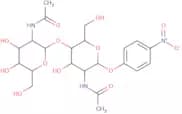
CAS:<p>Trans-Zeatin-o-glucuronide is a synthetic cytokinin derivative, which is derived from zeatin, a naturally occurring plant hormone. Zeatin originates from a variety of plant tissues but is predominantly found in corn, where it plays a crucial role in plant growth and development. As a cytokinin, trans-Zeatin-o-glucuronide acts by influencing cell division, differentiation, and apical dominance in plants. Its glucuronide form is a metabolite, which allows researchers to study the storage and transport of cytokinins within plant cells.</p>Fórmula:C16H21N5O7Pureza:Min. 95%Peso molecular:395.37 g/molGalNAcβ(1-4)GlcNAc-β-pNP
CAS:<p>Galnacβ(1-4)GlcNAc-β-PNP is a high purity, custom synthesized, synthetic carbohydrate. It is a complex carbohydrate that has been modified with a click modification at the reducing end of the sugar to attach an amine group. The sugar has also been methylated and glycosylated. The sugar has been fluorinated and saccharide, which is a monosaccharide or polysaccharide.</p>Fórmula:C22H31N3O13Pureza:Min. 95%Forma y color:PowderPeso molecular:545.5 g/molDisialylnonasaccharide-β-PNP
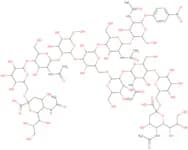
CAS:<p>Disialylnonasaccharide-β-PNP is a synthetic glycosylated oligosaccharide. It has a disialic acid residue at the reducing end and β-linked nonasaccharide residues at the nonreducing end. Disialylnonasaccharide-β-PNP is used as a monomer for the synthesis of polysaccharides, which are complex carbohydrates. Click modification of the saccharide unit can be carried out with an azido or nitro group. Disialylnonasaccharide-β-PNP is typically found in high purity and can be modified to suit your needs.</p>Fórmula:C90H141N7O64Pureza:Min. 95%Peso molecular:2,345.1 g/mol2,3,4-Tri-O-benzyl-D-glucuronide benzyl ester trichloroacetimidate
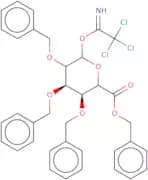
<p>The compound is a custom synthesis and modification of a complex carbohydrate. It has been synthesized by glycosylation, methylation, and click chemistry. The compound can be used as a building block for the synthesis of saccharides. It is also useful in the synthesis of polysaccharides, which are polymers consisting of long chains of sugars. The compound is a highly pure and fluorinated sugar that can be used in research as a standard or control.</p>Fórmula:C36H34Cl3NO7Pureza:Min. 95%Peso molecular:699.02 g/molD-[1-13C]Galacturonic acid potassium salt
<p>D-[1-13C]Galacturonic acid potassium salt is a sugar that is synthesized by the reaction of galactose with carbon dioxide. This sugar has been custom synthesized and is used in glycosylation reactions. Other modifications to this sugar include methylation and click modification, which can be done to make the sugar more reactive. D-[1-13C]Galacturonic acid potassium salt is a high purity product with a CAS number.</p>Pureza:Min. 95%2,3,4,6-Tetra-O-benzyl-1,5-di-O-mesyl-D-glucitol
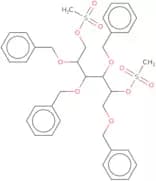
<p>2,3,4,6-Tetra-O-benzyl-1,5-di-O-mesyl-D-glucitol is a substituted sugar alcohol that can exist as either an intramolecular or an intermolecular isomer. The intramolecular isomer has a carboxylate group in the 6 position and the intermolecular isomer has a propionate group in the 6 position. 2,3,4,6-Tetra-O-benzyl-1,5-di-O-mesyl-D-glucitol has conformational properties that depend on which substituent occupies the 4 position. Benzene rings are more flexible than benzyloxy groups. The geometry of 2,3,4,6 - Tetra - O - benzyl - 1 , 5 - di - O - mesyl - D - glucitol changes from chair to boat with substitution at position</p>Fórmula:C36H42O10S2Pureza:Min. 95%Peso molecular:698.84 g/mol2-Acetamido-1,3-di-O-acetyl-4,6-O-benzylidene-2-deoxy-D-glucopyranose
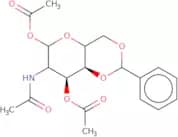
CAS:<p>2-Acetamido-1,3-di-O-acetyl-4,6-O-benzylidene-2-deoxy-D-glucopyranose is a custom synthesized sugar with a high purity. It is used in glycosylation reactions and has been shown to be resistant to methylation reactions. This product can be modified by click chemistry, fluorination, and saccharide modification. It has been shown to be resistant to Methylation, Click Modification, Polysaccharide, Fluorination, and Saccharide Modification. This product is often used as an intermediate for the synthesis of complex carbohydrate oligosaccharides.</p>Fórmula:C19H23NO8Pureza:Min. 95%Forma y color:White to off-white solid.Peso molecular:393.4 g/molGlucosamine sulfate potassium salt
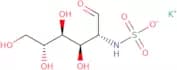
CAS:<p>Glucosamine sulfate potassium salt is a natural amino sugar that is synthesized by the body and can be found in animal tissue. Glucosamine sulfate potassium salt, as well as chondroitin sulfate, are important components of cartilage and synovial fluid. Both substances are necessary for the production of collagen, which provides strength and elasticity to connective tissues. Glucosamine sulfate potassium salt has been shown to be an efficient method for treating osteoarthrosis, alleviating pain and improving function. It has also been shown to reduce the symptoms of metabolic disorders such as diabetes mellitus type II by increasing insulin sensitivity, decreasing inflammation, and reducing oxidative stress. This product is often used in combination with other medicines such as vitamin D3 for adjuvant therapy.</p>Fórmula:C6H12KNO8SPureza:Min. 95%Peso molecular:297.33 g/molNicotinic acid acyl-b-D-glucuronide
CAS:<p>Nicotinic acid acyl-b-D-glucuronide is a carbohydrate that is synthesized by the condensation of nicotinic acid with b-D-glucuronic acid. It can be modified by fluorination, methylation, glycosylation, or click modification. The CAS Number for this product is 24719-73-1 and it has a purity of >98%. It has been custom synthesized at our lab and it is available in high purity.</p>Fórmula:C12H13NO8Pureza:Min. 95%Peso molecular:299.23 g/mol2-Azidoethyl b-D-glucopyranosiduronic acid
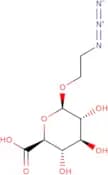
CAS:<p>2-Azidoethyl b-D-glucopyranosiduronic acid is a synthetic, fluorinated sugar that is used as a click modification to saccharides. It has the ability to be modified with methyl groups and glycosylation, which provide potential for synthesis of complex carbohydrates. The CAS number for 2-azidoethyl b-D-glucopyranosiduronic acid is 128095-64-7.</p>Fórmula:C8H13N3O7Pureza:Min. 95%Peso molecular:263.2 g/molD-Glucose-(toluene-4-sulfonylhydrazone)
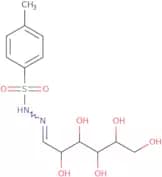
CAS:<p>D-Glycose-(Toluene-4-sulfonylhydrazone) is a modified sugar that is used as a building block for glycosylation. It has been used in the synthesis of complex carbohydrates, methylation, click chemistry and polysaccharides. The sulfonyl group on the toluene ring makes this compound a good candidate for fluorination, saccharide modification and Oligosaccharide synthesis. This product can be custom synthesized with high purity and CAS No. 5328-51-8.</p>Pureza:Min. 95%Ethyl 3,4,6-tri-O-benzyl-b-D-thiogalactopyranoside
CAS:<p>Ethyl 3,4,6-tri-O-benzyl-b-D-thiogalactopyranoside is a sugar that has been modified by Click chemistry and fluorination. It is used in the synthesis of glycosides and oligosaccharides. The monosaccharide, saccharide, and complex carbohydrate are found in nature and are used as food additives.</p>Fórmula:C29H34O5SPureza:Min. 95%Peso molecular:494.64 g/mol3-Pyridinylmethylbeta-D-glucopyranoside
CAS:<p>3-Pyridinylmethylbeta-D-glucopyranoside is a sugar that can be custom synthesized. It is a white to off-white crystalline powder with an odorless taste and is soluble in water. 3-Pyridinylmethylbeta-D-glucopyranoside is used in the synthesis of glycosides, saccharides, oligosaccharides, and monosaccharides. This compound can also be modified with fluorination or methylation reactions. The use of this product has been shown to produce high purity compounds for use in pharmaceuticals, agrochemicals, and other chemical industries.</p>Fórmula:C12H17NO6Pureza:Min. 95%Peso molecular:271.27 g/molEthyl 2,4,6-tri-O-acetyl-3-O-benzyl-b-D-thioglucopyranoside
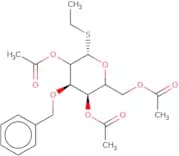
<p>Ethyl 2,4,6-tri-O-acetyl-3-O-benzyl-b-D-thioglucopyranoside is a synthetic carbohydrate with a molecular weight of 592. It has been fluorinated at the C2 position and acetylated at the C3 position. This product is used in the synthesis of oligosaccharides and polysaccharides. It is also used in click chemistry and as an intermediate in carbohydrate modifications and fluorination reactions.</p>Fórmula:C21H28O8SPureza:Min. 95%Peso molecular:440.51 g/mol1,2,3,4,6-Penta-O-benzoyl-D-galactopyranoside
CAS:<p>1,2,3,4,6-Penta-O-benzoyl-D-galactopyranoside is a custom synthesis of an oligosaccharide. It is a polysaccharide that is modified by methylation and glycosylation. This product has been fluorinated and has been modified with a click reaction. The final product is highly pure with a CAS number of 3006-48-2.</p>Fórmula:C41H32O11Pureza:Min. 95%Peso molecular:700.69 g/molPhenyl a-D-thiogalactopyranoside
<p>Phenyl a-D-thiogalactopyranoside is a sugar with a galactose and thioglucose residue linked by an alpha-1,6 glycosidic bond. It is obtained from the hydrolysis of starch or starch derivatives such as maltodextrin. This compound can be modified through various reactions, including fluorination, glycosylation, methylation, and modification. Phenyl a-D-thiogalactopyranoside has CAS number 5664-77-5 and molecular weight of 288.24 g/mol.</p>Fórmula:C12H16O5SPureza:Min. 95%Peso molecular:272.32 g/mol1,2,3-Tri-O-benzyl-4,6-O-benzylidene-b-D-galactopyranose
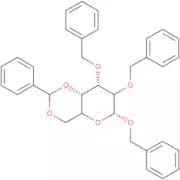
CAS:<p>1,2,3-Tri-O-benzyl-4,6-O-benzylidene-b-D-galactopyranose is a saccharide that is used as a building block for the synthesis of oligosaccharides and polysaccharides. It has been modified with fluorination, methylation, and click chemistry. 1,2,3-Tri-O-benzyl-4,6-O-benzylidene-b-D-galactopyranose is CAS No. 57783–80–9. This product can be custom synthesized to meet your needs.</p>Fórmula:C34H34O6Pureza:Min. 95%Peso molecular:538.63 g/mol3,4-Di-O-benzyl-L-rhamnal
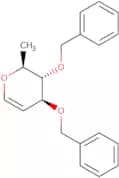
CAS:<p>3,4-Di-O-benzyl-L-rhamnal is a high purity Glycosylation Oligosaccharide with a CAS No. 117249-17-9 that is synthesized by Click modification and methylation. It can be used as a raw material in the synthesis of complex carbohydrate. 3,4-Di-O-benzyl-L-rhamnal is water soluble and has an excellent stability in acidic conditions.</p>Pureza:Min. 95%(4-Methylphenyl)methylbeta-D-glucopyranoside
CAS:<p>4-Methylphenyl)methylbeta-D-glucopyranoside is a modified monosaccharide that is synthesized by the methylation of D-glucose. It is a white powder with a molecular weight of 328.4 g/mol and chemical formula C14H22O9. The product's purity level is 99%.</p>Fórmula:C14H20O6Pureza:Min. 95%Peso molecular:284.31 g/mol1,2,3,4,6-Penta-O-benzoyl-b-D-mannopyranose
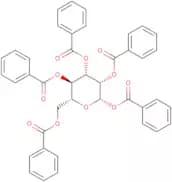
CAS:<p>1,2,3,4,6-Penta-O-benzoyl-b-D-mannopyranose is a custom synthesis that can be modified with fluorination or methylation. It is a monosaccharide and a synthetic saccharide that can also be used as an oligosaccharide.</p>Fórmula:C41H32O11Pureza:Min. 95%Peso molecular:700.7 g/molMethyl-O-(2-azido-3,4-di-O-benzyl-2-deoxy-a-D-glucopyranosyl)-(1-4)-O-(2,3-di-O-benzyl-b-D-glucopyranosyluronicacid)- (1-4)-O-(2-azi do-2-deoxy-a-D-glucopyranosyl)-(1-4)-O-(3-O-benzyl-a-L-idopyranosyluronic acid)-(1-4)-3-O-benzyl- 2-benzyloxycarbonyla
CAS:<p>Maltodextrin is a polysaccharide that is made up of glucose units linked together by alpha-glycosidic bonds. Maltodextrin is commonly used as a food additive, but it also has several industrial applications. It can be used to produce escherichia coli, which is a bacterium that produces maltose and amylopectin. Maltodextrin can also be used as an animal feed supplement or as an ingredient in baby food. The glycosidic bond between the glucose units are metabolized by mouse enzymes to produce maltose and glycogen, which are both plant metabolites. Maltodextrin consists of unbranched subunits with linear chains of alpha-1,4-linked glucose residues that have alpha-1,6-linked branches at every second residue. This means that maltodextrin has a glycosidic linkage between the two glucose molecules in the chain and one of these links will always be an alpha-</p>Fórmula:C81H91N7O27Pureza:Min. 95%Peso molecular:1,594.62 g/molMethyl 1-(5-fluoro-1H-2-oxopyrimidin-4-yl)-b-D-glucopyranuronate
CAS:<p>Methyl 1-(5-fluoro-1H-2-oxopyrimidin-4-yl)-b-D-glucopyranuronate is an anticancer drug that inhibits β-glucuronidase. Methyl 1-(5-fluoro-1H-2-oxopyrimidin-4-yl)-b-D-glucopyranuronate is a colorless solid that has been recrystallized, purified, and analyzed for its chloride content. The function of this compound has been tested in vitro using tissue cultures and animal models. The reaction vessel used for the test was an acetonitrile solution with a pH between 7 and 8. The methylester form of methyl 1-(5-fluoro-1H--2--oxopyrimidin 4--yl)-b--D--glucopyranuronate reacts with sulphite to produce a green product with a colorimetric method</p>Fórmula:C11H13FN2O8Pureza:Min. 95%Peso molecular:320.23 g/mol4,7,8,9-Tetra-O-acetyl-N-acetyl-D-neuraminic acid methyl ester
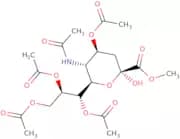
CAS:<p>4,7,8,9-Tetra-O-acetyl-N-acetyl-D-neuraminic acid methyl ester is a modified form of sialic acid. This compound is a glycosylation product that has been modified with methyl groups and fluorine atoms. The fluorination of the molecule increases its stability and prevents it from being hydrolyzed by enzymes such as β-galactosidase. 4,7,8,9-Tetra-O-acetyl-N-acetyl-D-neuraminic acid methyl ester is often used in the synthesis of polysaccharides and oligosaccharides for medical purposes. This compound can be custom synthesized for research purposes or to meet special requirements.</p>Fórmula:C20H29NO13Pureza:Min. 95%Forma y color:White to off-white solid.Peso molecular:491.44 g/mol2,3,5-Tri-O-benzoyl-b-D-ribofuranosyl azide
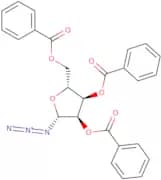
CAS:<p>2,3,5-Tri-O-benzoyl-b-D-ribofuranosyl azide (2,3,5-TRBA) is an antiviral agent that inhibits the synthesis of viral nucleic acid by targeting a glycosylation step in the synthesis of herpes simplex virus type 1 (HSV1). 2,3,5-TRBA has significant antiviral activity against HSV1 and other herpes viruses. This compound is also active against influenza A virus and vaccinia virus. 2,3,5-TRBA inhibits the enzyme triosephosphate isomerase (TPI), which catalyzes the conversion of dihydroxyacetone phosphate to glyceraldehyde 3-phosphate. Inhibition of TPI leads to decreased glucose production in cells infected with herpes viruses. The acetonitrile used as a solvent in this reaction can be replaced by pyridine or DMF. The sulfonate group</p>Fórmula:C26H21N3O7Pureza:Min. 98 Area-%Forma y color:PowderPeso molecular:487.46 g/mol2-Deoxy-D-ribose-anilide
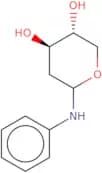
CAS:<p>2-Deoxy-D-ribose-anilide is a fluorinated monosaccharide that is used as a synthetic building block for the synthesis of oligosaccharides, polysaccharides, and other complex carbohydrates. This compound has been modified with methyl groups and click chemistry to form new types of sugars. 2-Deoxy-D-ribose-anilide is also available in high purity and can be used for glycosylation reactions.</p>Fórmula:C11H15NO3Pureza:Min. 95%Forma y color:Off-White To Light (Or Pale) Yellow SolidPeso molecular:209.24 g/mola-D-1,5-Difluoroglucose
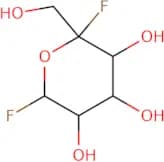
CAS:<p>a-D-1,5-Difluoroglucose is a synthetic sugar that is used in the modification of complex carbohydrates. It is fluorinated to give a stable compound that can be methylated and glucosylated. The compound has been shown to have high purity and a long shelf life.</p>Fórmula:C6H10F2O5Pureza:Min. 95%Peso molecular:200.14 g/moltrans-3'-Hydroxycotinine-O-b-D-glucuronide D3 sodium salt
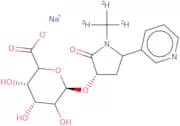
Producto controlado<p>Trans-3'-Hydroxycotinine-O-b-D-glucuronide D3 sodium salt is a modification of the natural product trans-3'-hydroxycotinine. It is an oligosaccharide with a complex carbohydrate structure, which may be synthesized by custom synthesis or by glycosylation. This modification has a high purity and may be monosaccharide or polysaccharide. Trans-3'-hydroxycotinine-O-b-D-glucuronide D3 sodium salt may have CAS number and fluorination. It has been shown to have antihistamine activities, which are due to its ability to inhibit the release of histamine from mast cells in the lungs.</p>Fórmula:C16H16N2O8D3·NaPureza:Min. 95%Peso molecular:393.34 g/molMethyl 2-deoxy-3,5-di-O-pivaloyl-a-D-ribofuranoside
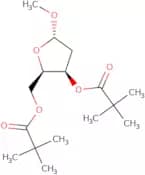
<p>Methyl 2-deoxy-3,5-di-O-pivaloyl-alpha-D-ribofuranoside is a custom synthesis of a complex carbohydrate that can be used in glycosylation and polysaccharide synthesis. This product is a sugar with a CAS No. that has been modified with methylation, fluorination, and click chemistry. <br>This product is synthesized by reacting the corresponding reactant monosaccharides with an acylating agent in the presence of a base to form 2,3,5-trihydroxybenzaldehyde esters. The 2,3,5-trihydroxybenzaldehyde esters are then reacted with an alcohol or phenol to form 2,4,6-trihydroxybenzalacetone derivatives which are converted into the desired product by hydrolysis.</p>Fórmula:C16H28O6Pureza:Min. 95%Forma y color:Oil.Peso molecular:316.39 g/mol2,4:3,5-Di-O-benzylidene-L-iditol
CAS:<p>2,4:3,5-Di-O-benzylidene-L-iditol is a custom synthesis that has been modified with methylation and glycosylation. It is a complex carbohydrate consisting of an oligosaccharide and polysaccharide. This product is a modification of saccharides by Methylation and Glycosylation. 2,4:3,5-Di-O-benzylidene-L-iditol is fluorinated at the C2 position. It has high purity with less than 1% impurities. The product is synthetic and consists of one monosaccharide</p>Fórmula:C20H22O6Pureza:Min. 95%Peso molecular:358.39 g/molCotinine b-D-glucuronide
CAS:<p>Cotinine is a major metabolite of nicotine. It is excreted in the urine and has been extensively studied for its role in nicotine addiction and the development of cancer. Cotinine is also used as a biomarker to identify exposure to tobacco smoke, secondhand smoke, and nicotine replacement therapy. The levels of cotinine are proportional to the number of cigarettes smoked per day, with an average half-life of 15 hours. The concentration can be determined by LC-MS/MS with chemical ionization or LC-MS/MS with electron impact ionization. Cotinine can be hydrolyzed by esterases or glucuronidases, oxidized by cytochrome P450 enzymes, reduced by glutathione reductase, or conjugated with glucuronic acid.</p>Fórmula:C16H20N2O7Pureza:Min. 95%Peso molecular:352.34 g/molEthyl 4,6-O-(4-methoxybenzylidene)-b-D-thiogalactopyranoside
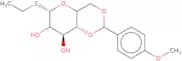
<p>Ethyl 4,6-O-(4-methoxybenzylidene)-b-D-thiogalactopyranoside is a custom synthesis of a carbohydrate. It is a high purity product with a purity of at least 99.0%. It has the following properties: Custom synthesis, sugar, Click modification, Fluorination, Glycosylation, Synthetic, Methylation, Modification.<br>This product is registered under CAS No. 100735-66-8 and has the molecular formula C51H75NO17. The molecular weight is 905.1 g/mol and the structural formula is as follows:</p>Fórmula:C16H22O6SPureza:Min. 95%Peso molecular:342.41 g/molL-Sorbosone
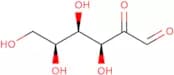
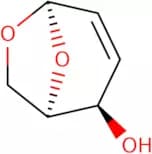
CAS:<p>L-Sorbosone is an antioxidant that can be used as a food additive or dietary supplement. It has been shown to have antioxidative properties and has the ability to inhibit oxidation reactions. The optimum concentration of L-sorbosone is 0.1 milligrams per liter and it is effective at inhibiting chemical reactions in a wide range of pH levels, from 2 to 8. L-Sorbosone belongs to the genus sorbose, which is a sugar alcohol that does not contain an aldehyde group. It also converts sorbose into dehydroascorbic acid and inhibits the enzyme activities of two important enzymes involved in cell culture, namely glutathione reductase and cytochrome p450, which are necessary for maintaining cellular redox balance.</p>Fórmula:C6H10O6Pureza:Min. 95%Peso molecular:178.14 g/mol1,6-Anhydro-2,3-dideoxy-b-D-threo-hex-2-enopyranose
CAS:<p>1,6-Anhydro-2,3-dideoxy-b-D-threo-hex-2-enopyranose is a carbohydrate that is synthesized from the sugar D-ribose. It can be used as a fluoroquinolone antibiotic. 1,6-Anhydro-2,3-dideoxy-b-D-threohexenopyranose has been modified with fluorine in order to increase its antibacterial activity. This modification makes the compound resistant to bacterial enzymes and allows it to bind to bacterial DNA. 1,6-Anhydro 2,3dideoxy bDthreo hexenopyranose also reacts with sugars and proteins to form glycosides and oligosaccharides that have high purity.</p>Fórmula:C6H8O3Pureza:Min. 95%Peso molecular:128.13 g/mol2-Azido-3,4,6-tri-O-benzyl-2-deoxy-D-glucopyranose
<p>Silver trifluoromethanesulfonate is an ionic silver reagent that is used to modify polysaccharides. It has been shown that the triethylamine can be substituted with other strong bases, such as potassium t-butoxide. This reagent reacts with chlorides to produce 2-azido-3,4,6-tri-O-benzyl-2-deoxy-D-glucopyranose. The modification of this compound is important for the study of glycosylation reactions and for understanding the structure of polysaccharides.</p>Pureza:Min. 95%Methyl 2,3,4-tri-O-methyl-b-D-glucopyranoside
CAS:<p>Methylated glucose glycoside with 6 position free</p>Pureza:Min. 95%1,2,3,4-Tetra-O-acetyl-L-arabinopyranose
CAS:<p>1,2,3,4-Tetra-O-acetyl-L-arabinopyranose is a custom synthesis that has been modified with fluorination and methylation. The monosaccharide is synthesized by using a Click modification and the oligosaccharides and polysaccharides are glycosylated. This compound has CAS No. 123163-97-3 and is a complex carbohydrate.</p>Pureza:Min. 95%1-O-(5-Carboxy-N-phenyl-2-(1H)-pyridone)-D-glucuronide
<p>1-O-(5-Carboxy-N-phenyl-2-(1H)-pyridone)-D-glucuronide is a modification of Oligosaccharide, Carbohydrate. It's CAS No. is 61877-69-8 and it has a molecular weight of 398.7 g/mol. The purity of this product is >99%. This product can be custom synthesized and has a glycosylation and methylation level of 100%. 1-O-(5-Carboxy-N-phenyl-2-(1H)-pyridone)-D-glucuronide is soluble in water and insoluble in oils, fats, ethers, chloroform and benzene. It is also resistant to acid hydrolysis.</p>Fórmula:C18H17NO9Pureza:Min. 95%Peso molecular:391.33 g/molPhenyl 4,6-O-benzylidene-a-D-thioglucopyranoside
<p>Phenyl 4,6-O-benzylidene-a-D-thioglucopyranoside is a custom synthesized compound with CAS No. This chemical is an alpha,alpha,alpha-trifluoroacetamido derivative of the natural carbohydrate thioglucose. Phenyl 4,6-O-benzylidene-a-D-thioglucopyranoside is a complex carbohydrate that can be modified by fluorination to produce a simple sugar. Modification of this compound can also produce monosaccharides with various levels of purity.</p>Fórmula:C19H20O5SPureza:Min. 95%Peso molecular:360.42 g/mol






![D-[1-13C]Galacturonic acid potassium salt](/_next/image/?url=https%3A%2Fstatic.cymitquimica.com%2Fproducts%2F3D%2Fthumb-webp%2FMG28931.webp&w=3840&q=75)