Monosacáridos
Subcategorías de "Monosacáridos"
- Allosas(11 productos)
- Arabinosas(21 productos)
- Eritrosas(11 productos)
- Fructosas(9 productos)
- Fucosas(36 productos)
- Galactosamina(41 productos)
- Galactosa(261 productos)
- Glucosas(365 productos)
- Ácidos glucurónicos(51 productos)
- Glico-sustratos para enzimas(77 productos)
- Gulosas(6 productos)
- Idosas(4 productos)
- Inositoles(15 productos)
- Lyxosas(4 productos)
- Manosas(65 productos)
- O-glicanos(48 productos)
- Psicosas(3 productos)
- Ramnosas(10 productos)
- Ribosas(61 productos)
- Ácidos siálicos(100 productos)
- Sorbosas(4 productos)
- Azúcares(173 productos)
- Tagatosis(4 productos)
- Taloses(8 productos)
- Xilosas(20 productos)
Se han encontrado 6090 productos de "Monosacáridos"
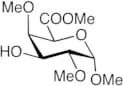
Methyl(methyl 2,4-di-O-methyl-α-D-galactopyranoside)uronate
CAS:A uronic acid analogue of galactose
Fórmula:C10H18O7Pureza:Min. 95%Forma y color:PowderPeso molecular:250.25 g/molRef: 3D-MM181443
Producto descatalogado5-O-tert-Butyldimethylsilyl-2,3-O-isopropylidene-L-ribono-1,4-lactone
CAS:5-O-tert-Butyldimethylsilyl-2,3-O-isopropylidene-L-ribono-1,4-lactone is a high purity custom synthesis and custom synthesis of complex carbohydrates. 5-O-tert-Butyldimethylsilyl-2,3-O-isopropylidene-L-ribono--1,4--lactone is a fluorination and an oligosaccharide that contains methylated sugar. It is a polysaccharide with a click modification that can be used for glycosylation and methylation. This product has been shown to be effective in the synthesis of oligosaccharides.
Fórmula:C15H28O5SiPureza:Min. 95%Peso molecular:316.47 g/molAllyl 4-O-benzyl-2,3-di-O-levulinyl-a-L-rhamnopyranoside
Allyl 4-O-benzyl-2,3-di-O-levulinyl-a-L-rhamnopyranoside is a custom synthesis of an oligosaccharide with a complex carbohydrate backbone. It is modified by methylation and glycosylation and fluorinated to give it high purity.
Pureza:Min. 95%Ethyl 3-O-benzyl-4,6-O-benzylidene-2-deoxy-2-N-phthalimido-b-D-thioglucopyranoside
CAS:Ethyl 3-O-benzyl-4,6-O-benzylidene-2-deoxy-2-N-phthalimido-b-D-thioglucopyranoside is a synthetically modified sugar. It is a monosaccharide that has been fluorinated and methylated. This modification has been shown to increase the stability of the sugar in the presence of water. The sugar also has an oligosaccharide and polysaccharide moiety attached to it. These saccharides are glycosylated and have a complex carbohydrate structure.
Fórmula:C30H29NO6SPureza:Min. 95%Forma y color:PowderPeso molecular:531.62 g/molRef: 3D-ME08389
Producto descatalogadoMethyl 2,3,4-tri-O-acetyl-6-O-tert-butyldimethylsilyl-a-D-glucopyranoside
CAS:Methyl 2,3,4-tri-O-acetyl-6-O-tert-butyldimethylsilyl-a-D-glucopyranoside is a glycosylation reagent and a synthetic monosaccharide that is custom synthesized and available in high purity. It is a saccharide with a molecular weight of 244.24 g/mol and chemical formula C12H21NO8Si. This product is often used as an intermediate for modified oligosaccharides and polysaccharides.
Methyl 2,3,4-tri-O-acetyl-6-O-tert-butyldimethylsilyl -a D glucopyranoside can be used for the synthesis of complex carbohydrate, methylation, click modification, fluorination saccharide, modification or other reactions.
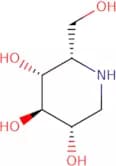
This product has CAS No. 637341162 and can be found inFórmula:C19H34O9SiPureza:Min. 95%Peso molecular:434.56 g/mol(2S, 3R, 4R, 5S) -2- (Hydroxymethyl) - 3, 4, 5- piperidinetriol
CAS:(2S, 3R, 4R, 5S) -2- (Hydroxymethyl) - 3, 4, 5- piperidinetriol is a naturally occurring metabolite of the amino acid tryptophan. It is a structural analog of glucosylceramide and has been shown to have inhibitory properties against β-glucosidase. Structural studies have shown that this compound has similar stereoselective properties as the natural product glucosylceramide. This compound was also found to be a competitive inhibitor of amines and a non-competitive inhibitor of β-glucosidase.
Fórmula:C6H13NO4Pureza:Min. 95%Peso molecular:163.17 g/mol2,3-O-Isopropylidene-1-C-methyl-D-erythrose
2,3-O-Isopropylidene-1-C-methyl-D-erythrose is a modified oligosaccharide that is synthesized from D-erythrose. It can be used in the synthesis of complex carbohydrates with various biological activities. It is a sugar that can be methylated, glycosylated, or fluorinated and has been shown to have anti-inflammatory properties.
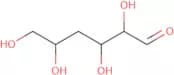
Pureza:Min. 95%2-Deoxy-D-ribose
CAS:Used in synthetic organic chemistry and natural product synthesis. Induces apoptosis by inhibiting the synthesis and increasing the efflux of glutathione. It is used for synthesis of optically active dipyrrolyl alkanols from pyrroles on the surface of montmorillonite KSF clay.
Fórmula:C5H10O4Pureza:Min. 99.0 Area-%Peso molecular:134.13 g/mol2-[(1E)-2-[6-(β-D-Galactopyranosyloxy)-2,3-dihydro-1H-xanthen-4-yl]ethenyl]-3,3-dimethyl-1-propyl-3H-indolium iodide
CAS:Please enquire for more information about 2-[(1E)-2-[6-(β-D-Galactopyranosyloxy)-2,3-dihydro-1H-xanthen-4-yl]ethenyl]-3,3-dimethyl-1-propyl-3H-indolium iodide including the price, delivery time and more detailed product information at the technical inquiry form on this page
Fórmula:C34H40NO7•IPureza:Min. 95%Peso molecular:701.59 g/molGDP-L-fucose disodium
CAS:Please enquire for more information about GDP-L-fucose disodium including the price, delivery time and more detailed product information at the technical inquiry form on this page
Fórmula:C16H23N5O15P2Na2Pureza:Min. 90 Area-%Peso molecular:633.31 g/mol1-Deoxy- 6- O- tert.butyl dimethylsilyl]- 3, 4- O- isopropylidene-D- Psicofuranose
This complex carbohydrate is a modification of the 6-O-tert.butyl dimethylsilyl]psicofuranose. It is an Oligosaccharide that has been modified with methylation, glycosylation, and Click modification of the sugar moieties. The CAS number for this complex carbohydrate is 10963-29-3, and it has a purity of 99%.
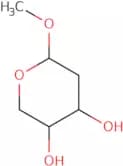
Pureza:Min. 95%Methyl 2-deoxy-b-D-ribopyranoside
CAS:Methyl 2-deoxy-b-D-ribopyranoside is a synthetic monosaccharide that has been modified by fluorination, monosaccharide, and methylation. It is an oligosaccharide that belongs to the group of complex carbohydrates. This compound can be used for glycosylation reactions or as a sugar donor in click chemistry. Methyl 2-deoxy-b-D-ribopyranoside has CAS No. 17676-20-9 and it's purity is greater than 99%.
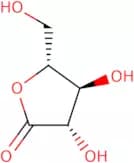
Fórmula:C6H12O4Pureza:Min. 95%Peso molecular:148.16 g/mol2-C-Methyl- 2, 3- O- isopropylidene - D- ribonic acid g- lactone
2-C-Methyl- 2, 3- O- isopropylidene - D- ribonic acid g- lactone (2CMP) is a modification of the sugar D- ribose that has been found to be useful in the synthesis of oligosaccharides. It can be synthesized from 2,3-O-isopropylidene -D-ribofuranose and methyl iodide. 2CMP is used as a building block for glycosylation reactions because it is easily converted to different sugars by methylation, fluorination, or saccharide modification.
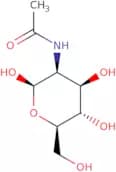
Pureza:Min. 95%N-Acetyl-D-mannosamine
CAS:N-Acetyl D-mannosamine (ManNAc) is an aldohexose (2-acetamido-2-deoxymannose) in which the axial hydroxyl group at position 2 is replaced by a N-acetyl group (Collins, 2006). It has been reported that N-acetyl D-mannosamine supplementation, may provide novel means to break the link between obesity and hypertension (Peng, 2019). N-Acetyl-D-mannosamine and N-acetyl-D-glucosamine are the essential precursors of sialic acid, the specific monomer of polysialic acid, a bacterial pathogenic determinant, for example, Escherichia coli K1 uses both amino sugars as carbon sources. It has been reported that ManNAc can be used as a treatment for hereditary inclusion body myopathy, an adult-onset, progressive neuromuscular disorder and also for renal disorders involving proteinuria and hematuria due to podocytopathy and/or segmental splitting of the glomerular basement membrane (Galeano, 2007).
Fórmula:C8H15NO6Pureza:Min. 98 Area-%Forma y color:White PowderPeso molecular:221.21 g/molRef: 3D-MA05269
Producto descatalogadoAllosamizoline
CAS:Allosamizoline is a potent inhibitor of bacterial enzyme that is produced by the bacteria. It inhibits viral replication and has been shown to inhibit the biosynthesis of other bioactive molecules, such as cyclohexane ring, nitrogen atoms, and growth regulators. Allosamizoline is a bicyclic compound with an acetylation at the carbon atom and a cyclohexane ring. This compound also has two nitrogen atoms in its structure that are important for inhibiting bacterial enzymes. In addition, allosamizoline can be conjugated to fluorescein via an ester linkage. The fluorescein-allosamizoline conjugate can be used as a fluorescent probe for the detection of bacterial enzymes in live cells and tissues.
Fórmula:C9H16N2O4Pureza:Min. 95%Peso molecular:216.23 g/molD-Allose pentaacetate
CAS:D-Allose pentaacetate is a modified oligosaccharide that can be used as a synthetic intermediate in the production of complex carbohydrates. It has been shown to have high purity and is easily synthesized in a laboratory setting. D-Allose pentaacetate is a monosaccharide with five acetate groups that can be methylated or glycosylated, which makes it an ideal candidate for modification. D-Allose pentaacetate has CAS No. 144071-49-8 and can be found on PubChem CID: 1215965.
Fórmula:C16H22O11Pureza:Min. 95%Forma y color:PowderPeso molecular:390.34 g/molMethyl 4-azido-4-deoxy-2,3-O-isopropylidene-a-D-mannopyranoside
Methyl 4-azido-4-deoxy-2,3-O-isopropylidene-a-D-mannopyranoside is a glycosylation reagent that is used to synthesize complex carbohydrates. This product is a monosaccharide with CAS No. 682487-41-6 and has a custom synthesis. It can be fluorinated and saccharified, resulting in an oligosaccharide. The synthesis of this product is based on the Click reaction, which is an efficient way to modify sugar molecules. This product has high purity and can be custom synthesized to meet your needs.
Pureza:Min. 95%(2, 4- Anhydro- 6- deoxy- L- mannonoyl)-glycine methyl ester
This is a custom synthesized product. It has been modified to include a methyl group at the 2,4-positions on the anhydro-6-deoxy-L-mannopyranose molecule. This modification is done using Click chemistry and the product contains a high level of purity. The modification can be used to create saccharides with high carbohydrate content and polysaccharides with different degrees of polymerization.
Pureza:Min. 95%4-Methoxyphenyl 2,4,6-tri-O-benzoyl-a-D-mannopyranoside
4-Methoxyphenyl 2,4,6-tri-O-benzoyl-a-D-mannopyranoside is a glycosylation product of mannose with 4-methoxybenzoic acid. It is a complex carbohydrate that has been modified by methylation and click modification. The fluorination increases the reactivity of the hydroxyl groups on the sugar ring. This product can be synthesized in high purity and custom synthesis.
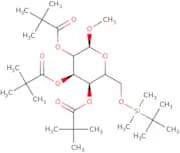
Fórmula:C34H30O10Pureza:Min. 95%Peso molecular:598.6 g/molMethyl 6-O-tert-butyldimethylsilyl-2,3,4-tri-O-pivaloyl-a-D-mannopyranoside
Methyl 6-O-tert-butyldimethylsilyl-2,3,4-tri-O-pivaloyl-a-D-mannopyranoside is a synthetic glycosylation agent that can be used for the synthesis of complex carbohydrates. This product has been fluorinated and saccharide modified. Methyl 6-O-tert-butyldimethylsilyl-2,3,4-tri-O-pivaloyl-aDmannopyranoside is available in CAS number: 5756782.
Fórmula:C28H52O9SiPureza:Min. 95%Peso molecular:560.81 g/mol3-Azido-3-deoxy-5,6-O-isopropylidene-D-allonic acid g-lactone
CAS:3-Azido-3-deoxy-5,6-O-isopropylidene-D-allonic acid g-lactone is a modification of the sugar allose. It is an oligosaccharide that contains a complex carbohydrate. It can be custom synthesized and has high purity, making it suitable for use in pharmaceuticals. 3-Azido-3-deoxy-5,6-O-isopropylidene-D allonic acid g lactone is a methylated sugar, which means that it has had one of its hydroxyl groups replaced with a methyl group. It is also glycosylated, meaning that it has been modified by the addition of carbohydrates to its structure. The carbons in 3ADODAGL are found in the form of ring structures, which are known as saccharides.
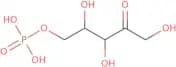
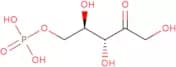
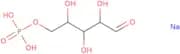
Pureza:Min. 95%D-Ribulose 5-phosphate sodium
CAS:Ribulose 5-phosphate sodium is a chemical that can be used to inhibit the enzyme ribulose phosphate reductase. Ribulose 5-phosphate sodium has been shown to inhibit glycolaldehyde production in the chloroplasts of plants, effectively reducing the amount of carbon dioxide produced. This chemical has also been shown to have an inhibitory effect on other enzymes involved in carbon fixation and assimilation. The effectiveness of this chemical is dependent on the specific plant species and environmental conditions.
Fórmula:C5H11O8P•NaxPureza:Min. 95%Forma y color:PowderPeso molecular:230.11 g/molRef: 3D-AAA09387
Producto descatalogadoD-Ribulose 5-phosphate sodium salt
CAS:Reference compound for metabolites of the pentosephosphate pathway
Fórmula:C5H11O8P·xNaPureza:Min. 96 Area-%Forma y color:White Yellow PowderPeso molecular:230.11 g/molRef: 3D-MR45852
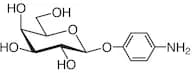
Producto descatalogado4-Aminophenyl β-D-Galactopyranoside
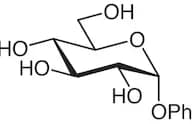
CAS:Fórmula:C12H17NO6Pureza:>98.0%(HPLC)Forma y color:White to Almost white powder to crystalPeso molecular:271.27Phenyl α-D-Glucopyranoside
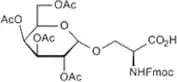
CAS:Fórmula:C12H16O6Pureza:>97.0%(GC)Forma y color:White to Light yellow powder to crystalPeso molecular:256.252,3,4,6-Tetra-O-acetyl-a-D-galactopyranosyl-Fmoc serine
CAS:2,3,4,6-Tetra-O-acetyl-a-D-galactopyranosyl-Fmoc serine is a custom synthesis that has been modified by fluorination and methylation. It is a monosaccharide with CAS No. 1351605-34-8 and Polysaccharide with Glycosylation and sugar Carbohydrate. This molecule has a complex carbohydrate structure with many glycosylation sites.Fórmula:C32H35NO14Pureza:Min. 95%Peso molecular:657.62 g/molRef: 3D-MT09625
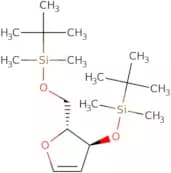
Producto descatalogado1,4-Anhydro-2-deoxy-3,5-bis-O-(t-butyldimethylsilyl)-D-erythro-pent-1-enitol
CAS:1,4-Anhydro-2-deoxy-3,5-bis-O-(t-butyldimethylsilyl)-D-erythro-pent-1-enitol is a custom synthesis that has been fluorinated. It is a high purity oligosaccharide with a complex carbohydrate structure. This product was synthesized by click modification and methylation of the saccharide. It is a monosaccharide and sugar with a molecular formula C8H14FNO6S.Fórmula:C17H36O3Si2Pureza:Min. 95%Forma y color:Clear LiquidPeso molecular:344.64 g/molRef: 3D-MA06401
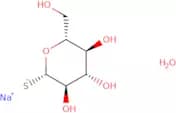
Producto descatalogadob-D-Thioglucose sodium salt hydrate
CAS:b-D-Thioglucose sodium salt hydrate is a complex carbohydrate that is used as an intermediate for the synthesis of oligosaccharides and polysaccharides. It is also used in the modification of saccharide chains, such as glycosylation, and for the preparation of fluorinated carbohydrates. b-D-Thioglucose sodium salt hydrate is high purity, with no detectable impurities or degradation products. It has been modified with fluorine to form a new chemical entity that has not been previously described in the literature.
Fórmula:C6H11NaO5S·H2OPureza:Min. 95%Peso molecular:236.22 g/molRef: 3D-MT02234
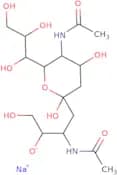
Producto descatalogado3'-a-Sialyl-N-acetyllactosamine sodium salt
CAS:3'-a-Sialyl-N-acetyllactosamine sodium salt is a high purity, custom synthesis sugar. It has been modified with fluorination, glycosylation, and methylation to provide the desired properties. This product is also available in other forms such as monosaccharide and saccharide. 3'-a-Sialyl-N-acetyllactosamine sodium salt can be used in various applications including Click modification, fluoroamination, glycosylation, carbonylation and methylation. CAS No. 350697-53-9
Fórmula:C25H42N2O19NaPureza:Min. 95%Peso molecular:697.59 g/molRef: 3D-MS182937
Producto descatalogado2-Acetamido-1,3,4,6-tetra-O-acetyl-2-deoxy-a-D-galactopyranose
CAS:2-Acetamido-1,3,4,6-tetra-O-acetyl-2-deoxy-a-D-galactopyranose is a fluorinated complex carbohydrate that has been modified by methylation and acetylation. This product is a custom synthesis that has not been previously described in the scientific literature. It is synthesized from 2, 3, 4, 6 tetraacetyl alpha D galactopyranoside and 2 deoxy alpha D galactopyranose. The chemical properties of this compound are similar to those of other complex carbohydrates such as glycogen and heparin.
Fórmula:C16H23NO10Pureza:Min. 90.0 Area-%Peso molecular:389.35 g/molD-Xylulose 5-phosphate sodium
CAS:D-Xylulose 5-phosphate sodium salt is a synthetic monosaccharide that can be used in the synthesis of oligosaccharides, polysaccharides, and complex carbohydrates. It is also used in glycosylation reactions. D-Xylulose 5-phosphate sodium salt has been fluorinated to provide better stability and solubility. The compound has a molecular weight of 206.06 g/mol and a CAS number of 105931-44-0. This product is available for custom synthesis upon request.
Fórmula:C5H11O8PNaPureza:Min. 95%Forma y color:PowderPeso molecular:252.09 g/molRef: 3D-MX182933
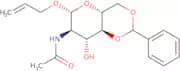
Producto descatalogadoAllyl 2-acetamido-4,6-O-benzylidene-2-deoxy-b-D-glucopyranoside
CAS:Allyl 2-acetamido-4,6-O-benzylidene-2-deoxy-b-D-glucopyranoside is a synthetic compound that belongs to the class of carbohydrates. It is used as a reagent in sugar chemistry and glycosylation reactions. Allyl 2-acetamido-4,6-O-benzylidene-2-deoxy-b-D-glucopyranoside is also used for the modification of polysaccharides and fluorination reactions. This product has been shown to be effective as a substrate for site specific methylation reactions. Allyl 2 acetamido 4,6 O benzylidene 2 deoxy b D glucopyranoside has been tested in vitro against methicillin resistant Staphylococcus aureus (MRSA) with promising results.
Fórmula:C18H23NO6Pureza:Min. 95%Peso molecular:349.39 g/molMethyl D-arabinofuranoside
CAS:Methyl D-arabinofuranoside is an antimycobacterial agent that inhibits the synthesis of mycolic acids, which are important components of the cell wall of Mycobacterium tuberculosis. Methyl D-arabinofuranoside has been shown to be active against drug-resistant strains and has been well tolerated by animals. This compound can be synthesized from 2,4-dichlorophenylacetic acid and arabinose in two steps. The first step involves a three-component condensation reaction with sodium hydroxide, hydrochloric acid, and 2,4-dichlorophenylacetic acid. The second step is a nucleophilic attack on the pyran ring of methyl D-arabinofuranoside with hypophosphorous acid. Methyl D-arabinofuranoside can also be prepared by reacting sodium nitrosobenzene with sodium benzene sulfinate in alcoholic solution
Fórmula:C6H12O5Pureza:Min. 95%Forma y color:Off-White PowderPeso molecular:164.16 g/molRef: 3D-MM31839
Producto descatalogado4-Deoxy-D-glucose
CAS:4-Deoxy-D-glucose is a sugar that is synthesized by the condensation of two molecules of erythrose. It has been shown to be an efficient donor substrate for nucleophilic attack, which can lead to the synthesis of glycosides and other natural products. 4-Deoxy-D-glucose is also a competitive inhibitor of uridine diphosphate (UDP) glucose, which is an enzyme involved in the biosynthesis of UDP sugars and glycoproteins. The concentration of 4-deoxy-D-glucose affects its catalytic mechanism, as it acts as a competitive inhibitor at high concentrations. Molecular modeling has revealed that this molecule adopts a chair conformation with significant solvent exposure.
Fórmula:C6H12O5Pureza:Min. 98 Area-%Forma y color:PowderPeso molecular:164.16 g/molRef: 3D-MD180432
Producto descatalogadoD-Ribulose-5-phosphate sodium
CAS:D-ribulose-5-phosphate sodium is a nucleotide sugar that is one of the ribonucleotides, which are fundamental components of RNA. D-ribulose 5-phosphate sodium has been shown to be an intermediate in the metabolism of ribulose and catalyzes the oxidation of d-arabinose. This enzyme also catalyses the synthesis of fatty acids and participates in reactions involving glycerolipids and phospholipids. The reaction mechanism involves a double displacement with simultaneous attack by a water molecule on C2' and C3'. When deuterium is present, it affects the rate of these reactions in a way that depends on the orientation of the substrate to the enzyme.
Fórmula:C5H11NaO8PPureza:Min. 95%Peso molecular:253.1 g/molRef: 3D-BDA05475
Producto descatalogado2-Amino-2,3,5-trideoxy-3-methyl-L-arabinonic acid-gamma-lactone hydrochloride
CAS:2-Amino-2,3,5-trideoxy-3-methyl-L-arabinonic acid-gamma-lactone hydrochloride is a lipid biosynthesis inhibitor that blocks the first step of this pathway by inhibiting the enzyme d-arabinose 4,5-diphosphate aldolase. This compound inhibits bacterial growth and leads to cell lysis. It has been shown to be active against cryptococcus neoformans and Candida neopformans. 2AADL has also been shown to inhibit the production of cell wall polysaccharides in C. neoformans and other fungi. 2AADL is thought to bind to the cell membrane through its alcohol group, which may lead to changes in the redox potential of the cells.
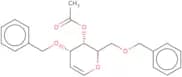
Pureza:Min. 95%4-O-Acetyl-3,6-di-O-benzyl-D-glucal
CAS:4-O-Acetyl-3,6-di-O-benzyl-D-glucal is a custom synthesized compound with high purity. This product is a complex carbohydrate that can be used as a monosaccharide or sugar. It has been modified with fluorination and methylation to produce a compound that is resistant to degradation by enzymes and oxidation. The CAS number for this product is 165524-87-8.
Fórmula:C22H24O5Pureza:Min. 95%Peso molecular:368.43 g/molN-Acetylmuramic acid 6-phosphate
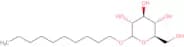
CAS:N-Acetylmuramic acid 6-phosphate is a molecule that belongs to the class of compounds known as nucleotide phosphates. It is an intermediate in the biosynthesis of peptidoglycan, which is a major component of bacterial cell walls. N-Acetylmuramic acid 6-phosphate is synthesized from ATP and N-acetylmuramic acid by hydrolysis. The reaction mechanism for this transformation involves an imine intermediate, which can be formed through the action of two molecules of ATP and one molecule of N-acetylmuramic acid. This reaction is catalyzed by an enzyme called heterocyst. The enzyme kinetics for this transformation are influenced by many factors, including temperature, pH, and substrate concentration.Fórmula:C11H20NO11PPureza:Min. 95%Peso molecular:373.25 g/molDecyl D-glucopyranoside
CAS:Decyl D-glucopyranoside is a sodium salt of decyl D-glucopyranoside that is used as a detergent additive in cleaning compositions. Decyl D-glucopyranoside has shown antimicrobial activity against both Gram-positive and Gram-negative bacteria, including methicillin resistant Staphylococcus aureus (MRSA) and Clostridium perfringens. Decyl D-glucopyranoside has also been shown to have chemical stability at high temperatures, making it useful in the manufacture of lacrimal gland preparations and cationic surfactants.
Fórmula:C16H32O6Peso molecular:320.42 g/molRef: 3D-MD11310
Producto descatalogadoADP-L-glycero-b-D-manno-heptose
ADP-L-glycero-b-D-manno-heptose is a synthetic, fluorinated oligosaccharide that is custom synthesized and modified. It has a high purity level and CAS No., as well as being a complex carbohydrate that can be modified with methylation or click modification to generate desired properties. ADP-L-glycero-b-D-manno-heptose is an Oligosaccharide with a glycosylation and methylation. This compound can be used in the synthesis of saccharides, polysaccharides, or other complex carbohydrates.
Pureza:Min. 95%





![2-[(1E)-2-[6-(β-D-Galactopyranosyloxy)-2,3-dihydro-1H-xanthen-4-yl]ethenyl]-3,3-dimethyl-1-propyl-…](/_next/image/?url=https%3A%2Fstatic.cymitquimica.com%2Fproducts%2F3D%2Fthumb-webp%2FMG183953.webp&w=3840&q=75)

![1-Deoxy- 6- O- tert.butyl dimethylsilyl]- 3, 4- O- isopropylidene-D- Psicofuranose](/_next/image/?url=https%3A%2Fstatic.cymitquimica.com%2Fproducts%2F3D%2Fthumb-webp%2FMD170320.webp&w=3840&q=75)