Monosacáridos
Subcategorías de "Monosacáridos"
- Allosas(11 productos)
- Arabinosas(21 productos)
- Eritrosas(11 productos)
- Fructosas(9 productos)
- Fucosas(36 productos)
- Galactosamina(41 productos)
- Galactosa(262 productos)
- Glucosas(365 productos)
- Ácidos glucurónicos(52 productos)
- Glico-sustratos para enzimas(78 productos)
- Gulosas(6 productos)
- Idosas(4 productos)
- Inositoles(15 productos)
- Lyxosas(4 productos)
- Manosas(65 productos)
- O-glicanos(48 productos)
- Psicosas(3 productos)
- Ramnosas(10 productos)
- Ribosas(61 productos)
- Ácidos siálicos(100 productos)
- Sorbosas(4 productos)
- Azúcares(173 productos)
- Tagatosis(4 productos)
- Taloses(8 productos)
- Xilosas(20 productos)
Se han encontrado 6089 productos de "Monosacáridos"
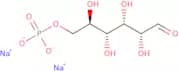
D-Glucose-6-phosphate disodium salt dihydrate
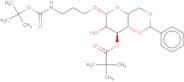
CAS:Glucose 6-phosphatase substrateFórmula:C6H11Na2O9P·2H2OPureza:Min. 98%Forma y color:White PowderPeso molecular:340.13 g/mol(3-N-Boc-aminopropyl) 4,6-O-benzylidene-3-O-pivaloyl-b-D-galactopyranoside
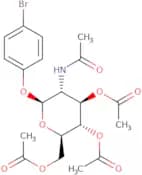
3-N-Boc-aminopropyl) 4,6-O-benzylidene-3-O-pivaloyl-b-D-galactopyranoside is a sugar that is custom synthesized. It is a fluorinated saccharide with an aminopropyl group at the 3' position and benzylidene group at the 6' position.Fórmula:C26H39NO9Pureza:Min. 95%Peso molecular:509.59 g/mol4-Bromophenyl 2-acetamido-3,4,6-tri-O-acetyl-2-deoxy-β-D-glucopyranoside
CAS:4-Bromophenyl 2-acetamido-3,4,6-tri-O-acetyl-2-deoxy-b-D-glucopyranoside is a custom synthesis product. It has been modified with fluorination, methylation and click modification. This product is an oligosaccharide which can be used for saccharide or polysaccharide synthesis. The purity of this product is high and it has been synthesized from a monosaccharide.Fórmula:C20H24BrNO9Pureza:Min. 95%Peso molecular:502.31 g/mol(1S) -1- [(2R, 3S) -3- Hydroxy- 1- azetidinyl] -1, 2- ethanediol hydrochloride
The tetrasaccharide 1,2-ethanediol is a synthetic compound that is used in pharmaceuticals and as an intermediate for other compounds. This product is a high purity custom synthesis that can be used for methylation or glycosylation reactions. The CAS number for this product is 615-86-1.Pureza:Min. 95%2-Chloro-2-Deoxy-1,3,5-tri-O-benzoyl-D-ribofuranose
2-Chloro-2-deoxy-1,3,5-tri-O-benzoyl-D-ribofuranose is a custom synthesis of an oligosaccharide. It is a complex carbohydrate with a CAS number. The molecular weight of this saccharide is 837.38 g/mol and it has a molecular formula of C9H11F4O5. This product is modified by methylation and glycosylation. The purity level is high and the product contains no impurities. The fluorination process on 2C2DBR has been done to increase the stability of the molecule at higher temperatures and to make it more soluble in polar solvents such as water or alcohols. This product can be used in click chemistry reactions to modify other molecules or can be used as a substrate for glycosylation reactions where glucose will be added to the sugar part of the molecule in order to form an OligosacPureza:Min. 95%2-Azidomethyl-2-deoxy-3,4-O-isopropylidene-D-ribono-1.5-lactone
2-Azidomethyl-2-deoxy-3,4-O-isopropylidene-D-ribono-1.5-lactone (AIMDOL) is a custom synthesis carbohydrate that has a complex structure of oligosaccharide and polysaccharide. It is an organic compound with CAS number 129814-29-6 and molecular weight of 534.8. AIMDOL can be modified by methylation, glycosylation, or click modification. The chemical name is 2-(azidomethyl)-2-deoxy-[3,4]-O-(isopropylidene)-D-[ribo] -1,5-[lactone]. AIMDOL has fluorination properties and it's synthesized with high purity. It is used in the modification of saccharides or sugar molecules to produce glycosylated products such as monosaccharides, disPureza:Min. 95%(2S, 3R, 4R, 5R, 6R) -6- (Hydroxymethyl) -2-phenyl-3, 4, 5- piperidinetriol
(2S, 3R, 4R, 5R, 6R) -6- (Hydroxymethyl) -2-phenyl-3, 4, 5- piperidinetriol is a synthetic glycosylate monosaccharide that has been modified with fluorine and methyl groups. This compound is used as a building block in the synthesis of complex carbohydrates. It is also an important intermediate for the synthesis of oligosaccharides and saccharides.Pureza:Min. 95%2-Azido- 2- deoxy- 2- C- methyl- 3, 4- O- isopropylidene - D- ribono-1,5- lactone
2-Azido-2-deoxy-2-C-methyl-3,4-O-isopropylideneD-ribono1,5-lactone is a monosaccharide that can be used in the synthesis of oligosaccharides and polysaccharides. It is also used for modification of saccharides by fluorination, methylation, and click chemistry. 2A2DMRL has been shown to have a CAS number of 53869-09-6.Pureza:Min. 95%5-Azido-5-deoxy-2,3-O-isopropylidene-2-C-([trifluormethanesulfonyloxy]methyl)- D-ribono-1.4-lactone
This is a custom synthesis of 5-azido-5-deoxy-2,3-O-isopropylidene-2-[(trifluoromethanesulfonyloxy)methyl]-D-ribono-1.4 -lactone (5ADL). The compound can be used as a synthetic intermediate and is a glycoside that contains an azido group. It is also known as a sugar and has the CAS number: 6374506-32-8. This compound has been shown to inhibit bacterial growth in vitro by inhibiting protein synthesis, DNA replication, and RNA transcription.Pureza:Min. 95%1-Azido- 1- deoxy- 2- C- hydroxymethyl - 2, 3-O-isopropylidene-D- glucitol
1-Azido-1-deoxy-2-C-hydroxymethyl-2,3-O-isopropylidene -D-glucitol is a synthetic monosaccharide that can be used for glycosylation, methylation, and click modification. It is a complex carbohydrate with an Oligosaccharide structure. 1-Azido -1-deoxy -2 -C -hydroxymethyl -2,3 -O -isopropylidene D glucitol has been fluorinated. This compound is a sugar that has been modified with a Click modification. It is a sugar that has been synthesized and custom synthesized by high purity.Pureza:Min. 95%4-Cyclohexylbutyl β-D-glucopyranoside
CAS:4-Cyclohexylbutyl-b-D-glucopyranoside is a methylated glycosylated cyclic oligosaccharide. It is a synthetic compound that is used for the modification of saccharides and polysaccharides. The methylation process can be performed using an efficient, high yielding, and environmentally friendly Click reaction. 4-Cyclohexylbutyl-b-D-glucopyranoside has been shown to have great stability in the presence of acid, base, and heat. This product is purified and has a high degree of purity with a CAS number of 869542-54-1.Fórmula:C16H30O6Pureza:Min. 95%Forma y color:White to off-white powderPeso molecular:318.41 g/mol(2R, 3S, 4R, 5S) -2-acetoxymethyl-4-acetoxy - 5- azido- 1,3-di-O-benzyl- piperidine
CAS:(2R, 3S, 4R, 5S) -2-acetoxymethyl-4-acetoxy - 5- azido- 1,3-di-O-benzyl- piperidine is a synthetic carbohydrate modified with fluorination and methylation. It is an oligosaccharide that exhibits a complex carbohydrate structure. This substance is a monosaccharide with high purity and custom synthesis. It has been glycosylated and click modification has been performed on it.Fórmula:C24H28N4O5Pureza:Min. 95%Peso molecular:452.5 g/mol2-C-Azidomethyl-2,3-di-O-benzhydryloxybis(trimethylsilyloxy)silyl-1-O-tert-butyldimethylsilyl-D-erythritol
2-C-Azidomethyl-2,3-di-O-benzhydryloxybis(trimethylsilyloxy)silyl-1-O-tert-butyldimethylsilyl-D-erythritol is a synthetic compound that can be used as a methylating agent and sugar donor in the glycosylation of oligosaccharides. This compound has been shown to methylate saccharides with high purity and can be used for the preparation of complex carbohydrates.Pureza:Min. 95%Methyl 4,6-O-(4-methoxybenzylidene)-2,3-di-O-pivaloyl-a-D-galactopyranoside
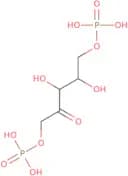
Methyl 4,6-O-(4-methoxybenzylidene)-2,3-di-O-pivaloyl-a-D-galactopyranoside is a custom synthesis of a sugar that is Click modified with fluorine and glycosylated. Methyl 4,6-O-(4-methoxybenzylidene)-2,3-di-O-pivaloyl-a-D-galactopyranoside is an oligosaccharide that has saccharides and monosaccharides. This complex carbohydrate has been synthesized by methylation and modification. Methyl 4,6-O-(4-methoxybenzylidene)-2,3--di--pivaloyl--a--D--galactopyranoside belongs to the CAS No. of 689717–97–1.Fórmula:C25H36O9Pureza:Min. 95%Peso molecular:480.56 g/molD-Ribulose 1,5-bisphosphate sodium hydrate
CAS:D-ribulose 1,5-bisphosphate sodium hydrate (DRBP) is a naturally occurring sugar that is found in plants. It is synthesized by the action of ribulose bisphosphate carboxylase on ribulose 1,5-bisphosphate, with ATP as a cofactor. DRBP has been shown to be an important intermediate in many biochemical pathways and enzymes. DRBP has been shown to inhibit HIV replication in vitro by binding to the enzyme reverse transcriptase and blocking its activity. As an inhibitor of HIV replication, DRBP is activated by a number of factors including p-nitrophenyl phosphate (pNPP), and the presence of hydrogen bond donors such as ATP or NADP+. This chemical also inhibits protease activity and increases the transport rate for D-ribulose 1,5-bisphosphate.Fórmula:C5H12O11P2•Nax•(H2O)yPureza:Min. 95%Forma y color:PowderPeso molecular:310.09 g/mol2-Amino-2,4-dideoxy-4-C-methyl- D-arabinaric acid 1-methyl ester
2-Amino-2,4-dideoxy-4-C-methyl-D-arabinaric acid 1-methyl ester is a fluorinated carbohydrate that belongs to the group of modified saccharides. It is a synthetic compound that is custom synthesized and can be used as a chemical intermediate. 2-Amino-2,4-dideoxy-4-C-methyl--D--arabinaric acid 1 methyl ester has been shown to have high purity and can be used in glycosylation reactions. This product also has strong methylation properties and can be used for click chemistry modifications.Pureza:Min. 95%1,2,3,4-Tetra-O-acetyl-6-deoxy-6-fluoro-D-galactopyranose
CAS:1,2,3,4-Tetra-O-acetyl-6-deoxy-6-fluoro-D-galactopyranose is a synthetic sugar that is used in glycosylation reactions. It is a monosaccharide that was fluorinated to form a glycoside with the 6′ position of the hexose ring. This product has been shown to be useful for click modification of proteins and other complex carbohydrates. It can be used in methylation and monosaccharide synthesis.Fórmula:C14H19FO9Pureza:Min. 95%Peso molecular:350.29 g/molBenzyl 2-acetamido-2-deoxy-3,4,6-tri-O-acetyl-β-D-glucopyranoside
CAS:Benzyl 2-acetamido-2-deoxy-3,4,6-tri-O-acetyl-b-D-glucopyranoside is a synthetic sugar that is used as a glycosylation reagent for the synthesis of oligosaccharides and polysaccharides. It reacts with saccharides in the presence of 1,3-dicyclohexylcarbodiimide (DCC) and 4-(dimethylamino)pyridine (DMAP). The benzyl group can be modified to include fluorine atoms or methyl groups. This compound is an important building block for the synthesis of complex carbohydrates.Fórmula:C21H27NO9Pureza:Min. 95%Forma y color:White To Off-White SolidPeso molecular:437.44 g/mol1,4-Anhydro-2,O:5,6-di-O-isopropylidene-2-C-(hydroxymethyl)-D-galactitol
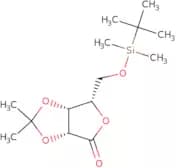
1,4-Anhydro-2,O:5,6-di-O-isopropylidene-2-C-(hydroxymethyl)-D-galactitol is a custom synthesis. It is commonly used in the modification of saccharides and oligosaccharides to produce fluorinated derivatives with various functional groups. The preparation of this compound has been described by Click chemistry.Pureza:Min. 95%5-O-tert-Butyldimethylsilyl-2,3-O-isopropylidene-L-lyxono-1,4-lactone
CAS:5-O-tert-Butyldimethylsilyl-2,3-O-isopropylidene-L-lyxono-1,4-lactone is an oligosaccharide that is used as a building block for the synthesis of complex carbohydrates. It can be customized to suit your needs. 5-O-tert-Butyldimethylsilyl-2,3-O-isopropylidene-L-lyxono-1,4--lactone has been modified with fluorine atom and methyl group to form a glycosylation product. It is available in CAS No. 1044813 -00 -4 and can be synthesized in purity of > 95%.Fórmula:C13H24O5SiPureza:Min. 95%Peso molecular:288.42 g/mol1-O-tert-Butyldimethylsilyl-5-O-DMT-2-O-methyl-D-ribose 3-CE-phosphoramidite
1-O-tert-Butyldimethylsilyl-5-O-DMT-2-O-methyl-D-ribose 3-CE phosphoramidite is a methylated saccharide which can be used in the synthesis of polysaccharides. This product is custom synthesized and has high purity, with a CAS number of 138876-62-1. It is also fluorinated, and can be used for complex carbohydrate synthesis.Fórmula:C42H61N2O8PSiPureza:Min. 95%Peso molecular:781 g/molN-Acetyl-2-O-methyl-a-D-neuraminic acid methyl ester
CAS:N-Acetyl-2-O-methyl-a-D-neuraminic acid methyl ester is a modification of the natural sugar N-acetyl-2,3,4,5,6-penta-, hexa-, and hepta-(1→4)-D-glycero-D-[1→6]-N-acetylneuraminic acid. It can be used as an intermediate in the synthesis of complex carbohydrates. This compound has been shown to be soluble in water and is stable at acidic pH levels.Fórmula:C13H23NO9Pureza:Min. 95%Peso molecular:337.32 g/mol2,3,4,6-Tetra-O-acetyl-b-D-galactopyranosyl bromide
CAS:2,3,4,6-Tetra-O-acetyl-b-D-galactopyranosyl bromide is a chemical reagent with the chemical formula C6H8Br4O7. It is an argon fluorochlorohydrohalide that has been used as a reagent in organic synthesis. This compound has been shown to have antibacterial activity against faecalis and other bacteria. 2,3,4,6-Tetra-O-acetyl-b-D-galactopyranosyl bromide reacts with oxygen or halides to form reactive species such as tribromide or chloride. These reactive species may be responsible for the antibacterial properties of this compound.Fórmula:C14H19BrO9Pureza:Min. 95%Peso molecular:411.2 g/mol(1S) -1- [(2S, 3R) - 3-Hydroxy- 1- ((4-methoxyphenyl)methyl) - 2- azetidinyl] -1, 2- ethanediol
CAS:Ai Product Descriptions 50 CreativeFórmula:C13H19NO4Pureza:Min. 95%Peso molecular:253.29 g/molMethyl 6-O-tert-butyldiphenylsilyl-2,3,4-tri-O-pivaloyl-a-D-glucopyranoside
Methyl 6-O-tert-butyldiphenylsilyl-2,3,4-tri-O-pivaloyl-a-D-glucopyranoside is an Oligosaccharide that is a complex carbohydrate. It has CAS number and it is synthesized using the Modification and Glycosylation techniques. This product is highly pure, fluorinated, and synthetic.Fórmula:C38H56O9SiPureza:Min. 95%Peso molecular:684.95 g/molN- [(3R, 4R, 5R) - 1- Butyl- 4- hydroxy- 5- (hydroxymethyl) - 3- pyrrolidinyl] -acetamide
Glycosylation, methylation, and fluorination of natural and synthetic saccharides is the basis for a number of chemical modifications. The incorporation of these modifications into glycoproteins has been shown to be important in the modification and stabilization of protein-carbohydrate interactions. This process can be used to modify polysaccharides to form oligosaccharides for use as drugs or as substrates for industrial enzymes.Pureza:Min. 95%2,4-Di- C- methyl- 3, 4- O- isopropylidene-L- arabinonic acid γ-lactone
2,4-Di-C-methyl-3,4-O-isopropylidene-L-arabinonic acid gamma-lactone is a high purity synthetic chemical that has been custom synthesized for research purposes. It has a molecular weight of 556.0 and its CAS number is 133552-02-2. This chemical is used in the synthesis of saccharides and carbohydrates, including oligosaccharides and monosaccharides. 2,4 Di C methyl 3,4 O isopropylidene L arabinonic acid gamma lactone can be fluorinated or glycosylated to create new compounds with different properties. It can also be methylated to create a variety of derivatives. This chemical reacts with sugars in order to produce glycosylations that are useful in drug development. Click modification refers to the addition of a sugar molecule to an amino acid side chain followed by a rearrangement of the sugar ringPureza:Min. 95%Cyanomethyl 2,3-O-isopropylidene-5-O-trityl-D-ribofuranoside
Cyanomethyl 2,3-O-isopropylidene-5-O-trityl-D-ribofuranoside is a carbohydrate that is used as a building block for the synthesis of oligosaccharides and polysaccharides. It is synthesized from D-ribose and methyl 2,3-O-(1,2,4)triazole by the reaction of the glycosyl donor 2,3,5-triacetoxybenzaldehyde with methyl iodide followed by reaction with sodium methoxide. This product has not been tested for microbial contamination or endotoxins.Fórmula:C29H29NO5Pureza:Min. 95%Peso molecular:471.54 g/mol(2S, 3S, 4R) -1Benzyl-2- [(1S) - 1, 2- dihydroxyethyl] - 3, 4- pyrrolidinediol
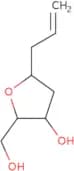
(2S, 3S, 4R) -1Benzyl-2- [(1S) - 1, 2- dihydroxyethyl] - 3, 4- pyrrolidinediol is a synthetic sugar that has been fluorinated on the C4 position. It can be custom synthesized to suit any specification and can be glycosylated or polysaccharided. This compound has a CAS number and is available in high purity.Pureza:Min. 95%(2R,3S,5S)-Tetrahydro-3-hydroxy-5-(2-propen-1-yl)-2-furanmethanol
CAS:(2R,3S,5S)-Tetrahydro-3-hydroxy-5-(2-propen-1-yl)-2-furanmethanol is a synthetic compound that has been fluorinated at the 2' position of the sugar. This product is a synthetic glycosylated saccharide. It can be used in pharmaceuticals and other chemical syntheses as an intermediate. The purity of this product is high and custom synthesis is available upon request.Fórmula:C8H14O3Pureza:Min. 95%Peso molecular:158.19 g/mol1,3-O-Benzylidene-4-O-t-butyl-dimethylsilyl-D-threitol
CAS:1,3-O-Benzylidene-4-O-t-butyl-dimethylsilyl-D-threitol is a synthetic carbohydrate that is structurally similar to D-threitol. It has a molecular weight of 323.07 and it has a melting point of 210°C. The CAS number for this compound is 652979-92-5. This compound has been modified with fluorination, methylation, and click chemistry. 1,3-O-Benzylidene-4-O-t -butyl dimethylsilyl D threitol has been used as a substrate for glycosylation reactions with oligosaccharides and polysaccharides in order to produce complex carbohydrates.Fórmula:C17H28O4SiPureza:Min. 95%Peso molecular:324.49 g/mol2-C-Azidomethyl-2,3-O-isopropylidene-L-erythrono-1,4-lactone
2-C-Azidomethyl-2,3-O-isopropylidene-L-erythrono-1,4-lactone is a glycosylation agent that can be used in the synthesis of saccharide and oligosaccharide. It has been shown to react with various carbohydrates by methylation, click modification, and fluorination. 2CAS is also able to modify polysaccharides. This compound is synthesized from erythronolide B and azidomethane, which are both commercially available compounds. The high purity of this product makes it ideal for use in industries such as pharmaceuticals and biotechnology.Pureza:Min. 95%2, 5- Anhydro-3-azido-3-deoxy-D- altronic acid 1-isopropyl ester
2,5-Anhydro-3-azido-3-deoxy-D-altronic acid 1-isopropyl ester is a synthetic compound that can be custom made to order. It is a sugar that can be modified with fluorination, glycosylation, and methylation. 2,5-Anhydro-3-azido-3-deoxy -D altronic acid 1 isopropyl ester has CAS No. 61118.Pureza:Min. 95%1-O-Acetyl-a-D-galactopyranose - min 90% α
CAS:1-O-Acetyl-a-D-galactopyranose is a carbohydrate that is synthesized from D-galactose and acetyl chloride. It's an Oligosaccharide, Polysaccharide, or Modification to saccharides that are found in nature. This product can be modified with methylation, glycosylation, or carbocationic reactions. 1-O-acetyl-a-D-galactopyranose is used for click chemistry reactions and has a CAS number of 496924551.Fórmula:C8H14O7Pureza:Min. 95%Peso molecular:222.19 g/mol1-O-Acetyl-2,3,4,6-tetra-O-benzyl-b-D-galactopyranose
CAS:Synthetic building block
Fórmula:C36H38O7Pureza:Min. 98 Area-%Forma y color:White PowderPeso molecular:582.68 g/mol6-[tert-Butoxycarbonyl-(2,3,4,5,6-pentahydroxy-hexyl)-amino]-2-(9H-fluoren-9-ylmethoxycarbonylamino)-hexanoic acid
CAS:6-[tert-Butoxycarbonyl-(2,3,4,5,6-pentahydroxy-hexyl)-amino]-2-(9H-fluoren-9-ylmethoxycarbonylamino)-hexanoic acid is a synthetic sugar that is modified by Click chemistry. It has a CAS number of 1078721-99-9. This product is often used as a glycosylation or oligosaccharide building block in the synthesis of complex carbohydrates. It has been shown to have high purity and can be modified using methylation and monosaccharides.Fórmula:C32H44N2O11Pureza:Min. 95%Peso molecular:632.7 g/mol2N-Boc-amino-2- deoxy- b- D- glucopyranosylamine
CAS:2N-Boc-amino-2-deoxy-b-D-glucopyranosylamine is a Glycosylation, complex carbohydrate that can be modified with Methylation, Click modification, Polysaccharide, Fluorination, saccharide, Modification, sugar and Oligosaccharide. The CAS No. for 2N-Boc-amino-2-deoxy-b-D-glucopyranosylamine is 494201-09-1 and it can be custom synthesized to your specifications.Fórmula:C11H22N2O6Pureza:Min. 95%Peso molecular:278.3 g/mol1-6-Bis- O- Tert.butyldimethylsilyl- 3, 4- O-isopropylidene)-D- mannitol
1-6-Bis-O-tert.butyldimethylsilyl-3,4-O-isopropylidene)-D-mannitol is a glycosylation agent that has been used in the synthesis of complex carbohydrates. This compound is synthesized by the click reaction between 1,6-bis(tert.butyldimethylsilyl)glycerol and aldehyde 3,4-(O)-isopropylidene)-D-mannitol. It is a high purity product with CAS No. 65425-06-7 and can be customized for your needs.Pureza:Min. 95%1,3,4,6-Tetra-O-acetyl-N-azidoacetylmannosamine
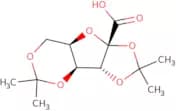
CAS:1,3,4,6-Tetra-O-acetyl-N-azidoacetylmannosamine, also called ManNAz tetraacetate, 1,3,4,6-tetra-O-acetyl-N-azidoacetyl-D-mannosamine and Ac4ManNAz, is an azide-containing metabolic glycoprotein labelling reagent that can be incorporated into the sialic acid biosynthesis pathway. The azide is able to react with an alkyne in a 1,3-dipolar cycloaddition reaction (click chemistry) to enable linking to a fluorescent probe or a biotin.Fórmula:C16H22N4O10Pureza:Min. 95%Forma y color:PowderPeso molecular:430.37 g/mol2,3:4,6-Di-O-isopropylidene-2-keto-L-gulonic acid
CAS:2,3:4,6-Di-O-isopropylidene-2-keto-L-gulonic acid is a mediator that is used in the synthesis of epoxides. It is obtained by the reaction of hydrogen peroxide with 2,3:4,6-di-o-isopropylidene-2-keto-l-gulonic acid monohydrate. This product can be used as an intermediate in organic synthesis to produce chiral epoxides. The stereochemistry of the epoxides depends on the chirality of the substrate and the stereoselectivity for this process is high. The epoxides are then recycled and reused to make more 2,3:4,6--di--isopropylidene--2--keto--l--gulonic acid monohydrate.Pureza:Min. 95%β-D-Glucose-1-phosphate disodium
CAS:b-D-Glucose-1-phosphate disodium salt is a white crystalline powder that is soluble in water, ethanol, and acetone. It is a monosaccharide with the molecular formula C6H12O6P2Na2. It has a molecular weight of 348.08 g/mol.
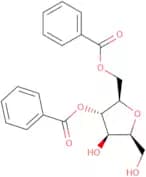
Fórmula:C6H13O9P•Na2Pureza:Min. 95%Forma y color:PowderPeso molecular:306.12 g/mol2,5-Anhydro-4,6-di-O-benzoyl-D-glucitol
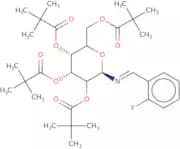
CAS:2,5-Anhydro-4,6-di-O-benzoyl-D-glucitol is a nucleoside analog that has been shown to inhibit the growth of Mycobacterium tuberculosis and other bacterial strains. It inhibits DNA synthesis by binding to the thymine moiety in the helix, which blocks access of thymine to the enzyme DNA polymerase. 2,5-Anhydro-4,6-di-O-benzoyl-D-glucitol also inhibits RNA synthesis by binding to the ribose moiety in nucleotides and blocking access of ribose to enzymes involved in the process. This compound is used as an immunosuppressant for organ transplantation in humans.Fórmula:C20H20O7Pureza:Min. 95%Peso molecular:372.38 g/molN-(2-Fluorobenzyliden)imino-2,3,4,6-tetra-O-pivaloyl-b-D-glucopyranoside
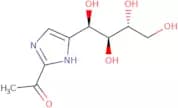
N-(2-Fluorobenzyliden)imino-2,3,4,6-tetra-O-pivaloyl-b-D-glucopyranoside is a custom synthesis of a high purity glycosylated oligosaccharide. It is modified with fluorine and has a methyl group on the 2' position of the sugar. The CAS number for this product is 1093457-52-1.Fórmula:C33H48FNO9Pureza:Min. 95%Peso molecular:621.73 g/mol2-Acetyl-4-tetrahydroxybutyl imidazole
CAS:Inhibitor of sphingosine-1-phosphate lyase; immunosuppressantFórmula:C9H14N2O5Pureza:Min. 95%Forma y color:White PowderPeso molecular:230.22 g/mol(5R, 8S, 9R) -8- [(4R) - 2, 2-Dimethyl- 1, 3- dioxolan- 4- yl] - 9- hydroxy- 2, 2- dimethyl- 1, 3, 7- trioxaspiro[4.4] nonan- 6- one
(5R, 8S, 9R) -8- [(4R) - 2, 2-Dimethyl- 1, 3- dioxolan- 4- yl] - 9- hydroxy- 2, 2- dimethyl- 1, 3, 7- trioxaspiro[4.4] nonan- 6- one is a monosaccharide that has been synthesized and modified. The synthesis of this compound was achieved by reacting 5-(2-(benzyloxy)ethoxy)-1-(3-(dimethylamino)propoxy)-2-(4-[(2S)-2,2,-dimethylpropanoyl]phenyl)pentaone (1), with the corresponding bromoacetate or chloroacetate in the presence of base to give the desired product (2). This compound has been methylated and glycosylated. It is a white solid that is soluble in water and DMSOPureza:Min. 95%(1S) -1- [(2S, 3R) - 3-Hydroxy-2- azetidinyl] -1, 2- ethanediol
Glycosylation of azetidinol is a chemical reaction in which a glycosylate group is transferred from an activated sugar to the nitrogen atom of an azetidinone. It can be used for the synthesis of oligosaccharides and polysaccharides by transferring the glycosyl group to their nitrogen atoms. Click modification refers to a type of chemical reaction that was developed by K. Barry Sharpless in 1996, which uses copper-catalyzed azide-alkyne cycloaddition. This type of reaction has been used for the synthesis of complex carbohydrates with high purity and low cost, as well as for modifying sugars with methyl groups or fluorine atoms.
Pureza:Min. 95%5-Azido-5-deoxy-2,3-O-isopropylidene-1-C-phenyl-L-lyxofuranose
5-Azido-5-deoxy-2,3-O-isopropylidene-1-C-phenyl-L-lyxofuranose is a fluorinated monosaccharide that can be synthesized by the reaction of 5 azidoacetone with 5 deoxyribose in the presence of sodium hydroxide. This compound is used for glycosylation, polysaccharide modification, and click chemistry. It is also used as a sugar source in the preparation of oligosaccharides and complex carbohydrates. 5 Azido-5 deoxy -2,3 O isopropylidene -1 C phenyl L L lyxofuranose has CAS number 8068635-52-8.Pureza:Min. 95%(5R, 8S, 9S) -8- [(4R) - 2, 2- Dimethyl- 1, 3- dioxolan- 4- yl] - 9- hydroxy- 2, 2- dimethyl- 1, 3, 7- trioxaspiro[4.4] nonan- 6- on e
(5R, 8S, 9S) -8- [(4R)-2,2-Dimethyl-1,3-dioxolan-4-yl] -9-hydroxy-2, 2-dimethyl-1,3, 7-trioxaspiro[4.4] nonan-6-on e is a synthetic compound that is used in the synthesis of oligosaccharides and glycosylations. It can be used as a building block for modification of saccharides and polysaccharides with click chemistry and fluorination. This product has high purity and is suitable for custom synthesis.Pureza:Min. 95%7, 8, 9, 10- Tetradeoxy- 1, 2- O- isopropylidene-D- glycero- a- D- gluco- decofuranose
7, 8, 9, 10-Tetradeoxy-1, 2-O-isopropylidene-D-glycero-a-D-gluco-decofuranose is a carbohydrate that has been modified to include fluorine atoms. This compound is a complex carbohydrate with a CAS number and is available for custom synthesis. It can be used as an oligosaccharide or sugar and has high purity and methylation. The compound can also be glycosylated and click modified.Pureza:Min. 95%2-C-Hydroxymethyl-2,3:5,6-di-O-isopropylidene-D-manno-1.4-lactone
2-C-Hydroxymethyl-2,3:5,6-di-O-isopropylidene-D-manno-1.4-lactone is a synthetic sugar that has been modified by fluorination and methylation. It is a high purity product with custom synthesis. This carbohydrate has been glycosylated and click modified.Pureza:Min. 95%

![(1S) -1- [(2R, 3S) -3- Hydroxy- 1- azetidinyl] -1, 2- ethanediol hydrochloride](/_next/image/?url=https%3A%2Fstatic.cymitquimica.com%2Fproducts%2F3D%2Fthumb-webp%2FMH163386.webp&w=3840&q=75)



![5-Azido-5-deoxy-2,3-O-isopropylidene-2-C-([trifluormethanesulfonyloxy]methyl)- D-ribono-1.4-lactone](/_next/image/?url=https%3A%2Fstatic.cymitquimica.com%2Fproducts%2F3D%2Fthumb-webp%2FMA163999.webp&w=3840&q=75)






![(1S) -1- [(2S, 3R) - 3-Hydroxy- 1- ((4-methoxyphenyl)methyl) - 2- azetidinyl] -1, 2- ethanediol](/_next/image/?url=https%3A%2Fstatic.cymitquimica.com%2Fproducts%2F3D%2Fthumb-webp%2FMH163553.webp&w=3840&q=75)

![N- [(3R, 4R, 5R) - 1- Butyl- 4- hydroxy- 5- (hydroxymethyl) - 3- pyrrolidinyl] -acetamide](/_next/image/?url=https%3A%2Fstatic.cymitquimica.com%2Fproducts%2F3D%2Fthumb-webp%2FMB163547.webp&w=3840&q=75)


![(2S, 3S, 4R) -1Benzyl-2- [(1S) - 1, 2- dihydroxyethyl] - 3, 4- pyrrolidinediol](/_next/image/?url=https%3A%2Fstatic.cymitquimica.com%2Fproducts%2F3D%2Fthumb-webp%2FMB168718.webp&w=3840&q=75)


![6-[tert-Butoxycarbonyl-(2,3,4,5,6-pentahydroxy-hexyl)-amino]-2-(9H-fluoren-9-ylmethoxycarbonylamin…](/_next/image/?url=https%3A%2Fstatic.cymitquimica.com%2Fproducts%2F3D%2Fthumb-webp%2FMB11580.webp&w=3840&q=75)



![(5R, 8S, 9R) -8- [(4R) - 2, 2-Dimethyl- 1, 3- dioxolan- 4- yl] - 9- hydroxy- 2, 2- dimethyl- 1, 3,…](/_next/image/?url=https%3A%2Fstatic.cymitquimica.com%2Fproducts%2F3D%2Fthumb-webp%2FMD170672.webp&w=3840&q=75)
![(1S) -1- [(2S, 3R) - 3-Hydroxy-2- azetidinyl] -1, 2- ethanediol](/_next/image/?url=https%3A%2Fstatic.cymitquimica.com%2Fproducts%2F3D%2Fthumb-webp%2FMH163530.webp&w=3840&q=75)
![(5R, 8S, 9S) -8- [(4R) - 2, 2- Dimethyl- 1, 3- dioxolan- 4- yl] - 9- hydroxy- 2, 2- dimethyl- 1, 3…](/_next/image/?url=https%3A%2Fstatic.cymitquimica.com%2Fproducts%2F3D%2Fthumb-webp%2FMD170675.webp&w=3840&q=75)