Monosacáridos
Subcategorías de "Monosacáridos"
- Allosas(11 productos)
- Arabinosas(21 productos)
- Eritrosas(11 productos)
- Fructosas(9 productos)
- Fucosas(36 productos)
- Galactosamina(41 productos)
- Galactosa(261 productos)
- Glucosas(365 productos)
- Ácidos glucurónicos(52 productos)
- Glico-sustratos para enzimas(78 productos)
- Gulosas(6 productos)
- Idosas(4 productos)
- Inositoles(15 productos)
- Lyxosas(4 productos)
- Manosas(65 productos)
- O-glicanos(48 productos)
- Psicosas(3 productos)
- Ramnosas(10 productos)
- Ribosas(61 productos)
- Ácidos siálicos(100 productos)
- Sorbosas(4 productos)
- Azúcares(173 productos)
- Tagatosis(4 productos)
- Taloses(8 productos)
- Xilosas(20 productos)
Se han encontrado 6088 productos de "Monosacáridos"
3,4:5,6-Di-O-Isopropylidene-2-O-tert.butyldimethylsilyl-L-idonic acid methyl ester
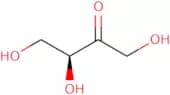
3,4:5,6-Di-O-isopropylidene-2-O-(tert.butyldimethylsilyl)-L-idonic acid methyl ester is an organosilicon compound that is used in the preparation of oligosaccharides and polysaccharides. This compound has a CAS number of 2134160-04-6 and can be custom synthesized to meet your needs. 3,4:5,6-Di-O-isopropylidene-2-O-(tert.butyldimethylsilyl)-L-idonic acid methyl ester is available at a purity of 99% or greater, which makes it ideal for modification to produce monosaccharides or other types of sugar derivatives.Pureza:Min. 95%L-Erythrulose
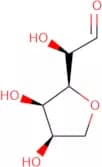
CAS:L-Erythrulose is an organic compound that is a sugar alcohol. It can be synthesized from the aldol reaction of glycolaldehyde and dehydroascorbic acid, which are both found in natural sources. L-Erythrulose has shown to have intramolecular hydrogen transfer (H-transfer) reactions, where the hydroxyl group migrates from one C atom to another. This kinetic data was obtained using surface methodology on model systems containing l-erythrulose and bacteria with wild-type or mutant strains. The conformational properties of L-erythrulose were also investigated by comparing its chemical structures with those of other sugars.
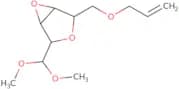
Fórmula:C4H8O4Pureza:Min. 95%Forma y color:Yellow Clear LiquidPeso molecular:120.1 g/mol2,5:3,4-Dianhydro-6-O-2-propenyl-dimethyl acetal-L-talose
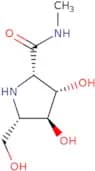
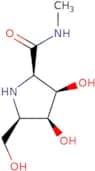
CAS:2,5:3,4-Dianhydro-6-O-2-propenyl-dimethyl acetal-L-talose is a fluorinated sugar that is synthesized by the reaction of an acetal with glycosylation. It has been modified to contain a methyl group and a click modification. 2,5:3,4-Dianhydro-6-O-2-propenyl-dimethyl acetal-L-talose is used as a fluorescent probe for the detection of nucleic acids in living cells. It has high purity and can be custom synthesized to meet customer specifications.Fórmula:C11H18O5Pureza:Min. 95%Peso molecular:230.26 g/mol(2S, 3S, 4S, 5S) -3, 4- Dihydroxy- 5- (hydroxymethyl) - N- methyl- 2- pyrrolidinecarboxami de
CAS:(2S, 3S, 4S, 5S) -3, 4- Dihydroxy- 5- (hydroxymethyl) - N- methyl- 2- pyrrolidinecarboxami de is a custom synthesis of an oligosaccharide. It is a complex carbohydrate that can be modified to the customer's specifications. The product is available in high purity and with good monosaccharide and methylation yield. The chemical structure of this product contains a fluorinated saccharide.Pureza:Min. 95%D-Saccharic acid calcium salt tetrahydrate
CAS:D-Saccharic acid calcium salt tetrahydrate is a white crystalline powder. It is a synthetic sugar that has been modified with fluorine and other substituents to produce a high purity, stable molecule. It can be used as an intermediate in the synthesis of oligosaccharides, monosaccharides, or glycosylations. D-Saccharic acid calcium salt tetrahydrate is synthesized by methylation and glycosylation of the saccharic acid molecule. This product can also be custom synthesized to meet your needs.Fórmula:C6H16CaO12Peso molecular:320.26 g/mol1,2-Di-O-acetyl-3,5-di-O-benzoyl-D-ribofuranose
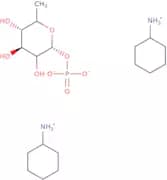
CAS:1,2-Di-O-acetyl-3,5-di-O-benzoyl-D-ribofuranose is a fluorinated carbohydrate that is synthesized through a glycosylation reaction. It has been shown to be stable in the presence of strong acid and base. The molecular weight of 1,2-Di-O-acetyl-3,5-di-O-benzoyl-D -ribofuranose is 694.49 g/mol. The purity of this compound is >99%.Pureza:Min. 95%b-L-Fucose-1-phosphate bis(cyclohexylammonium) salt
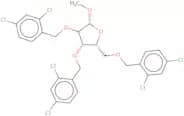
CAS:b-L-Fucose-1-phosphate bis(cyclohexylammonium) salt is a synthetic, fluorinated monosaccharide that is used in the synthesis of oligosaccharides, polysaccharides and glycoproteins. The compound can be modified using click chemistry. It has been synthesized by reacting b-D-fucose with 2 equivalents of cyclohexylamine in the presence of BF3.Fórmula:C6H11O8P·2C6H14NPureza:Min. 95%Forma y color:White PowderPeso molecular:442.48 g/molMethyl 2,3,5-tri-O-(2,4-dichlorobenzyl)-b-D-ribofuranoside
CAS:Methyl 2,3,5-tri-O-(2,4-dichlorobenzyl)-b-D-ribofuranoside is a glycosylation agent that is used as a monosaccharide or oligosaccharide modification. It can be utilized in the synthesis of saccharides and polysaccharides. Methyl 2,3,5-tri-O-(2,4-dichlorobenzyl)-b-D-ribofuranoside is a custom synthesis product with high purity and CAS No. 163759-40-8.Fórmula:C27H24Cl6O5Pureza:Min. 95%Peso molecular:641.21 g/mol5-Deoxy-5-fluoro-D-galactose
5-Deoxy-5-fluoro-D-galactose is an oligosaccharide that can be used as a custom synthesis. It is a modification of the natural monosaccharide D-galactose. 5-Deoxy-5-fluoro-D-galactose has the following chemical structure:Pureza:Min. 95%7-Deoxy-D-glycero-L-ido-heptitol
7-Deoxy-D-glycero-L-ido-heptitol is a synthetic carbohydrate that is a methylated, saccharide and polysaccharide. It is a custom synthesis and can be modified with Click chemistry. This product has CAS number 90319-73-6 and can be modified with fluorination. 7DGHLH is a high purity product that has been synthesized from carbon dioxide and hydrogen gas. It is an oligosaccharide that has been glycosylated and is available in the form of a powder or liquid.
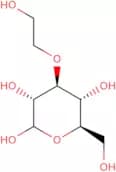
Pureza:Min. 95%3-O-Hydroxyethyl-D-glucose
CAS:3-O-Hydroxyethyl-D-glucose (3HEG) is a hexose sugar that can be synthesized from D-glucose and glycerol. It is an important precursor for the synthesis of polyethylene glycols for drug delivery and has been shown to be a potent inhibitor of glucose uptake in Xenopus oocytes. 3HEG is also a good carbon source for cell growth, but it can only be metabolised by cells with the appropriate enzymes. Glucofuranose, which is structurally similar to 3HEG, can inhibit uptake of glucose by binding to glucose transporters on the cell membrane surface. This inhibition may be due to the structural similarities between these two sugars. Mechanistic studies indicate that this inhibition may occur as a result of competitive inhibition or allosteric modulation, but further research is required to elucidate this mechanism.Fórmula:C8H16O7Pureza:Min. 98 Area-%Forma y color:Yellow PowderPeso molecular:224.21 g/mol1-Amino-2,4-O-benzylidene-D-butane-2,3,4-triol
1-Amino-2,4-O-benzylidene-D-butane-2,3,4-triol is a custom synthesis. This compound is an oligosaccharide that has been modified with methylation, glycosylation, and click modification. Carbohydrate molecules are saccharides that have a sugar as their backbone. Saccharides can be classified as monosaccharides (simple sugars) or polysaccharides (complex carbohydrates). This compound is a high purity synthetic that has been fluorinated and has undergone glycose chemistry to produce a desired product.Pureza:Min. 95%(2S,3S,4R,5R)-3,4-O-Benzylidene-2-cyano-N-(4-methoxybenzyl)-3,4,5-trihydroxy-piperidine
The modification of a polysaccharide with an oligosaccharide, which is the process of adding one or more sugar residues to the polysaccharide. This can be done enzymatically or chemically. The addition of a carbohydrate residue to another carbohydrate-bearing molecule. This can be done enzymatically or chemically. The synthesis of an organic compound that contains only carbon, hydrogen, and oxygen atoms in its molecular structure. This can be done enzymatically or chemically. The process of adding a methyl group to an organic compound. This can be done enzymatically or chemically. A monosaccharide is a simple sugar that cannot be hydrolyzed into simpler sugars by chemical means. It is one of the three main types of biomolecules found in living things (along with lipids and nucleic acids). Methylation is a chemical reaction involving the transfer of a methyl group from one chemical entity to another one; for example, from methanol to dimPureza:Min. 95%Allyl 2-O-acetyl-3-O-benzyl-a-L-rhamnopyranoside
CAS:Allyl 2-O-acetyl-3-O-benzyl-a-L-rhamnopyranoside is a synthetic monosaccharide that is used in the synthesis of complex carbohydrates. It has a CAS number of 940274-20-4 and may be modified with fluorine or methyl groups. Synthetic allyl 2-O-acetyl-3-O-benzyl-a -L -rhamnopyranoside is also known as "Methylated, Custom synthesis, Click modification, Oligosaccharide, Polysaccharide, saccharide, sugar."
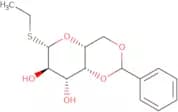
Fórmula:C18H24O6Pureza:Min. 95%Peso molecular:336.39 g/molEthyl 4,6-O-benzylidene-β-D-thiogalactopyranoside
CAS:Ethyl 4,6-O-benzylidene-b-D-thiogalactopyranoside is a synthetically produced carbohydrate typically used as a building block in oligo-saccharide synthesis.
Fórmula:C15H20O5SPureza:Min. 95%Forma y color:PowderPeso molecular:312.39 g/mol(2R, 3R, 4S, 5R) -3, 4- Dihydroxy- 5- (hydroxymethyl) - N- methyl-2- pyrrolidinecarboxami de
CAS:(2R, 3R, 4S, 5R) -3, 4- Dihydroxy- 5- (hydroxymethyl) - N- methyl-2- pyrrolidinecarboxami de is an Methylation product of 2-pyrrolidinone. It is a white to off-white solid. This product has been modified with Click chemistry to create a glycosylation site at the C6 position. It is soluble in water and alcohols. The CAS number for this product is 1591783-03-7.Pureza:Min. 95%N-[2-(4'-Dimethylaminophenyl)-1-cyano-3-butene]-2,3,4,6-tetra-O-pivaloyl-D-glucopyranoside
2-(4'-Dimethylaminophenyl)-1-cyano-3-butene-2,3,4,6-tetra-O-pivaloyl-D-glucopyranoside is a synthetic compound. It is an oligosaccharide that can be modified to produce various sugar derivatives. The modification process includes fluorination and methylation. 2-(4'-Dimethylaminophenyl)-1-cyano-3-butene-2,3,4,6 tetra O pivaloyl D glucopyranoside is a white powder with a melting point of 110°C and an optical rotation of +33°C.Fórmula:C39H59N2O9Pureza:Min. 95%Peso molecular:699.91 g/molMethyl 2,3,4-tri-O-benzyl-6-O-tert-butyldimethylsilyl-a-D-mannopyranoside
CAS:Methyl 2,3,4-tri-O-benzyl-6-O-tert-butyldimethylsilyl-a-D-mannopyranoside is a synthetic carbohydrate that has been modified with fluorination. The structure of this compound is a complex carbohydrate consisting of a monosaccharide and two oligosaccharides. This product can be custom synthesized to meet the specific needs of customers and offers high purity.Fórmula:C34H46O6SiPureza:Min. 95%Peso molecular:578.83 g/molD-Allose
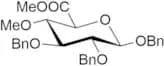
CAS:Anti-proliferative in cancer cellsFórmula:C6H12O6Pureza:Min. 95%Forma y color:White PowderPeso molecular:180.16 g/molMethyl (benzyl 2,3-di-O-benzyl-4-O-methyl-β-D-glucopyranoside)uronate
CAS:A useful glucuronide building blockFórmula:C29H32O7Pureza:Min. 95%Forma y color:PowderPeso molecular:492.56 g/mol3-Azido-3-deoxy-5, 6- O- isopropylidene- D- gulonic acid g- lactone
CAS:3-Azido-3-deoxy-5, 6-O-isopropylidene-Dgulonic acid g-lactone is a fluorinated monosaccharide. It is synthesized by the reaction between 3,4,6,7 tetra fluorobenzaldehyde and 5,6 O isopropylidene Dgulonic acid. It can be used for glycosylation reactions in order to produce oligosaccharides. The modification of this product can be achieved through methylation and sugar modification techniques. This product has CAS No. 244057-17-8 and is highly pure with a purity of 99%.Fórmula:C9H13N3O5Pureza:Min. 95%Peso molecular:243.22 g/mol2-Azido-2-deoxy-3,5-di-O-tert-butylsimethyl-D-xylitol
2-Azido-2-deoxy-3,5-di-O-tert-butylsimethyl-D-xylitol is a monosaccharide with the molecular formula C8H12N2O6. It is an important intermediate for the synthesis of saccharides and oligosaccharides. A major application of 2AA2DTBSX is in the modification of complex carbohydrates such as polysaccharides and glycoproteins. This carbohydrate can be fluorinated to produce 2-(azido)-2-(deoxy) -3,5-(di)O-(tert) butylsulfonylmethyl -D-xylitol. 2AA2DTBSX can also be methylated to produce 2-[(methylthio)methyl]-2,3,5,6 tetraiodo -D-xylitol.Pureza:Min. 95%Methyl 6-O-tert.butyldiphenylsilyl-a-D-galactopyranoside
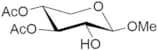
Methyl 6-O-tert.butyldiphenylsilyl-a-D-galactopyranoside is an organic chemical compound that belongs to the class of sugar derivatives. This substance is a high purity, custom synthesis and can be modified by fluorination, glycosylation, and methylation. The CAS number for this substance is 52793-71-0. Methyl 6-O-tert.butyldiphenylsilyl-a-D-galactopyranoside is an oligosaccharide with a molecular formula of C14H21NO4S and a molecular weight of 299.38 g/mol. It has a monosaccharide sequence of D -Galp1,6(Galp)2,3GlcNAc(Galp)2,4GlcNAc(Galp)2,5GlcNAc(Galp)2Pureza:Min. 95%Methyl 3,4-di-O-acetyl-β-D-xylopyranoside
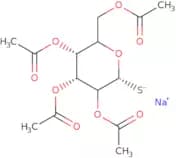
CAS:Acetyl protected xylosideFórmula:C10H16O7Pureza:Min. 95%Forma y color:PowderPeso molecular:248.2 g/mol2,3,4,6-Tetra-O-acetyl-a-D-thiomannopyranse sodium salt
2,3,4,6-Tetra-O-acetyl-a-D-thiomannopyranse sodium salt is a synthetic compound that is used as an intermediate in the production of glycosaminoglycans. It is a complex carbohydrate with four mannose units and two acetyl groups. This compound can be methylated, fluorinated, or modified with click chemistry to produce various derivatives. 2,3,4,6-Tetra-O-acetyl-a-D-thiomannopyranse sodium salt has been shown to have antiviral and anti cancer properties and can be custom synthesized for specific needs.Fórmula:C14H19O9SNaPureza:Min. 95%Peso molecular:386.35 g/mol7-Deoxy- 6- O- tert.butyldimethylsilyl - 1, 2- O- isopropylidene -L- glycero- a- D- gluco- heptofuranose
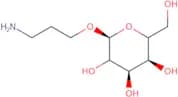
7-Deoxy-6-O-tert.butyldimethylsilyl-1,2-O-isopropylidene -L-glucoheptofuranose is a fluorinated monosaccharide that is used as a synthetic intermediate for the production of oligosaccharides and polysaccharides. 7DGTS can be modified with methyl groups and/or click chemistry to form various derivatives. The CAS Number for this product is 58959-14-8. This product has been shown to have a purity of 99% or higher.Pureza:Min. 95%3-Aminopropyl α-D-mannopyranoside
CAS:Mannose with an aliphatic 3 carbon amine linker.Fórmula:C9H19NO6Pureza:Min. 95%Forma y color:PowderPeso molecular:237.25 g/mol(2R, 3R, 4R) -3-Benzyloxy- 1- benzyl-4- (hydroxymethyl) - 2- azetidinecarboxylic acid methyl ester
(2R, 3R, 4R) -3-Benzyloxy- 1- benzyl-4-(hydroxymethyl)- 2-azetidinecarboxylic acid methyl ester is an oligosaccharide. It is a modification of the Oligosaccharide which is a carbohydrate with multiple saccharides. This means that it contains two or more types of sugar monomers. The primary type of sugar in this compound is the Monosaccharide, which are single units of sugar that are joined together to form a sugar polymer. The other type of sugar in this compound is the Polysaccharide, which is made up of many different monomers. Carbohydrates are an important source of energy for living organisms and they can be found in many different forms such as sugars and starches. This compound has been modified by Methylation (addition of a methyl group), Glycosylation (addition of glycosidicPureza:Min. 95%a-D-Galactose-sp-biotin
a-D-Galactose-sp-biotin is a glycosylation product with a complex carbohydrate structure. It is synthesized by reacting a galactose with a spacer arm and biotin. The product has been modified to include fluorination, saccharide modification, and Oligosaccharide synthesis. This product is available in high purity and CAS No.Fórmula:C25H44N4O9SPureza:Min. 95%Forma y color:PowderPeso molecular:576.7 g/mol3,5-Di-O-(tert-butyldimethylsilyl)-2-deoxy-D-ribono-1,4-lactone
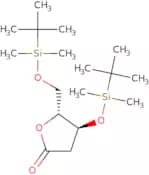
CAS:3,5-Di-O-(tert-butyldimethylsilyl)-2-deoxy-D-ribono-1,4-lactone is a nucleoside analog that inhibits the synthesis of viral RNA. It can be hydrolyzed to uridine, which is then converted to phosphorylated uridine by uridine phosphorylase. 3,5-Di-O-(tert-butyldimethylsilyl)-2-deoxy-D-ribono-1,4-lactone binds to the enzyme ribonucleotide reductase and blocks the production of DNA precursors. This may lead to a decrease in DNA synthesis and cell proliferation. The antiviral properties of 3,5-Di-O-(tert-butyldimethylsilyl)-2-deoxy--D--ribono--1,4--lactone have been shown in animal models against cytFórmula:C17H36O4Si2Pureza:Min. 95%Forma y color:PowderPeso molecular:360.65 g/molN- (2, 5- Anhydro- 3- azido- 3- deoxy- D- altronoyl) - 2, 5- Anhydro- 3- amino- 3- deoxy- D- altronic acid propyl ester
N- (2, 5- Anhydro- 3- azido- 3- deoxy- D- altronoyl) - 2, 5- Anhydro- 3- amino - 3 - deoxy- D - altronic acid propyl ester is a synthetic compound that has been modified to include an N-(2,5 anhydroazido)-3,6 dideoxydulonic acid moiety. The chemical structure of this product includes a methyl group and two hydroxyl groups on the anomeric carbon. This product is a white powder at room temperature and can be used in the synthesis of oligosaccharides or polysaccharides.Pureza:Min. 95%2-Deoxy-D-xylose
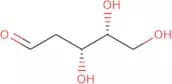
CAS:2-Deoxy-D-xylose is a sugar that is metabolized by bacteria in the absence of oxygen. It has been shown to be highly chemotactic, inducing the migration of cells from the surrounding tissue into the area where it is present. 2-Deoxy-D-xylose has also been shown to inhibit the growth of cancer cells and induce apoptosis in vitro. 2-Deoxy-D-xylose binds to mitochondria and inhibits cytochrome oxidase, which may contribute to its anti-cancer activity. 2-Deoxy-D-xylose has also been shown to have angiogenic effects by stimulating endothelial cell proliferation and migration.
Fórmula:C5H10O4Pureza:Min. 98 Area-%Forma y color:White PowderPeso molecular:134.13 g/mol4-Aminophenyl b-D-glucopyranoside
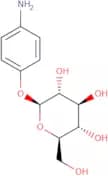
CAS:4-Aminophenyl b-D-glucopyranoside is a membrane transport inhibitor that prevents the uptake of glucose by inhibiting the enzyme hexose transporter. It is used in biological treatment and has been shown to be effective against glutamicum. 4-Aminophenyl b-D-glucopyranoside can also be used in assays to identify bacteria based on their surface antigens. This compound was isolated from corynebacterium glutamicum and its metabolic pathway has been elucidated. 4-Aminophenyl b-D-glucopyranoside has also been shown to inhibit enzymatic activity, which may be due to inhibition of the enzyme dihydroorotate dehydrogenase.Fórmula:C12H17NO6Pureza:Min. 95%Forma y color:White PowderPeso molecular:271.27 g/molMethyl 2,3,4-tri-O-benzoyl-6-O-trityl-a-D-galactopyranoside
CAS:Methyl 2,3,4-tri-O-benzoyl-6-O-trityl-a-D-galactopyranoside is an oligosaccharide. It is a highly pure and custom synthesis of methylated saccharides. The modification is done by Click chemistry, which is a reaction between an azide and an alkyne in the presence of copper catalyst. This modification helps to introduce fluorine atoms into the saccharide chain. The glycosylation process is then carried out on the modified saccharides to form the desired oligosaccharides. Methyl 2,3,4-tri-O-benzoyl-6-O-trityl-a-D galactopyranoside can be used as a raw material for various applications such as pharmaceuticals, agrochemicals and food additives.Fórmula:C47H40O9Pureza:Min. 95%Peso molecular:748.84 g/mol2,6-Dideoxy-L- arabino- hexose
CAS:2,6-Dideoxy-L-arabino-hexose is a carbohydrate that can be custom synthesized. It has a high purity with a custom synthesis and can be methylated and glycosylated. This modification changes the chemical structure of the sugar, which may have important therapeutic effects on cancer cells.Fórmula:C6H12O4Pureza:Min. 95%Peso molecular:148.16 g/mol3,6-Anhydro-D-glucose
CAS:3,6-Anhydro-D-glucose is a compound that is produced by the dehydration of D-glucose. It has been synthesized in an acidic hydrolysis reaction involving mercaptoacetic acid and sodium carbonate. The synthesis of 3,6-Anhydro-D-glucose involves the use of chloride as a reactive agent and metal ion catalysis. This compound can be used to create isomers with other sugars. It also has supramolecular chemistry properties due to its ability to form complexes with other molecules.Fórmula:C6H10O5Pureza:Min. 97 Area-%Forma y color:White Off-White PowderPeso molecular:162.14 g/mol5-O-Benzoyl-3-deoxy-1,2-O-isopropylidene-3C-methyl-a-D-ribofuranose
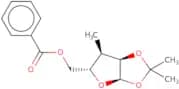
CAS:5-O-Benzoyl-3-deoxy-1,2-O-isopropylidene-3C-methyl-a-D-ribofuranose is a methylated sugar that has been modified with a click modification. It has been synthesized from D-(+)-ribose and 5′,5′′′-(1,2,3,4,5,6) -O-(benzoyl)-D-(+)-glycero 3C -methyluridine. This compound is soluble in water and can be used to modify polysaccharides.Pureza:Min. 95%D-[5-2H]Glucose
CAS:Producto controladoD-[5-2H]Glucose is a deuterated form of glucose that is used in the study of lipid synthesis. This isotopically labeled compound can be incorporated into cellular lipids and their derivatives, such as glycerides and phospholipids. D-[5-2H]Glucose can be used to investigate the biosynthesis of lipids by measuring the incorporation rate and the number of 2H atoms found in each molecule. D-[5-2H]Glucose may also be used to study membrane lipid synthesis, which includes anomeric effects on lipid synthesis. The theory behind this is that when a molecule is incorporated into a lipid, it will have at least one hydrogen atom from deuterium instead of hydrogen. This isotopically labeled compound can be used to measure how anomeric effects influence lipid synthesis.Fórmula:C6H11DO6Pureza:Min. 95%Forma y color:White PowderPeso molecular:181.16 g/molMethyl 3-azido-3-deoxy-2,4-di-O-acetyl-b-D-xylopyranoside
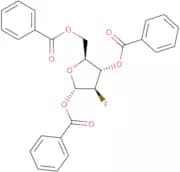
Methyl 3-azido-3-deoxy-2,4-di-O-acetyl-b-D-xylopyranoside is a synthetic compound that can be used in glycosylation reactions to introduce an azido group at the reducing end of a glycose. This product has been shown to react with the thiol group on cysteine residues and undergoes click chemistry with maleimide groups. It is also useful for the synthesis of polysaccharides and oligosaccharides. The purity of this product is over 99%. Methyl 3-azido-3-deoxy-2,4,-di-(O)-acetyl -b-(D)-xylopyranosidePureza:Min. 95%1,3,5-Tri-O-benzoyl-2-deoxy-2-fluoro-α-L-arabinofuranose
CAS:Intermediate in synthesis of clevudineFórmula:C26H21FO7Pureza:Min. 98 Area-%Forma y color:PowderPeso molecular:464.44 g/molN-[2-(4'-Chlorophenylacetonitrile)]-2,3,4,6-tetra-pivaloyl-D-glucopyranoside
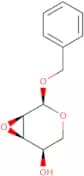
CAS:N-[2-(4'-Chlorophenylacetonitrile)]-2,3,4,6-tetra-pivaloyl-D-glucopyranoside is a synthetic monosaccharide that has been modified with fluorine. The synthesis of this compound involves the glycosylation of 2,3,4,6-tetra-pivaloyl-D-glucopyranoside with methyl 3-(4'-chlorophenyl)acetonitrile. This product is an oligosaccharide that has been used as a model for complex carbohydrates and as a sugar donor in click chemistry. It is soluble in water and ethanol and has a purity level of ≥98%.Fórmula:C34H49ClN2O8Pureza:Min. 95%Peso molecular:649.23 g/molBenzyl-2,3-anhydro-a-D-ribopyranoside
CAS:Benzyl-2,3-anhydro-a-D-ribopyranoside is a monosaccharide that is synthesized by the modification of the sugar benzyl 2,3-anhydro-a-D-ribofuranose. It is a white powder. Benzyl-2,3-anhydro-a-D-ribopyranoside is used as a reagent in glycosylation and methylation reactions. It has CAS No. 61134–24–5 and molecular weight of 230.22 g/mol. The molecule contains an anhydro group at C1 and hydroxyl groups at C6 and C8 positions. This product is soluble in water and ethanol.Fórmula:C12H14O4Pureza:Min. 95%Peso molecular:222.24 g/mol3-Deoxy- 3- fluoro- 1, 2- O- isopropylidene - D- allofuranose
3-Deoxy-3-fluoro-1,2-O-isopropylidene-D-allofuranose is an oligosaccharide that has been fluorinated at the 3 position and 3' position of the allofuranose moiety. It is a synthetic monosaccharide that belongs to a family of complex carbohydrates. The modification of this sugar with fluorine atoms is done by click chemistry, which entails the use of copper (II) ions. This sugar can be used for glycosylation and polysaccharide synthesis. Its high purity makes it ideal for use in laboratory settings.Fórmula:C9H15FO5Pureza:Min. 95%Peso molecular:222.21 g/mol3,5-Di-O-benzoyl-2-C-methyl-D-ribonic acid-1.4-lactone
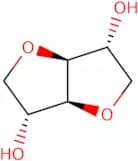
3,5-Di-O-benzoyl-2-C-methyl-D-ribonic acid-1.4-lactone is a custom synthesis that can be modified to suit your needs. Glycosylation, Oligosaccharide, sugar, Synthetic, Fluorination, Custom synthesis, Methylation, Monosaccharide, Polysaccharide, saccharide Click modification and complex carbohydrate are some of the modifications that can be done. 3DMBRL is a high purity product with CAS No.Pureza:Min. 95%1, 4:3, 6- Dianhydro-D- iditol
CAS:1,4:3,6-Dianhydro-D-iditol is an organic compound. It is the L-enantiomer of 1,4:3,6-dianhydro-L-iditol. This compound can be used as a substrate for the cytochrome P450 system and soluble guanylate cyclase. 1,4:3,6-Dianhydro-D-iditol has been shown to have an inhibitory effect on both tissues and guanylate cyclase in vitro. This compound also inhibits the production of reactive oxygen species by oxidases.Fórmula:C6H10O4Pureza:Min. 95%Peso molecular:146.14 g/molAllyl 2,3,4-tri-O-benzyl b-D-galactopyranoside
Allyl 2,3,4-tri-O-benzyl b-D-galactopyranoside is a custom synthesis of an oligosaccharide with a complex carbohydrate and a high purity. Allyl 2,3,4-tri-O-benzyl b-D-galactopyranoside can be used for a variety of applications including as an intermediate for the production of other chemicals or as a food additive. It is also used in the synthesis of other carbohydrates and saccharides. This compound has been shown to be effective in methylation reactions and glycosylation reactions.Pureza:Min. 95%1,2,3,6-Tetra-O-acetyl-α-D-glucopyranose
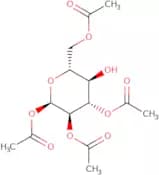
CAS:1,2,3,6-Tetra-O-acetyl-a-D-glucopyranose is a high purity chemical that can be custom synthesized. It is a sugar that has been fluorinated and glycosylated with a Click modification. It is a synthetic compound that contains methylation and modification. It has CAS No. 55286-97-0, which indicates its oligosaccharide and monosaccharide saccharide composition. This product can be used for complex carbohydrate synthesis in the laboratory or for research purposes.Fórmula:C14H20O10Pureza:Min. 98 Area-%Forma y color:PowderPeso molecular:348.3 g/mol4-Methoxyphenyl 2-azido-3,6-di-O-benzyl-2-deoxy-b-D-glucopyranoside
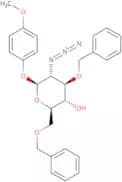
CAS:4-Methoxyphenyl 2-azido-3,6-di-O-benzyl-2-deoxy-b-D-glucopyranoside is a supramolecular compound that belongs to the group of curcumin analogs. It has shown anticancer activity against human papilloma virus and intestinal papilloma. 4-Methoxyphenyl 2-azido-3,6-di-O-benzyl-2-(2′,4′,6′)triphosphate is a hybridized compound with low bioavailability. This compound can be used for the treatment of cancers and other diseases as an anticancer agent.Fórmula:C27H29N3O6Pureza:Min. 95%Forma y color:White PowderPeso molecular:491.54 g/mol5-Azido-5-deoxy-2,3-O-isopropylidene-L-lyxofuranose
5-Azido-5-deoxy-2,3-O-isopropylidene-L-lyxofuranose (AIL) is a synthetic molecule that belongs to the group of carbohydrates. It is synthesized by the glycosylation and methylation of 5-(azido)-5,6-dideoxyglucose. AIL has been shown to have anti-inflammatory effects in cell culture models and in mice with inflammatory bowel disease.Pureza:Min. 95%Methyl 2-O-methyl-α-D-xylofuranoside
CAS:A partially protected methyl xyloside
Fórmula:C7H14O5Pureza:Min. 95%Forma y color:PowderPeso molecular:178.18 g/mol




![N-[2-(4'-Dimethylaminophenyl)-1-cyano-3-butene]-2,3,4,6-tetra-O-pivaloyl-D-glucopyranoside](/_next/image/?url=https%3A%2Fstatic.cymitquimica.com%2Fproducts%2F3D%2Fthumb-webp%2FMD08488.webp&w=3840&q=75)




![D-[5-2H]Glucose](/_next/image/?url=https%3A%2Fstatic.cymitquimica.com%2Fproducts%2F3D%2Fthumb-webp%2FMG75100.webp&w=3840&q=75)
![N-[2-(4'-Chlorophenylacetonitrile)]-2,3,4,6-tetra-pivaloyl-D-glucopyranoside](/_next/image/?url=https%3A%2Fstatic.cymitquimica.com%2Fproducts%2F3D%2Fthumb-webp%2FMC08449.webp&w=3840&q=75)