Monosacáridos
Los monosacáridos son la forma más simple de los carbohidratos y sirven como bloques fundamentales para azúcares más complejos y polisacáridos. Estas moléculas de azúcar única juegan roles críticos en el metabolismo energético, la comunicación celular y los componentes estructurales de las células. En esta sección, encontrará una amplia variedad de monosacáridos esenciales para la investigación en bioquímica, biología molecular y glicociencia. Estos compuestos son cruciales para estudiar las rutas metabólicas, los procesos de glucosilación y el desarrollo de agentes terapéuticos. En CymitQuimica, ofrecemos monosacáridos de alta calidad para apoyar sus necesidades de investigación, asegurando precisión y fiabilidad en sus investigaciones científicas.
Subcategorías de "Monosacáridos"
- Allosas(11 productos)
- Arabinosas(21 productos)
- Eritrosas(11 productos)
- Fructosas(9 productos)
- Fucosas(36 productos)
- Galactosamina(41 productos)
- Galactosa(261 productos)
- Glucosas(365 productos)
- Ácidos glucurónicos(51 productos)
- Glico-sustratos para enzimas(77 productos)
- Gulosas(6 productos)
- Idosas(4 productos)
- Inositoles(15 productos)
- Lyxosas(4 productos)
- Manosas(65 productos)
- O-glicanos(48 productos)
- Psicosas(3 productos)
- Ramnosas(10 productos)
- Ribosas(61 productos)
- Ácidos siálicos(100 productos)
- Sorbosas(4 productos)
- Azúcares(173 productos)
- Tagatosis(4 productos)
- Taloses(8 productos)
- Xilosas(20 productos)
Mostrar 17 subcategorías más
Se han encontrado 6088 productos de "Monosacáridos"
Ordenar por
Pureza (%)
0
100
|
0
|
50
|
90
|
95
|
100
D-Salicin
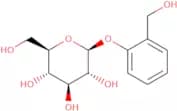
CAS:<p>D-Salicin is a naturally occurring compound, classified as a biologically active glycoside. It is acquired from the bark of willow trees, primarily species within the genus Salix. The primary mode of action of D-Salicin involves its metabolic conversion into salicylic acid within the human body. This conversion occurs in the gastrointestinal tract and bloodstream, ultimately displaying effects similar to non-steroidal anti-inflammatory drugs (NSAIDs).</p>Fórmula:C13H18O7Pureza:Min. 98 Area-%Forma y color:White Off-White PowderPeso molecular:286.28 g/mol1-Deoxy-L-fructose
<p>Deoxy-L-fructose is a sugar that is synthesized by the cleavage of sucrose, which is a disaccharide composed of glucose and fructose. Deoxy-L-fructose can be obtained from the hydrolysis of sucrose or it can be synthesized by the hydrogenation of d-talitol. This compound is used in various industrial processes as an intermediate in the production of other sugars and alcohols. 1-Deoxy-L-fructose has been found to have antimicrobial properties against Enterobacter aerogenes, Lactobacillus plantarum, and Lactobacillus acidophilus. It also inhibits the growth of Escherichia coli (E. coli) bacteria when tested in vitro at concentrations between 0.2 and 2mM. The antibiotic activity against E. coli may be due to its ability to inhibit ribosome synthesis and protein synthesis in these cells</p>Pureza:Min. 95%1,2,3,4,6-Penta-O-benzoyl-α-D-mannopyranose
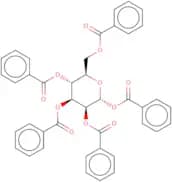
CAS:<p>1,2,3,4,6-Penta-O-benzoyl-alpha-D-mannopyranose is a monosaccharide that can be synthesized by modification of the corresponding mannose. This sugar has been shown to form a complex carbohydrate with an oligosaccharide or saccharide. It can also be used in click chemistry as a linker between two amino acids or peptides. The chemical name for 1,2,3,4,6-Penta-O-benzoyl-alpha-D-mannopyranose is 1,2:3,4:6:1′′′′′′′″:5′″:8:1″″″″″″"’5″'8″1 (2R)-2-(3'-chloroacetyl)pentaerythritol 2,4'-diyl dianhydride.</p>Fórmula:C41H32O11Peso molecular:700.69 g/molUDP-2-deoxy-2-fluoro-D-mannose
CAS:<p>UDP-2-deoxy-2-fluoro-D-mannose is a modified monosaccharide that is synthesized from D-mannose. It can be used for the synthesis of glycosyls and polysaccharides as well as for the modification of complex carbohydrates. UDP-2-deoxy-2-fluoro-D-mannose has been shown to be an excellent substrate for methylation, glycosylation, and fluorination reactions. This compound can also be used to modify high purity oligosaccharides with a high degree of substitution.</p>Fórmula:C15H23FN2O16P2Pureza:Min. 95%Peso molecular:568.29 g/molD-Glucosamine-6-O-sulphate
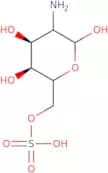
CAS:<p>D-Glucosamine-6-O-sulphate is a disaccharide that is a component of heparin. The molecular docking analysis of this drug with the target proteins, d-glucosamine 6-O-sulphate and l-iduronic acid, has been performed using the protein data sets from proteomics. D-Glucosamine-6-O-sulphate has been found to be related to psoriasis patients in urine samples. The macroscopic and microscopic structure of this drug was also studied and characterized by liquid chromatography.</p>Fórmula:C6H13NO8SPureza:Min. 95 Area-%Forma y color:White PowderPeso molecular:259.23 g/molPropofol-4-Hydroxy-4-D-glucuronide
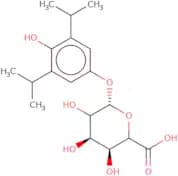
<p>Propofol-4-Hydroxy-4-D-glucuronide is a fluorinated monosaccharide that has been synthesized using the glycosylation, polysaccharide and modification methods. This compound is a custom synthesis that has been modified with methylation and click chemistry. The CAS number for this product is 54910-87-6. This product is a complex carbohydrate with high purity.</p>Fórmula:C18H26O8Pureza:Min. 95%Peso molecular:370.39 g/mol(3R, 4S,5R) -3-O-Benzhydryloxybis(trimethylsilyloxy)silyl 1-benzyl-4,5-O-isopropylidene-3, 4, 5- piperidinetriol
<p>(3R, 4S,5R) -3-O-Benzhydryloxybis(trimethylsilyloxy)silyl 1-benzyl-4,5-O-isopropylidene-3, 4, 5-piperidinetriol is a high purity methylated oligosaccharide. It is synthesized using Click chemistry and fluorination. This product can be modified with different functional groups. It is an excellent candidate for glycoprotein analysis due to its high purity and modification capabilities.</p>Pureza:Min. 95%6-Deoxy-D-lactose
CAS:<p>6-Deoxy-D-lactose is a custom synthesized, complex carbohydrate that is an Oligosaccharide. It is a polysaccharide with a CAS number of 52689-62-0. 6-Deoxy-D-lactose has been modified by methylation and glycosylation and can be used as a Modification of saccharides. 6-Deoxy-D-lactose has been fluorinated and it can be synthesized by Click modification of sugar or high purity. 6-Deoxy-D-lactose is a white, crystalline powder that is soluble in water, ethanol, and acetone.br><br>6 Deoxy Lactose (6DL) is an oligosaccharide that consists of one glucose molecule linked to one galactose molecule via alpha 1-->4 glycosidic linkage. The chemical formula for 6DL is C 12 H 22 O 11 . 6DL</p>Fórmula:C12H22O10Pureza:Min. 95%Forma y color:Off-White PowderPeso molecular:326.3 g/mol2,3:5,6-Di-O-isopropylidene-L-gulono-1,4-lactone
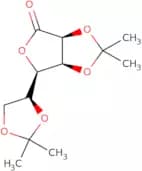
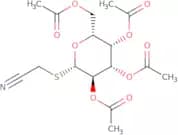
CAS:<p>2,3:5,6-Di-O-isopropylidene-L-gulono-1,4-lactone is a methylated form of L-gulono-1,4-lactone which is a monosaccharide. The methylation of this compound makes it more soluble in water and lipids. This product can be synthesized to any desired purity and can be modified to suit the needs of the customer. The oligosaccharides produced from 2,3:5,6-Di-O-isopropylidene L -gulono 1,4 lactone are polysaccharides composed of repeating units of monosaccharides that are linked together by glycosidic bonds. Polysaccharides are complex carbohydrates that can be either linear or branched and have many different functions in living organisms. Carbohydrates are saccharides that contain carbon atoms and hydrogen atoms as</p>Fórmula:C12H18O6Pureza:Min. 95 Area-%Forma y color:White crystals.Peso molecular:258.27 g/molCyanomethyl 2,3,4,6-tetra-O-acetyl-b-D-thioglucopyranoside
CAS:<p>Cyanomethyl 2,3,4,6-tetra-O-acetyl-b-D-thioglucopyranoside is a synthetic glycosylation agent. It is an acetal derivative of b-D-thioglucopyranoside with a terminal methyl group at C2 and a fluorine atom at C6. This product can be used to modify saccharides and sugars in a variety of ways. It has been shown to react with various carbohydrates including polysaccharides and oligosaccharides. Synthetic glycosylations are often used in the synthesis of complex carbohydrates for use in pharmaceuticals or chemical engineering. The CAS number for this product is 61145-33-3.</p>Fórmula:C16H21NO9SPureza:Min. 95%Peso molecular:403.41 g/mol4-Acetylphenyl-β-D-glucopyranoside
CAS:<p>4-Acetylphenyl-β-D-glucopyranoside (4APG) is a natural compound that belongs to the group of p-hydroxybenzoic acid. It has been shown to have antibacterial properties, with an optimum pH of 5.0 and an MIC of 1.0 μg/mL. 4APG was found to be active against Gram-positive bacteria, including Staphylococcus aureus, Bacillus subtilis, and Clostridium perfringens. This compound also inhibits the growth of Gram-negative bacteria such as Escherichia coli, Salmonella enteritidis, and Shigella dysenteriae. The chemical structure of 4APG was determined by NMR spectroscopy analysis and HPLC analysis. Analysis by GCMS revealed that 4APG contains protocatechuic acid, 5-caffeoylquinic acid, and other unknown compounds.</p>Fórmula:C14H18O7Pureza:Min. 95%Forma y color:Off-White Slightly Yellow PowderPeso molecular:298.29 g/molD-Ribose-1-phosphate bis(cyclohexylammonium)
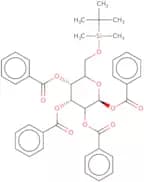
CAS:<p>D-Ribose-1-phosphate bis(cyclohexylammonium) salt is a custom synthesis of D-ribose. It is a monosaccharide that has been fluorinated, methylated, and glycosylated. The chemical modification of the sugar allows for it to have properties such as high purity and custom synthesis. This product can be used in a number of applications including complex carbohydrate, glycosylation, Methylation, and click modification.</p>Fórmula:C5H11O8P•(C6H13N)2Pureza:Min. 97 Area-%Forma y color:PowderPeso molecular:428.46 g/mol1,2,3,4-Tetra-O-benzoyl-6-O-tert-butyldimethylsilyl-b-D-glucopyranose
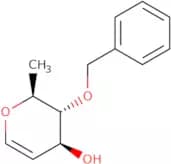
CAS:<p>1,2,3,4-Tetra-O-benzoyl-6-O-tert-butyldimethylsilyl-b-D-glucopyranose is a custom synthesis. It is an oligosaccharide that is glycosylated with methyl groups and fluorinated. This product has a purity of >99% and can be used as a substitute for natural glycosides in pharmaceuticals or other applications.</p>Fórmula:C40H42O10SiPureza:Min. 95%Peso molecular:710.86 g/mol4-O-Benzyl-L-rhamnal
CAS:<p>4-O-Benzyl-L-rhamnal is a functionalized, asymmetric, glycosylating agent that is used in the synthesis of glycoconjugates. 4-O-Benzyl-L-rhamnal is synthesized by the reaction of benzaldehyde with an aldehyde group on the sugar molecule. The product is then reacted with an alcohol to form a glycosidic bond. This process can be repeated until the desired number of sugar molecules are added. It can also be used to synthesize disaccharides and polysaccharides by convergent or nucleophile reactivity. 4-O-Benzyl-L-rhamnal utilizes a chiral auxiliary to produce its product, which can be used for synthesis purposes or as a starting material for other reactions.</p>Fórmula:C13H16O3Pureza:Min. 95%Forma y color:PowderPeso molecular:220.27 g/mol4-Methoxyphenyl 3,4-di-O-benzyl-α-D-mannopyranoside
<p>4-Methoxyphenyl 3,4-di-O-benzyl-a-D-mannopyranoside is a glycosylated, complex carbohydrate with a methylated and fluorinated saccharide. This product is available for custom synthesis and can be ordered in high purity.</p>Pureza:Min. 95%2,3,4,6-Tetra-O-acetyl-D-mannopyranose
CAS:<p>2,3,4,6-Tetra-O-acetyl-D-mannopyranose is a glycosylated polysaccharide. It is a complex carbohydrate with a methylated D-mannopyranose backbone and an acetylated 2,3,4,6-tetraose sidechain. This product can be fluorinated or saccharified to make it more reactive for click chemistry. 2,3,4,6-Tetra-O-acetyl-D-mannopyranose has been custom synthesized in a high purity form that is suitable for use in various applications including polymeric materials and pharmaceuticals.</p>Fórmula:C14H20O10Pureza:Min. 95%Peso molecular:348.3 g/mol4-Chloro-2-cyclopentylphenyl b-D-galactopyranoside
CAS:<p>4-Chloro-2-cyclopentylphenyl b-D-galactopyranoside is a synthetic monosaccharide with a methylated, fluorinated, and glycosylated backbone. It is often used as an artificial sweetener or sugar substitute in foods and beverages. The saccharide can be modified to contain one or more click modifications and/or polysaccharides. This product has been custom synthesized for high purity.</p>Fórmula:C17H23ClO6Pureza:Min. 95%Forma y color:PowderPeso molecular:358.81 g/molPhenyl 2,3,4,6-tetra-O-benzyl-b-D-thioglucopyranoside
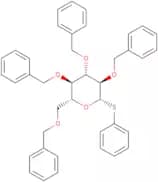
CAS:<p>Phenyl 2,3,4,6-tetra-O-benzyl-b-D-thioglucopyranoside is a modification. It is an oligosaccharide that belongs to the class of carbohydrates. Phenyl 2,3,4,6-tetra-O-benzyl-b-D-thioglucopyranoside has a high purity and can be synthesized in a custom manner. It is a white to off white powder that has CAS No. 38184-10-0 and can be used for glycosylation or methylation reactions. It also has fluoroquinolone resistance and can be used as a complex carbohydrate in the synthesis of polysaccharides.</p>Fórmula:C40H41O5SPureza:Min. 95%Forma y color:White Off-White PowderPeso molecular:632.83 g/mol2- Azido- 2- deoxy- 2- C- methyl-D- ribonic acid g- lactone
<p>2-Azido-2-deoxy-2-C-methyl-D-ribonic acid g-lactone is a glycoside that can be used as a monosaccharide or an oligosaccharide. It's custom synthesis allows for the modification of saccharides, such as fluorination and methylation, to create complex carbohydrates. This product has been shown to have high purity with a CAS number in the range of 108411-41-8.</p>Pureza:Min. 95%Ezetimibe b-D-glucuronide
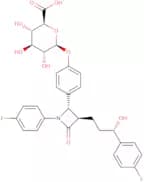
CAS:<p>Ezetimibe b-D-glucuronide is a glucuronide conjugate of ezetimibe. It can be found in human serum, as well as in the liver and small intestine. Ezetimibe b-D-glucuronide has been shown to inhibit uptake of uridine into Caco2 cells, which may be due to its ability to inhibit the activity of drug transporters such as P-glycoprotein and organic anion transporting polypeptides. This drug also inhibits the production of creatine kinase in the liver and lowers cholesterol levels by inhibiting dietary cholesterol absorption. The drug interactions with statins are still unclear and require further investigation. Ezetimibe b-D-glucuronide is metabolized by glucuronidation in the liver and small intestine.</p>Fórmula:C30H29F2NO9Pureza:Min. 95%Forma y color:PowderPeso molecular:585.55 g/mol5-Azido-1-O-acetyl-2,3-di-O-benzyl-5-deoxy-6-hydroxy-b-D-xylopyranoside
CAS:<p>5-Azido-1-O-acetyl-2,3-di-O-benzyl-5-deoxy-6-hydroxyb-Dxylopyranoside is a synthetic sugar that has been modified with fluorine and methyl groups. It is used in the synthesis of complex carbohydrate chains. The product is available in custom synthesis which may include other modifications such as acetylation, monosaccharide, or polysaccharide. 5AOBDX5 can be synthesized from 1,2,3,4,5,6 hexaoxohexane at elevated temperature by reacting with sodium azide and benzaldehyde. This product is available in high purity and can be used for click chemistry modifications.</p>Pureza:Min. 95%1,4-Anhydro-D-glucitol
CAS:<p>Intermediate in the synthesis of prostaglandins</p>Fórmula:C6H12O5Pureza:Min. 97 Area-%Forma y color:White Off-White PowderPeso molecular:164.16 g/mol2-Amino-2,4-dideoxy-4-fluoro-D-glucose HCl
<p>2-Amino-2,4-dideoxy-4-fluoro-D-glucose HCl is a synthetic carbohydrate. It is a modification of the sugar glucose with fluorine substitution. The CAS Number for this compound is 53635-91-5. 2-Amino-2,4-dideoxy-4-fluoro-D-glucose HCl has an average molecular weight of 258.1 g/mol and it can be synthesized in custom amounts. This product is available as a white crystalline powder and it can be used in various applications such as glycosylation, methylation, or click chemistry modifications.</p>Pureza:Min. 95%Esculin - Anhydrous
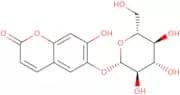
CAS:<p>Esculin is a natural product obtained from the plant Aesculus hippocastanum. Esculin has been shown to have anti-inflammatory properties in experimental models. It also has been shown to inhibit the activity of both human and animal renin, suppressing kidney fibrosis. Esculin was found to be more effective than indomethacin in preventing the progression of renal disease induced by the model system of chronic kidney disease. Esculin also has antioxidant properties and can reduce oxidative stress caused by free radicals, which may contribute to its anti-inflammatory effects. Esculin is a coumarin derivative that can be used as a chromatographic stationary phase for separation and identification of various chemical compounds.</p>Fórmula:C15H16O9Pureza:Min. 98 Area-%Forma y color:PowderPeso molecular:340.28 g/mol4-Azido-4,6-dideoxy-2,3-O-isopropylidene-L-talono(L-gulono)-1.5-lactone
<p>4-Azido-4,6-dideoxy-2,3-O-isopropylidene-L-talono(L-gulono)-1.5 lactone is a high purity synthetic carbohydrate. It is a custom synthesis and can be fluorinated, glycosylated, methylated or modified to meet your specifications. It has CAS number 1263289-75-9. This product is an oligosaccharide with a saccharide repeating unit of 3 to 7 units. The monosaccharides are D and L glucose and the oligosaccharides are D and L maltose. The complex carbohydrate is composed of one or more glycans linked by glycosidic bonds. This product is a sugar that consists of one or more monosaccharides with at least one hexose (D or L) and at least one pentose (D or L).</p>Pureza:Min. 95%1,2;4,5-Di-O-isopropylidene-b-D-fructopyranose
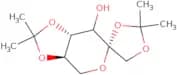
CAS:<p>Synthetic building block</p>Fórmula:C12H20O6Pureza:Min. 95 Area-%Forma y color:Off-White PowderPeso molecular:260.28 g/mol1,2:3,4-Di-O-isopropylidene-L-arabinopyranose
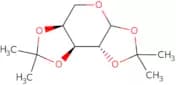
CAS:<p>1,2:3,4-Di-O-isopropylidene-L-arabinopyranose is a custom synthesis of 1,2:3,4-di-O-isopropylidene arabinopyranose. It is an oligosaccharide with a glycosylation and methylation that has a high purity with a CAS number of 212069-31-3. This complex carbohydrate can be modified to create new saccharides. The modification process includes fluorination and click chemistry reactions.</p>Fórmula:C11H18O5Pureza:Min. 95%Forma y color:PowderPeso molecular:230.26 g/mol6-O-Benzyl-D-mannose
<p>6-O-Benzyl-D-mannose is a methylated monosaccharide. It is an important intermediate in the synthesis of oligosaccharides and polysaccharides. 6-O-Benzyl-D-mannose can be used for modification of saccharides, carbohydrates and sugars. This product has high purity and a custom synthesis.</p>Fórmula:C13H18O6Pureza:Min. 95%Peso molecular:270.28 g/molZiyuglycoside II
CAS:<p>Ziyuglycoside II is a steroidal alkaloid that has been shown to have anti-angiogenic properties. It is a natural compound extracted from the Chinese herb ziyuglycoside. This compound has been shown to inhibit the activation of toll-like receptor 4, which plays an important role in inflammation and immunity. Ziyuglycoside II also inhibits the production of reactive oxygen species and autophagy, leading to cell death by apoptosis. This compound has been shown to be effective against bowel disease and epithelial mesenchymal transition (EMT). Ziyuglycoside II has also been shown to have matrix effects on the cells Hl-60, which are related to tumor metastasis.</p>Fórmula:C35H56O8Pureza:Min. 95%Forma y color:White To Off-White SolidPeso molecular:604.81 g/mol1,2:3,5-Di-O-Isopropylidene-α-L-xylofuranose
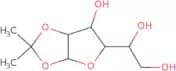
CAS:<p>1,2:3,5-Di-O-Isopropylidene-a-L-xylofuranose is a fluorinated sugar that is used as a building block in the synthesis of complex carbohydrates and oligosaccharides. It has a CAS number of 131156-47-3. 1,2:3,5-Di-O-Isopropylidene-a-L-xylofuranose is an active component in the modification of saccharide and polysaccharide structures by click chemistry. It can be modified with various functional groups such as methylation or monosaccharide to produce specific compounds. This product is available for custom synthesis.</p>Fórmula:C11H18O5Pureza:Min. 95%Forma y color:PowderPeso molecular:230.26 g/mol(1R) -1- [(2R, 3S) -3- Hydroxy- 1- azetidinyl] -1, 2- ethanediol
CAS:<p>The compound is a custom synthesis of (1R) -1- [(2R, 3S) -3- Hydroxy- 1- azetidinyl] -1, 2- ethanediol. The compound has been modified with fluorination and methylation. This modification has been confirmed by high resolution mass spectrometry and nuclear magnetic resonance spectroscopy. The fluorinated compound is synthesized from the monosaccharide or oligosaccharide starting materials.<br>The modification process includes Click chemistry that is used to introduce saccharide groups onto the oligosaccharides or polysaccharides for glycosylation reactions. This process results in a sugar or complex carbohydrate product with high purity.</p>Fórmula:C5H11NO3Pureza:Min. 95%Peso molecular:133.15 g/mol1-Deoxy-D-xylulose - Aqueous solution
CAS:<p>1-Deoxy-D-xylulose is a potent inhibitor of the enzyme xylulokinase, which catalyses the first step in the metabolism of D-xylulose to form 5-phosphate. This prevents the conversion of D-xylulose to xylitol and inhibits body formation. The 1-deoxy--D-xylulose molecule has been shown to bind selectively to sodium citrate by x-ray diffraction data. Sodium citrate is an antimicrobial agent used for food preservation and as a preservative in pharmaceuticals. It also has been shown to control enzyme activities that are involved in infectious diseases such as malaria, tuberculosis, and leprosy.<br>1-Deoxy--D--xylulose is one of many high purity steviol glycosides that have been identified as potential drug targets for inhibiting body formation or growth.</p>Fórmula:C5H10O4Pureza:Min. 97 Area-%Forma y color:Clear LiquidPeso molecular:134.13 g/mol3-Deoxy-1,2-O-isopropylidene-5-O-toluoyl-b-L-ribofuranose
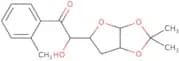
CAS:<p>3-Deoxy-1,2-O-isopropylidene-5-O-toluoyl-b-L-ribofuranose is a sugar that is a methylated form of ribose. It also forms the backbone of polysaccharides and is modified with glycosylation. 3DOTRB can be custom synthesized in high purity and has CAS No. 2072145-19-6.</p>Pureza:Min. 95%6-Deoxy-L-allitol
<p>6-Deoxy-L-allitol is a white crystalline solid that melts at 122°C. It has an amorphous character and may be present as a mixture of rotations, form, and crystalline polymorphs. 6-Deoxy-L-allitol can be oxidized to its diol derivative by hydrogen peroxide or sodium periodate. This compound is soluble in water, methanol, and acetone. The molecular weight of this compound is 179.06 g/mol.</p>Pureza:Min. 95%(3S, 5S) -1-Benzyl-3, 4, 5- piperidinetriol
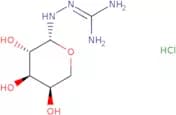
<p>(3S, 5S) -1-Benzyl-3, 4, 5- piperidinetriol is a custom synthesis that belongs to the group of methylated and fluorinated triols. It is a high purity compound with a monosaccharide sugar. This product can be used as an intermediate for the synthesis of complex carbohydrate compounds such as oligosaccharides and polysaccharides.</p>Pureza:Min. 95%N1-β-D-Arabinopyranosylamino-guanidine hydrochloride
CAS:<p>N1-b-D-arabinopyranosylamino-guanidine HCl is a modified carbohydrate. It is a synthetic monosaccharide that is custom synthesized by methylation and glycosylation. This product has high purity and can be used for modification of saccharides or oligosaccharides to create new carbohydrates with desired properties.</p>Fórmula:C6H14N4O4•HClPureza:Min. 95%Forma y color:White to light beige solid.Peso molecular:242.66 g/molN-Acetyl-D-glucosamine 2-epimerase
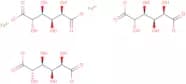
CAS:<p>N-Acetyl-D-glucosamine 2-epimerase is an enzyme that catalyzes the conversion of N-acetyl D-glucosamine to N-acetyl D-mannosamine. This enzyme is a recombinant protein. It has been shown to be active against bacterial cells and has been used as a target for antibodies in research. The enzyme is insoluble at high concentrations, so it must be refolded before use. It is active in a denatured form, but can be made inactive by heat or other denaturing agents such as urea, guanidine hydrochloride, or sodium dodecyl sulfate (SDS). Refolding strategies include dilution, dialysis, or adsorption onto a solid support such as agarose beads.<br>!--</p>Pureza:Min. 95%Forma y color:Grey to brown solid.UDP-D-[1-13C]glucose disodium salt
CAS:<p>Labelled substrate for glucosyltransferase</p>Pureza:Min. 95%4-Aminobutyl 2- acetamido - 2- deoxy-b- D- galactopyranoside
<p>4-Aminobutyl 2-acetamido-2-deoxy-b-D-galactopyranoside is a modification of the carbohydrate, which is an Oligosaccharide. It is synthesized by the chemical process of Methylation and Glycosylation. The functional groups on this modification are Carbohydrate and Fluorination. CAS No. for this product is 51310-59-3, and Monosaccharide is the sugar type.</p>Fórmula:C12H24N2O6Pureza:Min. 95%Peso molecular:292.33 g/molLumefantrine b-D-Glucuronide
CAS:<p>Lumefantrine b-D-Glucuronide is an anti-malarial drug with a high purity and custom synthesis. It can be synthesized by click modification, fluorination, glycosylation, and methylation of the sugar. Lumefantrine b-D-Glucuronide is an oligosaccharide that contains saccharides and complex carbohydrates. Lumefantrine b-D-Glucuronide is a sugar modified to produce a molecule that is more soluble in water. It has a CAS No. 460745-26-0 and can also be found under the name Oligosaccharide, Monosaccharide, Saccharide, Carbohydrate.</p>Fórmula:C36H40Cl3NO7Pureza:Min. 95%Peso molecular:705.06 g/molBenzyl 4,6-O-benzylidine-β-D-galactopyranoside
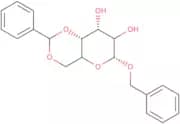
CAS:<p>Benzyl 4,6-O-benzylidine-b-D-galactopyranoside is a benzoylated sugar. It is prepared by reacting benzoyl chloride with benzene and then with the sugar in an equimolar ratio. The reaction proceeds via a nucleophilic substitution at the 2' position of the sugar followed by an elimination of water. Benzyl 4,6-O-benzylidine-b-D-galactopyranoside reacts with dibutyltin to form a benzoylated tin compound that can be used as a catalyst for organic synthesis.</p>Fórmula:C20H22O6Pureza:Min. 95%Forma y color:White To Off-White SolidPeso molecular:358.39 g/molMethyl 2,3,4-tri-O-acetyl-b-D-glucopyranuronosyl azide
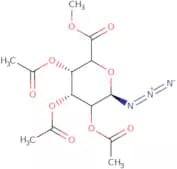
CAS:<p>Methyl 2,3,4-tri-O-acetyl-b-D-glucopyranuronosyl azide is a fluorinated carbohydrate. It is a monosaccharide and an oligosaccharide that is synthesized from a synthetic glycosylation reaction. This product can be used in the production of polysaccharides or as a click modification to modify the sugar moiety of other molecules. Methyl 2,3,4-tri-O-acetyl-b-D-glucopyranuronosyl azide has CAS No. 67776-38-9 and is available in high purity.</p>Fórmula:C13H17N3O9Pureza:(%) Min. 98%Forma y color:White PowderPeso molecular:359.29 g/mol1,2,3,5,6-Penta-O-benzoyl-D-galactofuranose
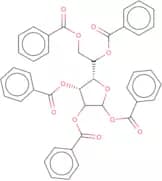
CAS:<p>1,2,3,5,6-Penta-O-benzoyl-D-galactofuranose is a sugar that is custom synthesized and can be modified with fluorination. This product has a CAS number of 138811-45-7 and is high purity. It can be used in glycosylation, oligosaccharide synthesis, methylation, monosaccharide synthesis and polysaccharide synthesis. It is an important building block for the modification of complex carbohydrates.</p>Fórmula:C41H32O11Pureza:Min. 95%Forma y color:White PowderPeso molecular:700.69 g/molTopiramate impurity D
CAS:<p>Topiramate impurity D is a custom synthesis with CAS number. It is an oligosaccharide that has been modified by methylation and glycosylation. Topiramate impurity D is a complex carbohydrate with saccharide units, which are modified by fluorination and click chemistry. This product is high purity and has been synthesized using the synthetic method of glycosylation, Oligosaccharide, Methylation, and Carbohydrate.</p>Fórmula:C12H20O6Pureza:Min. 95%Peso molecular:260.28 g/mol3,4,6-Tri-O-acetyl-2-azido-2-deoxy-β-D-galactopyranosyl trichloroacetimidate
CAS:<p>3,4,6-Tri-O-acetyl-2-azido-2-deoxy-beta-D-galactopyranosyl trichloroacetimidate is a custom synthesis that has been modified with fluorination and methylation. It is a monosaccharide containing the sugar galactose and it can be found in a saccharide or polysaccharide. This compound was synthesized using click chemistry.</p>Fórmula:C14H17Cl3N4O8Pureza:Min. 95 Area-%Peso molecular:475.67 g/mol1,2-O-Isopropylidene-a-D-glucofuranose
CAS:<p>1,2-O-Isopropylidene-a-D-glucofuranose (IPDF) is a natural compound that has been isolated from the leaves of the plant Cinnamomum camphora. IPDF has been shown to have biological properties such as inhibiting hl-60 cells and inducing apoptosis in leukemia cells. The metabolic rate of IPDF was studied in isolated hearts and it was found that the compound slows fatty acid oxidation. The enzyme substrate specificity of IPDF was also tested by adding trifluoroacetic acid, which yielded no reaction.</p>Fórmula:C9H16O6Forma y color:White Off-White PowderPeso molecular:220.22 g/molIron sucrose
CAS:<p>Iron sucrose is a sucrose-iron complex that is administered intravenously for the treatment of bowel disease and iron deficiency. Iron sucrose has been shown to have potent inducers of oxidative injury, which may be due to the formation of reactive oxygen species. Iron sucrose has also been shown to increase cellular transformation and congestive heart failure in mice. Long-term toxicity studies have not been conducted.</p>Fórmula:C12H22O11FePureza:Min. 95%Forma y color:Brown PowderPeso molecular:398.141-Amino-2,5-anhydro-1-deoxy-D-mannitol
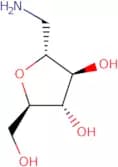
CAS:<p>1-Amino-2,5-anhydro-1-deoxy-D-mannitol is an amino sugar that is synthesized by reductive amination of d-fructose and nitrous acid. It has been shown to be a substrate for the transporter protein, which transports it into the cell. 1-Amino-2,5-anhydro-1-deoxy-D-mannitol has been used in the synthesis of arylamines with nitrous acid as a reducing agent. This process has been used to study the stereospecificity of reductive amination.</p>Fórmula:C6H13NO4Pureza:Min. 95%Forma y color:PowderPeso molecular:163.17 g/molPhenyl-β-D-thioglucopyranoside
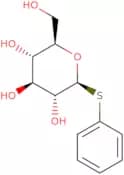
CAS:<p>Phenyl-beta-D-thioglucopyranoside is a heterocycloalkyl compound that contains a phenyl group and a beta-D-thioglucopyranoside. It is used as an intermediate in the production of pharmaceuticals, yellow dye, and cancer drugs. Phenyl-beta-D-thioglucopyranoside binds to the cell membrane of cancer cells and induces apoptosis by inhibiting the synthesis of proteins. This compound also has alkenyl and haloalkyl groups, which may be important for its biological activity. Phenyl-beta-D-thioglucopyranoside can be crystallized in two different forms: one with a crystalline form, which is yellow; the other with a crystalline form, which is colorless.</p>Fórmula:C12H16SO5Pureza:Min. 95%Forma y color:PowderPeso molecular:272.32 g/mol2,3-O-Isopropylidene-1-O-methyl-D-ribosic acid
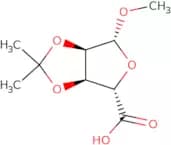
CAS:<p>2,3-O-Isopropylidene-1-O-methyl-D-ribosic acid is a synthetic glycosylate that can be used to modify saccharides and oligosaccharides. It is a methylated form of ribose and has been shown to inhibit the glycosylation reactions of glycogen. 2,3-O-Isopropylidene-1-O-methyl-D-ribosic acid is also known to react with fluorine in order to produce a variety of fluorinated carbohydrates. This product has high purity and can be used for custom synthesis of carbohydrates. The CAS number for this product is 54622-95-6.</p>Fórmula:C9H14O6Pureza:Min. 95%Forma y color:PowderPeso molecular:218.2 g/mol














![(1R) -1- [(2R, 3S) -3- Hydroxy- 1- azetidinyl] -1, 2- ethanediol](/_next/image/?url=https%3A%2Fstatic.cymitquimica.com%2Fproducts%2F3D%2Fthumb-webp%2FMH163408.webp&w=3840&q=75)

![UDP-D-[1-13C]glucose disodium salt](/_next/image/?url=https%3A%2Fstatic.cymitquimica.com%2Fproducts%2F3D%2Fthumb-webp%2FMU170099.webp&w=3840&q=75)