Monosacáridos
Los monosacáridos son la forma más simple de los carbohidratos y sirven como bloques fundamentales para azúcares más complejos y polisacáridos. Estas moléculas de azúcar única juegan roles críticos en el metabolismo energético, la comunicación celular y los componentes estructurales de las células. En esta sección, encontrará una amplia variedad de monosacáridos esenciales para la investigación en bioquímica, biología molecular y glicociencia. Estos compuestos son cruciales para estudiar las rutas metabólicas, los procesos de glucosilación y el desarrollo de agentes terapéuticos. En CymitQuimica, ofrecemos monosacáridos de alta calidad para apoyar sus necesidades de investigación, asegurando precisión y fiabilidad en sus investigaciones científicas.
Subcategorías de "Monosacáridos"
- Allosas(11 productos)
- Arabinosas(21 productos)
- Eritrosas(11 productos)
- Fructosas(9 productos)
- Fucosas(36 productos)
- Galactosamina(41 productos)
- Galactosa(261 productos)
- Glucosas(365 productos)
- Ácidos glucurónicos(51 productos)
- Glico-sustratos para enzimas(77 productos)
- Gulosas(6 productos)
- Idosas(4 productos)
- Inositoles(15 productos)
- Lyxosas(4 productos)
- Manosas(65 productos)
- O-glicanos(48 productos)
- Psicosas(3 productos)
- Ramnosas(10 productos)
- Ribosas(61 productos)
- Ácidos siálicos(100 productos)
- Sorbosas(4 productos)
- Azúcares(173 productos)
- Tagatosis(4 productos)
- Taloses(8 productos)
- Xilosas(20 productos)
Mostrar 17 subcategorías más
Se han encontrado 6088 productos de "Monosacáridos"
Ordenar por
Pureza (%)
0
100
|
0
|
50
|
90
|
95
|
100
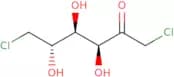
1,6-Dichloro-1,6-dideoxy-D-fructose
CAS:<p>1,6-Dichloro-1,6-dideoxy-D-fructose (1,6DD) is a synthetic spermicide that prevents the fusion of the egg and sperm. It has been shown to be effective in reducing fertility in male rats. The pharmacological effects of 1,6DD are due to its benzalkonium chloride content. 1,6DD is a reactive chemical that can damage cellular membranes and lead to cell death. Benzalkonium chloride is toxic to human cells and can cause necrosis or apoptosis. The toxicity of 1,6DD on the brain has been demonstrated using human liver cells as well as human brain cells. This agent also has an effect on mineralization and causes an increase in calcium influx into cells by activating calcium channels.</p>Pureza:Min. 95%1,2-O-Isopropylidene-3-deoxy-α-D-allofuranose
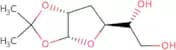
CAS:<p>1,2-O-Isopropylidene-3-deoxy-a-D-allofuranose is a custom synthesis that is a complex carbohydrate. It has been modified by methylation and glycosylation. The product is an Oligosaccharide, Polysaccharide and Modification of saccharide. The product has high purity with a CAS No. 4494-96-6.</p>Fórmula:C9H16O5Pureza:Min. 95%Forma y color:Off-White PowderPeso molecular:204.22 g/molMannide monooleate
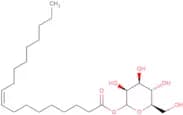
CAS:<p>Mannide monooleate is a naturally occurring fatty acid that is found in the lipid bilayer of cell membranes. It has shown to be effective in the treatment of a number of chronic inflammatory diseases, such as arthritis and inflammatory bowel disease. Mannide monooleate is also being explored as an adjuvant for vaccines, and has shown efficacy against leishmania infection.</p>Fórmula:C24H44O6Pureza:Min. 95%Forma y color:PowderPeso molecular:428.61 g/molUDP-L-galactose diammonium salt
<p>UDP-L-galactose diammonium salt is a modification of the sugar UDP-galactose. It is an oligosaccharide that is found in glycoproteins and glycolipids. It is synthesized by the addition of a methyl group to the galactose ring and a fluorine atom to the hydroxyl group on carbon 4. UDP-L-galactose diammonium salt is used as a synthetic sugar in laboratory settings, although it can also be found in nature. This compound has been shown to have anti-inflammatory properties, which may be due to its ability to inhibit prostaglandin synthesis.</p>Fórmula:C15H22N2O17P2·N2H8Pureza:Min. 95%Peso molecular:600.37 g/molα-D(+)Mannose 1-phosphate sodium hydrate
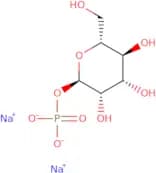
<p>a-D-Mannose-1-phosphate dipotassium salt (DMDK) is a synthetic oligosaccharide that was designed and synthesized for use as a potential drug in the treatment of cancer. DMDK has been shown to be an inhibitor of protein glycosylation, which may lead to the prevention of tumor formation. It also has anti-inflammatory properties and can inhibit the growth of bacteria by binding to bacterial 16S ribosomal RNA and inhibiting protein synthesis.</p>Fórmula:C6H13O9P·xNa·yH2OPeso molecular:260.14 g/molAcidic Sophorolipids mix-acetylated - mixture of C30H54O13, C32H56O14 and C34H58O15
<p>Sophorolipids are produced by various yeast species, notably Starmerella bombicola. Acidic Sophorolipids are amphiphilic molecules and therefore possess the attributes of surfactants; however as bio-surfactants they have several advantages over synthetic surfactants including low toxicity, biodegradability and the potential for low cost manufacture.</p>Pureza:Min. 95%Forma y color:White Yellow PowderPeso molecular:622.74. 664.78 and 706.822-Aminophenyl β-D-glucuronide
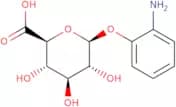
CAS:<p>2-Aminophenyl b-D-glucuronide is a cytosolic drug that is metabolized by the liver to mandelonitrile, which is then excreted in urine. 2-Aminophenyl b-D-glucuronide has been shown to inhibit the growth of fungi in vivo and has been shown to have a reversible binding affinity for fungal cell walls. This drug also inhibits the production of ergosterol, an important component of fungal cell membranes, which leads to cell death.</p>Fórmula:C12H15NO7Pureza:Min. 95%Forma y color:PowderPeso molecular:285.25 g/molSolasodine 3-glucoside
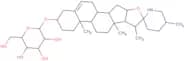
CAS:<p>Solasodine 3-glucoside is a sugar that belongs to the group of oligosaccharides. It has been synthetically modified by fluorination, methylation, and click chemistry. Solasodine 3-glucoside is synthesized from sucrose in a glycosylation reaction with glucuronic acid and an aminoglycoside antibiotic. The sugar analogs are then converted to the desired saccharide structure by monosaccharide synthesis or polysaccharide synthesis. This product is custom synthesized to order for customers and can be modified to suit their needs with click chemistry and other modifications.</p>Fórmula:C33H53NO7Pureza:Min. 95%Peso molecular:575.8 g/mola-D-Galactose-sp-biotin
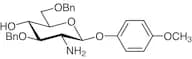
<p>a-D-Galactose-sp-biotin is a glycosylation product with a complex carbohydrate structure. It is synthesized by reacting a galactose with a spacer arm and biotin. The product has been modified to include fluorination, saccharide modification, and Oligosaccharide synthesis. This product is available in high purity and CAS No.</p>Fórmula:C25H44N4O9SPureza:Min. 95%Forma y color:PowderPeso molecular:576.7 g/mol4-Methoxyphenyl 2-Amino-3,6-di-O-benzyl-2-deoxy-β-D-glucopyranoside
CAS:Fórmula:C27H31NO6Forma y color:White to Almost white powder to crystalPeso molecular:465.55a-D-Glucoheptonic acid sodium salt
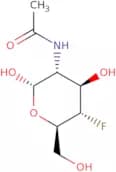
CAS:<p>a-D-Glucoheptonic acid sodium salt is a compound that has been shown to modulate the immune system. It also has been used in pharmaceutical formulations as an excipient and as a carrier for diagnostic and therapeutic agents.</p>Fórmula:C7H13O8NaPureza:Min. 95%Forma y color:PowderPeso molecular:248.16 g/mol2-Acetamido-2,4-dideoxy-4-fluoro-α-D-glucopyranose
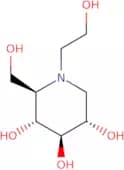
CAS:<p>2-Acetamido-2,4-dideoxy-4-fluoro-a-D-glucopyranose is a synthetic, fluorinated carbohydrate. It is a monosaccharide that is made by the substitution of an acetamido group with a fluoro group at C2 and C4 of the glucose molecule. This product has been synthesized using Click chemistry to modify the 2’ position and methylation at C5. The target use for this product is as a sugar in order to glycosylate or polysaccharide. This compound has been shown to have high purity and can be custom synthesized, depending on the needs of the customer.</p>Fórmula:C8H14FNO5Pureza:Min. 95 Area-%Forma y color:PowderPeso molecular:223.2 g/molN-(b-Hydroxyethyl)-1-deoxynojirimycin
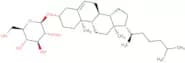
CAS:<p>Inhibitor of α-glucosidase with applications in diabetes therapy for control of post-prandial blood glucose fluctuations. The compound inhibits the digestive breakdown of complex carbohydrates to absorbable monosaccharides and smoothens hyperglycaemic peaks in type 2 diabetes mellitus. It also possesses anti-obesity effects thanks to activation of brown adipose tissue and increasing energy expenditure.</p>Fórmula:C8H17NO5Pureza:Min. 95%Forma y color:White PowderPeso molecular:207.22 g/molCholesterol b-D-glucoside
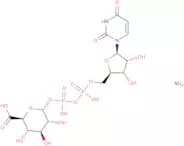
CAS:<p>Cholesterol b-D-glucoside is a modified cholesterol that has been fluorinated and methylated. It is a complex carbohydrate that can be used in the synthesis of oligosaccharides and monosaccharides. Cholesterol b-D-glucoside is soluble in water, alcohols, and ethers and is insoluble in chloroform. The CAS number for Cholesterol b-D-glucoside 7073-61-2. This product is available for custom synthesis, which means it can be made to order with the specifications you need.</p>Pureza:Min. 95%UDP-D-glucuronide ammonium salt
CAS:<p>UDP-D-glucuronide ammonium salt is a drug that is used for the treatment of estrogen-dependent cancers. It is an inhibitor of human UDP-glucuronosyltransferase, an enzyme that catalyzes the glucuronidation of estrone and other substrates. The binding affinity of UDP-D-glucuronide ammonium salt can be increased by mutating the enzyme to increase its kinetic rate. This drug has been shown to inhibit estrogen production in recombinant human liver cells as well as in human liver cells. Mutations in the gene encoding this enzyme have also been associated with variations in estrogen levels, specifically high rates.</p>Fórmula:C15H22N2O18P2·xNH3Pureza:Min. 95%Peso molecular:580.29 g/molD-[UL-¹³C6]mannose
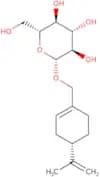
CAS:<p>D-[UL-¹³C6]mannose is a research chemical that is widely used in the field of carbohydrate and protein studies. It is a heavy label isotope of mannose, a monosaccharide that plays an important role in various biological processes. D-[UL-¹³C6]mannose is commonly used to study the metabolism and biosynthesis of oligosaccharides, glycoproteins, and lipopolysaccharides. By incorporating this heavy label into these molecules, researchers can track their movement and interactions within cells and tissues. This research chemical is an invaluable tool for studying the complex structures and functions of carbohydrates in biological systems.</p>Fórmula:C6H12O6Pureza:Min. 95%Peso molecular:186.11 g/molS-(-)-Perillyl alcohol glucoside
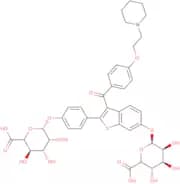
CAS:<p>S-(-)-Perillyl alcohol glucoside is a glycoconjugate that has been shown to inhibit β-glucosidase and pancreatic lipase. It is used in the treatment of cancers, such as colorectal cancer, by inhibiting glucose uptake into cells. S-(-)-Perillyl alcohol glucoside may also have anticancer effects by inhibiting glucose transporters and caspases.</p>Fórmula:C16H26O6Pureza:Min. 95%Forma y color:PowderPeso molecular:314.37 g/molRaloxifene 6,4'-bis-b-D-glucuronide
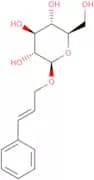
CAS:<p>Raloxifene 6,4'-bis-b-D-glucuronide is a synthetic molecule that has been modified and fluorinated. It is a monosaccharide with a methyl group at C6. The synthesis of this compound starts with the conversion of raloxifene to the bis-b-D-glucuronide compound in which hydroxyl groups have been esterified by an acetyl group. The modification process includes the addition of a methyl group at C6, and then it is fluorinated. This product is soluble in water and methanol, but insoluble in ether. It has CAS number 182507-20-6 and molecular weight 536. Raloxifene 6,4'-bis-b-D-glucuronide can be used as an intermediate for the synthesis of oligosaccharides or polysaccharides.</p>Fórmula:C40H43NO16SPureza:Min. 95%Peso molecular:825.85 g/mol3-Phenyl-2-propenylbeta-D-glucopyranoside
CAS:<p>3-Phenyl-2-propenylbeta-D-glucopyranoside is a flavonoid that has been shown to have inhibitory properties. It has been used as an analytical method for the diagnosis of bronchial reactivity. The high resistance of 3-phenyl-2-propenylbeta-D-glucopyranoside to oxidation and reduction make it an interesting candidate for antiinflammatory agents. When testing the effects of this compound on human bronchial tissue, it was found that 3-phenyl-2-propenylbeta-D-glucopyranoside inhibited allergic symptoms by inhibiting the release of inflammatory mediators such as histamine and leukotrienes, which are released in response to allergens and other irritants in the airways. The use of this compound may be useful in the treatment of asthma patients who suffer from allergic reactions to dust, pollen, or animal dander.</p>Fórmula:C15H20O6Pureza:Min. 95%Forma y color:PowderPeso molecular:296.32 g/molDigalactosyl diglyceride
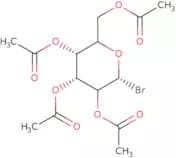
CAS:<p>Digalactosyl diglyceride is a lipid that is found in the wax of plants. It has been shown to have anti-inflammatory properties and can be used as a nonsteroidal anti-inflammatory drug. Digalactosyl diglyceride binds to nuclear DNA and inhibits fatty acid synthesis, which leads to membrane destabilization.</p>Fórmula:C18H34O13Pureza:Min. 95%Forma y color:SolidPeso molecular:458.45 g/molAcetobromo-D-glucose
CAS:<p>Intermediate for β-glucosides; potential PET surface modification reagent</p>Fórmula:C14H19BrO9Pureza:Min. 95%Forma y color:White Off-White PowderPeso molecular:411.2 g/molMethyl 2,3,5-tri-O-benzyl-D-ribofuranoside
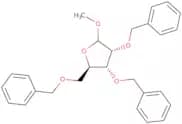
CAS:<p>Methyl 2,3,5-tri-O-benzyl-D-ribofuranoside is a potential drug that can be used in the treatment of type 2 diabetes. It is an analog of curcumin that has a nucleophilic group on its benzyl ring. This group reacts with the carbonyl carbon atom in maltase glucoamylase and triggers a Friedel-Crafts reaction that generates an isomeric product. The methyl 2,3,5-tri-O-benzyl-D-ribofuranoside molecule inhibits glycosidases by binding to the active site of these enzymes and preventing access to substrate. Methyl 2,3,5-tri-O-benzyl-D ribofuranoside has also been shown to have antifungal activity against Candida albicans.</p>Pureza:Min. 95%p-Nitrophenyl 2-Acetamido-2-deoxy-β-D-glucopyranoside
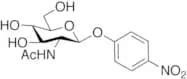
CAS:Producto controlado<p>Applications Useful substrate for the rapid colorimetric assay of N-Acetyl-beta-glucosaminidase in human urine.<br>References Muruhn, D.: Clin. Chim. Acta, 73, 453 (1976)<br></p>Fórmula:C14H18N2O8Forma y color:NeatPeso molecular:342.301N-Acetylneuraminic Acid Methyl Ester
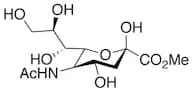
CAS:Producto controlado<p>Applications Derivative of Neuraminic Acid<br>References Oetke, C., et al.: J. Biol. Chem., 277, 6688 (2002),<br></p>Fórmula:C12H21NO9Forma y color:White To Off-WhitePeso molecular:323.30Methyl 2-Acetamido-2-deoxy-α-D-glucopyranoside
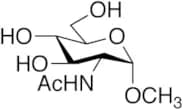
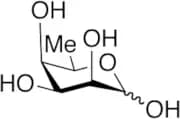
CAS:Producto controladoFórmula:C9H17NO6Forma y color:NeatPeso molecular:235.236-Deoxy-D-talose
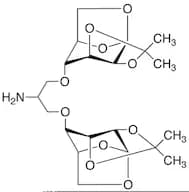
CAS:Producto controlado<p>Stability Hygroscopic<br>Applications 6-Deoxy-D-talose is an derivative of D-Talose (T005560), a monosaccharide sugar that can convert between aldose and ketose forms in pyridine in the presence of aluminum oxide.<br>References Davies, S.G., et al.: Org. Biomolec. Chem., 3, 348 (2005);<br></p>Fórmula:C6H12O5Forma y color:NeatPeso molecular:164.161,3-Bis-(1,6-anhydro-2,3-O-isopropylidene-β-D-mannopyranose-4-yloxy)-2-propylamine
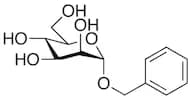
CAS:Producto controlado<p>Applications Used in the synthesis of novel bis(D-mannose) compounds.<br>References Holman, G.D., et al.: Carbohydrate Res., 135, 337 (1985),<br></p>Fórmula:C21H33NO10Forma y color:NeatPeso molecular:459.49Benzyl α-D-Mannopyranoside
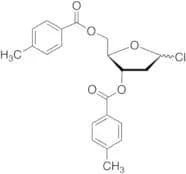
CAS:Producto controlado<p>Applications Benzyl α-D-Mannopyranoside (cas# 15548-45-5) is a compound useful in organic synthesis.<br>References Rutschow, S., et al.: Bioorg., Med. Chem., 10, 4043 (2002), Duvet, S., et al.: Glycobiol., 14, 841 (2004),<br></p>Fórmula:C13H18O6Forma y color:NeatPeso molecular:270.282-Deoxy-3,5-di-O-p-toluoyl-D-ribofuranosyl Chloride
CAS:Producto controladoFórmula:C21H21ClO5Forma y color:NeatPeso molecular:388.846-O-Triisopropylsilyl-D-glucal
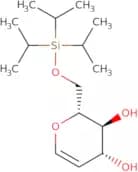
CAS:<p>6-O-Triisopropylsilyl-D-glucal is a silyl ether that can be used as a protecting group for benzyl alcohol. It is an efficient, large-scale synthesis of the benzyl alcohol and d-glucuronolactone. 6-O-Triisopropylsilyl-D-glucal accelerates the reaction by removing water as a byproduct of the reaction, simplifying the synthesis to just two steps. This product is also useful for synthesizing other products with similar structures.</p>Fórmula:C15H30O4SiPureza:Min. 95%Peso molecular:302.48 g/mol3,5,6-Tri-O-benzyl-D-glucofuranose
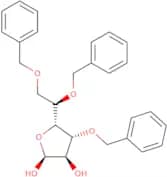
CAS:<p>3,5,6-Tri-O-benzyl-D-glucofuranose is a crystalline and white or off-white powder. It is soluble in water and toluene, but insoluble in chlorinated solvents. The chemical has been synthesized from benzoic acid and D-glucose. 3,5,6-Tri-O-benzyl-D-glucofuranose is used as a reagent for the synthesis of polyhydroxybutyrate (PHB) polymers that are biodegradable and can be used as thermoplastic polyesters. This compound has been shown to be potentially hazardous to the environment due to its high reactivity with chloride ions in the presence of benzyl alcohols.</p>Fórmula:C27H30O6Pureza:Min. 95%Peso molecular:450.54 g/molMethyl 4-chloro-4-deoxy-a-D-galactopyranoside
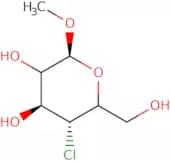
<p>Methyl 4-chloro-4-deoxy-a-D-galactopyranoside is a synthetic monosaccharide that has been modified with fluorination and methylation. The modification of this sugar provides it with the ability to be used in glycosylation reactions, click chemistry, and other modification reactions. This product is offered as a custom synthesis and can be synthesized for any desired specification. It is also available in high purity form.</p>Fórmula:C7H13ClO5Pureza:Min. 95%Peso molecular:212.63 g/molIvermectin b1 monosaccharide
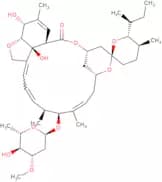
CAS:<p>Ivermectin is a derivative of avermectin that is used for the treatment of parasitic infections. Ivermectin b1 monosaccharide is an analog of the parent molecule, which lacks a carbon atom at position 1 and has a spiroketal group at position 2. It is known to be more potent than ivermectin in animal studies.</p>Fórmula:C41H62O11Pureza:Min. 95%Forma y color:PowderPeso molecular:730.92 g/mol1,2,3,5-Tetra-O-acetyl-D-ribofuranose
CAS:<p>1,2,3,5-Tetra-O-acetyl-D-ribofuranose is a dietary supplement that can be found in the form of palladium complexes. This compound has been shown to have anti-inflammatory properties and may be effective against cancer cells. 1,2,3,5-Tetra-O-acetyl-D-ribofuranose is an acetylated pyridazine derivative with antimicrobial and antibacterial effects. It has also been shown to inhibit the synthesis of purines and pyrimidines by cleaving the 6th carbon from ribose. 1,2,3,5-Tetra-O-acetyl-D-ribofuranose is synthesized by chlorination of 2,6-, 3-, 5-, or 7-(chloropurinomethyl)pyridine with mercuric chloride or nitrosyl chloride. The cleavage products are hydroxyl group</p>Pureza:Min. 95%D-[6-13C]Galacturonic acid potassium salt
<p>D-[6-13C]Galacturonic acid potassium salt is a synthetic, water-soluble complex carbohydrate with a molecular weight of 744.2. It is used as a fluorescence probe in magnetic resonance imaging (MRI) and also has applications in the synthesis of oligosaccharides and polysaccharides. D-[6-13C]Galacturonic acid potassium salt is soluble in water and has an average pH of 5.0. This compound is available for custom synthesis with high purity and can be found under CAS number 144561-27-4.</p>Pureza:Min. 95%D-[1-13C]Xylose
CAS:<p>D-[1-13C]Xylose is a carbon source that is used to study the metabolism of glycolytic carbon in cells. It has been labeled with 13C and can be used as a tracer for the study of the distribution of metabolites, including glucuronic acid, mannose, and xylose. This can be done by nuclear magnetic resonance (NMR) spectroscopy or by using a magnetic resonance spectroscopy technique. The use of D-[1-13C]xylose has been shown to be an effective way to label cryptococcus neoformans cells in order to understand their metabolism.</p>Fórmula:C5H10O5Pureza:Min. 95%Peso molecular:151.12 g/molo-(A-D-Galactopyranosyl)-D-galactose
CAS:<p>O-(A-D-Galactopyranosyl)-D-galactose is a sugar that is used in the synthesis of complex carbohydrates. O-(A-D-Galactopyranosyl)-D-galactose can be fluorinated and methylated to produce o-(A-D-Galactopyranosyl)-2,6-dideoxy--glucose. This sugar has been shown to inhibit the growth of bacteria such as Mycobacterium tuberculosis and Mycobacterium avium complex. Synthesis of this sugar is done through a custom synthesis process with high purity and quality.</p>Fórmula:C12H22O11Pureza:Min. 95%Peso molecular:342.3 g/moltrans-Zeatin-9-glucoside
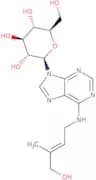
CAS:<p>Trans-zeatin-9-glucoside is a natural product that is produced by plants and is known to have a variety of biological activities. Trans-zeatin-9-glucoside has been shown to affect plant growth and development, as well as the immune system. It has also been shown to exhibit antioxidant activity and inhibit cancer cell proliferation. Trans-zeatin-9-glucoside has been found in barley, wheat, rye, oat straw, corn stover, soybean leaves, potato tubers, and composts. The biosynthesis of this compound begins with the conversion of zeatin into zeaxanthin via a series of enzymatic reactions. Zeaxanthin is then converted into trans-zeatin-9-glucoside through the action of an enzyme called β--cyclodextrin glucanotransferase.</p>Fórmula:C16H23N5O6Pureza:Min. 98 Area-%Forma y color:Colorless PowderPeso molecular:381.38 g/molα-GalCer analog 8
CAS:<p>α-GalCer analog 8 is a high purity, custom synthesis, synthetic α-galactocerebrosidase enzyme that has been modified to include 8 fluorine atoms. The enzyme is glycosylated at the N-terminal and methylated at the C-terminal. The modification of this enzyme with an oligosaccharide and monosaccharide moiety improves its stability in vivo. α-GalCer analog 8 is used for the treatment of Gaucher's disease, which is caused by the accumulation of complex carbohydrates in the body. This condition can be managed using α-GalCer analog 8 because it hydrolyzes these complex carbohydrates into their monosaccharides.</p>Fórmula:C50H97N3O8Pureza:Min. 95%Peso molecular:868.32 g/molL-Ribose
CAS:<p>L-Ribose is a monosaccharide that is a constituent of ribonucleic acid, deoxyribonucleic acid and other compounds. It can be found in small quantities in most living organisms. L-Ribose has been modified to include fluorine atoms at the C2 position. The addition of fluorine atoms increases the stability of the molecule and its resistance to hydrolysis by esterases. L-Ribose has also been modified with methyl groups at the C3 position and glycosylation at the C4 position. This modification preserves the biological activity of L-Ribose and increases its water solubility. L-Ribose is used as a building block for custom synthesis, such as peptides or oligosaccharides.>>END>></p>Fórmula:C5H10O5Peso molecular:150.13 g/molBenzyl b-D-arabinopyranoside
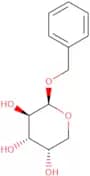
CAS:<p>Benzyl b-D-arabinopyranoside is a custom synthesis that can be used in the modification of complex carbohydrates, oligosaccharides, and polysaccharides. This product is a synthetic carbohydrate that can be fluorinated for use as a pharmaceutical or biological agent. It has CAS number 5329-50-0, and can be glycosylated, methylated, or click modified for different applications.</p>Fórmula:C12H16O5Pureza:Min. 95%Forma y color:White To Off-White SolidPeso molecular:240.25 g/molMethyl 2,3,4-tri-O-benzyl-b-D-glucuronide benzyl ester
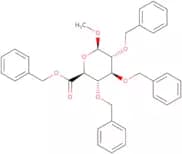
CAS:<p>Methyl 2,3,4-tri-O-benzyl-b-D-glucuronide benzyl ester is a custom synthesis that can be used as a glycosylation or methylation reagent. It has been shown to be an effective click modification reagent and can be used in the synthesis of complex carbohydrates. This compound is a carbohydrate that has been modified with fluorination and methylation. This compound has saccharide units and is a sugar. It is soluble in water and ethanol.</p>Fórmula:C35H36O7Pureza:Min. 95%Peso molecular:568.66 g/mol3,4,5,6-Tetra-O-acetyl myo-inositol
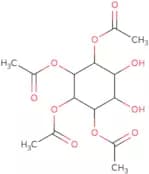
CAS:<p>3,4,5,6-Tetra-O-acetyl myo-inositol is a synthetic compound that functions as a methyl donor for the modification of saccharides and polysaccharides. It is used in click chemistry reactions to modify oligosaccharides with fluorinated alkyne moieties. 3,4,5,6-Tetra-O-acetyl myo-inositol is also used in glycosylation reactions to produce complex carbohydrates. This chemical has CAS number 90366-30-6.</p>Fórmula:C14H20O10Pureza:Min. 95%Peso molecular:348.3 g/molD-Gluco-hexodialdose
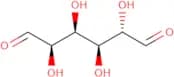
CAS:<p>D-Gluco-hexodialdose is a chiral intermediate useful for both research and industry.</p>Fórmula:C6H10O6Pureza:Min. 90%Forma y color:PowderPeso molecular:178.14 g/molBenzyl 2-acetamido-3,6-di-O-benzoyl-2-deoxy-a-D-glucopyranoside
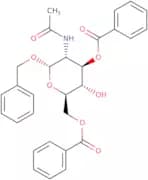
CAS:<p>A 2-acetamido-3,6-di-O-benzoyl-2-deoxy-a-D-glucopyranoside is a custom synthesis of a complex carbohydrate that has been modified with methylation and glycosylation. It is an Oligosaccharide with Polysaccharide and Modification. The CAS number for this compound is 82827-77-8 and has a purity of 99%. This compound has been fluorinated and synthesized.</p>Fórmula:C29H29NO8Pureza:Min. 95%Peso molecular:519.54 g/mol31-β-D-Cellobiosyl-glucose
CAS:<p>31-β-D-cellobiosyl-glucose is a Modification product that is an oligosaccharide. It has a CAS number of 32581-36-5 and can be custom synthesized. This product has a purity of high and is an oligosaccharide. 31-β-D-cellobiosyl-glucose is a complex carbohydrate that belongs to the group of carbohydrates, sugars, and saccharides. It has been fluorinated and glycosylated. 31-β-D-cellobiosyl-glucose is methylated and polysaccharide. This product can be made in our lab with a high degree of purity and it comes in the form of monosaccharide which can also be custom synthesized by our team.</p>Fórmula:C18H32O16Pureza:Min. 95%Peso molecular:504.4 g/molPseudoginsenoside Rh2
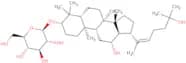
CAS:<p>Pseudoginsenoside Rh2 is a bioactive compound, which is a derivative of ginsenosides found in Panax ginseng. It is specifically extracted from the plant's root, known for its rich saponin content. Pseudoginsenoside Rh2 functions by interacting with various cellular pathways, influencing apoptosis, and cell cycle regulation. The mechanism of action involves modulation of signaling pathways, including PI3K/Akt and MAPK, which are crucial in controlling cell growth and survival.</p>Fórmula:C36H62O8Pureza:Min. 95%Peso molecular:622.87 g/molDidesmethylsibutamine D-glucuronide
<p>Didesmethylsibutamine D-glucuronide is a custom synthesis, complex carbohydrate, Oligosaccharide, CAS No. that is modified with saccharide and Methylation. It is synthesized with Carbohydrate and sugar to produce a high purity product. It also has the following modifications: Fluorination, Synthetic.</p>Pureza:Min. 95%L-Daunosamine-b-methylglycoside hydrochloride
<p>L-Daunosamine-b-methylglycoside hydrochloride is a high purity, custom synthesis of an oligosaccharide. This product is synthesized from D-mannose and L-daunosamine. The synthetic process begins with the click modification of the carbohydrate to introduce a methyl group onto the sugar. The resulting product is then glycosylated, fluorinated, and methylated to create the final product. L-Daunosamine-b-methylglycoside hydrochloride has been shown to act as a competitive inhibitor of bacterial dna gyrase, which helps maintain the integrity of bacterial DNA by preventing supercoiling. L-Daunosamine-b-methylglycoside hydrochloride has also been shown to inhibit protein synthesis in bacteria by binding to ribosomes, which are responsible for translating mRNA into proteins.</p>Fórmula:C7H15NO3·HClPureza:Min. 95%Peso molecular:197.66 g/mol





![D-[UL-¹³C6]mannose](/_next/image/?url=https%3A%2Fstatic.cymitquimica.com%2Fproducts%2F3D%2Fthumb-webp%2FMLA10074.webp&w=3840&q=75)



![D-[6-13C]Galacturonic acid potassium salt](/_next/image/?url=https%3A%2Fstatic.cymitquimica.com%2Fproducts%2F3D%2Fthumb-webp%2FMG170938.webp&w=3840&q=75)
![D-[1-13C]Xylose](/_next/image/?url=https%3A%2Fstatic.cymitquimica.com%2Fproducts%2F3D%2Fthumb-webp%2FVCA84921.webp&w=3840&q=75)