Monosacáridos
Los monosacáridos son la forma más simple de los carbohidratos y sirven como bloques fundamentales para azúcares más complejos y polisacáridos. Estas moléculas de azúcar única juegan roles críticos en el metabolismo energético, la comunicación celular y los componentes estructurales de las células. En esta sección, encontrará una amplia variedad de monosacáridos esenciales para la investigación en bioquímica, biología molecular y glicociencia. Estos compuestos son cruciales para estudiar las rutas metabólicas, los procesos de glucosilación y el desarrollo de agentes terapéuticos. En CymitQuimica, ofrecemos monosacáridos de alta calidad para apoyar sus necesidades de investigación, asegurando precisión y fiabilidad en sus investigaciones científicas.
Subcategorías de "Monosacáridos"
- Allosas(11 productos)
- Arabinosas(21 productos)
- Eritrosas(11 productos)
- Fructosas(9 productos)
- Fucosas(36 productos)
- Galactosamina(41 productos)
- Galactosa(261 productos)
- Glucosas(365 productos)
- Ácidos glucurónicos(51 productos)
- Glico-sustratos para enzimas(77 productos)
- Gulosas(6 productos)
- Idosas(4 productos)
- Inositoles(15 productos)
- Lyxosas(4 productos)
- Manosas(65 productos)
- O-glicanos(48 productos)
- Psicosas(3 productos)
- Ramnosas(10 productos)
- Ribosas(61 productos)
- Ácidos siálicos(100 productos)
- Sorbosas(4 productos)
- Azúcares(173 productos)
- Tagatosis(4 productos)
- Taloses(8 productos)
- Xilosas(20 productos)
Mostrar 17 subcategorías más
Se han encontrado 6090 productos de "Monosacáridos"
Ordenar por
Pureza (%)
0
100
|
0
|
50
|
90
|
95
|
100
3,6-Di-O-tert-butyldiphenylsilyl-D-glucal
CAS:3,6-Di-O-tert-butyldiphenylsilyl-D-glucal is a monosaccharide that is synthesized from D-glucal. It can be modified with methyl groups and fluorine atoms. 3,6-Di-O-tert-butyldiphenylsilyl-D-glucal has been shown to be effective in modifying polysaccharides, glycosylation, and oligosaccharides. This compound is also used in the synthesis of complex carbohydrates.Pureza:Min. 95%Asenapine N-b-D-glucuronide
Asenapine N-b-D-glucuronide is a modification of asenapine, which is an antipsychotic drug. It is a complex carbohydrate that contains an oligosaccharide and a monosaccharide. The oligosaccharide has two methyl groups, one of which is located at the 6th position and the other at the 8th position. This modification also contains two glycosylation sites and one fluorination site.Fórmula:C23H24ClNO7Pureza:Min. 95%Peso molecular:461.89 g/mol1,4-Dideoxy-1,4-imino-D-xylitol HCl
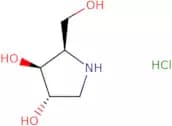
CAS:<p>1,4-Dideoxy-1,4-imino-D-xylitol HCl (DDX) is a potent inhibitor of the enzyme carboxypeptidase A2. DDX has been shown to inhibit the growth of HIV in vitro and in vivo. DDX also inhibits the production of proinflammatory cytokines and neurotrophic factors from HL60 cells. It has been shown to be a potential drug target for the treatment of infectious diseases such as alphaviruses, which produce a severe neuroinvasive disease in humans. DDX binds to dna with high affinity and specificity, but does not bind to RNA or proteins. DDX inhibits mitochondrial membrane potential by binding to ATP synthase and blocking the synthesis of ATP. DDX has also been shown to have an anti-oxidative injury effect on mitochondria, which may contribute to its inhibition of viral replication.</p>Fórmula:C5H11NO3·HClPureza:Min. 95%Peso molecular:169.61 g/mol2,6-Anhydro-3-deoxy-D-lyxo-hept-2-enononitrile
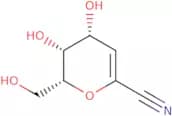
CAS:2,6-Anhydro-3-deoxy-D-lyxo-hept-2-enononitrile is a modified sugar that has been synthesized with Fluorination and saccharide. This compound is a custom synthesis of an oligosaccharide. It is also an Oligosaccharide Synthetic and is CAS No. 180336-27-0. This product has the molecular formula C8H12O5 and molecular weight of 228.24 g/mol. It has a purity of >99% (HPLC) and it is Custom synthesis, High purityFórmula:C7H9NO4Pureza:Min. 95%Peso molecular:171.15 g/mol6-O-Benzyl-1-(-)-carboxymenthyl-2,3;4,5-di-O-cyclohexylidene-D-myo-inositol
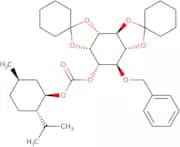
CAS:<p>6-O-Benzyl-1-(-)-carboxymenthyl-2,3;4,5-di-O-cyclohexylidene-D-myo-inositol is a novel glycosylation substrate for the synthesis of oligosaccharides. It is synthesized by fluorination and methylation of 1,2,3,4,5,-pentaacetoxycyclopentane. The fluorinated product can be further modified to produce various saccharides. This compound can be used as a custom synthesis in the synthesis of complex carbohydrates with high purity.</p>Fórmula:C36H52O8Pureza:Min. 95%Peso molecular:612.79 g/molL-Galactose-6-O-sulphate sodium salt
<p>L-Galactose-6-O-sulphate sodium salt is a modified carbohydrate that is synthesized by modifying the chemical structure of L-galactose. This modification can be accomplished using chemical reactions such as methylation, saccharide, polysaccharide, and click modification. The CAS number for this product is 68891-70-8.</p>Fórmula:C6H11O9SNaPureza:Min. 95%Peso molecular:282.2 g/molMethyl 2,3,4,6-tetra-O-acetyl-b-D-glucopyranose
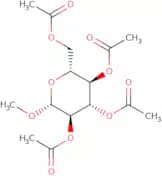
CAS:Methyl 2,3,4,6-tetra-O-acetyl-b-D-glucopyranose is a fluorinated synthetic oligosaccharide. It is custom synthesized to meet your specifications. Methyl 2,3,4,6-tetra-O-acetyl-b-D-glucopyranose is a complex carbohydrate with a glycosylation pattern that can be modified and methylated. This product has CAS No. 486085 9 and purity of >99%.Fórmula:C15H22O10Pureza:Min. 95%Peso molecular:362.33 g/mol5-Hydroxyvitamin D3 25-glucuronide
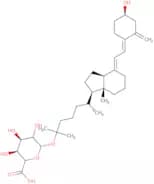
CAS:<p>5-Hydroxyvitamin D3 25-glucuronide is a glycosylated form of vitamin D that is synthesized by the addition of glucose to the 5-hydroxy group in the side chain. The synthesis of this product requires an intermediate step, which is the methylation of 25-hydroxyvitamin D. It is a complex carbohydrate that can be found in both natural and synthetic forms. The product has been modified using Click chemistry, fluorination, and saccharide modification to increase its stability and solubility. This product also has a high purity level.</p>Fórmula:C33H52O8Pureza:Min. 95%Peso molecular:576.76 g/molN-[(e-Benzyloxycarbonylamino)caproyl]-b-L-fucopyranosylamine
CAS:N-[(e-Benzyloxycarbonylamino)caproyl]-b-L-fucopyranosylamine is a high purity, methylated, glycosylated, custom synthesized carbohydrate. It's a complex carbohydrate with an oligosaccharide structure. This product can be used for research purposes.Fórmula:C20H30N2O7Pureza:Min. 95%Peso molecular:410.46 g/molHydroxy pioglitazone (M-VII) b-D-glucuronide
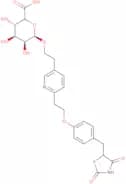
CAS:<p>Hydroxy pioglitazone (M-VII) b-D-glucuronide is a synthetic, fluorinated glucuronide of hydroxy pioglitazone. It has been shown to inhibit the activity of bacterial dna gyrase and topoisomerase IV enzymes.</p>Fórmula:C25H28N2O10SPureza:Min. 95%Peso molecular:548.56 g/mol3,4,5,6-Tetra-O-acetyl-myo-inositol-1,2-thiocarbonate
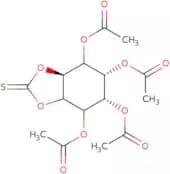
CAS:3,4,5,6-Tetra-O-acetyl-myo-inositol-1,2-thiocarbonate is a carbohydrate that has been modified with fluorination and methylation. This compound can be used in the synthesis of oligosaccharides, monosaccharides, and glycosylations. 3,4,5,6-Tetra-O-acetyl-myo-inositol is synthesized by reacting myo-inositol with carbon disulfide and sodium hydroxide to form the intermediate methyl ester followed by hydrolysis to produce the final product. The purity of 3,4,5,6-Tetra-O-acetyl-myo-inositol is greater than 98%.Fórmula:C15H18O10SPureza:Min. 95%Peso molecular:390.36 g/mol2-a-Methyl-5-a-androstan-3-a-ol-17-one glucuronide
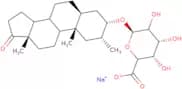
<p>2-A-Methyl-5-a-androstan-3-a-ol-17-one glucuronide is a high purity, custom synthesis, synthetic glycosylation product. It is a carbohydrate (saccharide) that is modified by fluorination, methylation and glycosylation. The CAS number for this carbohydrate is 535745-06-4. This product has the following properties: Oligosaccharide, sugar, complex carbohydrate.</p>Fórmula:C26H39O8·NaPureza:Min. 95%Peso molecular:502.57 g/mol1-Deoxy-L-erythrulose
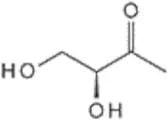
CAS:1-Deoxy-L-erythrulose is an electron acceptor that is a non-essential cofactor for the enzyme reductoisomerase. It binds to the active site of the enzyme and stabilizes its conformation, which leads to the formation of a dianion. 1-Deoxy-L-erythrulose also acts as an activator for phosphite, which is a transition state analog. This activation leads to the formation of ATP and NADPH as products.Fórmula:C4H8O3Pureza:Min. 95%Peso molecular:104.1 g/molN-D-Glucopyranosyl-5-aminosalicylic acid
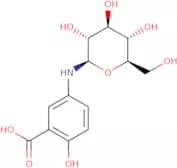
CAS:<p>5-Aminosalicylic acid (5-ASA) is an anti-inflammatory drug that belongs to the class of drugs called nonsteroidal anti-inflammatory drugs (NSAIDs). 5-ASA is an acidic compound that is a metabolite of salicylic acid. It is used in the treatment of rheumatoid arthritis, osteoarthritis, and other inflammatory diseases. The preparation of 5-ASA involves homogenizing liver tissue and then extracting it with water. This extract can be chromatographed using preparative high performance liquid chromatography (HPLC) or spectroscopically analyzed by mass spectrometry. 5-ASA has been shown to have hepatoprotective effects in rats when given at a dose of 400 mg/kg body weight by intraperitoneal injection.</p>Fórmula:C13H17NO8Pureza:Min. 95%Peso molecular:315.28 g/mol5-(β-D-Galactopyranosyloxy)-DL-lysine
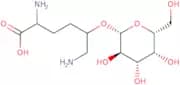
CAS:<p>5-(β-D-Galactopyranosyloxy)-DL-lysine is a custom synthesized compound that has been modified with 5-(β-D-galactopyranosyloxy) groups. It is an oligosaccharide, polysaccharide, and saccharide that belongs to the category of carbohydrates. This product is available for purchase in high purity and has been fluorinated. The CAS number for this product is 35910-05-5.</p>Fórmula:C12H24N2O8Pureza:Min. 95%Forma y color:PowderPeso molecular:324.33 g/molN-Acetyl-D-galactopyranosylthiosemicarbazide
N-Acetyl-D-galactopyranosylthiosemicarbazide is a glycosylation reagent that is used in the synthesis of saccharides, oligosaccharides, and polysaccharides. N-Acetyl-D-galactopyranosylthiosemicarbazide is synthesized by reacting acetamidoacetonitrile with D-galactose and sodium thiosulfate. The reaction product can be easily purified by crystallization or recrystallization. N-Acetyl-D-galactopyranosylthiosemicarbazide has been shown to be a high purity compound, as it does not contain any residual solvents or impurities. The CAS number for this compound is 58437-66-7.Pureza:Min. 95%Methyl 3-acetamido-4-O-benzoyl-6-bromo-2,3,6-trideoxy-a-D-ribo-hexopyranoside
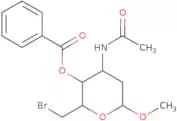
CAS:Methyl 3-acetamido-4-O-benzoyl-6-bromo-2,3,6-trideoxy--aDribohexopyranoside is a Custom synthesis that is classified as an Oligosaccharide. It has a molecular weight of 576.07 and a purity of >99%. The chemical formula for this compound is C22H30BrNO8. Methyl 3-acetamido-4-O-benzoyl-6-bromo-2,3,6--trideoxy--aDribohexopyranoside is used in the modification of saccharides with the purpose of synthesizing polysaccharides. This compound has been shown to be effective for the synthesis of glycosylations and methylations. Methyl 3 acetamido 4 O benzoyl 6 bromo 2,3,6 trideoxy - a D ribFórmula:C16H20BrNO5Pureza:Min. 95%Peso molecular:386.25 g/mol4-Deoxy-4-fluoro-a-D-glucopyranose
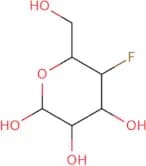
CAS:<p>4-Deoxy-4-fluoro-a-D-glucopyranose is a carbohydrate that belongs to the group of carbohydrates. It has enthalpy and entropy values of -1,865.2 kJ/mol and -3,363.6 J/(mol·K) at 298 K, respectively. This compound has been shown to interact with water molecules in solution phase. 4-Deoxy-4-fluoro-a-D-glucopyranose is soluble in water and interacts with other carbohydrate molecules at an intermolecular level. 4DFA has an extrapolated melting point of about 216 degrees Celsius.</p>Fórmula:C6H11FO5Pureza:Min. 95%Peso molecular:182.15 g/mol4-Methoxyphenyl 2-amino-3,6-di-O-benzyl-2-deoxy-b-D-glucopyranoside
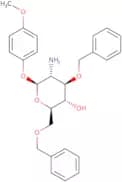
CAS:<p>4-Methoxyphenyl 2-amino-3,6-di-O-benzyl-2-deoxy-b-D-glucopyranoside (4MOP) is a drug that has been shown to be effective against colitis caused by viruses. 4MOP binds to single stranded DNA, which prevents the virus from replicating. 4MOP also inhibits the activity of papilloma viruses, such as human papilloma virus and typhimurium.</p>Fórmula:C27H31NO6Pureza:Min. 95%Peso molecular:465.54 g/mol6-(4-Azido-2-hydroxybenzamido)-6-deoxy-D-glucopyranose
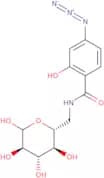
CAS:6-(4-Azido-2-hydroxybenzamido)-6-deoxy-D-glucopyranose (AGB) is a potential photoaffinity label that can be used to identify and characterize the transporter. The photoaffinity label is synthesized by reacting 2,4-dinitrophenylhydrazine with 6-(4-azido-2-hydroxybenzamido)-6-deoxy-D-glucopyranose in the presence of sodium bicarbonate or potassium carbonate. The photolysis of AGB produces an azide radical cation that reacts with amino acid residues on the protein surface, forming a covalent bond. This labeling process is irreversible.Fórmula:C13H16N4O7Pureza:Min. 95%Peso molecular:340.29 g/mol


![N-[(e-Benzyloxycarbonylamino)caproyl]-b-L-fucopyranosylamine](/_next/image/?url=https%3A%2Fstatic.cymitquimica.com%2Fproducts%2F3D%2Fthumb-webp%2FMB04503.webp&w=3840&q=75)