Monosacáridos
Los monosacáridos son la forma más simple de los carbohidratos y sirven como bloques fundamentales para azúcares más complejos y polisacáridos. Estas moléculas de azúcar única juegan roles críticos en el metabolismo energético, la comunicación celular y los componentes estructurales de las células. En esta sección, encontrará una amplia variedad de monosacáridos esenciales para la investigación en bioquímica, biología molecular y glicociencia. Estos compuestos son cruciales para estudiar las rutas metabólicas, los procesos de glucosilación y el desarrollo de agentes terapéuticos. En CymitQuimica, ofrecemos monosacáridos de alta calidad para apoyar sus necesidades de investigación, asegurando precisión y fiabilidad en sus investigaciones científicas.
Subcategorías de "Monosacáridos"
- Allosas(11 productos)
- Arabinosas(21 productos)
- Eritrosas(11 productos)
- Fructosas(9 productos)
- Fucosas(36 productos)
- Galactosamina(41 productos)
- Galactosa(261 productos)
- Glucosas(365 productos)
- Ácidos glucurónicos(51 productos)
- Glico-sustratos para enzimas(77 productos)
- Gulosas(6 productos)
- Idosas(4 productos)
- Inositoles(15 productos)
- Lyxosas(4 productos)
- Manosas(65 productos)
- O-glicanos(48 productos)
- Psicosas(3 productos)
- Ramnosas(10 productos)
- Ribosas(61 productos)
- Ácidos siálicos(100 productos)
- Sorbosas(4 productos)
- Azúcares(173 productos)
- Tagatosis(4 productos)
- Taloses(8 productos)
- Xilosas(20 productos)
Mostrar 17 subcategorías más
Se han encontrado 6090 productos de "Monosacáridos"
Ordenar por
Pureza (%)
0
100
|
0
|
50
|
90
|
95
|
100
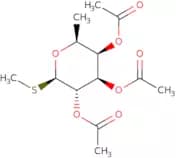
Methyl 2,3,4-tri-O-acetyl-β-L-thiofucopyranoside
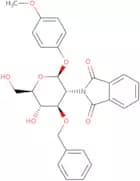
CAS:<p>Methyl 2,3,4-tri-O-acetyl-b-L-thiofucopyranoside is a ferrite that is important for the growth of cells. It can be used as a growth factor to promote the growth of cells. Covid®-19 pandemic A/Aureus strain is resistant to this drug and it has been shown to inhibit cellular transformation in human epidermal cells. The drug also reduces the size and number of cancerous lesions in mice by inhibiting tumor angiogenesis. Methyl 2,3,4-tri-O-acetyl-b-L-thiofucopyranoside can cause an overload of Ca2+ ions in the cell, which may lead to apoptosis or necrosis.</p>Fórmula:C13H20O7SPureza:Min. 95%Peso molecular:320.36 g/mol4-Methoxyphenyl 3-O-benzyl-2-deoxy-2-phthalimido-b-D-glucopyranoside
CAS:4-Methoxyphenyl 3-O-benzyl-2-deoxy-2-phthalimido-b-D-glucopyranoside is an antiviral agent that inhibits the replication of papilloma virus and other viruses. It binds to the viral DNA at a site that is not affected by other antiviral agents, preventing the viral DNA from being copied into RNA. 4MPBG also induces coagulation and cell expression in human cells and has been shown to inhibit the production of amyloid beta (Aβ) in Alzheimer's disease. This drug is not active against organisms such as bacteria, yeast, or fungi. The drug was originally synthesized as a potential pharmaceutical for cancer treatment, but it did not exhibit any cytotoxic effects on cancer cells.Fórmula:C28H27NO8Pureza:Min. 95%Peso molecular:505.52 g/molMethyl-2,3,6-tri-O-benzoyl-a-D-mannopyranose monohydrate
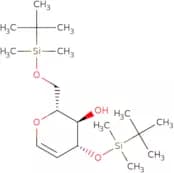
<p>Methyl-2,3,6-tri-O-benzoyl-a-D-mannopyranose monohydrate is a carbohydrate compound with the formula CHO. It is an Oligosaccharide made of three α-(1→2) linked mannose residues and one α-(1→3) linked mannose residue. This modification has been shown to be important for glycosylation and polysaccharide synthesis. Methyl-2,3,6-tri-O-benzoyl-a-D-mannopyranose monohydrate has high purity and CAS No.</p>Pureza:Min. 95%3,6-Di-O-tert-butyldimethylsilyl-D-glucal
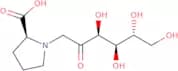
CAS:3,6-Di-O-tert-butyldimethylsilyl-D-glucal is a stereoselective synthetic compound that can be used as a glycosyl donor in the synthesis of glycosides. It is an intermediate in the synthesis of uridine, which is an important component of nucleic acids. 3,6-Di-O-tert-butyldimethylsilyl-D-glucal has been shown to inhibit the action of glycogen synthase and amylo-(1→4)-α-(1→2)-glycosidases. This inhibition prevents the breakdown of glycogen, which leads to a build up of glucose in the body and produces insulin resistance.Pureza:Min. 95%Frucoste-proline
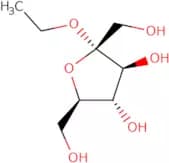
CAS:Frucoste-proline is a l-amino acid that is found in the leaves of tobacco plants. Frucoste-proline is synthesized by dehydration of L-proline, which is catalyzed by the enzyme tabacum l. Frucoste-proline can also be found in maltol and diazepine. The major function of frucoste-proline is to act as a cofactor for enzymes involved in the synthesis of aromatic compounds such as aldehydes and sulfides. This amino acid has been identified as an analytical marker for tobacco leaf, due to its low energy and high specificity.Pureza:Min. 95%Ethyl a-D-fructofuranoside
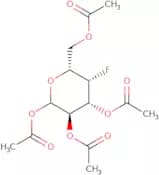
CAS:Ethyl a-D-fructofuranoside is a carbohydrate found in the roots of orientalis that has been shown to have anti-allergic effects. Ethyl a-D-fructofuranoside is extracted from the root of orientalis and purified by column chromatography. It inhibits histamine release and reduces inflammation in mouse skin tests. The structure of ethyl a-D-fructofuranoside was determined using nuclear magnetic resonance (NMR) spectroscopy, gas chromatography, and mass spectroscopy. The biosynthesis of this compound is unknown but it may be synthesized from sucrose or methanol extract with the help of an enzyme called verbascose synthase.Fórmula:C8H16O6Pureza:Min. 95%Peso molecular:208.21 g/mol1,2,3,6-Tetra-O-acetyl-4-deoxy-4-fluoro-D-galactopyranose
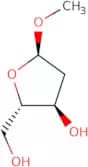
CAS:<p>1,2,3,6-Tetra-O-acetyl-4-deoxy-4-fluoro-D-galactopyranose is a sugar that is used in the synthesis of complex carbohydrates. The chemical structure of this sugar is similar to that of glucose or lactose. This sugar can be produced by methylation and saccharide reactions with the use of a Click modification. It can also be synthesized from 3,6-diacetylpyranose. This product is available for custom synthesis and has high purity.</p>Fórmula:C14H19FO9Pureza:Min. 95%Peso molecular:350.29 g/molMethyl 2-deoxy-a-L-ribofuranoside
CAS:Methyl 2-deoxy-a-L-ribofuranoside is a modification of a monosaccharide. It is synthesized by reacting 2,3,4,6-tetra-O-methylglucose with sodium nitrite in the presence of hydrochloric acid. Methyl 2-deoxy-a-L-ribofuranoside is used to modify saccharides and polysaccharides.Fórmula:C6H12O4Pureza:Min. 95%Peso molecular:148.16 g/mol4-Nitrophenyl 2-acetamido-3,6-di-O-benzoyl-2-deoxy-b-D-glucopyranoside
CAS:4-Nitrophenyl 2-acetamido-3,6-di-O-benzoyl-2-deoxy-b-D-glucopyranoside is a synthetic saccharide that can be used in the production of complex carbohydrates. This product has been modified with fluorination, methylation, and click modification. 4NP2AG is a monosaccharide that can be synthesized by modifying acetamido group with nitrophenol (4NP). It can also be used as an Oligosaccharide or Polysaccharide.Fórmula:C28H26N2O10Pureza:Min. 95%Peso molecular:550.51 g/molMixture of 1,2,3,5-Tetra-O-acetyl-D-arabinofuranose and 1,2,3,4-Tetra-O-acetyl-D-arabinopyranose
CAS:<p>Tetra-O-acetyl-D-arabinose is an organic compound, a saccharide with the chemical formula C4H8O6. It is a white to off-white crystalline solid. Tetra-O-acetyl-D-arabinose is a protected form of arabinose that can be methylated and glycosylated to produce various other compounds. Tetra-O-acetyl-D-arabinose can also be modified by click chemistry or fluorination and it has been used as a synthetic intermediate for the synthesis of oligosaccharides.</p>Fórmula:C13H18O9Pureza:(%) Min. 95%Forma y color:PowderPeso molecular:318.28 g/mol2-Acetamido-3,4,6-tri-O-acetyl-2-deoxy-a-D-glucopyranosyl-Fmoc asparagine
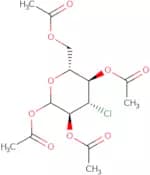
2-Acetamido-3,4,6-tri-O-acetyl-2-deoxy-a-D-glucopyranosyl -Fmoc asparagine is a custom synthesis. It is a high purity product. It is an oligosaccharide that has been modified with methylation and glycosylation. This product has been fluorinated, which makes it useful for click chemistry applications. It is a sugar with a complex carbohydrate structure that can be used in the production of polysaccharides and other carbohydrates.Fórmula:C33H37N3O13Pureza:Min. 95%Peso molecular:683.66 g/mol1,2,4,6-Tetra-O-acetyl-3-chloro-3-deoxy-D-glucopyranose
CAS:1,2,4,6-Tetra-O-acetyl-3-chloro-3-deoxy-D-glucopyranose (1) is a synthetic oligosaccharide that has been modified with a fluorine atom at the 6 position of the glucose moiety. This modification has been shown to have increased stability in acidic environments. Glycosylation can be achieved by reacting 1 with an appropriate glycosylant such as bromoacetyl bromide or chloroacetyl chloride. The saccharide unit may also be methylated at the 2 and 4 positions of the glucose moiety to confer protection against enzymatic degradation. Click modification can be used to attach other molecules such as proteins or peptides to 1,2,4,6-tetra-O-acetyl-3-chloro-3-deoxy--D--glucopyranose via a covalent bond betweenFórmula:C14H19ClO9Pureza:Min. 95%Peso molecular:366.75 g/mol2,3:4,5-Di-O-isopropylidene-b-D-fructopyranose-D12
Producto controlado2,3:4,5-Di-O-isopropylidene-b-D-fructopyranose (2,3:4,5-di-OIPF) is a synthetic sugar that has been fluorinated and methylated. 2,3:4,5-Di-OIPF can be used as a building block for the synthesis of oligosaccharides or polysaccharides. It can also be modified with an acetal group to form an acetal sugar.Fórmula:C12H8D12O6Pureza:Min. 95%Peso molecular:272.35 g/molN-Methyl-b-D-glucopyranosylamine (hydrochloride or other salt)
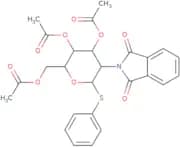
CAS:<p>Methylation of saccharides is a chemical process that adds methyl groups to the hydroxyl groups of sugars. The most common form of this reaction is the conversion of glucose to mannose. Methylation can be achieved by reacting the sugar with sodium cyanoborohydride, which converts the sugar into a reactive form that can be used in other reactions. This product is a synthetic compound and an intermediate for various glycosylations or modifications. It is a high-purity, white powder with molecular formula C6H17NO5 and molecular weight 191.22 g/mol and CAS Number 114761-39-6 (hydrochloride).</p>Fórmula:C7H15NO5·HClPureza:Min. 95%Peso molecular:229.7 g/molPhenyl-3,4,6-tri-O-acetyl-2-deoxy-2-phthalimido-b-D-thioglucopyranoside
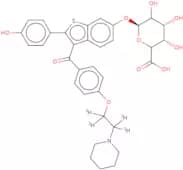
CAS:<p>Phenyl-3,4,6-tri-O-acetyl-2-deoxy-2-phthalimido-b-D-thioglucopyranoside is a glycosylation reagent that is used in the synthesis of complex carbohydrates. It reacts with an activated monosaccharide to form a glycosidic linkage between the sugar and the phenol group of the sugar. Phenyl 3,4,6 triacetate 2 deoxy 2 phthalimido B D thioglucopyranoside can be used for modifying polysaccharides and saccharides by fluorination or methylation. The compound has CAS No. 79528 49 7 and is available as custom synthesis. It is also available in high purity.</p>Pureza:Min. 95%Raloxifene 6-D-glucuronide D4
CAS:Producto controlado<p>Raloxifene 6-D-glucuronide D4 is a complex carbohydrate with a unique sugar modification. It is a custom synthesis that has been fluorinated, monosaccharide, and polysaccharide. It can be glycosylated and methylated as well. The desired purity level is high.</p>Fórmula:C34H31NO10SD4Pureza:Min. 95%Peso molecular:653.73 g/molN-(b-D-Glucopyranosyl)-N'-[(2-methanethiosulfonyl)ethyl]urea
CAS:N-(b-D-Glucopyranosyl)-N'-[(2-methanethiosulfonyl)ethyl]urea is a synthetic, fluorinated glycosylamine that has been used for the synthesis of oligosaccharides and polysaccharides. The product is supplied in high purity and with a custom synthesis. It is also available for click modification to suit customer needs.Fórmula:C10H20N2O8S2Pureza:Min. 95%Forma y color:White to off-white solid.Peso molecular:360.4 g/mol1-Hydroxypyrene-d9
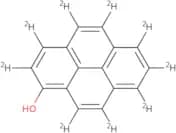
CAS:Producto controlado<p>1-Hydroxypyrene-d9 is a genotoxic aromatic hydrocarbon that can be found in the environment as a byproduct of combustion and cigarette smoke. It has been shown to cause DNA damage through oxidative stress and genotoxicity. This compound can be used for the detection of naphthalene in bile samples and urine samples. 1-Hydroxypyrene-d9 also has potential use in cancer research as it can be used to detect oxidative damage to DNA in cells. It has been shown to have synchronous fluorescence with DNA, which makes it useful for quantification of DNA. 1-Hydroxypyrene-d9 is analysed using analytical methods such as fluorescence spectrometry, synchronous fluorescence, and sample preparation.</p>Fórmula:C16HD9OPureza:Min. 95%Forma y color:PowderPeso molecular:227.3 g/molN-(2-Deoxy-D-glucopyranosyl)-S-nitroso-N-acetyl-D,L-pencillamine
CAS:<p>N-(2-Deoxy-D-glucopyranosyl)-S-nitroso-N-acetyl-D,L-pencillamine is a custom synthesis of an Oligosaccharide. It is an unmodified saccharide with a CAS No. 188849-82-3. The chemical formula for this compound is C12H14N2O9 and its molecular weight is 368.24 g/mol. This compound has been synthesized using the Click modification, methylation, and fluorination techniques. N-(2-Deoxy-D-glucopyranosyl)-S-nitroso-N acetyl D,L pencillamine has a purity level of 95% or greater. This product has not been glycosylated or carbamoylated and does not contain any sugar moieties.</p>Fórmula:C13H23N3O8SPureza:Min. 95%Peso molecular:381.4 g/molThiamine galactoside
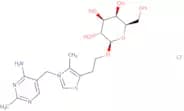
CAS:<p>Thiamine galactoside is a custom synthesis of a monosaccharide. It is modified with fluorination, methylation and saccharide. The resulting product has a molecular weight of 578.08 g/mol and the chemical formula C24H34N6O18S2.</p>Fórmula:C18H27O6N4S·C2H3O2Pureza:Min. 95%Peso molecular:486.54 g/mol




![N-(b-D-Glucopyranosyl)-N'-[(2-methanethiosulfonyl)ethyl]urea](/_next/image/?url=https%3A%2Fstatic.cymitquimica.com%2Fproducts%2F3D%2Fthumb-webp%2FMG07448.webp&w=3840&q=75)