Monosacáridos
Subcategorías de "Monosacáridos"
- Allosas(11 productos)
- Arabinosas(21 productos)
- Eritrosas(11 productos)
- Fructosas(9 productos)
- Fucosas(36 productos)
- Galactosamina(41 productos)
- Galactosa(261 productos)
- Glucosas(365 productos)
- Ácidos glucurónicos(52 productos)
- Glico-sustratos para enzimas(78 productos)
- Gulosas(6 productos)
- Idosas(4 productos)
- Inositoles(15 productos)
- Lyxosas(4 productos)
- Manosas(65 productos)
- O-glicanos(48 productos)
- Psicosas(3 productos)
- Ramnosas(10 productos)
- Ribosas(61 productos)
- Ácidos siálicos(100 productos)
- Sorbosas(4 productos)
- Azúcares(173 productos)
- Tagatosis(4 productos)
- Taloses(8 productos)
- Xilosas(20 productos)
Se han encontrado 6084 productos de "Monosacáridos"
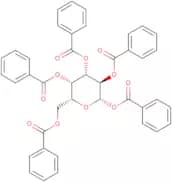
1,2,3,4,6-Penta-O-benzoyl-b-D-galactopyranose
CAS:Penta-O-benzoyl-b-D-galactopyranose is a pentasaccharide that has been shown to have an inhibitory effect on the growth of corynebacterium, which may be due to its ability to modulate fatty acid synthesis. Penta-O-benzoyl-b-D-galactopyranose is a disaccharide that is used as a diagnostic agent for corynebacteria. It is also used as a growth factor in the production of Corynebacterium glutamicum. The safety profile of this drug has not been evaluated in humans.Fórmula:C41H32O11Pureza:Min. 95%Peso molecular:700.71 g/mol2,3,5-Tri-O-benzyl-D-ribose
CAS:Remdesivir impurity
Fórmula:C26H28O5Pureza:Min. 98 Area-%Forma y color:White Off-White PowderPeso molecular:420.5 g/molMethyl 1-(5-fluoro-1H-2-oxopyrimidin-4-yl)-b-D-glucopyranuronate
CAS:Methyl 1-(5-fluoro-1H-2-oxopyrimidin-4-yl)-b-D-glucopyranuronate is an anticancer drug that inhibits β-glucuronidase. Methyl 1-(5-fluoro-1H-2-oxopyrimidin-4-yl)-b-D-glucopyranuronate is a colorless solid that has been recrystallized, purified, and analyzed for its chloride content. The function of this compound has been tested in vitro using tissue cultures and animal models. The reaction vessel used for the test was an acetonitrile solution with a pH between 7 and 8. The methylester form of methyl 1-(5-fluoro-1H--2--oxopyrimidin 4--yl)-b--D--glucopyranuronate reacts with sulphite to produce a green product with a colorimetric method
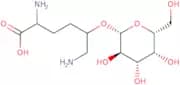
Fórmula:C11H13FN2O8Pureza:Min. 95%Peso molecular:320.23 g/mol5-(β-D-Galactopyranosyloxy)-DL-lysine
CAS:5-(β-D-Galactopyranosyloxy)-DL-lysine is a custom synthesized compound that has been modified with 5-(β-D-galactopyranosyloxy) groups. It is an oligosaccharide, polysaccharide, and saccharide that belongs to the category of carbohydrates. This product is available for purchase in high purity and has been fluorinated. The CAS number for this product is 35910-05-5.
Fórmula:C12H24N2O8Pureza:Min. 95%Forma y color:PowderPeso molecular:324.33 g/molRef: 3D-FG181089
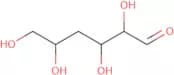
Producto descatalogado4-Deoxy-D-glucose
CAS:4-Deoxy-D-glucose is a sugar that is synthesized by the condensation of two molecules of erythrose. It has been shown to be an efficient donor substrate for nucleophilic attack, which can lead to the synthesis of glycosides and other natural products. 4-Deoxy-D-glucose is also a competitive inhibitor of uridine diphosphate (UDP) glucose, which is an enzyme involved in the biosynthesis of UDP sugars and glycoproteins. The concentration of 4-deoxy-D-glucose affects its catalytic mechanism, as it acts as a competitive inhibitor at high concentrations. Molecular modeling has revealed that this molecule adopts a chair conformation with significant solvent exposure.
Fórmula:C6H12O5Pureza:Min. 98 Area-%Forma y color:PowderPeso molecular:164.16 g/molRef: 3D-MD180432
Producto descatalogadoTrimethylsilyl-2,3,4,6-tetra-O-benzyl-b-D-glucopyranoside
CAS:Trimethylsilyl-2,3,4,6-tetra-O-benzyl-b-D-glucopyranoside is a modified carbohydrate that has been fluorinated and silylated. It is used as an intermediate in the synthesis of glycosylated compounds. Trimethylsilyl-2,3,4,6-tetra-O-benzyl-b-D-glucopyranoside can be custom synthesized to meet your needs. It is a white powder that is soluble in water and alcohols. The CAS number for this compound is 89825-08-1.
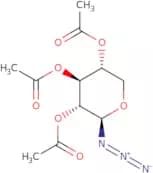
Fórmula:C37H42O8Pureza:Min. 95%Peso molecular:614.72 g/mol2,3,4-Tri-O-acetyl-β-D-xylopyranosyl azide
CAS:2,3,4-Tri-O-acetyl-b-D-xylopyranosyl azide is a compound that has a linear range of 10 to 500 μM. It has been shown to inhibit the growth of bacteria such as C. perfringens and S. aureus. This compound inhibits the production of toxins in these bacteria by binding to the ribosomes and inhibiting protein synthesis. In addition, this compound has been shown to have high activity at salinity levels up to 15% NaCl and diffraction data was obtained from 2,3,4-tri-O-acetyl-b-D-xylopyranosyl azide crystals using XRD in order to quantify its molecular structure.
Fórmula:C11H15N3O7Pureza:Min. 98 Area-%Forma y color:PowderPeso molecular:301.25 g/molRef: 3D-MT01040
Producto descatalogadoGlcnacβ(1-2)man-α-ethylazide
CAS:Glcnacβ(1-2)man-α-ethylazide is a modified oligosaccharide that has been synthesized from the sugar GlcNAcβ(1-2)mannose. It is a complex carbohydrate with a high purity, which can be used as a custom synthesis. The synthesis of this product involves fluorination and saccharide methylation. The CAS number for this product is 1858224-15-3.
Fórmula:C16H28N4O11Pureza:Min. 95%Peso molecular:452.41 g/molRef: 3D-IZC22415
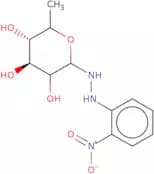
Producto descatalogadoFucose 2-nitrophenylhydrazone
Fucose 2-nitrophenylhydrazone is a custom synthesis that is a modification of fucose. It has been used in methylation, click modification, and fluorination. This compound has been shown to be effective in the synthesis of oligosaccharides and polysaccharides. Fucose 2-nitrophenylhydrazone has also been used as an intermediate for the synthesis of saccharides such as monosaccharide and sugar.
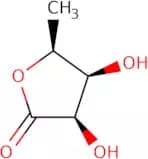
Fórmula:C12H17N3O6Pureza:Min. 95%Peso molecular:299.111745-Deoxy-L-lyxono-1,4-lactone
CAS:5-Deoxy-L-lyxono-1,4-lactone is a crystalline solid that belongs to the class of hydroxamic acids. This compound has been shown to react with hydroxylamine in an aldonic reaction and to inhibit the enzyme xanthin oxidase. The monoclinic crystal structure of 5-Deoxy-L-lyxono-1,4-lactone was determined by XRD analysis. This compound is synthesized from glyoxylate and malonitrile in an efficient manner. It also inhibits glucose oxidation and can be used as an additive for food products.
Fórmula:C5H8O4Pureza:Min. 95%Peso molecular:132.12 g/molRef: 3D-MD09167
Producto descatalogadoMethyl D-arabinofuranoside
CAS:Methyl D-arabinofuranoside is an antimycobacterial agent that inhibits the synthesis of mycolic acids, which are important components of the cell wall of Mycobacterium tuberculosis. Methyl D-arabinofuranoside has been shown to be active against drug-resistant strains and has been well tolerated by animals. This compound can be synthesized from 2,4-dichlorophenylacetic acid and arabinose in two steps. The first step involves a three-component condensation reaction with sodium hydroxide, hydrochloric acid, and 2,4-dichlorophenylacetic acid. The second step is a nucleophilic attack on the pyran ring of methyl D-arabinofuranoside with hypophosphorous acid. Methyl D-arabinofuranoside can also be prepared by reacting sodium nitrosobenzene with sodium benzene sulfinate in alcoholic solution
Fórmula:C6H12O5Pureza:Min. 95%Forma y color:Off-White PowderPeso molecular:164.16 g/molRef: 3D-MM31839
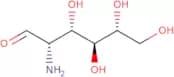
Producto descatalogado2-Amino-2-deoxy-D-altrose
CAS:2-Amino-2-deoxy-D-altrose (2AD) is a molecule with the chemical formula C6H14N2O4. It belongs to the class of compounds known as uronic acids. 2AD is an acetylated molecule that has been structurally studied by X-ray crystallography and NMR spectroscopy. The molecule contains a ring of six carbon atoms, two of which are epoxide groups. The nature of this compound is glycosidic, with focus on hexamethylphosphoramide and diamino oligosaccharides. 2AD has been shown to have anti-inflammatory activities in animals, but its exact mechanism of action remains unknown. This compound may act through a ring-opening reaction or by inhibiting prostaglandin synthesis.
Fórmula:C6H13NO5Pureza:Min. 95%Peso molecular:179.17 g/mol6-O-Benzyl-D-glucose
CAS:6-O-Benzyl-D-glucose is an aglycon of 6-O-benzylglycosides, which are synthesized from glucose by alkaline hydrolysis in the presence of silver oxide. The benzyl group can be removed by a variety of methods, including treatment with hydrogen chloride gas. 6-O-Benzyl-D-glucose has been used in research to demonstrate that carbohydrates have a common structural feature that can be identified by looking at their molecular structure. This molecule has also been used to study the synthesis and reactivity of benzyl groups.
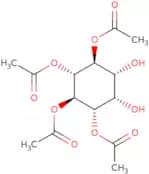
Fórmula:C13H18O6Pureza:Min. 95%Peso molecular:270.28 g/mol3,4,5,6-Tetra-O-acetyl-D-myo-inositol
CAS:3,4,5,6-Tetra-O-acetyl-D-myo-inositol is a carbohydrate that can be used as a monosaccharide or an oligosaccharide. It is produced by the modification of inositol with acetate and fluoride. The compound has been shown to have anti-inflammatory properties and can be used as a drug target for treating inflammation. 3,4,5,6-Tetra-O-acetyl-D-myo-inositol is also methylated and glycosylated.
Fórmula:C14H20O10Pureza:Min. 95%Peso molecular:348.3 g/molD-Ribulose-5-phosphate sodium
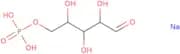
CAS:D-ribulose-5-phosphate sodium is a nucleotide sugar that is one of the ribonucleotides, which are fundamental components of RNA. D-ribulose 5-phosphate sodium has been shown to be an intermediate in the metabolism of ribulose and catalyzes the oxidation of d-arabinose. This enzyme also catalyses the synthesis of fatty acids and participates in reactions involving glycerolipids and phospholipids. The reaction mechanism involves a double displacement with simultaneous attack by a water molecule on C2' and C3'. When deuterium is present, it affects the rate of these reactions in a way that depends on the orientation of the substrate to the enzyme.
Fórmula:C5H11NaO8PPureza:Min. 95%Peso molecular:253.1 g/molRef: 3D-BDA05475
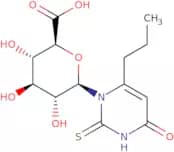
Producto descatalogadoPropylthiouracil N-b-D-glucuronide
CAS:Propylthiouracil N-b-D-glucuronide is a glycosylation product of propylthiouracil, which is the active form of this drug. It has been shown to inhibit thyroid hormone synthesis by binding to the enzyme thyroid peroxidase. Propylthiouracil N-b-D-glucuronide is used in the treatment of thyrotoxicosis, and can also be used as an antithyroid agent for hyperthyroidism. It is chemically synthesized from propylthiouracil with a glycosyl group added at the C3 position on the thiourea ring by glycosyltransferases. This compound has also been fluorinated and polysaccharided, modified and saccharided, oligosaccharided or sugar, synthetic or monosaccharide, custom synthesis or high purity.
Fórmula:C13H18N2O7SPureza:Min. 95%Peso molecular:346.36 g/molRef: 3D-MP16842
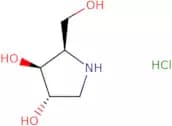
Producto descatalogado1,4-Dideoxy-1,4-imino-D-xylitol HCl
CAS:1,4-Dideoxy-1,4-imino-D-xylitol HCl (DDX) is a potent inhibitor of the enzyme carboxypeptidase A2. DDX has been shown to inhibit the growth of HIV in vitro and in vivo. DDX also inhibits the production of proinflammatory cytokines and neurotrophic factors from HL60 cells. It has been shown to be a potential drug target for the treatment of infectious diseases such as alphaviruses, which produce a severe neuroinvasive disease in humans. DDX binds to dna with high affinity and specificity, but does not bind to RNA or proteins. DDX inhibits mitochondrial membrane potential by binding to ATP synthase and blocking the synthesis of ATP. DDX has also been shown to have an anti-oxidative injury effect on mitochondria, which may contribute to its inhibition of viral replication.
Fórmula:C5H11NO3·HClPureza:Min. 95%Peso molecular:169.61 g/molRef: 3D-MD10116
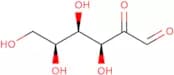
Producto descatalogadoL-Sorbosone
CAS:L-Sorbosone is an antioxidant that can be used as a food additive or dietary supplement. It has been shown to have antioxidative properties and has the ability to inhibit oxidation reactions. The optimum concentration of L-sorbosone is 0.1 milligrams per liter and it is effective at inhibiting chemical reactions in a wide range of pH levels, from 2 to 8. L-Sorbosone belongs to the genus sorbose, which is a sugar alcohol that does not contain an aldehyde group. It also converts sorbose into dehydroascorbic acid and inhibits the enzyme activities of two important enzymes involved in cell culture, namely glutathione reductase and cytochrome p450, which are necessary for maintaining cellular redox balance.
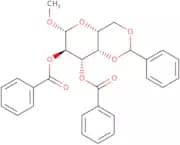
Fórmula:C6H10O6Pureza:Min. 95%Peso molecular:178.14 g/molMethyl 2,3-di-O-benzoyl-4,6-O-benzylidene-b-D-galactopyranoside
CAS:Methyl 2,3-di-O-benzoyl-4,6-O-benzylidene-b-D-galactopyranoside is a custom synthesis that belongs to the class of complex carbohydrates. This compound is an oligosaccharide or a polysaccharide that has been modified by methylation and glycosylation. The modification of this saccharide with methyl groups allows for fluorination which is a click modification. Methyl 2,3-di-O-benzoyl-4,6-O-benzylidene b -D galactopyranoside is synthesized via glycosylation followed by fluorination. This product can be used as a research chemical or in other applications.
Fórmula:C28H26O8Pureza:Min. 95%Peso molecular:490.5 g/molRef: 3D-MR58621
Producto descatalogado