Sales de metal
En esta sección, puede encontrar diversas sales metálicas, que son compuestos caracterizados por contener átomos metálicos y no metálicos. Esencialmente, las sales metálicas están compuestas por cationes que son uno o más átomos metálicos. Estas sales desempeñan un papel crucial en numerosas reacciones y aplicaciones químicas, sirviendo como catalizadores, reactivos o intermediarios en varios procesos industriales y de investigación. En CymitQuimica, ofrecemos una amplia selección de sales metálicas de alta calidad para satisfacer sus necesidades de investigación e industriales, asegurando un rendimiento fiable y efectivo en sus aplicaciones.
Se han encontrado 2870 productos de "Sales de metal"
Ordenar por
Pureza (%)
0
100
|
0
|
50
|
90
|
95
|
100
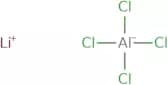
Lithium tetrachloroaluminate
CAS:<p>Lithium tetrachloroaluminate is a compound that consists of lithium, copper, and aluminum. It has an average particle diameter of about 1 micrometer. Lithium tetrachloroaluminate can be used as a catalyst for the reduction of inorganic and organic solutes. This compound is soluble in water and organic solvents, which may be due to its ionic nature. Lithium tetrachloroaluminate can be used as a rechargeable battery electrode material because it has a high capacity for storing lithium ions. The reaction with chloride ions produces chlorine gas, which is corrosive and toxic under certain conditions.</p>Fórmula:LiAlCl4Pureza:(%) Min. 98%Forma y color:White PowderPeso molecular:175.73 g/molBromoferrocene
CAS:<p>Bromoferrocene is a ligand that binds to the ferrocenecarboxylic acid skeleton. It is an aromatic hydrocarbon that has been shown to be a potent inhibitor of cervical cancer proliferation. Bromoferrocene was synthesized by a Friedel-Crafts reaction between styrene and hydrobromic acid. The bromine atom in this compound is electron-withdrawing and therefore has radical character, which makes it a reactive molecule with potential for biological activity. Bromoferrocene is chiral and thus can exist as two enantiomers - one with R configuration, the other L.</p>Fórmula:C10H9BrFePureza:90%NmrPeso molecular:264.93 g/molCopper(II) acetate monohydrate
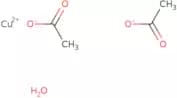
CAS:<p>Copper acetate is a chemical compound that is composed of copper and acetic acid. Copper acetate monohydrate, the form used in this product, is an ionic salt that has the chemical formula Cu(CHCO)2. The copper atom has a coordination geometry of 4.5 and is surrounded by six oxygen atoms and two hydrogen atoms. The reaction mechanism for this compound involves methyl ethyl malonic acid as shown below: The first step in the reaction mechanism is the formation of a carbanion intermediate with the loss of a proton from one of the methyl groups on malonic acid. This carbanion attacks the copper atom to form an intermediate with two positive charges on it, which then breaks down into two molecules of malonic acid and one molecule of water. The other methyl group then reacts with another molecule of malonic acid to form methyl ethyl dicarboxylate and release another proton. This proton can be accepted by water or react with</p>Fórmula:C4H6CuO4·H2OPureza:Min. 95%Forma y color:Blue Clear LiquidPeso molecular:199.65 g/molVinylferrocene
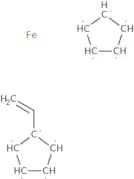
CAS:<p>Vinylferrocene is a zirconium-containing compound that can be used as an electrode material for sensors and electrochemical impedance spectroscopy. It has been shown to react with 3-mercaptopropionic acid at high temperatures in the presence of a palladium catalyst, producing polymer films with cationic polymerization. The phase transition temperature of Vinylferrocene has been shown to be between -30°C and -35°C using gravimetric analysis. The transfer reactions of Vinylferrocene are likely due to the carbonyl groups present on its surface. Vinylferrocene has been shown to have excellent electrochemical properties, including a reversible charge transfer resistance that is significantly lower than other materials such as gold. This property makes it an excellent candidate for use as electrodes in sensors.</p>Fórmula:C12H12FePureza:Min. 95%Forma y color:Yellow PowderPeso molecular:212.07 g/molSodium cinnamate
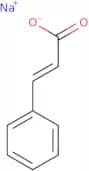
CAS:<p>Sodium cinnamate is an organic compound that is a derivative of 4-hydroxycinnamic acid. It forms sodium salts with water vapor, which are soluble in water. Sodium cinnamate has been shown to have genotoxic activity, and may be used as a potential anticancer drug. Sodium cinnamate also binds to toll-like receptors on the surface of cells, which activate inflammatory signaling pathways. This compound also inhibits enzymes involved in infectious diseases such as influenza A virus and herpes simplex virus type 1 replication. Caffeic acids, chlorogenic acids, and pge2 levels were shown to be increased after treatment with sodium cinnamate.</p>Fórmula:C9H7NaO2Pureza:Min. 95 Area-%Forma y color:PowderPeso molecular:170.14 g/molIron bis(tetrafluoroborate) hexahydrate
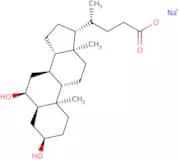
CAS:<p>Iron bis(tetrafluoroborate) hexahydrate is a ferrimagnetic, thermally stable coordination compound that has been shown to interact with bidentate ligands. Iron bis(tetrafluoroborate) hexahydrate can be used as a mononuclear section in analogy to the octahedral section of nickel bis(tetrafluoroborate) hexahydrate. The ligands are methyl groups, which are diffracted at 2θ values of 12.8° and 18.3°. The compound is stable in solvents such as dimethylsulfoxide and tetrahydrofuran. It also has chelate ligand transfer properties, which are due to the presence of two hydroxyl groups on each iron atom.</p>Fórmula:Fe(BF4)2•(H2O)6Pureza:Min. 95%Forma y color:SolidPeso molecular:337.55 g/molHyodeoxycholic acid sodium salt
CAS:Producto controlado<p>Hyodeoxycholic acid sodium salt is a nonsteroidal anti-inflammatory drug that belongs to the class of hyodeoxycholic acids. It is an inhibitor of the enzyme activities that are involved in the synthesis of prostaglandins from arachidonic acid. Hyodeoxycholic acid sodium salt has been shown to inhibit the activity of enzymes such as cyclooxygenase, lipoxygenase, and 5-lipoxigenase. This inhibition leads to decreased production of inflammatory prostaglandins, which are responsible for inflammation and pain. Hyodeoxycholic acid sodium salt also has neurotrophic effects that may be due to its ability to stimulate NGF synthesis by neurons in vitro.</p>Fórmula:C24H39NaO4Pureza:Min. 95%Peso molecular:414.55 g/molPotassium tetracyanoplatinate(II)trihydrate
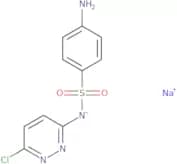
CAS:Producto controlado<p>Potassium tetracyanoplatinate(II)trihydrate (KTP) is a nanomaterial that is made of metal ions, such as ruthenium and copper, and organic molecules. It has the ability to absorb electrons from water, which are then transferred to carbon sources. This process can be used to remove proton in the water, thereby creating an acidic solution. The KTP particles have been shown to produce cavitation when exposed to ultrasound waves or other high-frequency sound waves. Cavitation occurs when bubbles form and rapidly collapse within a liquid. The resulting shockwaves can break down the cell membrane of microorganisms.</p>Fórmula:C4H6K2N4O3PtPureza:Min. 95%Peso molecular:431.4 g/molSodium N-(6-chloropyridazin-3-yl)sulphanilamidate
CAS:<p>Sodium N-(6-chloropyridazin-3-yl)sulphanilamidate (NPS) is a sulfa drug that has been shown to have an effect on the enzyme activities of some endoparasites, such as Giardia lamblia and Entamoeba histolytica. The active form of NPS is metabolized through a number of metabolic transformations, including hydrolysis by esterases or glucuronidases, oxidation by cytochrome P450 enzymes, reduction by glutathione reductase, or conjugation with glucuronic acid. It also specifically binds to markers expressed at high levels in Mycobacterium tuberculosis strains (e.g., ESX-1 secretion system protein) and inhibits cell growth in culture.</p>Fórmula:C10H8ClN4O2SNaPureza:Min. 95%Peso molecular:306.7 g/molSodium L-glutamate monohydrate
CAS:<p>L-glutamic acid is a nonessential amino acid that is used as a food additive. L-glutamic acid is found in the form of sodium salt, called monosodium glutamate (MSG), and is used to enhance the flavor of foods. L-glutamic acid has been shown to be essential for the growth of certain bacteria, such as corynebacteria. The l-glutamic acid gene can be found in corynebacteria and corynebacterium glutamicum. It has been shown that l-glutamic acid can be synthesized by these organisms under conditions of low magnesium concentration, high pH, and high temperature.</p>Fórmula:C5H8NNaO4·H2OPureza:Min. 95%Forma y color:PowderPeso molecular:187.13 g/molPhosphatidylinositol-bis-4,5-phosphate sodium salt
<p>Please enquire for more information about Phosphatidylinositol-bis-4,5-phosphate sodium salt including the price, delivery time and more detailed product information at the technical inquiry form on this page</p>Pureza:Min. 95%Sodium decyl sulfate
CAS:<p>Sodium decyl sulfate is a surfactant used in the preparation of biological samples for analysis using mass spectrometry. This compound forms a disulfide bond with cysteine residues on proteins, which can be cleaved by reducing agents such as dithiothreitol or mercaptoethanol. Sodium decyl sulfate also has potent antitumor activity and is used to treat autoimmune diseases such as multiple sclerosis. The thermal expansion of this compound is proportional to the vapor pressure of water over the range from 0-100°C, and it has been shown to have a constant pressure at temperatures below 100°C. Furthermore, sodium decyl sulfate has been found to be chiral and binds to receptor molecules that are hydrophobic in nature.</p>Fórmula:C10H21O4SNaPureza:Min. 95%Forma y color:White PowderPeso molecular:260.33 g/mol1,1'-Diacetylferrocene
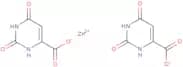
CAS:Producto controlado<p>1,1'-Diacetylferrocene is an organic compound that has been synthesized by a reaction of ferrocene with benzoylhydrazone. Ferrocenes are compounds containing a ferrocene unit, a cyclic system with alternating double bonds and single bonds. The hydroxyl group on 1,1'-diacetylferrocene can be replaced by other substituents such as carboxylic acids or alcohols to produce different derivatives. 1,1'-Diacetylferrocene is soluble in water and solvents such as acetonitrile. It reacts with peroxide to form the corresponding hydroperoxides. This product has been shown to have the ability to interact specifically with ferrocenes when introduced into the solution.</p>Fórmula:C14H14FeO2Pureza:Min. 95%Peso molecular:270.1 g/molZinc orotate
CAS:<p>Zinc orotate is a mineral supplement that contains elemental zinc in the form of an orotate salt. It is used to treat or prevent zinc deficiency and for the prevention and treatment of various conditions, such as liver lesions, antimicrobial agents, brain functions, and energy metabolism. Zinc is an essential mineral that is required for normal growth and development. Zinc also plays a role in maintaining healthy skin and hair. The physiological levels of zinc are 10-20 mg per day for adults. Zinc orotate provides 100% of the daily requirement (15 mg) in just one tablet.</p>Fórmula:C10H6N4O8Zn·2H2OPureza:Min. 95%Forma y color:White PowderPeso molecular:411.59 g/molTetrakis[N-tetrachlorophthaloyl-(S)-tert-leucinato]dirhodium Bis(ethyl Acetate) Adduct
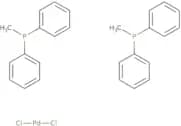
CAS:<p>Please enquire for more information about Tetrakis[N-tetrachlorophthaloyl-(S)-tert-leucinato]dirhodium Bis(ethyl Acetate) Adduct including the price, delivery time and more detailed product information at the technical inquiry form on this page</p>Fórmula:C56H40Cl16N4O16Rh2·C8H16O4Pureza:Min. 95%Peso molecular:1,974.2 g/molBis(methyldiphenylphosphine)palladium(II) Dichloride
CAS:Producto controlado<p>Bis(methyldiphenylphosphine)palladium(II) chloride is an aryl halide catalyst that is used in the preparation of aryl chlorides. It can be used for the synthesis of pharmaceuticals, agrochemicals, perfumes and other chemical compounds. This catalyst has been shown to be effective in the presence of chloride as well as aryl halides. The reaction can be performed in either the presence or absence of solvent. Methyldiphenylphosphine is soluble in organic solvents such as ether, benzene, and toluene.</p>Fórmula:C26H26Cl2P2PdPureza:Min. 95%Peso molecular:577.76 g/molThallium(I) acetate
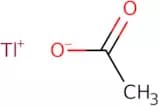
CAS:<p>Used as a selective agent against gram-negative bacteria in selective media</p>Fórmula:C2H3O2TlPureza:Min. 95%Peso molecular:263.43 g/molPotassium p-Toluenethiosulfonate
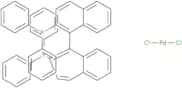
CAS:<p>Potassium p-Toluenethiosulfonate is a functional group that contains a sulfhydryl (-SH) and a thiol (-S-H). It has been used to prepare radionuclides for cancer diagnosis, such as Tc-99m (technetium-99m), I-123 (iodine-123), and I-131 (iodine-131). This compound has been used in preparative methods for the synthesis of organic chemicals. Potassium p-Toluenethiosulfonate is also used in conjugates with drugs or other molecules, which are used in the diagnosis of cancer. The conjugates can be linked to plasma proteins or tumor cells.</p>Fórmula:C7H7KO2S2Pureza:Min. 95%Peso molecular:226.36 g/mol(R)-(+)-(2,2-Bis(Diphenylphosphino)-1,1-binaphthyl)palladium(II)chloride
CAS:Producto controlado<p>(R)-(+)-(2,2-Bis(Diphenylphosphino)-1,1-binaphthyl)palladium(II)chloride is a colorless solid that can be made into a crystalline form. It has a molecular weight of 518.8 g/mol and the chemical formula C12H14P4Cl2. The compound has four asymmetric carbon atoms and two stereocenters in the molecule. This compound is used as a catalyst for organic reactions and in the synthesis of other compounds. (R)-(+)-(2,2-Bis(Diphenylphosphino)-1,1-binaphthyl)palladium(II)chloride is soluble in ethanol and ether but insoluble in water. It reacts with oxygen to produce phosphorous acid and hydrogen chloride gas. This compound has been shown to have nuclear magnetic resonance spectra at room temperature with chemical shifts (</p>Fórmula:C44H33Cl2P2PdPureza:Min. 95%Peso molecular:801.01 g/molIridium(III) acetylacetonate
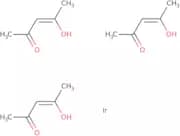
CAS:<p>Iridium(III) acetylacetonate is a coordination complex that is used as an oxidation catalyst. It has the ability to increase the rate of reactions in which water is the reactant or product. Iridium(III) acetylacetonate has a square-planar geometry, with four ligands bound to each metal ion. The coordination geometry of this complex determines its reactivity and selectivity. The reactivity of iridium(III) acetylacetonate can be enhanced by using less soluble salts, such as sodium carbonate or fluorine, to dissolve it in solution. This complex undergoes reaction mechanisms involving hydrogen abstraction and reductive elimination, depending on the conditions of the reaction solution. Iridium(III) acetylacetonate has been used for coatings on glass substrates and as a catalyst for growth kinetics studies and mechanism studies.</p>Fórmula:C15H21IrO6Pureza:Min. 95%Forma y color:PowderPeso molecular:489.54 g/molMercury thiocyanate
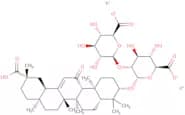
CAS:Producto controlado<p>Mercury thiocyanate is a coordination complex that is an organometallic compound. It contains mercury and thiocyanate ions, which are coordinated by four sulfur atoms from the thiocyanate ion. This compound is a light-sensitive, white powder with a basic structure. Mercury thiocyanate has been used in gravimetric analysis for determining the concentration of thiocyanates in solutions. Powder diffraction analysis has shown that mercury thiocyanate crystallizes in the monoclinic system with space group C2/c and unit cell dimensions a = 12.7 Å, b = 8.5 Å, c = 4.7 Å, β = 108°, V = 518 Å3 (calculated). The morphology of this compound is acicular crystals with smooth surfaces and edges that are often striated or curved on one side. It also exhibits thermal expansion properties as well as high chemical stability and resistance to</p>Fórmula:C2HgN2S2Pureza:Min. 95%Peso molecular:316.76 g/molTrisodium glycyrrhizinate
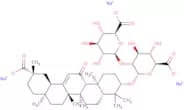
CAS:<p>Trisodium glycyrrhizinate is a fatty acid that acts as an absorption enhancer. It has been shown to have antihypertensive activity and to protect against hepatic tissue damage in experimental models. Trisodium glycyrrhizinate also exhibits antiviral activity and has been shown to be effective against viruses such as HIV, herpes simplex virus, and influenza A. Trisodium glycyrrhizinate is poorly absorbed by the body, which may be due to its high molecular weight and low water solubility. The bioavailability of trisodium glycyrrhizinate can be increased significantly by using it with a film-forming polymer or diphenyl ether. This product is found in various foods such as ganoderma lucidum (a Chinese herbal medicine) and some types of licorice candy.</p>Fórmula:C42H59Na3O16Pureza:80%MinPeso molecular:888.88 g/molBis(2,2,2-trifluoroacetato-kO)di-mercury fluorescein
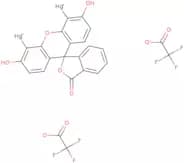
CAS:Producto controlado<p>Please enquire for more information about Bis(2,2,2-trifluoroacetato-kO)di-mercury fluorescein including the price, delivery time and more detailed product information at the technical inquiry form on this page</p>Fórmula:C24H10F6Hg2O9Pureza:Min. 95%Peso molecular:957.5 g/molPrednisolone disodium phosphate
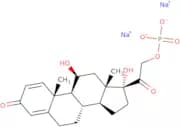
CAS:<p>Prednisolone is a corticosteroid that is used to treat inflammation and reduce the body's immune response. Prednisolone disodium phosphate (PDSP) is an enteric-coated tablet that releases prednisolone in the small intestine, where it can be absorbed into the bloodstream. It has been shown to be effective at reducing bowel disease activity in patients with inflammatory bowel disease. Prednisolone disodium phosphate may also have a role in controlling infectious diseases, such as tuberculosis, due to its ability to inhibit toll-like receptor 4 signaling. The drug has been studied as a model system for predicting drug interactions by monitoring the rate constant for benzalkonium chloride binding to human serum albumin.</p>Fórmula:C21H29O8P•Na2Pureza:Min. 95%Forma y color:PowderPeso molecular:486.4 g/molPotassium phosphate dibasic , anhydrous - for HPLC, >99.0%
CAS:<p>Potassium phosphate dibasic, anhydrous - for HPLC, >99.0% is a crystalline cellulose used as a model system for enzyme activities. It has been shown to have the same effects on enzymes as potassium phosphate monobasic and potassium dihydrogen phosphate. This product also has a use in radiation-induced damage studies due to its ability to absorb ionizing radiation.</p>Fórmula:K2HPO4Pureza:Min. 95%Forma y color:PowderPeso molecular:174.18 g/molSodium benzyloxide solution - 1.0 M in benzyl alcohol
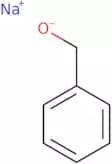
CAS:<p>Sodium benzyloxide is an alkanoic acid with the chemical formula CH3C6H2O2. It is used as a matrix metalloproteinase inhibitor in the synthesis of bicyclic heterocycles. It is also used in asymmetric synthesis and as a substrate for enzyme inhibitors. Sodium benzyloxide has been shown to be effective against herpes simplex virus by preventing viral replication and inducing apoptosis.</p>Fórmula:C6H5CH2ONaForma y color:Clear LiquidPeso molecular:130.12 g/molSodium tetrachloropalladate(II)
CAS:<p>Sodium tetrachloropalladate(II) is a photoelectron acceptor that absorbs x-rays in the wavelength range of 0.2-1.5 Å. It is used as a nanomaterial for the preparation of microspheres and optical devices. Sodium tetrachloropalladate(II) has been shown to have a chloride ion content of 36%. The chemical composition of this element can be determined by using preparative methods such as suzuki coupling reaction, phase chromatography, or elemental analysis. The isolated yield of sodium tetrachloropalladate(II) can be determined by immobilizing it on an ion exchange resin and eluting with 0.1 M HCl.</p>Fórmula:Cl4Na2PdPureza:Min. 95%Peso molecular:294.21 g/molDichloro[1,3-Bis(2,6-diisopropylphenyl)imidazolyl-2-idene](3-chloropyridyl)palladium(IV)
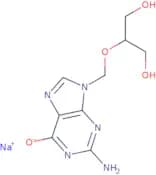
CAS:Producto controlado<p>Dichloro[1,3-Bis(2,6-diisopropylphenyl)imidazolyl-2-idene](3-chloropyridyl)palladium(IV) is an insoluble molecule with a beige color. The molecule belongs to the class of palladium catalyzed cross coupling reactions. It can react with various halides and has been shown to have functionalities, skeleton and reactive groups. This compound is used in synthetic organic chemistry in order to generate sequences with chloride and pentane.</p>Fórmula:C32H40Cl3N3PdPureza:Min. 95%Forma y color:PowderPeso molecular:679.46 g/molGanciclovir sodium
CAS:<p>Anti-viral; DNA polymerase inhibitor; dGTP competitive inhibitor</p>Fórmula:C9H13N5NaO4Pureza:Min. 95%Peso molecular:278.22 g/molChloro[2-(di-tert-butylphosphino)-2',4',6'-triisopropyl-1,1'-biphenyl][2-(2-aminoethyl)phenyl)]palladium(II)
CAS:Producto controlado<p>Chloro[2-(di-tert-butylphosphino)-2',4',6'-triisopropyl-1,1'-biphenyl][2-(2-aminoethyl)phenyl)]palladium(II) is a molecule that inhibits the adenosine receptor in autoimmune diseases and cancer. It also has an inhibitory effect on the membrane transport of glucose, glucosan, and aziridine. This drug can be used to treat inflammatory diseases such as diabetes, asthma, and inflammatory bowel disease. The geometric isomers of this molecule are not identical in shape or size and can have different effects on the body.</p>Fórmula:C37H55ClNPPdPureza:Min. 95%Peso molecular:686.69 g/molDipotassium glycyrrhizinate
CAS:<p>Dipotassium glycyrrhizinate is a compound that is soluble in water and is found in the roots of Glycyrrhiza glabra, an herb that has been used for centuries to treat a variety of inflammatory conditions. The main component of this extract is glycyrrhizinic acid, a triterpene that has been shown to have anti-inflammatory effects. This compound binds to toll-like receptor 4 (TLR4), which is involved in the innate immune response. Dipotassium glycyrrhizinate can inhibit the production of pro-inflammatory cytokines such as tumor necrosis factor alpha and interleukin-8. It also inhibits the release of histamine from mast cells, which are implicated in allergic reactions.</p>Fórmula:C42H60K2O16Pureza:75%Peso molecular:899.11 g/molPotassium chlorate
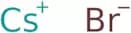
CAS:Producto controlado<p>Potassium chlorate is a strong oxidizing agent and a salt of potassium and chlorate. Potassium chlorate is used as an oxidizer in fireworks, propellants, and for the treatment of wastewater. It can also be used to generate chlorine dioxide, which is used as a disinfectant. Potassium chlorate has been shown to have genotoxic effects on rat liver cells, which may be due to its ability to induce transcriptional regulation by altering DNA methylation status. Chronic exposure to high concentrations of potassium chlorate can cause apical necrosis in rats. This type of necrosis is caused by the accumulation of potassium ions that lead to a disruption in membrane integrity. Chlorates are also known to cause chronic renal toxicity via oxidative stress mechanisms.</p>Fórmula:ClKO3Pureza:Min. 95%Forma y color:White SolidPeso molecular:122.55 g/molCesium bromide
CAS:<p>Cesium bromide is a chemical compound that has a high melting point. It is used as an ionic liquid and as a salt in analytical chemistry. Cesium bromide can be used to measure the thermal expansion of materials or to measure the hydrogen bond strength between two molecules. Cesium bromide is also used in membrane systems for water purification, and it can be used for radiation treatment of cancer cells. Cesium bromide can be found in wastewater treatment plants where it helps to remove halides and other contaminants from water vapor, providing kinetic energy to do so. Cesium bromide is also used as an analytical method for measuring hydrochloric acid, uv absorption, or chelate rings.</p>Fórmula:CsBrPureza:Min. 95%Peso molecular:212.81 g/molDichlorotitanium Diisopropoxide
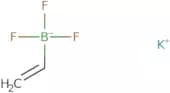
CAS:Producto controlado<p>Dichlorotitanium Diisopropoxide is a novel reagent for the asymmetric synthesis of amides. The reaction mechanism is based on the formation of a chloride-containing titanium enolate from titanium tetrachloride and an amine. This enolate reacts with another molecule of titanium tetrachloride to form the desired amide. Dichlorotitanium Diisopropoxide has been used in the preparation of polymers, such as poly(vinyl chloride) and poly(methyl methacrylate). It has also been used to produce organic compounds, such as chloroform, dichloromethane, and chlorobenzene. The stereoselectivity can be controlled by changing the solvent used in this reaction.nowiki>END>></p>Fórmula:C6H14Cl2O2TiPureza:Min. 95%Peso molecular:236.95 g/molPotassium vinyltrifluoroborate
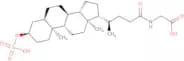
CAS:<p>Potassium vinyltrifluoroborate is a salt that contains the inorganic anion potassium and the organic ligand vinyltrifluoroborate. It is used as an electrolyte in electrochemical cells, such as fuel cells, to increase power output by increasing the conductivity of the electrolyte. This compound has been shown to be effective against chronic kidney disease and infectious diseases such as HIV and malaria. Potassium vinyltrifluoroborate also has anti-cancer properties due to its ability to inhibit cellular proliferation and induce apoptosis in cancer cells. The mechanism of action of this drug is still unclear but may be due to its ability to inhibit proteases, such as ns3 protease found in human erythrocytes.</p>Fórmula:C2H3BF3KPureza:Min. 95%Forma y color:PowderPeso molecular:133.95 g/mol3-Sulfoglycolithocholic acid disodium
CAS:<p>3-Sulfoglycolithocholic acid disodium is a potential biomarker for inflammatory bowel disease. It is also used as an analytical method to measure bile acids in the blood. 3-Sulfoglycolithocholic acid disodium has been shown to be a strong indicator of liver inflammation and hepatitis. This compound can also be used as a diagnostic tool for infectious diseases, such as HIV and hepatitis C, by measuring serum bile acids levels. The level of this molecule can be measured in the blood and urine of patients with bowel disease, such as ulcerative colitis or Crohn's disease. 3-Sulfoglycolithocholic acid disodium can also be used to diagnose atrial fibrillation.</p>Fórmula:C26H43NO7S•Na2Pureza:Min. 95%Peso molecular:559.67 g/molrac 5-Hydroxy valproic acid sodium
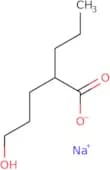
CAS:<p>Please enquire for more information about rac 5-Hydroxy valproic acid sodium including the price, delivery time and more detailed product information at the technical inquiry form on this page</p>Fórmula:C8H16O3•NaPureza:Min. 95%Forma y color:PowderPeso molecular:183.2 g/molTauroursodeoxycholic acid, sodium salt
CAS:<p>Tauroursodeoxycholic acid, sodium salt is a taurine-conjugated bile acid derivative, which is synthesized in the liver from ursodeoxycholic acid. It functions through its role in stabilizing the mitochondria and inhibiting apoptosis by modulating the unfolded protein response. This molecular action involves reducing endoplasmic reticulum stress, thereby providing cytoprotective effects in various cellular environments.</p>Fórmula:C26H44NNaO6SPureza:Min. 95%Peso molecular:521.69 g/molCopper(I) trifluoromethanesulfonate toluene complex
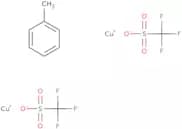
CAS:Producto controlado<p>Toluene complex</p>Fórmula:C9H8Cu2F6O6S2Pureza:Min. 95%Peso molecular:517.37 g/mol(Trimethyl)pentamethylcyclopentadienyltitanium(IV)
CAS:<p>Please enquire for more information about (Trimethyl)pentamethylcyclopentadienyltitanium(IV) including the price, delivery time and more detailed product information at the technical inquiry form on this page</p>Fórmula:C13H24TiPureza:Min. 95%Peso molecular:228.2 g/molRuthenium(III) chloride
CAS:<p>Ruthenium(III) chloride is a compound of ruthenium and chlorine that is used in the preparation of pharmaceuticals. Ruthenium(III) chloride reacts with potassium dichromate to form stable complexes, as well as being oxidized by picolinic acid or other oxidizing agents to form stable complexes. It has been shown to be an effective catalyst for organic synthesis reactions and biological studies have shown it can inhibit the growth of bacteria such as Mycobacterium tuberculosis by inhibiting the synthesis of proteins necessary for cell division. Ruthenium(III) chloride also forms complexes with amines and nitrogen atoms, which may be due to its ability to bind with these groups.</p>Fórmula:RuCl3Pureza:Min. 95%Forma y color:Black SolidPeso molecular:207.43 g/molMercury(II) bis(dithizonate)
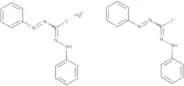
CAS:Producto controlado<p>Mercury(II) bis(dithizonate) is an isomeric form of mercury that exhibits photochromism. It has a yellow color in the solid state and can reversibly change to a red color when exposed to light. Mercury(II) bis(dithizonate) is soluble in organic solvents and forms bright yellow crystals with a melting point of 81-82 °C. It has been used as an optical dye for microscopy, where it absorbs ultraviolet radiation and emits visible light. This property makes it useful for detection of bacteria or other microorganisms by optical microscopy or fluorescence microscopy. The solvents acetonitrile, diethylether, or acetone can be used to dissolve this compound. Mercury(II) bis(dithizonate) is metastable which means that it will decompose spontaneously into mercury(I) oxide and hydrogen gas if heated to 180 °C.</p>Fórmula:C26H22HgN8S2Pureza:Min. 95%Forma y color:Dark Red SolidPeso molecular:711.23 g/molSodium hexamethylene-1,6-bisthiosulfate dihydrate
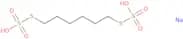
CAS:<p>Sodium hexamethylene-1,6-bisthiosulfatedihydrate is a salt of an oxide of benzene with hexamethylene 1,6-disulfate dihydrate. It has a white to off-white crystalline appearance and is used as an additive in mixtures to improve the wetting and dispersing properties of the mixture. The chemical formula for this compound is C8H4NaOS·2H2O.</p>Fórmula:C6H12Na2O6S4Pureza:Min. 95%Forma y color:PowderPeso molecular:354.4 g/molDichloro(1,5-cyclooctadiene)palladium(II)
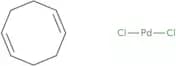
CAS:Producto controlado<p>Dichloro(1,5-cyclooctadiene)palladium(II) is a stable metal complex in which the chlorine atom is coordinated to two benzyl groups and one palladium atom. The chloride ion is coordinated to the palladium atom through a strong coordinate bond. The chloride ion is also coordinated to the two benzyl groups by weaker coordinate bonds. In the presence of sodium carbonate, hydrogen chloride and nitrogen gas, dichloro(1,5-cyclooctadiene)palladium(II) reacts with hydrogen chloride to form stable complexes that are soluble in water. These complexes can be used as catalysts for organic reactions because they are able to transfer hydrogen atoms between molecules without breaking covalent bonds. Dichloro(1,5-cyclooctadiene)palladium(II) has been shown to have antibacterial activity against Staphylococcus aureus and Pseudomonas aeruginosa</p>Fórmula:C8H12Cl2PdPureza:Min. 98%Peso molecular:285.51 g/molTris(dibenzylideneacetone)dipalladium(0)
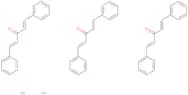
CAS:<p>Tris(dibenzylideneacetone)dipalladium(0) (Pd2(dba)) is a monoclonal antibody that is used to treat infectious diseases. The metal complex binds to the fatty acid and inhibits the synthesis of membrane lipids, which leads to an inhibition of virus replication. Tris(dibenzylideneacetone)dipalladium(0) has been shown to have potent antitumor activity in animal models, with cytotoxic effects on mutant melanoma cells and hydrochloric acid. This drug also has potent pro-apoptotic properties, inducing apoptosis by binding to pro-apoptotic proteins. Tris(dibenzylideneacetone)dipalladium(0) has been shown to be a potent inhibitor of x-ray crystal structures at high temperatures, where it competes with water for the labile hydrogen atoms on the surface of hydroxyl groups.</p>Fórmula:C17H14O·Pd2Pureza:Min. 95%Forma y color:Purple PowderPeso molecular:915.72 g/mol4-Hydroxy atorvastatin disodium salt
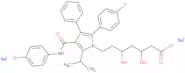
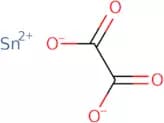
CAS:<p>Please enquire for more information about 4-Hydroxy atorvastatin disodium salt including the price, delivery time and more detailed product information at the technical inquiry form on this page</p>Fórmula:C33H33FN2Na2O6Pureza:Min. 95%Peso molecular:618.6 g/molTin(II) oxalate
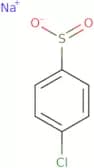
CAS:<p>Tin(II) oxalate is a chemical compound with the formula (CH3COO)2SnO. It is a white crystalline solid that is soluble in water and alcohol but not ether. Tin(II) oxalate has been shown to be an effective inhibitor of epidermal growth factor (EGF). This compound also inhibits the formation of dibutyltin oxide, which is a component of some paints. The following are the high-quality product descriptions for eCommerce: Rifapentine Rifapentine is an anti-tuberculosis drug that belongs to the class of rifamycins. It is the most active of the rifamycins for the treatment of tuberculosis. Rifapentine inhibits bacterial growth by binding to DNA-dependent RNA polymerase, thereby preventing transcription and replication. The high frequency of human activity has been shown using a patch-clamp technique on human ery</p>Fórmula:C2O4SnPureza:Min. 95%Peso molecular:206.73 g/mol4-Chloro-benzene-sulfinic acid sodium salt
CAS:<p>The 4-chloro-benzenesulfinic acid sodium salt is a type of sulfinic acid. It can be used to control experiments involving methides, halides, and human macrophages. Sodium salts of this compound have been shown to inhibit the growth of Candida glabrata and Galleria mellonella in vitro. The 4-chloro-benzenesulfinic acid sodium salt reacts with chloride ion to form a nucleophilic trifluoroacetate anion, which reacts with thiosulfonates to produce type strain. Trifluoroacetic acid is used as a solvent in the reaction.</p>Fórmula:C6H4ClNaO2SPureza:Min. 95%Peso molecular:198.6 g/molBromocresol purple sodium salt
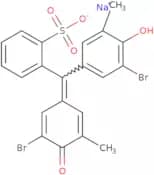
CAS:<p>Bromocresol purple sodium salt is a dye that emits light when it is irradiated with light of a particular wavelength. It has been used to detect amniotic fluid contamination in the laboratory and as an absorber in polymer films. Bromocresol purple sodium salt absorbs ultraviolet and visible light, which causes it to emit red light. The molecules of bromocresol purple sodium salt are long-chain triazoles, which absorb water vapor and emit infrared radiation. This property can be used to detect the presence of alkali metals. The luminescent property of bromocresol purple sodium salt can be enhanced by adding an alkali metal, such as potassium or lithium chloride, to the solution where it is dissolved.</p>Fórmula:C21H15Br2O5S·NaPureza:Min. 95%Peso molecular:562.2 g/molCalcium pyrophosphate
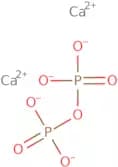
CAS:<p>Calcium pyrophosphate is a compound that is used in the diagnosis and treatment of chronic arthritis. It has been shown to induce caspase-independent cell death and inhibit the proliferation of fibroblasts. Calcium pyrophosphate also inhibits nuclear DNA fragmentation and caspases, which are proteins that are involved in apoptosis. This drug has a structural analysis that shows it to be a crystalline compound with a molecular weight of 622.6 Da. The crystals are composed of two calcium ions, two phosphate ions, one pyrophosphate ion, and three water molecules. Calcium pyrophosphate is biocompatible and can be used as a coating for medical implants because it does not cause any inflammation or organ rejection.</p>Fórmula:Ca2P2O7Pureza:Min. 95%Forma y color:SolidPeso molecular:254.1 g/mol







![Tetrakis[N-tetrachlorophthaloyl-(S)-tert-leucinato]dirhodium Bis(ethyl Acetate) Adduct](/_next/image/?url=https%3A%2Fstatic.cymitquimica.com%2Fproducts%2F3D%2Fthumb-webp%2FFT60020.webp&w=3840&q=75)




palladium(IV)](/_next/image/?url=https%3A%2Fstatic.cymitquimica.com%2Fproducts%2F3D%2Fthumb-webp%2FFB157435.webp&w=3840&q=75)
![Chloro[2-(di-tert-butylphosphino)-2',4',6'-triisopropyl-1,1'-biphenyl][2-(2-aminoethyl)phenyl)]pal…](/_next/image/?url=https%3A%2Fstatic.cymitquimica.com%2Fproducts%2F3D%2Fthumb-webp%2FFC156938.webp&w=3840&q=75)