Péptidos
Subcategorías de "Péptidos"
Se han encontrado 29801 productos de "Péptidos"
[Lys1015,1024]- Thrombospondin-1 (1015-1024) (human, bovine, mouse)
Custom research peptide; min purity 95%.Fórmula:C68H105N17O12SPureza:Min. 95%Peso molecular:1,384.77 g/molCFTR (108-117), Pseudomonas aeruginosa Inhibitor
Custom research peptide; min purity 95%.Fórmula:C51H77N15O22Pureza:Min. 95%Peso molecular:1,252.27 g/molSpinorphin, bovine
Custom research peptide; min purity 95%.Fórmula:C45H64N8O10Pureza:Min. 95%Peso molecular:877.06 g/molMBP (1-11), human
MBP(1-11) corresponds to amino acids 1 to 11 of the human myelin basic protein (MBP).
Fórmula:C52H88N22O17Pureza:Min. 95%Peso molecular:1,293.42 g/molHemorphin-7
Custom research peptide; min purity 95%.Fórmula:C49H64N12O11Pureza:Min. 95%Peso molecular:997.12 g/molBAM-22P
Custom research peptide; min purity 95%.Fórmula:C130H184N38O31S2Pureza:Min. 95%Peso molecular:2,839.28 g/molMotilin, porcine
Custom research peptide; min purity 95%.Fórmula:C120H188N34O35SPureza:Min. 95%Peso molecular:2,699.1 g/molRFRP-1 (Human)
Custom research peptide; min purity 95%.Fórmula:C67H101N19O14SPureza:Min. 95%Peso molecular:1,428.73 g/molHistone H3 (1-25),amide
Custom research peptide; min purity 95%.Fórmula:C110H202N42O32Pureza:Min. 95%Peso molecular:2,625.1 g/mol[D-Ala1] Peptide T, amide
Custom research peptide; min purity 95%.
Fórmula:C35H56N10O15Pureza:Min. 95%Peso molecular:856.89 g/molproFIX18
Custom research peptide; min purity 95%.Fórmula:C95H157N31O27Pureza:Min. 95%Peso molecular:2,165.5 g/molHBV core (107-115)
Custom research peptide; min purity 95%.Fórmula:C44H72N12O14SPureza:Min. 95%Peso molecular:1,025.19 g/molα-MSH
CAS:Custom research peptide; min purity 95%.Fórmula:C77H109N21O19SPureza:Min. 95%Peso molecular:1,664.9 g/molDTrp-Gamma MSH
Custom research peptide; min purity 95%.Fórmula:C74H99N21O16SPureza:Min. 95%Peso molecular:1,570.81 g/molPrion Peptide (106-126), Human
CAS:Custom research peptide; min purity 95%.Fórmula:C80H138N26O24S2Pureza:Min. 95%Peso molecular:1,912.28 g/molNeuropeptide Y, human, rat
Custom research peptide; min purity 95%.Fórmula:C189H285N55O57SPureza:Min. 95%Peso molecular:4,271.7 g/molBid BH3 Peptide
Custom research peptide; min purity 95%.Fórmula:C95H161N33O32SPureza:Min. 95%Peso molecular:2,309.61 g/molLMP2 (419-427), TYG
Custom research peptide; min purity 95%.Fórmula:C48H71N9O12S2Pureza:Min. 95%Peso molecular:1,030.27 g/molBax-BH3
Custom research peptide; min purity 95%.Fórmula:C77H136N22O27SPureza:Min. 95%Peso molecular:1,834.13 g/molMelanocyte Associated Antigen gp 100 (17-25)
Custom research peptide; min purity 95%.Fórmula:C38H70N10O11Pureza:Min. 95%Peso molecular:843.04 g/molGlucagon (1-29), bovine, human, porcine
CAS:Glucagon (1-29), bovine, human, porcine, is a peptide hormone, which is derived from bovine, human, and porcine sources. It comprises 29 amino acids and functions as a crucial regulator of glucose metabolism by promoting the increase of blood glucose levels. The mode of action involves binding to receptors on liver cells, activating adenylate cyclase, and subsequently increasing intracellular cyclic AMP. This cascade triggers glycogenolysis and gluconeogenesis, leading to elevated blood glucose.In scientific research, Glucagon (1-29), bovine, human, porcine, is utilized to study metabolic pathways and the regulation of glucose homeostasis. Its applications extend to diabetes research, where it serves as a model for understanding glucagon's role in insulin resistance and pancreatic beta-cell dysfunction. Furthermore, this product is employed in the development of therapeutic strategies for hypoglycemic events experienced by diabetic patients. It also serves as a tool in pharmacological studies to elucidate receptor-ligand interactions and signaling mechanisms in different species.Fórmula:C153H225N43O49SPureza:Min. 95%Peso molecular:3,482.78 g/molMelanocyte Protein PMEL 17 (185-193) (human, bovine, mouse)
Custom research peptide; min purity 95%.Fórmula:C46H72N10O15Pureza:Min. 95%Peso molecular:1,005.14 g/molMet-Enkephalin
Custom research peptide; min purity 95%.Fórmula:C27H35N5O7SPureza:Min. 95%Peso molecular:573.67 g/molCINC-1/gro (Rat)
CINC-1/gro is a recombinant protein of the rat CINC-1. It is used as an activator or ligand for the caspase-1/caspase-4 cascade and as a receptor for TNF-α, IL-1β, and IL-18. CINC-1 is a member of the NODO family of cytoplasmic proteins that are involved in intracellular signaling pathways. CINC-1 can be activated by different stimuli such as apoptotic cells, dsRNA, or ATP and then binds to various receptors on the cell surface including those for TNFα, IL1β, and IL18. CINC-1 has been shown to activate caspases by cleaving Bid into tBid and activating caspase 8. This activation leads to subsequent cleavage of procaspases 3, 6, 7, 9, 10, 11 which eventually results in apoptosis or programmed cellFórmula:C343H572N98O97S7Pureza:Min. 95%Peso molecular:7,845.3 g/molGH Bovine
GH Bovine is a peptide hormone that stimulates the production of IGF-1, which is an important regulator of growth and metabolism. GH Bovine binds to the GH receptor, a G protein-coupled receptor, and triggers its activation. It also interacts with other receptors, such as the insulin receptor. GH Bovine is a research tool for studying the interactions between proteins. GH Bovine has been used in pharmacology to study the role of GH in humans, including its effects on cancer cells. GH Bovine has been shown to have an inhibitory effect on cell proliferation and DNA synthesis in vitro. This product is highly purified and has a CAS number of 714-69-2.
Pureza:Min. 95%α-Defensin-6, human
α-defensin-6 is a human protein that belongs to the α-defensin family. It has been shown to have antibacterial activity against Gram-positive bacteria and is thought to be involved in the innate immune response. α-Defensin-6 has been shown to inhibit ion channels, receptor activation, and cell biology. This product is available as a 0.1mg vial and contains disulfide bonds between Cys4-Cyc31, Cys6-Cys20 and Cys10-Cys30. It can be used as an antimicrobial peptide in Paneth cells.Fórmula:C156H228N46O46S7Pureza:Min. 95%Peso molecular:3,708.2 g/molAzido-dPEG®24-OH
Azido-dPEG®24-OH is a PEG polymer categorised as monofunctional (OH-PEG-X). Used as a linker, azido-dPEG®24-OH is used to attached PEG to proteins, peptides, oligonucleotides, nanoparticles and small molecules via pegylation, a bioconjugation technique.Fórmula:C88H156F4N2O41Pureza:Min. 95%Peso molecular:1,974.16 g/molArphamenine B
CAS:Arphamenine B is a potent, selective, and reversible inhibitor of the protein tyrosine phosphatase 1B (PTP1B). Arphamenine B binds to PTP1B with high affinity and specificity. It is a useful tool for studying protein-protein interactions and protein function. Arphamenine B can also be used as an activator or ligand for receptors, especially G-protein coupled receptors. This peptide has been shown to inhibit ion channels such as calcium channels, potassium channels, and sodium channels.
Fórmula:C16H24N4O4Pureza:Min. 95%Peso molecular:336.39 g/molHBB MS Calibrator (25nmol)
HBB MS Calibrator is a research tool that is used to calibrate mass spectrometry. It is an activator of Ligand and Receptor, which are proteins that play a role in cell biology. HBB MS Calibrator binds to ion channels and inhibits the opening of these channels. This leads to a decrease in the flow of ions through the channel, which can affect a number of cellular processes. HBB MS Calibrator also has pharmacological properties that are used for drug discovery and peptide production.
Pureza:Min. 95%GnGn-bi-Asn-PABA
GnGn-bi-Asn-PABA is a peptide that has been shown to activate the nicotinic acetylcholine receptor. It binds to the ligand binding site of the receptor and mimics the natural neurotransmitter acetylcholine, increasing the probability of neurotransmitter release. GnGn-bi-Asn-PABA has also been shown to inhibit calcium ion channels and ligand gated ion channels, which are proteins that regulate the flow of ions in and out of cells. GnGn-bi-Asn-PABA is a research tool used for studying cell biology and pharmacology.Fórmula:C63H103N9O37Pureza:Min. 95%Peso molecular:1,578.5 g/molHP MS Calibrator-8 (25nmol)
HP MS Calibrator-8 (25nmol) is a peptide that is used in proteomics research. It contains haptoglobin beta chain, haptoglobin alpha chain, zonulin, tryptic peptide and trypTides. This product can be used to identify the presence of Haptoglobin beta chain in samples. HP MS Calibrator-8 (25nmol) also has the ability to inhibit protein synthesis in human cells.Pureza:Min. 95%Bis-MAL-Lysine-dPEG®4-TFP Ester
Bis-MAL-Lysine-dPEG®4-TFP Ester is a peptide containing polyethylene glycol (PEG) as spacer to alter their pharmacokinetic properties and pharmodynamics.Fórmula:C19H38O9Pureza:Min. 95%Peso molecular:410.5 g/molTentaGel® Macrobead RAM Resin
TentaGel; is a gelatinous resin, an important support for solid phase synthesis. TentaGel resins are constructed with a backbone of low crosslinked polystyrene grafted with polyoxyethylene (polyethylene glycol) as shown below. The typical chain length of POE (n) is approximately 68 ethylene oxide units or an average MW of 3000. This long chain creates a spacer that effectively separates the reactive site (X) from the crosslinked backbone matrix. This product has a particle size of 280-320 µm and capacity: 02-03 meq/g.Pureza:Min. 95%Biotin-dPEG®3-TFPA
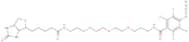
CAS:Biotin-dPEG®3-TFPA is a PEG compound with two different functional groups (also known as heterobifunctional). Unlike homobifunctional PEG compounds (same functional group on both ends), this type of compounds are more versatile as have two different anchor points. Biotin-dPEG®3-TFPA is used as a linker and spacer to add a PEG moiety, via pegylation (a bioconjugation technique) to proteins, peptides, oligonucleotides, small molecules and nanoparticles.Fórmula:C27H37F4N7O6SPureza:Min. 95%Peso molecular:663.69 g/molH2N-PEG-O-C3H6-COOH hydrochloride
H2N-PEG-O-C3H6-COOH hydrochloride is a PEG compound with two different functional groups (also known as heterobifunctional). Unlike homobifunctional PEG compounds (same functional group on both ends), this type of compounds are more versatile as have two different anchor points. H2N-PEG-O-C3H6-COOH hydrochloride is used as a linker and spacer to add a PEG moiety, via pegylation (a bioconjugation technique) to proteins, peptides, oligonucleotides, small molecules and nanoparticles.Pureza:Min. 95%Methoxytrityl-S-dPEG®4-Acid
CAS:Methoxytrityl-S-dPEG®4-Acid is a PEG compound with two different functional groups (also known as heterobifunctional). Unlike homobifunctional PEG compounds (same functional group on both ends), this type of compounds are more versatile as have two different anchor points. Methoxytrityl-S-dPEG®4-Acid is used as a linker and spacer to add a PEG moiety, via pegylation (a bioconjugation technique) to proteins, peptides, oligonucleotides, small molecules and nanoparticles.
Fórmula:C51H103NO26Pureza:Min. 95%Peso molecular:1,146.35 g/molMouse GIP (Active) ELISA (1ea)
Mouse GIP (Active) ELISA (1ea) is a Mouse GIP (Active) ELISA Kit that can be used to measure the levels of active Mouse GIP in serum, plasma or other biological fluids. The assay employs a monoclonal antibody specific for mouse GIP. This antibody captures Mouse GIP from test samples, and a biotinylated polyclonal antibody specific for mouse GIP is then used to measure the captured Mouse GIP by means of a colorimetric reaction. The amount of Mouse GIP in the test sample is inversely proportional to the intensity of the color developed.Pureza:Min. 95%Leptin (Rat)-ELISA Kit (1ea)
Leptin ELISA Kit is a sandwich ELISA for the quantitative measurement of mouse leptin in rat serum. Leptin is a 16-kDa peptide hormone that regulates energy balance and body weight. It is produced by adipose tissue, and circulates in the blood as a protein complex with high-density lipoprotein (HDL). The assay employs monoclonal antibodies (MAbs) to measure mouse leptin in rat serum. The Mabs are specific for the mouse leptin sequence, which allows them to selectively bind to the mouse leptin in rat serum. Quantitative measurements of mouse leptin can be made using standard colorimetric procedures.Pureza:Min. 95%Secretogranin III, human, recombinant
Secretogranin III, human, recombinant is a research peptide that is produced using Escherichia Coli. This protein is involved in various physiological processes and has been widely studied in the field of neuroscience. Secretogranin III plays a crucial role in the regulated secretion of hormones and neuropeptides. It is also involved in the formation and trafficking of secretory granules within cells. The recombinant form of Secretogranin III offers researchers a valuable tool for studying its functions and mechanisms in different biological systems.Pureza:Min. 95%Anti Urocortin (3-40) Serum
Anti Urocortin (3-40) Serum is a peptide that can be used as a research tool to activate ion channels and ligand receptors. This product is a high purity, lyophilized serum that can be reconstituted with water. Anti Urocortin (3-40) Serum has been shown to inhibit protein interactions in the cell biology and pharmacology fields. The CAS number for this product is 103425-75-4.Pureza:Min. 95%IL 4 Rhesus Macaque
IL 4R is a receptor for Interleukin-4. It is a member of the type II cytokine receptor family and has been shown to be an inhibitor of cell proliferation. IL 4R also interacts with the protein tyrosine phosphatase SHP2, which plays a role in signaling pathways. IL 4R binds to specific Ligands, such as IL-4 and IL-13, that are found in the extracellular matrix and on the surface of cells. These interactions activate the receptor and lead to intracellular signaling cascades. The protein's activation can be inhibited by small molecules like peptides or antibodies that bind to its extracellular domain.
Pureza:Min. 95%Anti Pancreatic Polypeptide (18-36), Human Serum
Anti Pancreatic Polypeptide (18-36), humanSerum is a recombinant protein that belongs to the group of peptides. It is an activator of ion channels, which are proteins that regulate the flow of ions across cell membranes. This product is used as a research tool in pharmacology and cell biology. Anti Pancreatic Polypeptide (18-36), humanSerum has been shown to inhibit the activity of ion channels by binding to their ligands, thereby preventing activation. The purified recombinant protein has no detectable endotoxin levels and is suitable for use in research applications.Pureza:Min. 95%IL 1 beta Mouse
IL1-beta is a pro-inflammatory cytokine that belongs to the Interleukin family. It is expressed in response to inflammation, trauma, and infection and can be found in many tissues of the body. IL1-beta has been shown to have a wide variety of effects on the body including regulating cell growth and differentiation. IL1-beta has also been shown to bind with high affinity to specific receptors that are known as type I interleukins. These receptors are able to activate other cells such as T cells and macrophages, which produce more inflammatory cytokines such as tumor necrosis factor alpha (TNFα) and interferon gamma (IFNγ).
IL1-beta Mouse is a mouse monoclonal antibody that binds specifically with IL1-beta. This antibody can be used for immunohistochemistry or Western blotting experiments. It can also be used for blocking studies using an ELISA assay or RIA assay.Pureza:Min. 95%Methoxytrityl-S-dPEG®8 Acid
CAS:Methoxytrityl-S-dPEG®8 Acid is a PEG compound with two different functional groups (also known as heterobifunctional). Unlike homobifunctional PEG compounds (same functional group on both ends), this type of compounds are more versatile as have two different anchor points. Methoxytrityl-S-dPEG®8 Acid is used as a linker and spacer to add a PEG moiety, via pegylation (a bioconjugation technique) to proteins, peptides, oligonucleotides, small molecules and nanoparticles.
Pureza:Min. 95%Peso molecular:730.91 g/molTGF b 1, human, recombinant
TGF b 1 is a member of the transforming growth factor family and is a potent inhibitor of cell proliferation. Recombinant human TGF b 1 has been shown to inhibit the proliferation of various cell types in culture, including fibroblasts, endothelial cells, and smooth muscle cells. It also inhibits tumor growth in vivo. The binding site for TGF b 1 on target cells has been localized to the extracellular domain of type II receptor kinase, which is composed of three immunoglobulin-like domains. This protein can be used as an antibody or ligand to study protein interactions.Pureza:>95% By Sds-Page.Des-Arg9-Bradykinin
Des-Arg9-Bradykinin is a peptide that is structurally related to bradykinin. It is synthesized by removing the first two amino acids from the N terminus of bradykinin and replacing them with an acetyl group. It has been shown to have potent activity against inflammatory cells in vitro, including mast cell degranulation and histamine release. Des-Arg9-Bradykinin also inhibits the production of nitric oxide, which may be responsible for its anti-inflammatory effects.Fórmula:C44H61N11O10•CH3COOH•3H2OPureza:Min. 95%Peso molecular:1,018.12 g/molNeuromedin U (mouse)
Neuromedin U is a peptide that plays a role in the regulation of cardiovascular function and the modulation of pain. It has been found to activate receptors for calcitonin gene-related peptide (CGRP) and vasoactive intestinal peptide (VIP). Neuromedin U has also been found to be an inhibitor of ligand-induced activation of ion channels, such as those activated by bradykinin or histamine. This protein can be used as a research tool in cell biology, pharmacology, and biochemistry.
Fórmula:C125H185N35O33Pureza:Min. 95%Peso molecular:2,706 g/molm-dPEG®12-Amido-dPEG®12-TFP Ester
m-dPEG®12-Amido-dPEG®12-TFP Ester is a PEG compound with two different functional groups (also known as heterobifunctional). Unlike homobifunctional PEG compounds (same functional group on both ends), this type of compounds are more versatile as have two different anchor points. m-dPEG®12-Amido-dPEG®12-TFP Ester is used as a linker and spacer to add a PEG moiety, via pegylation (a bioconjugation technique) to proteins, peptides, oligonucleotides, small molecules and nanoparticles.
Fórmula:C59H105F4NO27Pureza:Min. 95%Peso molecular:1,336.45 g/molBis-dPEG®9-NHS Ester
CAS:Bis-dPEG®9-NHS Ester is a PEG polymer categorised as homobifunctional PEG (X-PEG X). Used as a linker, bis-dPEG®9-NHS Ester is used to attached PEG to proteins, peptides, oligonucleotides, nanoparticles and small molecules via pegylation, a bioconjugation technique.Fórmula:C34H46N4O7SPureza:(%) Min. 97%Peso molecular:654.82 g/molAnti GLP-1 (7-36)-NH₂, Human Serum
Anti GLP-1 (7-36)-NH₂, human serum is a recombinant protein that inhibits the activity of the glucagon-like peptide-1 receptor. It is used as a research tool to study the role of GLP-1 and its receptor in regulating blood glucose levels. Anti GLP-1 (7-36)-NH₂, human serum can be used as a ligand for the isolation of the GLP-1 receptor from cells. The anti GLP-1 (7-36)-NH₂, human serum is also used to study ion channels and antibody binding.Pureza:Min. 95%DBCO-dPEG®24-TFP ester
DBCO-dPEG®24-TFP Ester is a PEG compound with two different functional groups (also known as heterobifunctional). Unlike homobifunctional PEG compounds (same functional group on both ends), this type of compounds are more versatile as have two different anchor points. DBCO-dPEG®24-TFP Ester is used as a linker and spacer to add a PEG moiety, via pegylation (a bioconjugation technique) to proteins, peptides, oligonucleotides, small molecules and nanoparticles.Fórmula:C77H118F4N2O28Pureza:Min. 95%Peso molecular:1,595.75 g/molRat GIP (Total) ELISA (1ea)
Rat GIP (Total) ELISA is a sandwich enzyme-linked immunosorbent assay for the quantitative determination of rat GIP in serum. The assay utilizes monoclonal antibodies that are specific to rat GIP and an enzyme-labeled anti-rat GIP antibody. The antibody is then incubated with a sample and the amount of labeled antibody bound to the antigen is determined.Pureza:Min. 95%Joining Peptide (Rat)
CAS:Joining peptide is a peptide that activates the receptor. It consists of two parts: a receptor-binding domain and a cell-penetrating domain. The receptor-binding domain is designed to bind to specific receptors on cells, while the cell-penetrating domain allows the peptide to cross the plasma membrane and penetrate into the cytoplasm. Joining peptide is used as an activator for ion channels and ligands for antibodies or receptors. Joining peptide can be used in research as a tool for investigating protein interactions, pharmacology, and cell biology.
Fórmula:C75H119N25O32Pureza:Min. 95%Peso molecular:1,882.9 g/molAnti Galanin (15-29) (Rat) Serum
Anti Galanin (15-29) (Rat) Serum is a recombinant protein that is used as a research tool and has been shown to inhibit the activity of ion channels. It has been used to study the interactions between proteins, peptides, and receptors. This product has not been evaluated by the FDA for use in humans.
Pureza:Min. 95%CNP-22, Human Antiserum
CNP-22 is a peptide that is an inhibitor of the protein interactions between the potassium channel Kv1.3 and its natural ligand, CNP-23, which is a member of the guanylate cyclase family of proteins. It has been shown to activate the potassium channel Kv1.2 in rat neurons, leading to increased neuronal excitability. CNP-22 has been used as a research tool for studying ion channels and receptors. The purified antibody can be used as an immunogen in preparing polyclonal or monoclonal antibodies against CNP-22.Pureza:Min. 95%m-dPEG®12-DSPE
m-dPEG®12-DSPE is a PEG compound with two different functional groups (also known as heterobifunctional). Unlike homobifunctional PEG compounds (same functional group on both ends), this type of compounds are more versatile as have two different anchor points. m-dPEG®12-DSPE is used as a linker and spacer to add a PEG moiety, via pegylation (a bioconjugation technique) to proteins, peptides, oligonucleotides, small molecules and nanoparticles.Fórmula:C67H132NO21PPureza:Min. 95%Peso molecular:1,318.73 g/molIL 12 Mouse
IL-12 is a heterodimeric cytokine that can be produced by T cells and natural killer cells. IL-12 is composed of two subunits, p35 and p40. It has been shown to induce the production of Interferon-gamma (IFN-γ) and other cytokines in response to infection with intracellular bacteria, such as Mycobacterium tuberculosis and M. avium complex. IL 12 Mouse is an antibody against the protein IL 12 that blocks its interaction with cell surface receptors on T cells, thus preventing the activation of these cells.Pureza:Min. 95%Neuromedin B (Human, Porcine, Rat)
Neuromedin B is a neuropeptide that is found in the central nervous system and peripheral tissues. It activates ligand-gated ion channels, including nicotinic acetylcholine receptors. Neuromedin B has been shown to inhibit the activity of voltage-gated potassium channels and calcium channels, which are involved in neurotransmission. It also inhibits the activation of phospholipase C, which is involved in cellular signaling pathways. This peptide can be used as a research tool for studying the pharmacology of peptides and as an antibody for immunohistochemistry studies.
Fórmula:C52H73N15O12S•CH3COOH•5H2OPureza:Min. 95%Peso molecular:1,282.43 g/molVasoactive Intestinal Peptide (VIP) Antiserum
Vasoactive Intestinal Peptide (VIP) Antiserum is a research tool that can be used to investigate the function of VIP in different cell types. VIP Antiserum is also an inhibitor of Protein interactions and may have applications in pharmacology.Pureza:Min. 95%C-Peptide I (Mouse)-EIA Kit (1ea)
C-Peptide I (Mouse)-EIA Kit is a mouse monoclonal antibody specific to the C-terminus of human proinsulin. It is used in ELISA as a sandwich reagent.Pureza:Min. 95%Bis-dPEG®25-TFP Ester
Bis-dPEG®25-TFP Ester is a PEG polymer categorised as homobifunctional PEG (X-PEG X). Used as a linker, bis-dPEG®25-TFP Ester is used to attached PEG to proteins, peptides, oligonucleotides, nanoparticles and small molecules via pegylation, a bioconjugation technique.Fórmula:C66H106F8O29Pureza:Min. 95%Peso molecular:1,515.52 g/molFGF 9 Human
FGF 9 is a protein that belongs to the FGF family. It is a ligand of FGFR3 and FGFR4, which are receptor tyrosine kinases. FGF 9 has been shown to have many biological activities, including the ability to activate other ligands such as EGF and PDGF. FGF 9 also has been shown to be able to stimulate the proliferation of cells, promote cell migration, and regulate ion channels. This protein may also be involved in angiogenesis by stimulating endothelial cell proliferation and migration.Pureza:Min. 95%FRETS-25Val (1 umol) (1umol)
FRETS-25Val is a research tool that is used to activate, inhibit, or modulate the function of ion channels. FRETS-25Val is an agonist of G protein-coupled receptors (GPCRs) and ligands for receptor tyrosine kinases (RTKs). It has been shown to bind to Ligand Binding Domains (LBDs) on cell surface receptors. FRETS-25Val binds to antibody Fc regions and also inhibits the binding of peptides to proteins by competing with them for binding sites.Pureza:Min. 95%γ-Glutamyl Hydrolase , human, recombinant
The enzyme is a glycohydrolase that catalyzes the hydrolysis of gamma-glutamyl peptide bonds. It is a member of the family of enzymes that catalyze the hydrolysis of peptide bonds in proteins, polypeptides, and oligopeptides. The enzyme has been purified from Escherichia coli and characterized by chromatographic techniques and molecular mass determination. The gene encoding this protein has been cloned into prokaryotic expression vectors or eukaryotic expression vectors for use in protein studies or other investigations.Pureza:Min. 95%Biotin-dPEG®12-TFP Ester
Biotin-dPEG®12-TFP Ester is a PEG compound with two different functional groups (also known as heterobifunctional). Unlike homobifunctional PEG compounds (same functional group on both ends), this type of compounds are more versatile as have two different anchor points. Biotin-dPEG®12-TFP Ester is used as a linker and spacer to add a PEG moiety, via pegylation (a bioconjugation technique) to proteins, peptides, oligonucleotides, small molecules and nanoparticles.Fórmula:C43H69F4N3O16SPureza:Min. 95%Peso molecular:992.08 g/molUrinary Trypsin Inhibitor-Ulinastatin Human
Urinary Trypsin Inhibitor-Ulinastatin Human is a protein that is found in human urine. This protein was originally identified as an autoantigen in patients with the tripartite syndrome, which consists of nephrotic syndrome, skin lesions and lymphocytic infiltration. The protein is also found to be involved in the development of type 1 diabetes and other autoimmune disorders. Urinary Trypsin Inhibitor-Ulinastatin Human may be a ribonucleoprotein or a proteinase inhibitor. It has been shown to inhibit trypsin activity on Escherichia coli cells.
Pureza:Min. 95%m-dPEG®24-Amido-dPEG®24-TFP Ester
m-dPEG®24-Amido-dPEG®24-TFP Ester is a PEG compound with two different functional groups (also known as heterobifunctional). Unlike homobifunctional PEG compounds (same functional group on both ends), this type of compounds are more versatile as have two different anchor points. m-dPEG®24-Amido-dPEG®24-TFP Ester is used as a linker and spacer to add a PEG moiety, via pegylation (a bioconjugation technique) to proteins, peptides, oligonucleotides, small molecules and nanoparticles.Fórmula:C107H201F4NO51Pureza:Min. 95%Peso molecular:2,393.71 g/molAnti Neurotensin (Bovine) Serum
Anti Neurotensin (Bovine) Serum is an antibody that blocks the action of neurotensin, a peptide that has been implicated in several physiological and pathological processes. It binds to neurotensin and prevents it from binding to its receptor. Anti Neurotensin (Bovine) Serum can be used as a research tool to study protein interactions and as a pharmacological reagent for the treatment of diseases such as obesity, hypertension, and diabetes.Pureza:Min. 95%Scyllatoxin
CAS:This Scyllatoxin product is a synthetic scorpion (Leiurus quinquestriatus hebraeus) toxin with disulfide bonds between Cys3-Cys21, Cys8-Cys26, and Cys12-Cys28. It can be used as a small conductance Ca2+-activated K+ channel blocker and may assist in pharmacology receptor studies. This product is available as a 0.1mg vial.Fórmula:C142H237N45O39S7Pureza:Min. 95%Peso molecular:3,423.1 g/molAnti EGF, Human Serum
Anti-EGFR (Epidermal Growth Factor Receptor) is a monoclonal antibody that binds to the epidermal growth factor receptor (EGFR). The EGFR is a transmembrane tyrosine kinase receptor that plays an important role in cell proliferation, differentiation, and survival. Anti-EGFR can be used as a research tool for studying protein interactions, such as the interaction of peptides with receptors or ligands. It can also be used for pharmacological studies and can be used to isolate proteins from cells. This product is available in high purity, which means it has been purified by chromatography to have less than 0.1% other proteins than the product. This product is also available in a form of an antibody conjugate, which means that it has been linked to an antibody molecule that recognizes the target antigen specifically. Anti-EGFR is available in CAS No., which stands for Chemical Abstracts Service Number.
Pureza:Min. 95%Big Endothelin-3 (Human, 22-41 Amide) Antiserum
Big Endothelin-3 (Human, 22-41 Amide) Antiserum is an antibody that can be used to inhibit the activity of Big Endothelin-3. It is a monoclonal antibody that has been raised against Big Endothelin-3 and is specific to this protein. The antibody recognizes the epitope on the human form of Big Endothelin-3 which is located between amino acids 22 and 41. This antibody can also be used to detect peptides in cell lysates or tissue sections.Pureza:Min. 95%MAL-dPEG®12-Tris(-dPEG®11-amido-MAL)3
MAL-dPEG®12-Tris(-dPEG®11-amido-MAL)3 is a PEG compound with two different functional groups (also known as heterobifunctional). Unlike homobifunctional PEG compounds (same functional group on both ends), this type of compounds are more versatile as have two different anchor points. MAL-dPEG®12-Tris(-dPEG®11-amido-MAL)3 is used as a linker and spacer to add a PEG moiety, via pegylation (a bioconjugation technique) to proteins, peptides, oligonucleotides, small molecules and nanoparticles.
Pureza:Min. 95%Peso molecular:3,121.49 g/molAnti TGF-Beta1, Human Serum
Anti-TGF-Beta1 is a recombinant monoclonal antibody that binds to the TGF-beta1 protein and blocks its function. It is a research tool for studying the effects of TGF-beta1 on cells, tissues, and organs in the body. Anti-TGF-Beta1 can be used as a control for blocking TGF-beta1 in various experiments, as well as for studying the effects of TGF-beta1 receptor activation. This antibody can also be used to detect TGF-beta1 in various samples by immunohistochemistry or immunocytochemistry.
The target is human serum proteins which react with this antibody and are detected at dilutions of 1:1000 or greater.Pureza:Min. 95%MAL-dPEG®12-DSPE
MAL-dPEG®12-DSPE is a PEG compound with two different functional groups (also known as heterobifunctional). Unlike homobifunctional PEG compounds (same functional group on both ends), this type of compounds are more versatile as have two different anchor points. MAL-dPEG®12-DSPE is used as a linker and spacer to add a PEG moiety, via pegylation (a bioconjugation technique) to proteins, peptides, oligonucleotides, small molecules and nanoparticles.Fórmula:C75H140N3O24PPureza:Min. 95%Peso molecular:1,498.89 g/molsCD40L Human
sCD40L is a soluble form of CD40, which belongs to the TNF-alpha superfamily. It is an activator of CD40 receptors, which are found on the surface of B cells and other immune cells. The receptor-ligand interaction triggers a series of intracellular signaling events that lead to the proliferation and activation of B cells. sCD40L can be used as a research tool for studying cell biology and protein interactions.Pureza:Min. 95%Apelin-36 (Human, 1-16 Amide)
Apelin-36 is a peptide hormone that is derived from a larger precursor protein. It is a member of the apelin peptide family, which is involved in regulating cardiovascular and metabolic functions. Apelin-36 binds to a G protein-coupled receptor called APJ (apelin receptor), which is widely expressed in various tissues. The interaction between apelin-36 and APJ receptor leads to a range of physiological effects, such as cardiac contractility stimulation and blood pressure suppression as well as lowering body weight and improving glucose homeostasis. Research has shown that apelin-36 may have therapeutic potential in the treatment of cardiovascular diseases, such as hypertension and heart failure, as well as metabolic disorders, such as obesity and diabetes. Apelin-36 has also been implicated in other physiological processes, including inflammation, angiogenesis, and cancer progression. This product is available as a 0.1 mg vial.Fórmula:C74H117N27O20Pureza:Min. 95%Peso molecular:1,704.9 g/molsRANKL Mouse
Sostenuto (sRANKL) is a cytokine that binds to the activator of the receptor activator of NF-κB ligand. It is a soluble protein that can activate cells and regulate inflammatory responses. Sostenuto has been shown to be an important regulator in the immune system and can stimulate macrophages, T cells, and B cells by binding to their receptors. It also inhibits neutrophil apoptosis and enhances IL-10 production in macrophages. Sostenuto has been shown to have a regulatory effect on bacterial growth, specifically Escherichia Coli which is found in the gut.Pureza:Min. 95%Parathyroid Hormone (Human, 69-84)
CAS:Parathyroid Hormone (Human, 69-84) is a peptide hormone that regulates the levels of calcium and phosphate in the blood. It regulates bone formation and remodeling by targeting bone mineralization. Parathyroid hormone binds to to the G-protein coupled receptor type 1 PTH receptor, which activates adenylate cyclase or phospholipase C thus activating pathways involved in the mediation of bone resorption and bone formation. This product is suitable for life science applications and is available has a 0.5mg vial.Fórmula:C72H125N21O27Pureza:Min. 95%Peso molecular:1,716.9 g/molAzido-dPEG®36-OH
Azido-dPEG®36-OH is a PEG polymer categorised as monofunctional (OH-PEG-X). Used as a linker, azido-dPEG®36-OH is used to attached PEG to proteins, peptides, oligonucleotides, nanoparticles and small molecules via pegylation, a bioconjugation technique.Fórmula:C57H101F4N3O26Pureza:Min. 95%Peso molecular:1,320.41 g/molLipoamido-dPEG®24-TFP Ester
Lipoamido-dPEG®24-TFP Ester is a PEG molecule conjugated with a lipid moiety. Lipoamido-dPEG®24-TFP Ester, conjugated to this lipid constituent, is very important especially in drug delivery and vaccine development as it helps improve the stability and circulation time of lipid nanoparticles (LNPs) and liposomes.
Fórmula:C8H14O6Pureza:Min. 95%Peso molecular:206.19 g/molIL 7 Human
IL-7 is a colony-stimulating factor that is expressed in the stromal cells of human cells. IL-7 has been shown to have modulatory effects on neutrophils and myeloid cells, which are important for immune responses. IL-7 stimulates phagocytosis and the production of reactive oxygen species by neutrophils and myeloids. IL-7 also has autocrine and paracrine effects on lymphoblasts and amplifies their proliferation. This protein may be used as a tumor marker for some malignant tumors because it can be detected in autocrine loops and in the circulation of patients with cancer.Pureza:Min. 95%Glu17,Gla21,24-Osteocalcin, human
CAS:Glu17,Gla21,24-Osteocalcin is a peptide that is used as a research tool to study ion channels and receptor interactions. It has been shown to bind to the human insulin receptor and act as an agonist. Glu17,Gla21,24-Osteocalcin also binds to the calcitonin receptor with high affinity. This peptide can be used in pharmacology studies as an inhibitor of insulin-mediated glucose uptake or as an activator of calcium release from intracellular stores.
Fórmula:C268H381N67O80S2Pureza:Min. 95%Peso molecular:5,885.4 g/molC5 MS Calibrator-5 (25nmol)
C5 MS Calibrator-5 is a tryptic peptide calibration standard for mass spectrometry. It contains a C5, CO5, and protein. The peptide calibrator is useful as a molecular weight marker in proteomics experiments.Pureza:Min. 95%Neuromedin C (Human, Porcine, Canine)
Neuromedin C is a peptide hormone that is involved in the regulation of feeding behavior. It is found in humans, pigs, and dogs. Neuromedin C has been shown to be involved in the regulation of gastric acid secretion and pancreatic secretion. The peptide also plays a role in the regulation of insulin release from the pancreas. In addition, neuromedin C has been shown to be an effective treatment for diabetes-related neuropathy.Fórmula:C50H73N17O11S•2CH3COOH•5H2OPureza:Min. 95%Peso molecular:1,330.49 g/molPeptide YY (Human)-EIA Kit (1ea)
Peptide YY (Human)-EIA Kit (1ea) is an EIA kit for the quantitative analysis of human peptide YY. Peptide YY is a neuropeptide with a role in the regulation of food intake and energy expenditure. The kit contains one vial each of peptide YY antiserum, peptide YY antibody, and standard reference material. The assay can be used to detect the level of peptide YY in tissue samples or cell culture supernatants.
Pureza:Min. 95%IGF1 Rat
IGF1 Rat is a recombinant IGF-1 receptor ligand that is a member of the insulin-like growth factor family. It activates the IGF-1 receptor and has been used as a research tool for studying protein interactions, such as those with G-protein coupled receptors and ion channels. The recombinant IGF-1 rat peptide is an excellent choice for pharmacological studies because it is highly purified and contains no contaminants.Pureza:Min. 95%Methoxytrityl-S-dPEG®12-Acid
CAS:Please enquire for more information about Methoxytrityl-S-dPEG®12-Acid including the price, delivery time and more detailed product information at the technical inquiry form on this pageFórmula:C47H70O15SPureza:Min. 95%Peso molecular:907.11 g/molAnti Basic-FGF (1-9), human Serum
Anti Basic-FGF (1-9) is a peptide that has been shown to inhibit the growth of cancer cells in vitro. It is an activator of the receptor tyrosine kinase FGF receptor and has been used as a research tool for studying the interactions between proteins. The antibody against Anti Basic-FGF (1-9) can be used in immunohistochemistry and Western blot analysis to identify this peptide in tissue samples. This peptide is also an inhibitor of the ion channel protein, TRPM4, and has been shown to block its activity at low concentrations.Pureza:Min. 95%TentaGel® HL-NH2 Resin
TentaGel® is a gelatinous resin, an important support for solid phase synthesis. TentaGel® resins are constructed with a backbone of low crosslinked polystyrene grafted with polyoxyethylene (polyethylene glycol). The typical chain length of POE (n) is approximately 68 ethylene oxide units or an average MW of 3000. This long chain creates a spacer that effectively separates the reactive site (X) from the crosslinked backbone matrix. TentaGel® HL (High Load) (mean particle size 75 µm: capacity 04-06 meq/g) Substitution Functional Group: -O-CH2-CH2-NH2TentaGel®Pureza:Min. 95%Midkine (Human, 60-121)
Midkine belongs to the group of peptides and is found in human brain, bone marrow, and peripheral blood. It is an activator of ion channels and has a high affinity for receptors. Midkine is a ligand that binds to receptors on cells. This protein may be used as a research tool to study the function of ion channels or as an antibody in cell biology experiments.Fórmula:C292H483N91O87S4Pureza:Min. 95%Peso molecular:6,788.8 g/molAnti GRP (Porcine) Serum
GRP is a member of the G protein-coupled receptor family. GRP is an endogenous ligand for the GPCR, with binding affinity to GRP receptors. Activation of GRP receptors results in inhibition of cAMP production and activation of K+ channels. Anti-GRP serum is a research tool that can be used to identify and characterize GRP receptors by blocking their ability to bind endogenous ligands. This inhibitor has been shown to inhibit peptides that are inhibitors for ion channels, such as the nicotinic acetylcholine receptor and the glycine receptor. The anti-GRP serum also binds to antibodies raised against the peptide sequence of GRP, which may be used to identify these proteins in immunoblots or Western blots.Pureza:Min. 95%Porcine Follicle Stimulating Hormone
Porcine follicle stimulating hormone (FSH) is a peptide hormone that belongs to the group of gonadotropin hormones. It is produced in the anterior pituitary gland and stimulates ovarian activity, as well as follicular growth in females. FSH has been shown to stimulate cell factor, an enzyme involved in erythropoiesis, through a dinucleotide phosphate-dependent polymerase chain reaction. FSH also has been shown to increase estradiol benzoate levels and disulfide bond formation. Porcine FSH can be used for in vitro fertilization by stimulating the growth of human egg cells in culture with human serum or sephadex g-100.Pureza:Min. 95%Anti Angiostatin (128-141) (Mouse) Serum
Anti Angiostatin (128-141) (Mouse) Serum is a peptide that is able to inhibit the activity of angiostatin, a protein that has been implicated in the process of blood vessel growth. This serum is a research tool for use in cell biology and biochemistry.Pureza:Min. 95%CA-125 Heavy Tryptic Peptide Standard (4nmol)
Cancer antigen 125 (CA 125) heavy tryptic peptide standard for proteomics studies. CA 125 is an antigenic tumor marker which can be used to diagnose epithelial ovarian cancers. It is expressed by epithelial ovarian neoplasms and cells lining the fallopian tubes, endometrium, pericardium, peritoneum and pleura.Pureza:Min. 95%Anti VIP (Human, Porcine) Serum
Anti VIP (Human, Porcine) Serum is a research tool for the study of protein interactions. It inhibits the binding of VIP to its receptor. Anti VIP (Human, Porcine) Serum is an inhibitor and activator of ion channels. It has been shown to bind to a wide variety of receptors and ligands, including those involved in cell biology and pharmacology. This product is highly purified and can be used in life science research as well as antibody production.Pureza:Min. 95%Galanin (Rat) Antiserum
Galanin is a peptide that is involved in the regulation of many physiological processes, including the regulation of food intake, water balance, and pain perception. The rat galanin antiserum reacts with both human and rat galanin. Galanin is a member of the family of G protein-coupled receptors (GPCRs).Pureza:Min. 95%MAL-dPEG®4-Glu(OH)-NH-m-dPEG®24
MAL-dPEG®4-Glu(OH)-NH-m-dPEG®24 is a peptide containing polyethylene glycol (PEG) as spacer to alter their pharmacokinetic properties and pharmodynamics.
Fórmula:C72H134N4O35Pureza:Min. 95%Peso molecular:1,615.84 g/molI-TAC, human, recombinant (CXCL11)
I-TAC is a chemokine that is expressed in high amounts in the human blood and leukocytes. It also has been shown to be an inducible chemoattractant for leukocytes. I-TAC is a member of the CXC family of chemokines, which are small proteins that act as chemoattractants for cells of the immune system. I-TAC has been shown to attract neutrophils, monocytes, and T cells by binding to their receptors.Pureza:Min. 95%
![[Lys1015,1024]- Thrombospondin-1 (1015-1024) (human, bovine, mouse)](/_next/image/?url=https%3A%2Fstatic.cymitquimica.com%2Fproducts%2F3D%2Fthumb-webp%2FPL16877.webp&w=3840&q=75)









![[D-Ala1] Peptide T, amide](/_next/image/?url=https%3A%2Fstatic.cymitquimica.com%2Fproducts%2F3D%2Fthumb-webp%2FPD16875.webp&w=3840&q=75)