Péptidos
Subcategorías de "Péptidos"
Se han encontrado 29708 productos de "Péptidos"
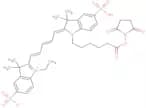
CY5-SE
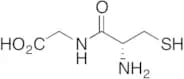
CAS:CY5-SE (Cy5 NHS Ester) is a reactive dye used to label amino groups in peptides, proteins, and nucleotides.Fórmula:C37H43N3O10S2Pureza:99.56%Forma y color:SolidPeso molecular:753.88L-Cysteinylglycine
CAS:Stability Air Sensitive
Applications L-Cysteinylglycine, is a biologically important compound since it is formed during the γ-glutamyl cycle. It is a cysteinyl peptide, that can be used in the studies of many peptides and important proteins.
References Marvin D., et al.: New J. Org. Synth., 12, 185 (1980); Sheehan, J. C., et al.: New Synth. Cysteinyl Peptide, 1159 (1958);Fórmula:C5H10N2O3SForma y color:NeatPeso molecular:178.21Lixisenatide Acetate
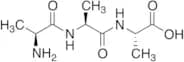
CAS:Producto controladoFórmula:C215H347N61O65S·C2H4O2Forma y color:NeatPeso molecular:4858.48 + x(60.05)L-Alanyl-L-alanyl-L-alanine
CAS:Producto controladoApplications L-Alanyl-L-alanyl-L-alanine (cas# 5874-90-8) is a useful research chemical.
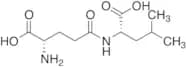
Fórmula:C9H17N3O4Forma y color:White To Off-WhitePeso molecular:231.25N-L-gamma-GLUTAMYL-L-LEUCINE
CAS:Producto controladoApplications N-L-GAMMA-GLUTAMYL-L-LEUCINE (cas# 2566-39-4) is a useful research chemical.
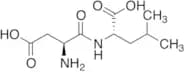
Fórmula:C11H20N2O5Forma y color:White To Off-WhitePeso molecular:260.29H-Asp-Leu-OH
CAS:Producto controladoStability Hygroscopic
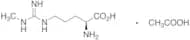
Applications H-Asp-Leu-OH (cas# 3062-14-4) is a useful research chemical.Fórmula:C10H18N2O5Forma y color:NeatPeso molecular:246.26NG-Monomethyl-L-arginine Acetate
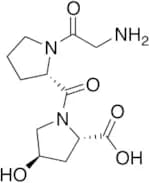
CAS:Producto controladoFórmula:C7H16N4O2·C2H4O2Forma y color:NeatPeso molecular:248.28H-Gly-Pro-Hyp-OH
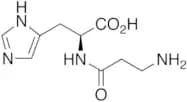
CAS:Producto controladoFórmula:C12H19N3O5Forma y color:White To Off-WhitePeso molecular:285.3L-Carnosine
CAS:Producto controladoApplications L-Carnosine is a naturally-occurring histidine-containing compound and the biological role of this dipeptide is to act as cytosolic buffering agents. Other roles ascribed to L-Carnosine include actions as neurotransmitters, modulation of enzymic activities and chelation of heavy metals.
References Quinn, P.J., et al.: Mol. Aspects. Med., 13, 379 (1992); Aruoma, O.I., et al.: Biochem. J., 264, 863 (1989);Fórmula:C9H14N4O3Forma y color:NeatPeso molecular:226.23D-Lactic Acid
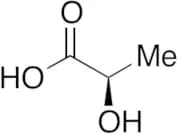
CAS:Applications D-Lactic Acid occurs in small quantities in the blood and muscle fluid of man and animals. The lactic acid concentration increases in muscle and blood after vigorous activity.
References He, W. et al.: Comp. Biochem. Phys. Part A: Mol. Int. Phys., 166, 308 (2013)Fórmula:C3H6O3Pureza:90%Forma y color:Colourless To Light YellowPeso molecular:90.08L-Cysteine Hydrochloride Monohydrate
CAS:Stability Moisture Sensitive
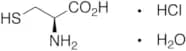
Applications L-Cysteine is a non-essential amino acid that can be synthesized by the human body under normal physiological conditions if a sufficient quantity of methionine is available. L-Cysteine is commonly used as a precursor in the food and pharmaceutical industries. L-Cysteine is used as a processing aid for baking, as an additive in cigarettes, as well as in the preparation of meat flavours.
References Hui, N. et al.: Meat Sci. Appl., 74 (2001); Kiviharju, K. et al.: J. Biotechnol., 117, 299 (2005); Pecivova, P. et al.: J. Sci. Food Agric., 90, 1681 (2010);Fórmula:C3H7NO2S·ClH·H2OForma y color:NeatPeso molecular:175.63Lactoferrin
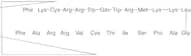
CAS:Producto controladoApplications Lactoferrin is a multifunctional protein of transferin family. A glycoprotein present in various secretions including milk, saliva and tears. Antiviral agent, it binds to liproproteins of cell membranes dispersing virus molecules from host cells.
References Sánchez L. et al.: Arch. Dis. CHild., 67, 657 (1992); Harmsen MC. et al.: J. Infect. Dis., 172, 380 (1995);Fórmula:C141H224N46O29S3Forma y color:NeatPeso molecular:3123.8TCEP Hydrochloride (0.5M in water)
CAS:Producto controladoFórmula:C9H15O6P·ClHForma y color:ColourlessPeso molecular:286.653X HA Tag
3X HA Tag (Triple-HA Tag) is a bioactive peptide consisting of three repetitive HA tags (YPYDVPDYA) and is mainly used for protein and peptide detection.Fórmula:C205H272N38O67SPureza:99.78%Forma y color:SoildPeso molecular:4372.63Biotin NHS
CAS:Producto controladoStability Moisture Sensitive
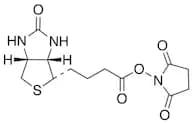
Applications Amino reactive biotin reagent for preparing biotinylated surfaces or polypeptides.
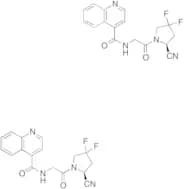
References Ngo, T.T., et al.: Applied Biochem. Biotech, 7, 443 (1982), Wojchowski, D.M., et al.: J. Immunol. Methods, 90, 173 (1986);Fórmula:C14H19N3O5SForma y color:NeatPeso molecular:341.38(S)-N-(2-(2-Cyano-4,4-difluoropyrrolidin-1-yl)-2-oxoethyl)quinoline-4-carboxamide (UAMC1110)
CAS:Producto controladoFórmula:C17H14F2N4O2Forma y color:NeatPeso molecular:344.32Poly(ethylene Glycol) ~1000
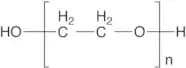
CAS:Producto controladoApplications Poly(ethylene Glycol) molecules of an average molecular mass of 1000. Poly(ethylene Glycol) is used in various applications from industrial chemistry to biological chemistry. Recent research has shown PEG maintains the ability to aid the spinal cord injury recovery process, helping the nerve impulse conduction process in animals. In rats, it has been shown to aid in the repair of severed sciatic axons, helping with nerve damage recovery. It is industrially produced as a lubricating substance for various surfaces to reduce friction. PEG is also used in the preparation of vesicle transport systems in with application towards diagnostic procedures or drug delivery methods.
References Borgens, R. et al.: J. Neurosci. Res., 66, 1179 (2001); Stavisky, R. et al.: Neurosci. Lett., 376, 98 (2005); Nalam, P. et al.: Tribiol. Lett., 37, 541 (2010); Steinmetz, N. et al.: J. Am. Chem. Soc., 131, 17093 (2009); Li, X. et al.: J. Am. Chem. Soc., 133, 11147 (2011); Li, L. et al.: Int. J. Pharm., 447, 192 (2013);Fórmula:H2O(C2H4O)nForma y color:White To Off-WhitePeso molecular:62.07Poly(ethylene Glycol) ~600
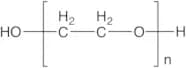
CAS:Producto controladoApplications Poly(ethylene Glycol) molecules of an average molecular mass of 600. Poly(ethylene Glycol) is used in various applications from industrial chemistry to biological chemistry. Recent research has shown PEG maintains the ability to aid the spinal cord injury recovery process, helping the nerve impulse conduction process in animals. In rats, it has been shown to aid in the repair of severed sciatic axons, helping with nerve damage recovery. It is industrially produced as a lubricating substance for various surfaces to reduce friction. PEG is also used in the preparation of vesicle transport systems in with application towards diagnostic procedures or drug delivery methods.
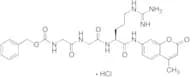
References Borgens, R. et al.: J. Neurosci. Res., 66, 1179 (2001); Stavisky, R. et al.: Neurosci. Lett., 376, 98 (2005); Nalam, P. et al.: Tribiol. Lett., 37, 541 (2010); Steinmetz, N. et al.: J. Am. Chem. Soc., 131, 17093 (2009); Li, X. et al.: J. Am. Chem. Soc., 133, 11147 (2011); Li, L. et al.: Int. J. Pharm., 447, 192 (2013);Fórmula:H2O(C2H4O)nForma y color:Colourless To Off-WhitePeso molecular:62.07N-CBZ-Glycyl-glycyl-L-arginine 7-Amido-4-methylcoumarin Hydrochloride
CAS:Applications N-CBZ-Glycyl-glycyl-L-arginine 7-Amido-4-methylcoumarin Hydrochloride is a fluorogenic substrate for uPA (urokinase).
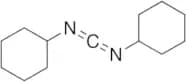
References Zimmerman, M., et al. Proc. Natl. Acad. Sci. USA 75, 750 (1978);Fórmula:C28H33N7O7·HClForma y color:NeatPeso molecular:579.6N,N'-Dicyclohexylcarbodiimide
CAS:Producto controladoFórmula:C13H22N2Forma y color:Off-White To Light YellowPeso molecular:206.33