Sustratos de enzimas
Los sustratos enzimáticos son moléculas sobre las cuales actúan las enzimas para catalizar reacciones químicas. El sustrato se une al sitio activo de la enzima, donde sufre una transformación específica para formar el producto de la reacción. Los sustratos enzimáticos son herramientas esenciales en la investigación para estudiar la cinética enzimática, la especificidad y el mecanismo de acción. También se utilizan en ensayos diagnósticos y estudios bioquímicos. En CymitQuimica, ofrecemos una selección diversa de sustratos enzimáticos de alta calidad para apoyar su investigación en enzimología y bioquímica.
Subcategorías de "Sustratos de enzimas"
Se han encontrado 1529 productos de "Sustratos de enzimas"
Ordenar por
Pureza (%)
0
100
|
0
|
50
|
90
|
95
|
100
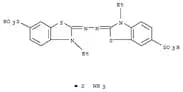
ABTS extrapure (2,2-Azino-bis (3-ethylbenzothiazoline-6-sulfonic acid) Diammonium Salt), 98%
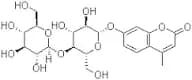
CAS:Fórmula:C18H24N6O6S4Pureza:min. 98%Forma y color:Pale green to green, Crystals or powderPeso molecular:548.684-Methylumbelliferyl-ß-D-Cellobioside extrapure, 98%
CAS:Fórmula:C22H28O13Pureza:min. 98%Forma y color:White to off-white, PowderPeso molecular:500.505-Fluoroorotic Acid (5-FOA) for molecular biology, 98%
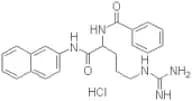
CAS:Fórmula:C5H3FN2O4Pureza:min. 98%Forma y color:White to off- white, PowderPeso molecular:174.09N-a-Benzoyl-DL-Arginine-ß-Naphthylamide Hydrochloride (BANA) extrapure, 97%
CAS:Fórmula:C23H25N5O2·HClPureza:min. 97%Forma y color:White, PowderPeso molecular:439.95IPTG, 1M aqueous solution
CAS:<p>A non-metabolizable allolactose analogue, widely used in molecular biology for overexpression of recombinant proteins from inducible systems under the control of lac promoter. IPTG binds to the LacI repressor and causes its release from the lac operator, allowing gene expression to take place. Present in vectors of pGEX, pGEM-T, pET, pRSET, pMAL class and others.</p>Fórmula:C9H18O5SPureza:Min. 95%Forma y color:Clear LiquidPeso molecular:238.3 g/molD-Luciferin Potassium Salt ex. Firefly, 99%
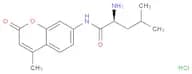
CAS:Fórmula:C11H7KN2O3S2Pureza:min. 99%Forma y color:Yellow, PowderPeso molecular:318.42L-Leucine 7-Amido-4-Methylcoumarin Hydrochloride Salt extrapure, 98%
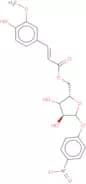
CAS:Fórmula:C16H21ClN2O3Pureza:min. 98%Forma y color:White to off-white, PowderPeso molecular:324.84-Nitrophenyl 5-O-trans-feruloyl-a-L-arabinofuranoside
CAS:<p>4-Nitrophenyl 5-O-trans-feruloyl-alpha-L-arabinofuranoside is a chromogenic substrate for alpha-L-arabinofuranosidase. Upon hydrolysis, para-nitrophenol is released yielding a yellowish colour. 4-Nitrophenyl 5-O-trans-feruloyl-alpha-L-arabinofuranoside is used in different applications such as the Plant cell wall degradation assays, bacterial enzyme profiling</p>Fórmula:C21H21NO10Pureza:Min. 95%Forma y color:PowderPeso molecular:447.4 g/molCrimson-Gal
Crimson-Gal (Crimson-beta-D-galactopyranoside) is a chromogenic indicator for beta-galactosidase activity. The colorless product is cleaved by lactose-utilizing bacteria in liquid media or on agar plates and yields a crimson colored precipitate. Crimson-Gal can also be used as detecting agent for beta-galactosidase activity in reporter gene assays or for identification of positive transformants on agar plates when using the α-complementation approach. Read more in the Application Notes.Peso molecular:360.96 g/mol4-Nitrophenyl caprylate
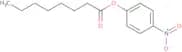
CAS:<p>Chromogenic substrate targeting lipase, C8 esterase</p>Fórmula:C14H19NO4Pureza:Min. 95 Area-%Forma y color:Slightly Brown Yellow Clear LiquidPeso molecular:265.31 g/molp-Nitrophenyl α-D-Glucopyranoside
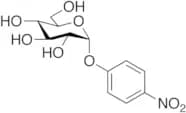
CAS:<p>Applications p-Nitrophenyl α-D-Glucopyranoside is a substrate for α-glucosidase inhibitor.<br>References O'Neill, R., et al.: J. Biol. Chem., 264, 20430 (1989), Carpita, N., et al.: Plant J., 3, 1 (1993), Henrissat, B., et al.: Biochem. J., 293, 781 (1993), Nakai, H., et al.: Biochimie, 89, 49 (2007) ,<br></p>Fórmula:C12H15NO8Forma y color:White To Off-WhitePeso molecular:301.25Pseudopelletierine
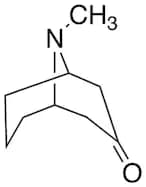
CAS:Producto controlado<p>Applications It was found in the root bark of Punica granatum L., Punicaceae. Used as a enzyme substrate.<br>References Hunt, R., et al.: J. Pharm. Pharmacol., 22, 29S (1970), Hashimoto, T., et al.: Plant Physiol., 100, 836 (1992), Boswell, H., et al.: Phytochemistry, 52, 855 (1999),<br></p>Fórmula:C9H15NOForma y color:NeatPeso molecular:153.225-Bromo-4-chloro-3-indolyl 2-Acetamido-2-deoxy-α-D-galactopyranoside
CAS:Producto controlado<p>Applications A histochemical substrate for a-N-acetyl-galactosaminidase.<br>References Zhu, et al.: Gene, 137, 309 (1994)<br></p>Fórmula:C16H18BrClN2O6Forma y color:NeatPeso molecular:449.68(S)-Ethyl 2,6-Diisocyanatohexanoate
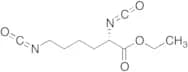
CAS:Producto controlado<p>Applications (S)-ETHYL 2,6-DIISOCYANATOHEXANOATE (cas# 45172-15-4) is a useful research chemical.<br> Not a dangerous good if item is equal to or less than 1g/ml and there is less than 100g/ml in the package<br></p>Fórmula:C10H14N2O4Forma y color:NeatPeso molecular:226.22Benzyl β-D-Glucopyranosiduronic Acid
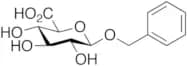
CAS:Producto controlado<p>Stability Hygroscopic<br>Applications Protected Glucopyranosiduronic Acid.<br></p>Fórmula:C13H16O7Forma y color:NeatPeso molecular:284.262-Nitrophenyl laurate
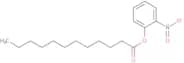
CAS:<p>2-Nitrophenyl laurate is a fatty acid that is not able to be degraded and has a high affinity for magnetic particles. It can be used in the immobilization of bacteria, such as Stenotrophomonas maltophilia, which are resistant to many antibiotics. 2-Nitrophenyl laurate also inhibits the enzyme lipolytic enzymes, which are responsible for the degradation of phospholipids in the cell membrane. This inhibition may lead to an increase in bacterial susceptibility to antibiotics. 2-Nitrophenyl laurate is a synthetic substrate that can be used to study the regulation of lipolytic enzymes by regulatory proteins.</p>Pureza:Min. 95%Forma y color:Pale yellow to yellow solid.Peso molecular:321.41 g/molAldol® 470 N-tosyl-L-alanine ester, Biosynth Patent: EP 2427431 and US 8940909
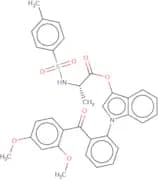
CAS:Producto controlado<p>Aldol® 470 N-tosyl-L-alanine ester is a fluorogenic substrate that is used in enzyme and chromogenic assays. It is a high purity, high quality, and highly soluble substrate for chemiluminescent reactions. Aldol® 470 N-tosyl-L-alanine ester can be used to detect the presence of bacteria in culture media and as an indicator of bacterial growth. It is also used to test for the presence of different types of enzymes that catalyze the oxidation of alcohols.</p>Fórmula:C33H30N2O7SPureza:Min. 90.0 Area-%Peso molecular:598.67 g/mol6-Amino-6-deoxyluciferin
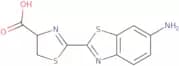
CAS:6-Amino-6-deoxyluciferin is a synthetic analog of luciferin. It is used as a substrate for bacterial luciferase and in immunoassays to detect neutrophils, infectious diseases, and various protease activities. 6-Amino-6-deoxyluciferin is synthesized by the condensation of an amide with a hydroxyl group from acetaldehyde. This reaction requires the use of a coupling agent such as dicyclohexylcarbodiimide or 1-(3-dimethylaminopropyl)-3-ethylcarbodiimide hydrochloride (EDC), which are often used to form amides from carboxylic acids and amines. The conjugation of 6-amino-6-deoxyluciferin with antibodies can be accomplished by chemical crosslinking methods, such as glutaraldehyde, which react thiol groups on the antibodyFórmula:C11H9N3O2S2Pureza:Min. 95%Forma y color:Yellow SolidPeso molecular:279.34 g/molAldol® 496 acetate, Biosynth Patent: EP 2427431 and US 8940909
CAS:Aldol 496 acetate is a chromogenic substrate for the enzyme Aldolase. It is also used as a ligand to detect the presence of Aldolase in biological fluids and tissues. This product is designed for Food testing, Diagnostics, Chromogenic substrate, Staining, Enzyme substrate, Bioluminescence, Fluorogenic substrate, Chemiluminescence, and Culture media. Aldol 496 acetate is an organic chemical with high purity and high quality.Fórmula:C27H24N2O4Pureza:Min. 95.0 Area-%Peso molecular:440.49 g/molAldol® 470 L-pyroglutamic acid amide, Biosynth Patent: EP 2427431 and US 8940909
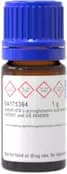
CAS:Producto controladoAldol® 470 L-pyroglutamic acid amide is a chromogenic and fluorogenic enzyme substrate used for detection of pyrrolidonyl peptidase (PYRase) activity. The colorless enzyme substrate is cleaved by PYRase-producing bacteria grown in liquid or solid media, yielding orange color. In addition, green fluorescence is generated when a suitable matrix is present, such as, the surface of cellulose acetate filters, polypropylene tubes or microplates, and polyethylene vials. Aldol® 470 L-pyroglutamic acid amide is suitable for use under aerobic and anaerobic conditions.Fórmula:C28H25N3O5Pureza:Min. 95%Forma y color:PowderPeso molecular:483.52 g/mol