Sustratos de enzimas
Los sustratos enzimáticos son moléculas sobre las cuales actúan las enzimas para catalizar reacciones químicas. El sustrato se une al sitio activo de la enzima, donde sufre una transformación específica para formar el producto de la reacción. Los sustratos enzimáticos son herramientas esenciales en la investigación para estudiar la cinética enzimática, la especificidad y el mecanismo de acción. También se utilizan en ensayos diagnósticos y estudios bioquímicos. En CymitQuimica, ofrecemos una selección diversa de sustratos enzimáticos de alta calidad para apoyar su investigación en enzimología y bioquímica.
Subcategorías de "Sustratos de enzimas"
Se han encontrado 1529 productos de "Sustratos de enzimas"
Ordenar por
Pureza (%)
0
100
|
0
|
50
|
90
|
95
|
100
Ethyl umbelliferone-3-carboxylate-α-D-glucopyranoside
<p>Ethyl umbelliferone-3-carboxylate-a-D-glucopyranoside is a fluorogenic substrate used for detecting alpha-glucosidase activity in enzymatic assays. When alpha-glucosidase cleaves , the glycosidic bond, umbelliferone-3-carboxylate is released, which exhibits strong fluorescence. This substrate is commonly utilized in glycobiology research, diagnostic tests, and high-throughput screening of enzyme inhibitors.</p>Fórmula:C18H20O10Pureza:Min. 95%Forma y color:Off-white to yellow solid.Peso molecular:396.35 g/molNaphthol AS-E phosphate, 60%
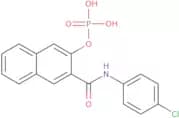
CAS:<p>Histochemical substrate for alkaline phosphatase</p>Fórmula:C17H13ClNO5PPureza:(%) Min. 60%Forma y color:SolidPeso molecular:377.72 g/molL-Pyroglutamic acid 7-amido-4-methylcoumarin
CAS:<p>Fluorogenic substrate for proglutamyl peptidase 1 yielding a blue fluorescent solution upon cleavage. Used in identification of Enterococcus spp. and group A streptococci (Streptococcus pyogenes).</p>Fórmula:C15H14N2O4Pureza:Min. 98 Area-%Peso molecular:286.29 g/molNaphthol AS nonanoate
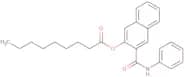
CAS:<p>Modified naphtol AS substrate used in histochemical and cytochemical staining</p>Fórmula:C26H29NO3Pureza:Min. 95%Forma y color:PowderPeso molecular:403.51 g/molLuc-Enterobacteria Na
Luc-Enterobacteria Na is a bioluminescent substrate for bacterial luciferase used to detect Enterobacteriaceae. The enzyme luciferase oxidizes luciferin with FMNH₂ and O₂ via luxAB genes, emitting blue light.Fórmula:C17H17NaN2O8S2Pureza:Min. 94 Area-%Peso molecular:464.44 g/molAldol® 584 β-D-glucuronic acid, triethylammonium salt, Biosynth Patent: EP 2427431 and US 8940909
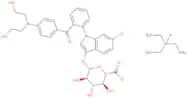
CAS:Aldol 584 is a chromogenic substrate that is used in enzymatic assays to detect the presence of an enzyme. It is a triethylammonium salt with beta-D-glucuronic acid. Aldol 584 is used in diagnostic procedures and can be used as a substrate for fluorogenic substrates and chemiluminescent substrates. This product has been shown to be effective in detecting the presence of bile in feces, erythrocyte hemolysis, and the presence of proteinases in human urine. It can also be used as a food testing agent or to measure bacterial activity in culture media.Fórmula:C37H46ClN3O10Pureza:Min. 95%Forma y color:PowderPeso molecular:728.2 g/mol4-Methylumbelliferone
CAS:4-Methylumbelliferone is a coumarin derivative that inhibits the activity of enzymes such as p-nitrophenyl phosphate oxidase and aminopeptidase. It is used in vitro to study oxidative injury, which plays a role in the pathogenesis of inflammatory diseases, including primary sclerosing cholangitis and bone marrow transplantation. 4-Methylumbelliferone has been shown to induce apoptosis by increasing reactive oxygen species levels and activating toll-like receptor 4 (TLR4). It also has inhibitory effects on osteosarcoma cell proliferation in vitro.Fórmula:C10H8O3Peso molecular:176.17 g/mol6-Nitro-3-indoxyl-β-D-galactopyranoside
<p>For the detection of beta-galactosidase activity</p>Fórmula:C14H16N2O8Peso molecular:340.29 g/mol4-Methylumbelliferyl heptanoate
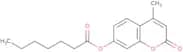
CAS:<p>Lipase targeting MOSCERDAM® substrate</p>Fórmula:C17H20O4Pureza:Min. 95%Forma y color:White PowderPeso molecular:288.34 g/mol5-Nitro-3-indoxyl-β-D-galactopyranoside
For the detection of beta-galactosidase activityFórmula:C14H16N2O8Peso molecular:340.29 g/mol4-Methylumbelliferyl 6-deoxy-2,3,4,6-tetra-O-acetyl-6-thio-β-D-glucopyranoside
4-Methylumbelliferyl 6-deoxy-2,3,4,6-tetra-O-acetyl-6-thio-beta-D-glucopyranoside is a fluorogenic substrate for beta-glucosidase. After enzymatic cleaveage, free 4-methylumbelliferone (also known as hymecromone) is released, exhibiting blue fluorescence upon excitation with UV light. The strongest fluorescence of 4-methylumbelliferone requires deprotonation of the hydroxyl group (thus requires alkaline pH), with a maximal fluorescence intensity obtained with excitation at 350 to 370 nm and emission at 440 to 470 nm. The use of 4-methylumbelliferyl 6-deoxy-2,3,4,6-tetra-O-acetyl-6-thio-beta-D-glucopyranosideas a substrate for measuring the beta-glucosidase activity is used for Gaucher disease diagnosis.Fórmula:C24H26O11SPureza:Min. 95%Forma y color:White to off-white solid.Peso molecular:522.52 g/molIsopropyl-β-D-thiogalactopyranoside - non-animal origin
CAS:A non-metabolizable allolactose analogue, widely used in molecular biology for overexpression of recombinant proteins from inducible systems under the control of lac promoter. IPTG binds to the LacI repressor and causes its release from the lac operator, allowing gene expression to take place. Present in vectors of pGEX, pGEM-T, pET, pRSET, pMAL class and others.Fórmula:C9H18O5SPureza:Min. 99.0 Area-%Peso molecular:238.3 g/molChitin azure
CAS:<p>Chitin azure is a chromogenic substrate for chitinases. It is one of the few specific substrates for this enzyme that produces chito-oligosaccharides from chitin.</p>Forma y color:PowderGlycyl-glycine 7-amido-4-methylcoumarin hydrochloride
CAS:Glycyl-glycine 7-amido-4-methylcoumarin hydrochloride (Gly-Gly-AMC) is a fluorescent compound that can be used as a probe for the transfer of glycine in the brain. Gly-Gly-AMC binds to Langerhans cells and is transferred by an anterograde axonal transport mechanism from the peripheral nervous system to the central nervous system. The binding of Gly-Gly-AMC to Langerhans cells has been shown to activate them, which induces the release of inflammatory mediators into the surrounding tissue. This activity may be due to increased levels of calcium ions, which are known to induce exocytosis in these cells. Glycine is also involved in depression and other mental disorders, as well as muscle and brain activity.Fórmula:C14H16ClN3O4Peso molecular:325.75 g/molRef: 3D-G-6100
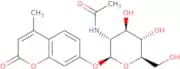
1gA consultar5gA consultar10gA consultar500mgA consultar2500mgA consultar-Unit-ggA consultar4-Methylumbelliferyl 2-acetamido-2-deoxy-b-D-glucopyranoside
CAS:Fluorogenic substrate for chitinaseFórmula:C18H21NO8Pureza:Min. 99 Area-%Forma y color:White Off-White PowderPeso molecular:379.36 g/mol3-Nitrophenyl b-D-galactopyranoside
CAS:Chromogenic substrate targeting beta-galactosidaseFórmula:C12H15NO8Forma y color:PowderPeso molecular:301.25 g/molCoelenterazine e
CAS:<p>Coelenterazine and its derivatives spontaneously complex with aequorin to develop a Ca2+-dependent fluorescent signal.</p>Fórmula:C28H23N3O3Pureza:Min. 95%Forma y color:PowderPeso molecular:449.5 g/molAquaSpark® caprylate, 10 mM in DMSO, Ramot at Tel-Aviv University Ltd. Patent family WO 2017/130191
CAS:<p>Chemiluminescent substrate for C8-esterase and lipase</p>Fórmula:C36H43ClO8Pureza:Min. 95%Forma y color:Clear LiquidPeso molecular:639.18 g/mol5-Bromo-4-chloro-3-indolyl a-L-rhamnoside
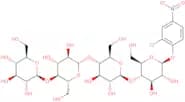
<p>5-Bromo-4-chloro-3-indolyl a-L-rhamnoside is a chromogenic substrate used to detect the specific enzymatic activity of alpha-L-rhamnosidase. After cleavage, 5-bromo-4-chloro-indoxyl is released, resulting in a blue to blue-green color change in bacterial colonies or media. 5-Bromo-4-chloro-3-indolyl a-L-rhamnoside is used in bacterial rhamnose metabolism studies (e.g. E. coli).</p>Fórmula:C14H15BrClNO5Pureza:Min. 95%Forma y color:SolidPeso molecular:392.63 g/mol2-Chloro-4-nitrophenyl-β-D-cellotetraoside
CAS:2-chloro-4-nitrophenyl-beta-D-cellotetraoside is a chromogenic substrate for measuring cellulase activity and other glycosyl hydrolases. The release of 2-chloro-4-nitrophenol can be detected at 405 nm.Fórmula:C30H44ClNO23Pureza:Min. 95%Forma y color:PowderPeso molecular:822.12 g/mol