


Sustratos cromogénicos
Se han encontrado 712 productos de "Sustratos cromogénicos"
2-Naphthyl b-D-glucopyranoside monohydrate
CAS:2-Naphthyl-lpha-D-glucopyranoside is a substrate for α-glucosidase. 2-Naphthol is released upon hydrolyzation. By simultaneous coupling with a suitable staining reagent, such as hexazonium p-rosaniline, the corresponding reddish-brown azo-dye is formed. Naphthols can also be detected by fluorescence analysis.
Pureza:Min. 95%Forma y color:PowderPeso molecular:324.33 g/molRef: 3D-EN06885
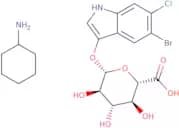
Producto descatalogado5-Bromo-6-chloro-3-indolyl b-D-glucuronide cyclohexylammonium salt
CAS:5-Bromo-6-chloro-3-indolyl b-D-glucuronide cyclohexylammonium salt is a magenta enzyme substrate commonly used in biochemical assays. This compound is a derivative of indole, containing bromine and chlorine atoms at positions 5 and 6, respectively. The glucuronide moiety is attached to the indolyl ring, and the cyclohexylammonium cation serves as a counterion to balance the charge. This substrate is often utilized in the detection and quantification of β-glucuronidase activity, an enzyme involved in the metabolism of glucuronides. Upon cleavage by β-glucuronidase, the substrate produces a magenta-colored product, allowing for easy visualization and measurement of enzyme activity.
Fórmula:C14H13BrClNO7·C6H13NPureza:Min. 98 Area-%Forma y color:PowderPeso molecular:521.79 g/molRef: 3D-EB03300
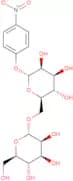
Producto descatalogado4-Nitrophenyl 6-O-(a-D-mannopyranosyl)-a-D-mannopyranoside
CAS:4-Nitrophenyl 6-O-(alpha-D-mannopyranosyl)-alpha-D-mannopyranoside is a chromogenic substrate for alpha-mannosidase. Upon hydrolysis, para-nitrophenol is released yielding a yellowish colour. 4-Nitrophenyl 6-O-(alpha-D-mannopyranosyl)-alpha-D-mannopyranoside is used in different applications such as the Lysosomal storage disorder diagnosis (e.g., alpha-mannosidosis)
Pureza:Min. 95%Forma y color:PowderPeso molecular:463.39 g/molRef: 3D-EN06126
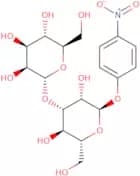
Producto descatalogado4-Nitrophenyl 3-O-(a-D-mannopyranosyl)-a-D-mannopyranoside
CAS:Chromogenic substrate for α-glucanase
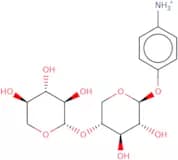
Fórmula:C18H25NO13Pureza:Min. 97 Area-%Forma y color:White PowderPeso molecular:463.39 g/mol4-Nitrophenyl β-D-xylobioside
CAS:4-Nitrophenyl beta-D-xylobioside is a chromogenic substrate for xylanase. Upon hydrolysis, para-nitrophenol is released yielding a yellowish colour. 4-Nitrophenyl beta-D-xylobioside is used in different applications such as the Xylan degradation studies, paper/pulp industry applicationsFórmula:C16H21NO11Pureza:Min. 95%Forma y color:White PowderPeso molecular:403.34 g/molRef: 3D-EN15454
Producto descatalogadoIPTG
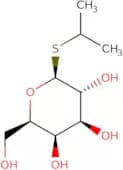
CAS:Isopropyl-beta-D-thiogalactopyranoside (IPTG) is a non-metabolizable allolactose analogue, widely used in molecular biology for overexpression of recombinant proteins from inducible systems under the control of lac promoter. IPTG binds to the LacI repressor and causes its release from the lac operator, allowing gene expression of lac operon to take place. IPTG is present in vectors of pGEX, pGEM-T, pET, pRSET, pMAL class and others.
Fórmula:C9H18O5SPureza:Min. 99 Area-%Forma y color:White PowderPeso molecular:238.3 g/molRef: 3D-EI07011
Producto descatalogadoChlorophenol red-β-D-cellotrioside
CAS:Chromogenic substrate for cellulases; red colorFórmula:C37H42Cl2O20SPureza:Min. 95%Forma y color:Orange to red solid.Peso molecular:909.69 g/molRef: 3D-EC30182
Producto descatalogadoAlizarin-2-β-D-galactopyranoside
CAS:Chromogenic substrate targeting beta- galactosidase and whose color is dependent on the metal chelating.Alizarin-2-beta-D-galactopyranoside is a chromogenic substrate for enzymes based on alizarin and has been reported for the detection of bacterial beta-galactosidase by researchers at the University of Northumbria and the Freeman Hospital, Newcastle upon Tyne in the UK (James, 2000).
Fórmula:C20H18O9Pureza:Min. 98.0 Area-%Peso molecular:402.36 g/mol3-Indoxyl phosphate p-toluidine Salt
CAS:Producto controlado3-Indoxyl phosphate p-toluidine salt is a secretor of blood group A. It is used in the detection of the presence of alkaline phosphatase in serum and other body fluids. This compound has been shown to be an isoform of 3-indoxyl phosphate with a molecular mass of about 4,000 daltons. It is also used as a substrate for gel electrophoresis and filtration experiments. The purified form of this compound has been shown to have an alkaline phosphatase activity that is ˜4 times greater than that found in human serum and intestinal extracts.
Fórmula:C8H8NO4P·C7H9NPureza:Min. 98 Area-%Forma y color:PowderPeso molecular:320.28 g/molRef: 3D-EI56753
Producto descatalogado4-Nitrophenyl trans-ferulate
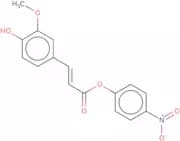
CAS:Substrate for feruloyl esterases
Fórmula:C16H13NO6Pureza:Min. 98 Area-%Forma y color:PowderPeso molecular:315.28 g/molNitrocefin
CAS:Chromogenic cephalosporin substrate for the detection of beta-lactamase activity
Fórmula:C21H16N4O8S2Pureza:Min. 90 Area-%Forma y color:Yellow Orange PowderPeso molecular:516.51 g/molRef: 3D-EN46644
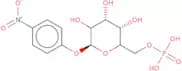
Producto descatalogado4-Nitrophenyl b-D-glucopyranoside-6-phosphate
CAS:4-Nitrophenyl beta-D-glucopyranoside-6-phosphate is a chromogenic substrate for glucose-6-phosphatase. Upon hydrolysis, para-nitrophenol is released yielding a yellowish colour. 4-Nitrophenyl beta-D-glucopyranoside-6-phosphate is used in different applications such as the Glycogen storage disease diagnosis (e.g., von Gierke disease)
Fórmula:C12H16NO11PPureza:Min. 98 Area-%Forma y color:PowderPeso molecular:381.23 g/molRef: 3D-EN32426
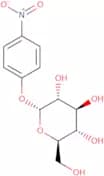
Producto descatalogado4-Nitrophenyl a-D-glucopyranoside
CAS:Chromogenic substrate for alpha-glucosidase
Fórmula:C12H15NO8Pureza:Min. 98 Area-%Forma y color:White PowderPeso molecular:301.25 g/mol5-Bromo-6-chloro-3-indoxyl choline phosphate
CAS:Please enquire for more information about 5-Bromo-6-chloro-3-indoxyl choline phosphate including the price, delivery time and more detailed product information at the technical inquiry form on this page
Fórmula:C13H17BrClN2O4PPureza:Min. 99 Area-%Peso molecular:411.63 g/molRef: 3D-B-7118
Producto descatalogado5-Bromo-3-indoxyl choline phosphate
Please enquire for more information about 5-Bromo-3-indoxyl choline phosphate including the price, delivery time and more detailed product information at the technical inquiry form on this page
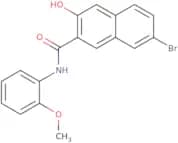
Fórmula:C13H18BrN2O4PPeso molecular:377.18 g/molNaphthol AS-BI
CAS:Chromogenic substrate for alkaline and acid phosphatase
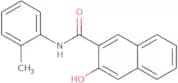
Fórmula:C18H14BrNO3Pureza:Min. 95%Peso molecular:372.21 g/molNaphthol AS-D
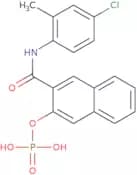
CAS:Naphthol AS-D is a diagnostic chemical for phosphatase enzymes and is used to stain cells, tissues, and body fluids for diagnosis. The chemical reacts with the amino groups of proteins in cells and produces a brown color. Naphthol AS-D is not toxic to living cells in concentrations below 5%. It stains basophilic leukemia cells as well as brain cells. This chemical can be used to diagnose cutaneous lesions, such as psoriasis or melanoma, which are difficult to diagnose by standard methods. present in these lesions and produce a brown color.
Fórmula:C18H15NO2Pureza:Min. 95%Forma y color:PowderPeso molecular:277.32 g/molRef: 3D-EN70199
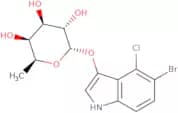
Producto descatalogado5-Bromo-4-chloro-3-indolyl a-L-rhamnoside
5-Bromo-4-chloro-3-indolyl a-L-rhamnoside is a chromogenic substrate used to detect the specific enzymatic activity of alpha-L-rhamnosidase. After cleavage, 5-bromo-4-chloro-indoxyl is released, resulting in a blue to blue-green color change in bacterial colonies or media. 5-Bromo-4-chloro-3-indolyl a-L-rhamnoside is used in bacterial rhamnose metabolism studies (e.g. E. coli).
Fórmula:C14H15BrClNO5Pureza:Min. 95%Forma y color:SolidPeso molecular:392.63 g/molRef: 3D-EB170531
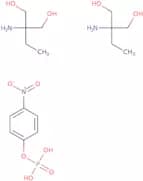
Producto descatalogado4-Nitrophenyl phosphate mono(2-amino-2-ethyl-1,3-propanediol) salt monohydrate
CAS:Chromogenic substrate for alkaline phosphatase
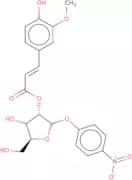
Fórmula:C26H32N3NaO6S2Pureza:Min. 95%Forma y color:PowderPeso molecular:457.41 g/mol4-Nitrophenyl 2-O-trans-feruloyl-a-L-arabinofuranoside
CAS:4-Nitrophenyl 2-O-trans-feruloyl-alpha-L-arabinofuranoside is a chromogenic substrate for alpha-L-arabinofuranosidase. Upon hydrolysis, para-nitrophenol is released yielding a yellowish colour. 4-Nitrophenyl 2-O-trans-feruloyl-alpha-L-arabinofuranoside is used in different applications such as the Plant biomass analysis, bacterial arabinan degradation assays
Fórmula:C21H21NO10Pureza:Min. 95%Forma y color:PowderPeso molecular:447.39 g/molRef: 3D-EN16252
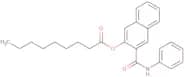
Producto descatalogadoNaphthol AS nonanoate
CAS:Modified naphtol AS substrate used in histochemical and cytochemical staining
Fórmula:C26H29NO3Pureza:Min. 95%Forma y color:PowderPeso molecular:403.51 g/mol5-Bromo-4-chloro-3-indoxyl choline phosphate
CAS:5-Bromo-4-chloro-3-indoxyl choline phosphate is a synthetic enzyme substrate for detecting phosphatidylcholine-specific phospholipase C.
Fórmula:C13H17BrClN2O4PPureza:Min. 99 Area-%Peso molecular:411.63 g/molRef: 3D-B-7116
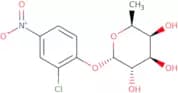
Producto descatalogado2-Chloro-4-nitrophenyl-alpha-L-fucopyranoside
CAS:Alternative chromogenic substrate for alpha-D-galactosidase
Fórmula:C12H14ClNO7Pureza:Min. 98 Area-%Forma y color:White PowderPeso molecular:319.69 g/molRef: 3D-EC05990
Producto descatalogado3,4-Cyclohexenoesculetine β-D-glucopyranoside
CAS:Chromogenic substrate for beta-glucosidase
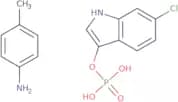
Fórmula:C19H22O9Pureza:Min. 95%Forma y color:PowderPeso molecular:394.37 g/mol6-Chloro-3-indolyl phosphate p-toluidine salt
CAS:A substrate for visualising alkaline phosphatase activity. Produces a red colored insoluble end product that is detected visually, when used together with Nitroblue tetrazolium. The substrate system is versatile and functions in a variety of applications, including Northern, Southern, and Western blotting, in situ hybridization, ELISAs and immunohistochemistry. DMF soluble.
Fórmula:C15H16ClN2O4PPureza:Min. 98%Forma y color:White Off-White PowderPeso molecular:354.73 g/molRef: 3D-EC09439
Producto descatalogado5-Bromo-6-chloro-3-indoxyl phosphate, p-toluidine salt
CAS:Substrate for visualizing alkaline phosphatase activity. Produces a magenta colored insoluble end product that is detected visually, when used together with Nitroblue tetrazolium. The substrate system is versatile and functions in a variety of applications, including Northern, Southern, and Western blotting, in situ hybridization, ELISAs and immunohistochemistry. DMF soluble.Fórmula:C15H15BrClN2O4PPureza:Min. 98.0 Area-%Peso molecular:433.63 g/mol4-Nitrophenyl-β-D-glucopyranoside
CAS:4-Nitrophenyl-beta-D-glucopyranoside is a fluorescent probe that can be used in the study of the biochemical properties of enzymes. This compound binds to the enzyme's active site, which allows for transfer reactions to occur. 4-Nitrophenyl-beta-D-glucopyranoside is an artificial substrate that is biochemically inert and has a similar physical structure to natural substrates. It can be used as a model system to study enzymatic reactions and has been shown to have pharmacokinetic properties and a pH optimum. The detection sensitivity of this compound is high, making it ideal for use in biochemical studies.
Fórmula:C12H15NO8Pureza:Min. 99.0 Area-%Peso molecular:301.25 g/mol5-Cyano-3-indolyl-β-D-galactopyranoside
5-Cyano-3-indolyl-b-D-galactopyranoside is a chemiluminescent substrate that can be used to measure the activity of esterases and other enzymes. It has been shown to be a potent inhibitor of human erythrocyte esterase. The compound is also a potent inducer of bioluminescence in bacteria, which can be used for diagnostic applications. 5-Cyano-3-indolyl-b-D-galactopyranoside is a fluorogenic substrate that can be used to measure the activity of phosphatases and other enzymes. This product has an enzyme substrate function, which can be used for enzyme assays. 5CIGP is useful for measuring high levels of enzyme activity in the presence of strong inhibitors such as phenylmethylsulfonyl fluoride (PMSF).
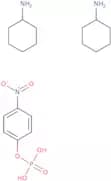
Fórmula:C15H16N2O6Pureza:Min. 95%Forma y color:PowderPeso molecular:320.3 g/mol4-Nitrophenyl phosphate bis(cyclohexylammonium)
CAS:4-Nitrophenyl phosphate bis(cyclohexylammonium) is an excellent chromogenic substrate designed for the detection and quantification of phosphatase enzyme activities. Aided by the presence of the cyclohexylammonium cation, it undergoes enzymatic hydrolysis, yielding the colored 4-nitrophenolate ion, which can be readily observed at 405 nm. The substrate has become an essential tool for biomedical research, playing a crucial role in unearthing cellular mechanisms, function, and potential drug targets.
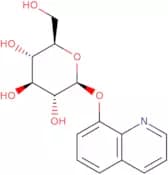
Fórmula:C18H32N3O6PPureza:97.0 To 103.0%Forma y color:PowderPeso molecular:417.44 g/mol8-Hydroxyquinoline b-D-glucopyranoside
CAS:8-Hydroxyquinoline b-D-glucopyranoside (8-OHG-glu) is a chromogenic enzyme substrate commonly used to detect the presence of beta-glucosidase in biological samples. When hydrolyzed by beta-glucosidase, 8-OHG-glu produces a yellow-orange color, indicating the presence of the enzyme. This substrate is particularly useful for measuring beta-glucosidase activity in soil and plant samples.
Fórmula:C15H17NO6Pureza:Min. 95%Forma y color:PowderPeso molecular:307.3 g/molRef: 3D-EH04988
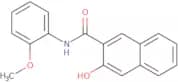
Producto descatalogadoNaphthol AS-OL
CAS:Naphthol AS-OL is a widely used chromogenic enzyme substrate that forms a colored product upon reaction with specific enzymes. It is commonly employed in histochemical and cytochemical staining techniques to visualize enzyme activity in cells and tissues. Naphthol AS-OL is particularly useful for detecting the presence of enzymes such as alkaline phosphatase, acid phosphatase, and esterases. The resulting colored product can be easily observed under a microscope, allowing researchers to study the distribution and localization of these enzymes in various biological samples.
Fórmula:C18H15NO3Pureza:Min. 95%Forma y color:PowderPeso molecular:293.32 g/molRef: 3D-EN71191
Producto descatalogadoNaphthol AS-TR phosphate
CAS:Modified naphtol AS substrate used in histochemical and cytochemical staining
Fórmula:C18H15ClNO5PPureza:Min. 95%Forma y color:Off-White PowderPeso molecular:391.74 g/molRef: 3D-EN70036
Producto descatalogado5-Iodo-3-indolyl b-D-galactopyranoside
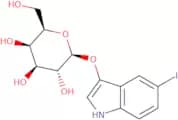
CAS:5-Iodo-3-indolyl b-D-galactopyranoside is a chromogenic substrate used for beta-galactosidase. It is incorporated into media or detection kits for rapid and direct identification of microorganisms.
Fórmula:C14H16INO6Pureza:Min. 98 Area-%Forma y color:PowderPeso molecular:421.18 g/molRef: 3D-EI03217
Producto descatalogado2-Nitrophenyl b-D-glucopyranoside
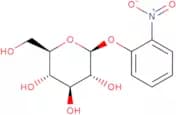
CAS:Chromogenic substrate for beta-glucosidase
Fórmula:C12H15NO8Pureza:Min. 99 Area-%Forma y color:Off-White Yellow PowderPeso molecular:301.25 g/molRef: 3D-EN06435
Producto descatalogado4-Nitrophenyl decanoate
CAS:4-Nitrophenyl decanoate is a chromogenic substrate for lipase. Upon hydrolysis, para-nitrophenol is released yielding a yellowish colour. 4-Nitrophenyl decanoate is used in different applications such as the Pancreatic insufficiency diagnosis, lipid metabolism studies
Fórmula:C16H23NO4Pureza:Min. 97 Area-%Forma y color:PowderPeso molecular:293.36 g/mol4-Nitrophenyl a-D-xylopyranoside
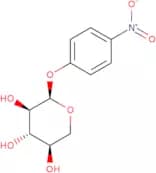
CAS:The 4-Nitrophenyl a-D-xylopyranoside is a highly sensitive and reliable chromogenic substrate tailored for the detection and analysis of alpha-D-xylosidase enzyme activity. Upon enzymatic hydrolysis, it forms 4-nitrophenol, a yellow compound with remarkable fluorescence that enables a straightforward, quantitative assay in areas including environmental science, metabolism studies, and enzyme modifier exploration.
Fórmula:C11H13NO7Pureza:Min. 95%Forma y color:White PowderPeso molecular:271.22 g/molRef: 3D-EN03233
Producto descatalogado5-Bromo-4-chloro-3-indoxyl-alpha-L-fucopyranoside
CAS:5-Bromo-4-chloro-3-indoxyl-alpha-L-fucopyranoside is a chromogenic substrate for alpha-L-Fucosidase. It produces a green-blue color.
Fórmula:C14H15BrClNO5Pureza:Min. 98 Area-%Forma y color:PowderPeso molecular:392.63 g/molAldol® 515 phosphate, disodium salt, Biosynth Patent: EP 2427431 and US 8940909
CAS:Aldol® 515 phosphate is a chromogenic and fluorogenic enzyme substrate used for detection of phosphatase activity. The colorless enzyme substrate is cleaved by acid and alkaline phosphatases secreted by bacteria in liquid or solid media, yielding intense red color and red fluorescence. Aldol® 515 phosphate can also be used in Western blots and other immunoassay applications with phosphatase-coupled secondary antibodies. Aldol® 515 phosphate can be used under aerobic and anaerobic conditions.Fórmula:C23H19N2Na2O5PPureza:Min. 95 Area-%Peso molecular:480.36 g/molRef: 3D-A-4721_P00
Producto descatalogadoAldol® 455 β-D-glucopyranoside, Biosynth Patent: EP 2427431 and US 8940909
CAS:Aldol® 455 beta-D-glucopyranoside is a chromogenic and fluorogenic enzyme substrate used for detection of beta-glucosidase activity. The colorless enzyme substrate is cleaved by beta-glucosidase producing bacteria grown in liquid or solid media, yielding a yellow color and green to orange fluorescence. Aldol® 455 beta-D-glucopyranoside can be used under aerobic and anaerobic conditions.
Fórmula:C27H24ClNO7Pureza:Min. 92.0 Area-%Peso molecular:509.94 g/molRef: 3D-A-4689_P00
Producto descatalogado3,4-Cyclohexenoesculetine-N-acetyl-glucosamine
Please enquire for more information about 3,4-Cyclohexenoesculetine-N-acetyl-glucosamine including the price, delivery time and more detailed product information at the technical inquiry form on this page
Pureza:Min. 95%Aldol® 467 beta-D-galactopyranoside, Biosynth Patent: EP 2427431 and US 8940909
CAS:Aldol® 467 beta-D-galactopyranoside is a chromogenic and fluorogenic enzyme substrate used for detection of beta-galactosidase activity. The colorless product is cleaved by lactose-utilizing bacteria grown in liquid or solid media, yielding yellow coloration and green fluorescence. Aldol® 467 beta-D-galactopyranoside can also be used in beta-galactosidase gene reporter assays or immunoassay applications (ELISA). Aldol® 467 beta-D-galactopyranoside can be used under aerobic and anaerobic conditions.
Fórmula:C29H28ClNO9Pureza:Min. 95%Forma y color:PowderPeso molecular:570 g/molRef: 3D-EA175335
Producto descatalogadoEspresso-Gal
Espresso-Gal (Espresso-beta-D-galactopyranoside) is a chromogenic indicator for beta-galactosidase activity. The colorless product is cleaved by lactose-utilizing bacteria in liquid media or on agar plates and yields an espresso brown colored precipitate. Espresso-Gal can also be used as detecting agent for beta-galactosidase activity in reporter gene assays or for identification of positive transformants on agar plates when using the α-complementation approach. Read more in the Application Notes.
Pureza:Min. 95%5-Bromo-4-chloro-3-indoxyl-α-D-xylopyranoside
CAS:5-Bromo-4-chloro-3-indoxyl-alpha-D-xylopyranoside is an enzyme substrate that can be used in the detection of β-galactosidase activity. This product has been shown to be a good ligand for various xanthine oxidoreductases, including xanthine dehydrogenase and uricase. 5BBIX is also a chromogenic substrate for horseradish peroxidase and can be used to detect hydrogen peroxide in the presence of osmium tetroxide or potassium permanganate. 5BBIX has been extensively tested for use in diagnostics, food, and environmental testing.
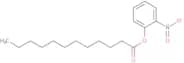
Fórmula:C13H13BrClNO5Pureza:Min. 98.0 Area-%Peso molecular:378.61 g/mol2-Nitrophenyl laurate
CAS:2-Nitrophenyl laurate is a fatty acid that is not able to be degraded and has a high affinity for magnetic particles. It can be used in the immobilization of bacteria, such as Stenotrophomonas maltophilia, which are resistant to many antibiotics. 2-Nitrophenyl laurate also inhibits the enzyme lipolytic enzymes, which are responsible for the degradation of phospholipids in the cell membrane. This inhibition may lead to an increase in bacterial susceptibility to antibiotics. 2-Nitrophenyl laurate is a synthetic substrate that can be used to study the regulation of lipolytic enzymes by regulatory proteins.
Pureza:Min. 95%Forma y color:Pale yellow to yellow solid.Peso molecular:321.41 g/molRef: 3D-EN15506
Producto descatalogado4-Nitrophenyl 6-O-DMT-a-D-mannopyranoside
4-nitrophenyl 6-O-DMT-a-D-mannopyranoside is a fluorescent substrate for the enzyme beta-glucosidase. It reacts with an acyl group at the C2 position of the glycoside moiety, producing an aldehyde group at the C1 position and a hydroxymethylene group at the C4 position. This reaction is catalyzed by beta-glucosidase, which cleaves the glycosidic linkage in sucrose and other disaccharides. The product can be detected using luminescence methods, such as chemiluminescence or bioluminescence.
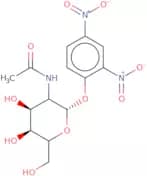
4-nitrophenyl 6-O-DMT-a-D-mannopyranoside is used to detect β glucosidase activity in bacteria. This substrate has been shown to be sensitive and specific for β glucosidase activity when combined with fluorescence detection technologyPureza:Min. 95%Peso molecular:603.62 g/mol2,4-Dinitrophenyl 2-acetamido-2-deoxy-b-D-glucopyranoside
2,4-Dinitrophenyl 2-acetamido-2-deoxy-b-D-glucopyranoside is a fluorogenic substrate for use in diagnostic testing. It reacts with the enzyme β -galactosidase to produce a blue color. This product is used as an indicator of β -galactosidase activity in bacterial cultures or as an indicator of the presence of this enzyme in food or other materials. It can be used to detect and measure the level of β -galactosidase in a sample. The reaction can be monitored by measuring light emission at 450 nm. 2,4-Dinitrophenyl 2 acetamido 2 deoxy b D glucopyranoside has a CAS number of 47868-87-0 and is available in high purity (>97%).Pureza:Min. 95%Peso molecular:387.31 g/mol4-Nitrophenyl 2-acetamido-2-deoxy-4-O-[2-O-(a-L-fucopyranosyl)-b-D-galactopyranosyl]-b-D-glucopyranoside
CAS:The 4-Nitrophenyl 2-acetamido-2-deoxy-4-O-[2-O-(a-L-fucopyranosyl)-b-D-galactopyranosyl]-b-D-glucopyranoside is a specialized pNP enzyme substrate designed to study fucosyl-galactose-dependent enzymes. This chromogenic substrate is valuable for researchers investigating glycosyltransferase activity, structure-function relationships of glycan-binding proteins, and regulation of cellular signaling pathways involving fucose modifications. Its high specificity and sensitivity ensure accurate measurements in diverse experimental setups, and its chromogenic detection system facilitates rapid and reliable analysis.Pureza:Min. 95%Peso molecular:650.58 g/molRef: 3D-EN04931
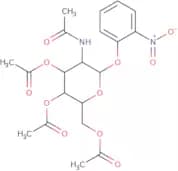
Producto descatalogado2-Nitrophenyl 2-acetamido-3,4,6-tri-O-acetyl-2-deoxy-b-D-galactopyranoside
CAS:2-Nitrophenyl 2-acetamido-3,4,6-tri-O-acetyl-2-deoxy-b-D-galactopyranoside is a chemiluminescent substrate for the detection of beta galactosidase. It is a white to light yellow powder with a molecular weight of 564.87 and an assay of ≥ 98% by HPLC. This product has been shown to be stable when stored at 4°C for up to three months.Pureza:Min. 95%Peso molecular:468.41 g/mol[2-Methoxy-4-(2-nitrovinyl)phenyl] b-D-glucopyranoside
CAS:[2-Methoxy-4-(2-nitrovinyl)phenyl] beta-D-galactopyranoside is a chromogenic substrate (505 nm) for β-glucosidase.
Pureza:Min. 95%Peso molecular:357.31 g/molRef: 3D-EM06789
Producto descatalogado


















![4-Nitrophenyl 2-acetamido-2-deoxy-4-O-[2-O-(a-L-fucopyranosyl)-b-D-galactopyranosyl]-b-D-glucopyra…](/_next/image/?url=https%3A%2Fstatic.cymitquimica.com%2Fproducts%2F3D%2Fthumb-webp%2FEN04931.webp&w=3840&q=75)
![[2-Methoxy-4-(2-nitrovinyl)phenyl] b-D-glucopyranoside](/_next/image/?url=https%3A%2Fstatic.cymitquimica.com%2Fproducts%2F3D%2Fthumb-webp%2FEM06789.webp&w=3840&q=75)