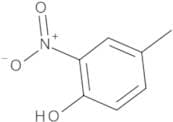
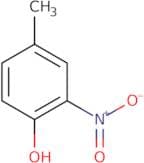
CAS 119-33-5
:4-Méthyl-2-nitrophénol
- 0-Nitro-P-Methylphenol
- 2-Nitro-4-methylphenol
- 2-Nitro-p-cresol
- 4-Hydroxy-3-nitrotoluene
- NSC 5387
- NSC 66511
- O-Nitro P-Methyl Phenol
- Phenol, 4-methyl-2-nitro-
- o-Nitro-p-methylphenol
- p-Cresol, 2-nitro-
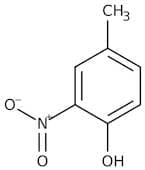
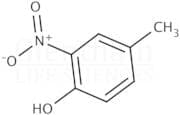
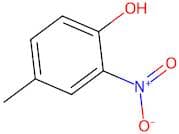
- 4-Methyl-2-nitrophenol
- 2-NITRO-PARA-CRESOL
- 2-Nitro-4-cresol
- 1-HYDROXY-4-METHYL-2-NITROBENZENE
- 4-methyl-2-nitro-pheno
- 4-Metyl-2-mitrophenol
- 4-METHYL-2-NITROPHENOL/2-NITRO-P-CRESOL
- O-NITRO-P-CRESOL
- 2-nitro-p-creso
- 4-Hydroxy-3-nitrotoluene~2-Nitro-p-cresol
- 3-NITRO-4-HYDROXYTOLUENE
- Voir plus de synonymes
4-Methyl-2-nitrophenol, 97%
CAS :This Thermo Scientific Chemicals brand product was originally part of the Alfa Aesar product portfolio. Some documentation and label information may refer to the legacy brand. The original Alfa Aesar product / item code or SKU reference has not changed as a part of the brand transition to Thermo SciFormule :C7H7NO3Degré de pureté :97%Couleur et forme :Yellow to dark yellow to brown or yellow/brown, Fused solid or clear liquid as melt or chunksMasse moléculaire :153.144-Methyl-2-nitrophenol
CAS :Produit contrôléFormule :C7H7NO3Couleur et forme :NeatMasse moléculaire :153.144-Methyl-2-nitrophenol
CAS :4-Methyl-2-nitrophenol
Formule :C7H7NO3Degré de pureté :95%Couleur et forme : low melting solid/clear. brown liquidMasse moléculaire :153.14g/mol4-Methyl-2-nitrophenol
CAS :Produit contrôléFormule :C7H7NO3Couleur et forme :Dark YellowMasse moléculaire :153.144-Methyl-2-nitrophenol
CAS :4-Methyl-2-nitrophenol is a nitro compound that is used as a reagent in organic analytical chemistry. It reacts with hydrogen chloride to form the corresponding hydrochloride salt. The hydrochloride salt can be converted back to 4-methyl-2-nitrophenol by treatment with sodium hydroxide. This reaction mechanism is thought to involve intramolecular hydrogen bonding and an inorganic acid acting as a proton donor. The use of ionization techniques, such as chemical ionization or electron impact, can help determine the structure of 4-methyl-2-nitrophenol using mass spectrometry.
4-Methyl-2-nitrophenol has been shown to inhibit acetylcholinesterase activity in Sprague Dawley rats. Acetylcholine esterase inhibitors are often used for the treatment of Alzheimer's disease and other neurological disorders.Formule :C7H7NO3Degré de pureté :Min. 98 Area-%Couleur et forme :PowderMasse moléculaire :153.14 g/mol4-Methyl-2-nitrophenol
CAS :Formule :C7H7NO3Degré de pureté :97.0%Couleur et forme :SolidMasse moléculaire :153.137