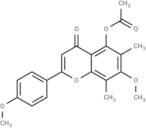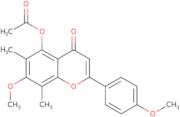
CAS 14004-35-4
:Formule :C21H20O6
InChI :InChI=1S/C21H20O6/c1-11-19(25-5)12(2)21-18(20(11)26-13(3)22)16(23)10-17(27-21)14-6-8-15(24-4)9-7-14/h6-10H,1-5H3
Code InChI :XCJBAXUKWUWAJL-UHFFFAOYSA-N
SMILES :CC1=C2C(=C(C(=C1OC)C)OC(=O)C)C(=O)C=C(O2)C3=CC=C(C=C3)OC
Filtrer par
Pourcentage de pureté
0
100
|
0
|
50
|
90
|
95
|
100
2 produits trouvés.
- Tri par prix ascendant
- Tri par prix descendant
- Puretés inférieures
- Puretés supérieures
- Livraison estimée la plus rapide
Eucalyptin acetate
CAS :Eucalyptin acetate is a useful organic compound for research related to life sciences and the catalog number is T125926.Formule :C21H20O6Couleur et forme :SolidMasse moléculaire :368.38Eucalyptin acetate
CAS :Eucalyptin acetate is an ester compound that is primarily utilized in the fragrance industry. It is derived from eucalyptus plants, specifically from their essential oils, which are well-known for their aromatic qualities. The mode of action of eucalyptin acetate involves its interaction with olfactory receptors, stimulating a fresh, invigorating scent profile that is widely appreciated in perfumery and consumer products. Beyond its aromatic applications, eucalyptin acetate is also being explored for its potential therapeutic properties, given the bioactive nature of eucalyptus-derived compounds. Additionally, it may exhibit antimicrobial effects, contributing to its utility in certain medical or hygiene products. Further research into its biochemical interactions and efficacy in various applications remains ongoing, presenting a potential avenue for scientific investigation and innovation in both commercial and medical fields.Formule :C21H20O6Degré de pureté :Min. 95%Masse moléculaire :368.4 g/mol