CAS 17996-13-3
:Carbamate de phénylméthyle N-(4-hydroxybutyle)
Description :
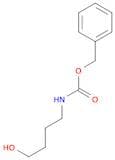
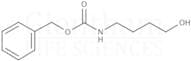
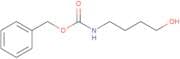
Carbamate de phénylméthyle N-(4-hydroxybutyle), identifié par son numéro CAS 17996-13-3, est un composé organique qui appartient à la classe des carbamates. Cette substance présente un groupe phénylméthyle lié à un groupe fonctionnel carbamate, qui est en outre substitué par un groupe 4-hydroxybutyle. La présence du groupe hydroxyle contribue à sa solubilité potentielle dans des solvants polaires et peut influencer sa réactivité et son interaction avec les systèmes biologiques. En général, les carbamates sont connus pour leurs applications en agriculture en tant que pesticides et herbicides, ainsi que dans les produits pharmaceutiques en raison de leur capacité à inhiber certaines enzymes. La structure spécifique de ce composé suggère qu'il pourrait présenter des propriétés uniques, telles qu'une stabilité modérée à élevée dans diverses conditions, et une bioactivité potentielle, qui pourrait être explorée en chimie médicinale. Cependant, des études détaillées sur sa toxicité, son impact environnemental et ses applications spécifiques seraient nécessaires pour comprendre pleinement ses caractéristiques et ses utilisations potentielles.
Formule :C12H17NO3
InChI :InChI=1S/C12H17NO3/c14-9-5-4-8-13-12(15)16-10-11-6-2-1-3-7-11/h1-3,6-7,14H,4-5,8-10H2,(H,13,15)
Code InChI :InChIKey=BNFLPFDVXGOHJY-UHFFFAOYSA-N
SMILES :C(OC(NCCCCO)=O)C1=CC=CC=C1
Synonymes :- (4-Hydroxybutyl)carbamic acid benzyl ester
- 4-(Carbobenzoxyamino)-1-butanol
- Benzyl (4-Hydroxybutyl)Carbamate
- Benzyl N-(4-hydroxybutyl)carbamate
- Carbamic acid, (4-hydroxybutyl)-, benzyl ester
- Carbamic acid, (4-hydroxybutyl)-, phenylmethyl ester
- Carbamic acid, N-(4-hydroxybutyl)-, phenylmethyl ester
- N-(4-Hydroxybutyl)carbamic acid benzyl ester
- Phenylmethyl N-(4-hydroxybutyl)carbamate
- [4-(Benzyloxycarbonyl)amino]-1-butanol
Trier par
Degré de pureté (%)
0
100
|
0
|
50
|
90
|
95
|
100
6 produits trouvés.
Benzyl (4-hydroxybutyl)carbamate
CAS :Benzyl (4-hydroxybutyl)carbamateFormule :C12H17NO3Degré de pureté :98%Masse moléculaire :223.27Carbamic acid, N-(4-hydroxybutyl)-, phenylmethyl ester
CAS :Formule :C12H17NO3Degré de pureté :97%Couleur et forme :SolidMasse moléculaire :223.26834-(Z-Amino)-1-butanol
CAS :Benzyl (4-hydroxybutyl)carbamateFormule :C12H17NO3Degré de pureté :98%Masse moléculaire :223.274-N-CBZ-AMINO-BUTAN-1-OL
CAS :Formule :C12H17NO3Degré de pureté :97%Couleur et forme :SolidMasse moléculaire :223.2724-(Z-Amino)-1-butanol
CAS :4-(Z-Amino)-1-butanol is a synthetic chemokine that has been shown to be an effective vaccine adjuvant. It is believed that this drug works by enhancing the immune response to the vaccine and increasing the production of cytokines. 4-(Z-Amino)-1-butanol has been shown to be effective in treating damaged cells, such as those caused by cancer cells or viruses. This drug also prevents replication of HIV and other virus infections, which may be due to its ability to inhibit viral DNA polymerase. 4-(Z-Amino)-1-butanol binds with high affinity to the chemokine receptor CXCR3, which is expressed on activated T cells and macrophages. The binding induces chemotaxis, activation, and differentiation of T cells into effector cells.Formule :C12H17NO3Degré de pureté :Min. 95%Masse moléculaire :223.27 g/mol