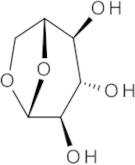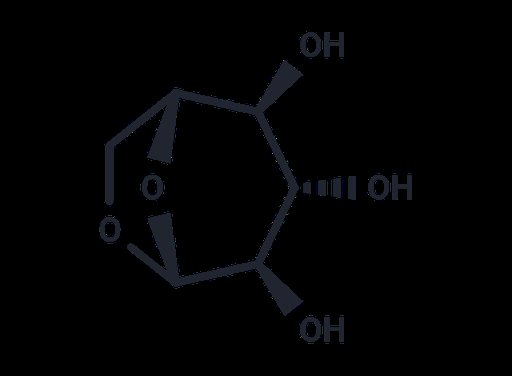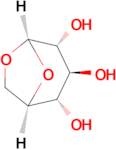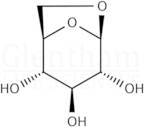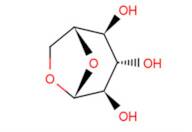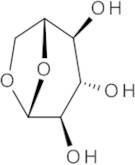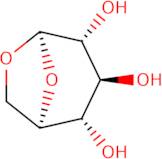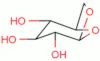
CAS 498-07-7
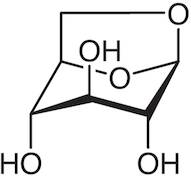
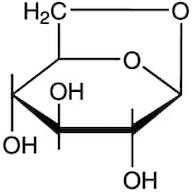
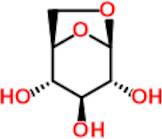
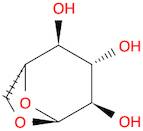
:1,6-anhydro-β-D-glucose
- 1,6-Anhydro-<span class="text-smallcaps">D</span>-glucopyranoside
- 1,6-Anhydro-<span class="text-smallcaps">D</span>-glucose
- 1,6-Anhydro-Beta-D-Glucopyranose
- 1,6-Anhydro-D-glucopyranoside
- 1,6-Anhydro-D-glucose
- 1,6-Anhydro-β-<span class="text-smallcaps">D</span>-glucopyranose
- 1,6-Anhydro-β-<span class="text-smallcaps">D</span>-glucose
- 1,6-Anhydro-β-D-glucopyranose
- 1,6-Anhydroglucose
- 1,6-anhidro-β-D-glucosa
- 6,8-Dioxabicyclo[3.2.1]octane, β-<span class="text-smallcaps">D</span>-glucopyranose deriv.
- <span class="text-smallcaps">D</span>-Glucose, 1,6-anhydro-
- D-Glucose, 1,6-anhydro-
- GLUCOPYRANOSE (,beta.-D), 1,6-ANHYDRO-
- Leucoglucosan
- Levoglucosan
- Nsc 46243
- β-<span class="text-smallcaps">D</span>-Glucopyranose, 1,6-anhydro-
- β-D-Glucopyranose, 1,6-anhydro-
- 6,8-Dioxabicyclo[3.2.1]octane, β-D-glucopyranose deriv.
- (-)-1,6-ANHYDRO-B-D-GLUCOPYRANOSE FOR SY
- 1,6-Anhydro-beta-D-glucopyranose, 99+%
- 1,6-Anhydro-β-D-glucose ,98%
- 1,6-Anhydro-?-glucopyranose
- 1,6-anhydro-á-d-glucopyranose
- 1,6-ANHYDRO-SS-D-GLUCOPYRANOSE, 99% MIN., HPLC
- 1,6-anhydro-β-d-[1-2H]glucose
- beta-D-Glucopyranose, 1,6-anhydro-
- Laevoglucosan
- 1,6-Anhydro-beta-D-glucopyranose (levoglucosan)
- 1,6-Anhydro-D-glucopyranose, 99℉
- 1,6-Anhydro-
- 1,6-Anhydro-β-D-glucose,Levoglucosan
- (-)-1,6-Anhydro--D-glucopyranose for synthesis
- 1,6-Anhydro-beta-D-glucopyranose min. 98%
- 1,6-Anhydro-β-D-glycopyranose
- 1,6-Anhydro-beta-D-glucose 99%
- 1,6-ANHYDRO-BETA-D-GLUCOSE (LEVOGLUCOSAN)
- 1,6-ANHYDRO-SS-D-GLUCOPYRANOSE
- 1,6-anhydro-beta-glucopyranose
- 1,6-ANHYDRO-BETA-D-GLUCOPYRA
- 1,6-ANHYDRO-BETA-D-GLUCOSE
- 1,6-anhydro-β-d-[UL-2H7]glucose
- 1,6-anhydro-beta-d-glucopyranos
- 1,6-anhydro-D-glucose (50 mg)
- 1,6-Dideoxy-1,6-epoxy-β-D-glucopyranose
- 1,6-Anhydro-β-glucopyranose
- 1,6-ANHYDRO-B-D-GLUCOSE
- Voir plus de synonymes
1,6-Anhydro-β-D-glucose
CAS :Formule :C6H10O5Degré de pureté :>99.0%(GC)Couleur et forme :White to Light yellow powder to crystalMasse moléculaire :162.141,6-Anhydro-β-D-glucopyranose, 99%
CAS :1,6-Anhydro-beta-D-glucopyranose is used for the preparation of biologically important and structurally diverse products such as rifamycin S, indanomycin, thromboxane B2, (+)-biotin, tetrodotoxin, quinone, macrolide antibiotics and modified sugars. It is used as a chemical tracer for biomass burningFormule :C6H10O5Degré de pureté :99%Couleur et forme :Powder or crystals or crystalline powder, WhiteMasse moléculaire :162.141,6-anhydro-D-glucose
CAS :Heterocyclic compounds with oxygen hetero-atom(s) only, nesoiFormule :C6H10O5Couleur et forme :White Beige PowderMasse moléculaire :162.05282b-D-Glucopyranose, 1,6-anhydro-
CAS :Formule :C6H10O5Degré de pureté :98%Couleur et forme :SolidMasse moléculaire :162.14061,6-Anhydro-β-D-glucopyranose
CAS :1,6-Anhydro-β-D-glucopyranoseFormule :C6H10O5Degré de pureté :98%Couleur et forme :Beige SolidMasse moléculaire :162.1406Levoglucosan (Standard)
CAS :Levoglucosan (Standard) is the standard substance of Levoglucosan, and it is applicable for quantitative analysis, quality control, and related research in biochemical experiments. Levoglucosan (1,6-anhydro-b-D-Glucose) is an anhydrohexose that is the 1,6-anhydro-derivative of beta-D-glucopyranose. It is formed from the pyrolysis of carbohydrates, such as starch and cellulose. Levoglucosan can also be utilized in the synthesis of chiral polymers such as unhydrolysable glucose polymers. Levoglucosan is also produced via caramelization of sugar. Consumption of caramel or caramel-containing sweets can lead to a short-term 5X increase in urinary levels of levoglucosan (from 20 uM/mM creatinine to 100 uM/mM creatinine).Formule :C6H10O5Couleur et forme :SolidMasse moléculaire :162.141,6-Anhydro-β-d-glucose
CAS :Formule :C6H10O5Degré de pureté :95%Couleur et forme :Solid, Light beige powderMasse moléculaire :162.0531,6-Anhydro-β-D-glucopyranose
CAS :Formule :C6H10O5Degré de pureté :(HPLC) ≥ 99.0%Couleur et forme :White crystalline powderMasse moléculaire :162.14Levoglucosan
CAS :Levoglucosan is a byproduct of carbohydrate pyrolysis, used in chiral polymer synthesis, and increases in urine post-caramel consumption.Formule :C6H10O5Degré de pureté :99.97% - ≥95%Couleur et forme :SolidMasse moléculaire :162.14Levoglucosan
CAS :(1R,2S,3S,4R,5R)-6,8-Dioxabicyclo[3.2.1]octane-2,3,4-triolFormule :C6H10O5Degré de pureté :98%Masse moléculaire :162.141,6-Anhydro-β-D-glucopyranose
CAS :1,6-Anhydro-β-D-glucopyranoseFormule :C6H10O5Degré de pureté :98%Couleur et forme :Solid-PowderMasse moléculaire :162.14061,6-Anhydro-β-D-glucopyranose
CAS :Stability Hygroscopic
Applications 1,6-Anhydrohexopyranoses have proven to be valuable synthons for the preparation of biologically important and structurally diverse products (e.g. rifamycin S, indanomycin, thromboxane B2, (+)-biotin, tetrodotoxin, quinone, and macrolide antibiotics) as well as for modified sugars.The chemical/physical/toxicological properties have not been thoroughly investigated. Since it is known to be a minor component of certain food materials it may be regarded as of relatively low toxicity.
References Fraser-Reid, B., et al. J. Am. Chem. Soc. 106, 731 (1984); Edwards, M.P., et al. J. Org. Chem. 49, 3503 (1984); Kelly, A.G., and Roberts, J.S. J. Chem. Soc., Chem. Commun. 228, (1980); Ogawa, T., et al. Carbohydr. Res. 57, C31 (1977); Isobe, M., et al. Tetrahedron Lett. 28, 6485 (1987); Fresnos, J.N. and Swenton, J.S. , J. Chem. Soc., Chem. Commun. 658, (1985); Kochetkov, N.K. et al., Tetrahedron Lett. 22, 4315, 4319 (1981); Georges, M. et al., Carbohydr. Res. 130, 115 (1984); Paulsen, et al., Chem. Ber. 114, 322 (1981).Formule :C6H10O5Couleur et forme :NeatMasse moléculaire :162.141,6-Anhydro-beta-D-glucopyranose
CAS :Used for preparation of biologically active compoundsFormule :C6H10O5Degré de pureté :Min. 98 Area-%Couleur et forme :White PowderMasse moléculaire :162.14 g/mol