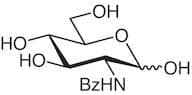
CAS 655-42-5
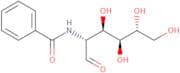
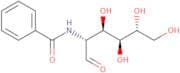
:2-(benzoylamino)-2-désoxyhexose
- D-glucopyranose, 2-(benzoylamino)-2-deoxy-
- 2-Deoxy-2-[(phenylcarbonyl)amino]hexose
- D-Glucose, 2-(benzoylamino)-2-deoxy-
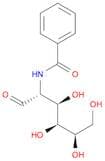
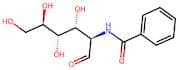
- N-(3,4,5,6-Tetrahydroxy-1-oxo-2-hexanyl)benzamide
- 2-(Benzoylamino)-2-deoxyhexose
- hexose, 2-(benzoylamino)-2-deoxy-
N-Benzoyl-D-glucosamine
CAS :Formule :C13H17NO6Degré de pureté :>98.0%(N)Couleur et forme :White to Almost white powder to crystalMasse moléculaire :283.28N-Benzoyl-D-glucosamine
CAS :Formule :C13H17NO6Degré de pureté :98%Couleur et forme :SolidMasse moléculaire :283.2772N-((2R,3R,4S,5R)-3,4,5,6-Tetrahydroxy-1-oxohexan-2-yl)benzamide
CAS :N-((2R,3R,4S,5R)-3,4,5,6-Tetrahydroxy-1-oxohexan-2-yl)benzamideDegré de pureté :98%Masse moléculaire :283.28g/molN-Benzoyl-D-glucosamine
CAS :Lectins are carbohydrate-binding proteins that can be classified into different types based on their specificities for glycan structures. One of the most common types is the N-acetyl-D-glucosamine (NAG) lectin, which binds to oligomers of NAG and related sugars. Lectins are used to activate cells and induce cell death. The dodecyl NAG lectin has been shown to bind to glucocerebrosides in a reductively irreversible manner and has been used as a model for such interactions. This lectin is also inexpensively produced from a synthetic benzylidene acetal, which can be made from commercially available materials. It has been shown that this lectin binds to polyacrylamide gels in an SDS-polyacrylamide gel electrophoresis, with a pH optimum at 7.0 and an amino acid composition that includes glutamic acid, glutamine, asparagine, ser
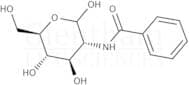
Formule :C13H17NO6Degré de pureté :Min. 95%Couleur et forme :White PowderMasse moléculaire :283.28 g/mol2-Benzamido-2-deoxy-D-glucopyranose
CAS :2-Benzamido-2-deoxy-D-glucopyranose is a synthetic, inexpensive, and non-toxic compound that has antibiotic properties. It is used as a reagent for the sulfonylating of aromatic rings and as an intermediate in the synthesis of other compounds. 2-Benzamido-2-deoxy-D-glucopyranose can be radiolabeled with carbon or fluorine atoms to form a resonance labeled probe that can be used in magnetic resonance spectroscopy.Formule :C13H17NO6Degré de pureté :Min. 95%Couleur et forme :White PowderMasse moléculaire :283.28 g/mol