CAS 9002-18-0
:Agar
Description :
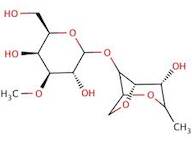
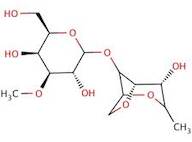
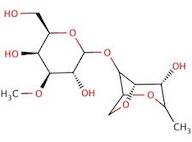
Agar, avec le numéro CAS 9002-18-0, est une substance gélatineuse dérivée d'algues rouges, principalement des genres Gelidium et Gracilaria. Elle est composée principalement de Agarose et de Agaropectine, des polysaccharides qui forment un gel lorsqu'ils sont dissous dans de l'eau bouillante puis refroidis. Agar est largement utilisé en microbiologie comme agent de solidification pour les milieux de culture, permettant la croissance de divers micro-organismes. Ses propriétés gélifiantes sont également utilisées dans les produits alimentaires, où elle sert d'épaississant, de stabilisant et d'émulsifiant. Agar est inodore, sans goût et a un point de fusion élevé, ce qui le rend adapté aux applications nécessitant une stabilité thermique. De plus, il est non toxique et végétalien, ce qui en fait une alternative populaire à la gélatine. La capacité de Agar à former des gels à faibles concentrations et sa texture unique le rendent précieux tant dans les domaines culinaires que scientifiques. Sa polyvalence s'étend à l'industrie pharmaceutique, où il est utilisé dans la formulation de médicaments et comme milieu pour la libération contrôlée d'ingrédients actifs.
Formule :Unspecified
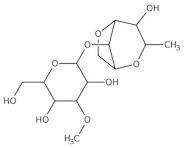
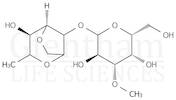
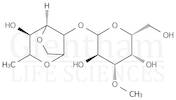
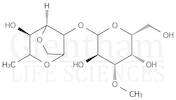
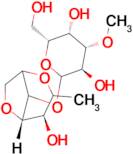
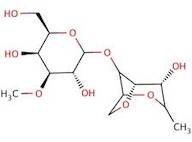
InChI :InChI=1S/C14H24O9/c1-5-8(16)13-11(7(21-5)4-20-13)23-14-10(18)12(19-2)9(17)6(3-15)22-14/h5-18H,3-4H2,1-2H3/t5?,6-,7?,8-,9+,10-,11?,12+,13+,14?/m1/s1
Code InChI :GYYDPBCUIJTIBM-DYOGSRDZSA-N
SMILES :CC1[C@H]([C@H]2C(C(O1)CO2)OC3[C@@H]([C@H]([C@H]([C@H](O3)CO)O)OC)O)O
Synonymes :- Agar-Agar
- Agargel
- Azazoon
- Bacto-agar
- Cs-16A
- Gelose
- Kantenmatsu
- Karikorikan
- Max
- Phytagar
- SDA
- Ultra-Agar
- Bengal isinglass
- Agar
- Bengal gelatin
- Voir plus de synonymes
Filtrer par
Pourcentage de pureté
0
100
|
0
|
50
|
90
|
95
|
100
17 produits trouvés.
- Tri par prix ascendant
- Tri par prix descendant
- Puretés inférieures
- Puretés supérieures
- Livraison estimée la plus rapide
Agar powder
CAS :Agar is the most suited solidifying agent for scientific applications that require incubation temperatures closer to human body temperature. Agar is used as a medium in bacteriology and plant biology, impression material in dentistry, biofertilizer in organic farming, and salt bridges in electrochemFormule :C14H24O9Couleur et forme :White to cream or pale yellow to pale brown, PowderMasse moléculaire :336.34Agar, low gel strength, suitable for microbiology
CAS :Formule :(C12H18O9)nCouleur et forme :Off-white to cream or light-brown powderMasse moléculaire :-Agar, low gel strength
CAS :Formule :(C12H18O9)nCouleur et forme :Off-white to cream or light-brown powderMasse moléculaire :-Agar, high gel strength, suitable for microbiology
CAS :Formule :(C12H18O9)nCouleur et forme :Off-white to cream or light-brown powderAgar, high gel strength
CAS :Formule :(C12H18O9)nCouleur et forme :Off-white to cream, yellowish or light-brown powderMasse moléculaire :-Agar Powder
CAS :Formule :C14H24O9Degré de pureté :BRCouleur et forme :SolidMasse moléculaire :336.337Agar
CAS :Agar is a gelatinous substance from algae, widely used in food, tissue culture, and microbiology.Formule :C14H24O9Couleur et forme :White SolidMasse moléculaire :336.34Agar powder for tissue culture
CAS :Formule :(C12H28O9)nCouleur et forme :White to pale yellow, Powder, Almost clear, Pale yellowAgar powder BactoBio for microbiology
CAS :Couleur et forme :Off white to light beige, Granular, free flowing powder, Clear to very slightly turbid, Colourless to pale yellowAgar powder Bacto grade
CAS :Couleur et forme :White to off-white, Powder, Clear, Colourless to pale yellowAgar powder regular grade for bacteriology
CAS :Couleur et forme :Off - white to pale yellow, Powder, Almost clear to slight hazyAgar
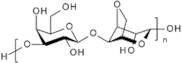
CAS :The major gel forming component in agar, agarose, consists of a linear chain of sequences of 1,3 linked β-D-galactopyranosyl units and 1,4 linkages to 3,6-anhydro-α-L-galactopyranosyl units. Gelation is done via the formation of double helices (Arnott, 1974). Agar's properties are similar to gelatin as it is primarily used as a plating gel for microbial cultures (Lahaye, 1991). However, agar is a good substitute for animal-based gelatin in vegetarian foods and is easy to use in food gels in a similar way to the carrageenans. Common food applications of agar include: puddings, custards, and soft candies. Agar improves the texture of processed cheese and frozen desserts, and is also added to baked goods to inhibit staling. A creative food application uses agar-based gel cubes that are infused with fruit extract or wine to make a vegetable-based aspic (Armisén, 2009). Agar contains two polysaccharides Agarobiose and Agaropectin. Both Gelidium latifolium and Gelidium amansii are sources of both Agar and Agarose. The images were kindly provided by Prof Mike Guiry from Cork who runs ‘The Seaweed Site’. Agaropectin Agaropectin is a sulphated non-gelling galactan comprising about 30% of Agar. Half ester sulphate is present in varying amounts plus D-glucuronic acid and small amounts of pyruvic acid. As with Agarose the main chain has alternating residues of D-galactose and L-galactose heavily modified with acidic side-groups which are usually sulfate, glucuronate, and pyruvate. Pyruvic acid is possibly attached in an acetal form to the D-galactose residues of the agarobiose skeleton. No formal structure of Agaropectin appears to have been published. Agarose Agarose is a linear gelling polysaccharide of (1-3) linked β-D-galactopyranose residues linked to 3,6-anhydro-α-L-galactopyranose via 1-4 bonds. Agar contains about 60% Agarose.Degré de pureté :Min. 95%Couleur et forme :Powder