Substrats fluorescents
Les substrats fluorescents sont des molécules qui émettent de la fluorescence lorsqu'elles sont converties enzymatiquement en un produit. Ces substrats sont précieux pour détecter et quantifier l'activité enzymatique avec une grande sensibilité et spécificité. Les substrats fluorescents sont largement utilisés dans une variété d'applications, y compris l'imagerie cellulaire en temps réel, la cytométrie en flux et les dosages basés sur la fluorescence. Ils permettent aux chercheurs d'étudier la cinétique enzymatique, la localisation et les interactions en temps réel. Chez CymitQuimica, nous proposons une gamme complète de substrats fluorescents de haute qualité pour soutenir vos recherches en biochimie, biologie moléculaire et diagnostic.
370 produits trouvés pour "Substrats fluorescents".
Trier par
Degré de pureté (%)
0
100
|
0
|
50
|
90
|
95
|
100
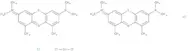
1,9-Dimethyl-methylene blue zinc chloride
CAS :1,9-Dimethyl-methylene blue zinc chloride double salt is a fluorescent dye that has been used in the study of hyaluronic acid and mesenchymal stem cells. The compound absorbs light at a wavelength of 580 nm, which is the same as the absorption wavelength for hyaluronic acid and mesenchymal stem cells. 1,9-Dimethyl-methylene blue zinc chloride double salt can be used to measure the amount of these compounds in tissues. This dye also shows sensitivity to artifacts such as hemolysis and lipemia, making it useful for research purposes.Formule :(C18H22ClN3S)2•ZnCl2Degré de pureté :Min. 95%Couleur et forme :PowderMasse moléculaire :832.11 g/mol1H-Benz[de]isoquinoline-5-sulfonicacid, 6-amino-2,3-dihydro-2-(4-methylphenyl)-1,3-dioxo-, sodium salt (1:1)
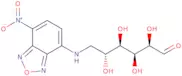
CAS :Formule :C19H14N2O5SCouleur et forme :SolidMasse moléculaire :382.38996-NBDG
CAS :Nonhydrolyzable fluorescent glucose analog used to monitor glucose uptakeFormule :C12H14N4O8Degré de pureté :Min. 95%Couleur et forme :PowderMasse moléculaire :342.26 g/mol5-Carboxy-X-rhodamine, succinimidyl ester
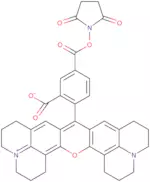
CAS :Single isomer of 5(6)-ROX. It is a fluorescent dye used in RT-PCR methods as an internal reference to determine fluorescence variation that is not associated with the amplification process (plastic of the wells, small differences in concentration or volume, instrument measurements). It produces a constant fluorescence emission signal during the PCR process that is used to normalise the emission produced by the reporter. The fluorescence signal is compatible with that of most reporters. It is used to label the 5â end of oligonucleotides as a reporter in the presence of a quencher at the 3â end (dual labelled probe). During amplification, the dye is cleaved, and the fluorescence increases proportionally with the amount of the specific sequence amplified during the PCR process. The development of the fluorescence signal is therefore specifically related to the amplification of the target sequence. 6-ROX with NHS-activated carboxylic acids reacts with primary amines.Formule :C37H33N3O7Degré de pureté :Min. 95%Couleur et forme :Red To Violet To Black SolidMasse moléculaire :631.67 g/molNucleic Acid Dye Green I - solution in DMSO (6.11 mg/ml)
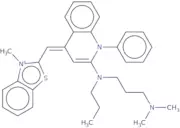
CAS :Nucleic Acid Dye Green I is a DNA-staining dye that has found application in various high resolution assays for the detection of microbial or viral contaminant DNA.Formule :C32H37N4SDegré de pureté :Min. 95%Couleur et forme :Clear LiquidMasse moléculaire :509.73 g/mol9,10-Bis[2-(4-methoxyphenyl)ethynyl]anthracene
CAS :9,10-Bis[2-(4-methoxyphenyl)ethynyl]anthracene is a reagent for chemiluminescence research.Formule :C32H22O2Degré de pureté :Min. 98.0 Area-%Masse moléculaire :438.52 g/molBenzo[k]fluoranthene
CAS :Produit contrôléBenzo[k]fluoranthene is a polycyclic aromatic hydrocarbon that is used as an optical sensor for transcriptional regulation. It has been shown to activate the transcription factor NF-κB, which induces expression of inflammatory genes in cells. Benzo[k]fluoranthene can be used to measure changes in gene expression and protein levels. The antibody response to benzo[k]fluoranthene was studied using a kinetic data analysis method. Benzo[k]fluoranthene has also been shown to induce genotoxic effects in liver cells and human hepatoma cell line HepG2. This compound also causes light emission when it is excited with light, which can be measured with synchronous fluorescence.Formule :C20H12Degré de pureté :Min. 95%Couleur et forme :SolidMasse moléculaire :252.31 g/mol4-Propylphenol
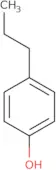
CAS :Produces a fluorogenic signal in the presence of peroxidaseDegré de pureté :Min. 95%Resazurin
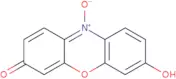
CAS :Weakly fluorescent blue dye; indicator of mitochondrial activity. The reduction of resazurin has been ascribed to a putative reductase or diaphorase-type enzymes from the mitochondria and cytosol but also it might play a role as an intermediate electron acceptor in the electron transport chain between the final reduction of oxygen and cytochrome oxidase.Formule :C12H7NO4Degré de pureté :Min. 95%Masse moléculaire :229.19 g/molBP Fluor 488 hydrazide
CAS :Green fluorescent dye used for labelling aldehydes or ketones in polysaccharides or glycoproteins with an excitation peak at 499 nm and an emission peak at 520 nm. Frequently employed in microscopy and flow cytometry.
Formule :C21H16N4O10S2Masse moléculaire :548.51 g/mol

![1H-Benz[de]isoquinoline-5-sulfonicacid, 6-amino-2,3-dihydro-2-(4-methylphenyl)-1,3-dioxo-, sodium …](https://static.cymitquimica.com/products/IN/thumb-webp/DA006XRT.webp)

![9,10-Bis[2-(4-methoxyphenyl)ethynyl]anthracene](https://static.cymitquimica.com/products/3D/thumb-webp/J-650272.webp)
![Benzo[k]fluoranthene](https://static.cymitquimica.com/products/3D/thumb-webp/FB157375.webp)