Ferroptose
La ferroptose est une forme de mort cellulaire régulée caractérisée par l'accumulation de peroxydes lipidiques et par le stress oxydatif dépendant du fer. Contrairement à l'apoptose, la ferroptose n'est pas entraînée par les caspases, mais plutôt par l'échec des défenses antioxydantes cellulaires, conduisant à la mort cellulaire. Les inhibiteurs et inducteurs de la ferroptose sont essentiels pour étudier cette voie unique de mort cellulaire, impliquée dans diverses maladies, notamment le cancer, la neurodégénérescence et les lésions d'ischémie-reperfusion. Chez CymitQuimica, nous offrons une large gamme de modulateurs de la ferroptose de haute qualité pour soutenir vos recherches sur les mécanismes de mort cellulaire, le stress oxydatif et la pathologie des maladies.
215 produits trouvés pour "Ferroptose"
Trier par
Degré de pureté (%)
0
100
|
0
|
50
|
90
|
95
|
100
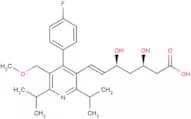
Cerivastatin
CAS :<p>Cerivastatin is an HMG-CoA reductase inhibitor with anticancer and lipid-lowering effects and can be used to study primary hyperlipidemia.</p>Formule :C26H34FNO5Degré de pureté :97.80% - 99.56%Couleur et forme :SolidMasse moléculaire :459.55Microtubule inhibitor 2
<p>Microtubule inhibitor 2: potent, selective, oral, induces ferroptosis, strong antitumor effect.</p>Formule :C20H23NO7Couleur et forme :SolidMasse moléculaire :389.4Nur77 agonist-1
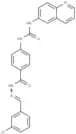
CAS :<p>Nur77 agonist-1 (Compound 8f) is an orally active Nur77 agonist. It induces ferroptosis by upregulating Nur77 protein expression, increasing reactive oxygen species (ROS) and lipid peroxidation levels, while decreasing GPX4 protein expression. Nur77 agonist-1 binds with affinity to the ligand binding domain of Nur77, with a KD of 13.80 μM. It demonstrates significant antiproliferative activity against various breast cancer cells (IC50: 2.15-3.26 μM) and exhibits low cytotoxicity towards normal cells. This compound is useful for breast cancer research.</p>Formule :C24H18ClN5O2Couleur et forme :SolidMasse moléculaire :443.885GPX4-IN-13
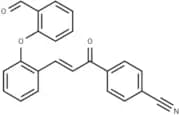
CAS :<p>GPX4-IN-13 (compound 16), a GPX4 inhibitor, exhibits anticancer properties by diminishing the expression of GPX4, thereby reducing thyroid cell proliferation and inducing ferroptosis. Additionally, this compound effectively inhibits the growth of three distinct thyroid cancer cell lines: N-thy-ori-3-1 (IC 50 =8.39 μM), MDA-T32 (IC 50 =10.28 μM), and MDA-T41 (IC 50 =8.18 μM).</p>Formule :C23H15NO3Couleur et forme :SolidMasse moléculaire :353.37GPX4 activator 2
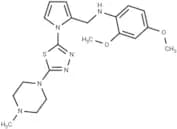
CAS :<p>GPX4 Activator 2 (Compound C3) serves as an activator of GPX4 and exhibits cardioprotective effects by inhibiting cellular iron death (ferroptosis) with an efficacy concentration (EC50) of 7.8 μM. It is used in the study of myocardial damage.</p>Formule :C20H26N6O2SCouleur et forme :SolidMasse moléculaire :414.52TfR-1-IN-1
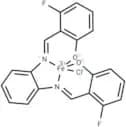
CAS :<p>TfR-1-IN-1 is a TfR-1 inhibitor, also a Fe(III) salivary phenol complex, inducing apoptosis and inhibiting tumor and normal cell growth.</p>Formule :C20H12ClF2FeN2O2Degré de pureté :96.96%Couleur et forme :SolidMasse moléculaire :441.62Ferroptosis-IN-15
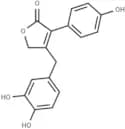
CAS :<p>Ferroptosis-IN-15 (compound 12) serves as an effective inhibitor of ferroptosis, exhibiting EC50 values of 0.76 μM and 0.67 μM in A375 cells and 786-O cells, respectively. It acts as a potential iron chelator and radical-scavenging antioxidant.</p>Formule :C17H14O5Couleur et forme :SolidMasse moléculaire :298.29Ferrostatin-1 diyne
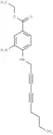
CAS :<p>Ferrostatin-1 diyne (Fer-1 diyne) (compound 2) serves as an inhibitor of ferroptosis, accumulating in cellular lysosomes, mitochondria, and the endoplasmic reticulum. It notably inhibits ferroptosis independently of lysosomal and mitochondrial activity.</p>Formule :C18H22N2O2Couleur et forme :SolidMasse moléculaire :298.38Ferroptosis-IN-6
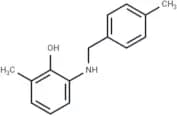
CAS :<p>Ferroptosis-IN-6 is an efficient ferroptosis inhibitor, protecting cells from cell death induced by ferroptosis inducers, and inhibiting STY-BODIPY oxidation.</p>Formule :C15H17NODegré de pureté :99.84%Couleur et forme :SolidMasse moléculaire :227.3CAR-2
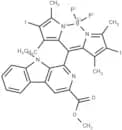
CAS :<p>CAR-2 is a BODIPY-based photosensitizer that induces ferroptosis in photodynamic therapy (PDT) by targeting the endoplasmic reticulum (ER) and lipid droplets (LD). It exhibits phototoxicity against breast cancer cells with an IC50 of 0.01-0.02 μM and demonstrates antitumor efficacy in a 4T1 xenograft mouse model.</p>Formule :C27H23BF2I2N4O2Couleur et forme :SolidMasse moléculaire :738.114Ferroptosis-IN-18
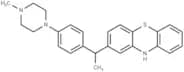
CAS :<p>Ferroptosis-IN-18 (51) is a phenothiazine derivative known for its potent anti-ferroptotic and antioxidant properties. It is useful for research related to intracerebral hemorrhage (ICH).</p>Formule :C25H27N3SCouleur et forme :SolidMasse moléculaire :401.567GPX4-IN-3
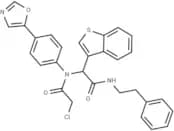
CAS :<p>GPX4-IN-3 (26a) is a potent GPX4 inhibitor, inducing selective ferroptosis with 71.7% inhibition at 1 μM.</p>Formule :C29H24ClN3O3SCouleur et forme :SolidMasse moléculaire :530.04Cetzole
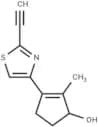
CAS :<p>Cetzole (Compound 1) acts as an inducer of ferroptosis (iron-dependent cell death) through the accumulation of ROS, leading to cell death. The compound exhibits varying half-maximal cytotoxic concentrations (CC50) against several cell lines: 2.56 μM in NCI-H522, 10.31 μM in NCI-H522 GFP-SCL7A11 #8, 2.71 μM in NCI-H522 RV-GFP, 3.07 μM in HT-1080, 14.9 μM in NARF2, and 6.28 μM in MDA-MB-231. This highlights Cetzole's potential for research in cancer therapeutics.</p>Formule :C11H11NOSCouleur et forme :SolidMasse moléculaire :205.28DL-Buthionine-(S,R)-sulfoximine hydrochloride
<p>DL-Buthionine-(S,R)-sulfoximine hydrochloride (Buthionine sulfoximine hydrochloride) is a potent and specific glutamylcysteine synthetase biosynthesis inhibitor</p>Formule :C8H19ClN2O3SCouleur et forme :SolidMasse moléculaire :258.77Vatiquinone
CAS :<p>Vatiquinone, also known as EPI 743, is an orally bioavailable para-benzoquinone being developed for inherited mitochondrial diseases. The mechanism of action of EPI-743 involves augmenting the synthesis of glutathione, optimizing metabolic control, enhanc</p>Formule :C29H44O3Couleur et forme :SolidMasse moléculaire :440.66