Endocrinologie/Hormones
Sous-catégories appartenant à la catégorie "Endocrinologie/Hormones"
- Récepteur des androgènes(229 produits)
- Annexine A(16 produits)
- Aromatase(22 produits)
- Récepteur d'œstrogène/progestatif(64 produits)
- GPR(1 produits)
- Récepteur des glucocorticoïdes(165 produits)
- LHRH(2 produits)
- Récepteur opioïde(326 produits)
- Récepteur de prostaglandine(122 produits)
- RAAS(86 produits)
- Réductase(51 produits)
- Somatostatine(57 produits)
- Récepteur des hormones thyroïdiennes (THR)(33 produits)
- Récepteur de la vasopressine(48 produits)
3415 produits trouvés pour "Endocrinologie/Hormones"
GIP (1-42)-[C] human
Peptide derived from the Gastric inhibitory polypeptide (GIP), an inhibiting hormone of the secretin family of hormones. While GIP is a weak inhibitor of gastric acid secretion, its main role is to stimulate insulin secretion - in a glucose-dependent mechanism. Therefore, GIP is referred to as a glucose-dependent insulinotropic peptide.GIP is derived from a 153-amino acid pro-protein encoded by the GIP gene and circulates as a biologically active 42-amino acid peptide. It is synthesised by K cells, which are found in the mucosa of the duodenum and the jejunum of the gastrointestinal tract. GIP receptors are seven-transmembrane proteins found on β-cells in the pancreas. These β-cells are those that are able to simultaneously detect glucose and release insulin as a result to GIP binding.The clinical relevance of GIP is related to type 2 diabetes mellitus (T2DM)- studies have found that T2DM diabetics are unresponsive to GIP and have lower levels of GIP secretion after a meal when compared to non-diabetics. In research involving knockout mice, it was found that absence of the GIP receptors correlates with resistance to obesity.
Masse moléculaire :1,234.5 g/molGRP (14-27), human, porcine
Mammalian bombesin-like neuropeptide- first isolated from pig spinal cord, which can stimulate rat uterine smooth muscle contraction and gastrin and somatostatin secretion in vitro. Increases blood pressure and pancreatic exocrine secretion in dogs.
Couleur et forme :PowderMasse moléculaire :1,666.8 g/molInsulin beta Chain Peptide (15 - 23)
Insulin is a polypeptide composed of two peptide chains referred to as the alpha chain and β chain. These chains are linked by two disulphide bonds, and an additional disulphide is formed within the alpha chain. In most species, the alpha chain consists of 21 amino acids and the β chain of 30 amino acids. Insulin is normally secreted rapidly from the β-cells of the pancreatic islets in response to nutrients absorbed after a meal. In type 1 diabetes mellitus, there may be an absolute insulin deficiency as a consequence of autoimmune destruction of the β-cells. On the other hand, in type 2 diabetes mellitus, insulin secretion is impaired and is inadequate to overcome peripheral insulin resistance.
Couleur et forme :PowderMasse moléculaire :1,008.5 g/molAlexamorelin
The heptapeptide Alexamorelin is a member of the Growth Hormone secretagogues (GHS) family. These are synthetic molecules which act through the central nervous system to stimulate the secretion of somatotrophs, prolactin, adrenocorticotrophin and cortisol. Alexamorelin has also been shown to inhibit 125I-Tyr-Ala-HEX binding in tissues. Due to their stimulation of growth hormone release, they are known as non-approved pharmaceuticals and are a concern to sport's drug testing organisations.
Masse moléculaire :957.5 g/molGlucagon (3-29)
The cleavage of proglucagon forms glucagon. Increased levels of glucagon that can't be regulated are linked to diabetic hyperglycaemia and other pathologies. Typically, glucagon levels should be suppressed as glucose levels rise. However, the opposite has generally been found to be accurate, and the nature of this elevated immunoreactive glucagon has led to more research. Hyperglucagonaemia is a characteristic of several pathologies, but the detection of immunoreactive glucagon has yet to be fully verified due to the nature of available detection.Glucagon can be hydrolysed by dipeptidyl peptidase IV (DPIV) to products such as (18-29) and (3-29). Current methods for detecting glucagon rely on antibodies to the N terminus or C-terminus to detect pancreatic glucagon. However, these antibodies may also detect truncated forms due to a pathology affecting the secretion, clearance or processing of proglucagon-derived peptides. Theoretically, these can be used in a sandwich process to detect only full-length glucagon. Therefore, the availability of the truncated glucagon (3-29) as a control to test the sensitivity of the available antibodies and the ELISAs is useful. Plasma levels from hyperglucagonaemic patients and healthy counterparts were used as a control to test the commercial glucagon assays and ELISAs. The truncated glucagon (3-29) provided valuable information about the sensitivity and specificity of the antibodies that have been used as an industry standard for glucagon measurement. This truncated glucagon is vital in ensuring our research moves forward with more controls and fewer assumptions.
Couleur et forme :PowderMasse moléculaire :3,298.5 g/molGlucagon like-peptide-2 (GLP-2)
Glucagon like-peptide-2 (GLP-2) is a gut hormone produced in the enteroendocrine L cells of gastrointestinal tract by the cleavage of the 160-amino-acid proglucagon molecule. GLP-2 is secreted following the ingestion of food and carries out its activities via the GLP-2 G-protein coupled receptors (GLP-2Rs). GLP-2 has a range of roles within the cell, including: anti-inflammatory effects promoting the expansion of the intestinal mucosa, stimulating intestinal blood flow, inhibiting gastric acid secretion and gastric emptying, increasing intestinal barrier function and enhancing nutrient and fluid absorption.
Masse moléculaire :3,555.7 g/molGastrin Releasing Peptide, human
CAS :Mammalian bombesin-like peptide neurotransmitter that is an agonist for the gastrin-releasing peptide receptor (GRPR). It exhibits physiological functions such as gastrin and somatostatin release and chemoattraction within the immune system.
Masse moléculaire :2,857.5 g/molCalcitonin, Rat
The hormone Calcitonin, reduces the amount of serum calcium during hypercalcemia and is released from the C-cells of the thyroid gland. Within its structure it contains a disulphide bridge between cysteine 1 and 7 and a proline at its carboxy terminal.Calcitonin is used therapeutically in the treatment of hypercalcemia diseases such as Paget disease, Sudeck atrophy, bone metastases and vitamin-D intoxication.The level of calcitonin in the plasma can also be used as a marker for medullary thyroid carcinoma, while procalcitonin is used to diagnose sepsis.
Masse moléculaire :3,397.6 g/molGLP-1 (9-36) amide
CAS :Natural cleavage product of GLP-1 which, unlike GLP-1, does not affect either insulin secretion or glucose homeostasis. GLP-1(9-36) has low affinity for, and acts as an antagonist to, the GLP-1 receptor.GLP-1 (9-36) does however display unique biological activities such as beneficial cardiovascular effects and reducing the production of reactive oxygen species (ROS). GLP-1 (9-36) also exerts important physiological effects on neuronal plasticity in the hippocampus, and inhibits chemokine-induced migration of human CD4-positive lymphocytes.GLP-1 (9-36) is formed from the breakdown of biologically active but highly unstable GLP-1 (7-36) amide by the ubiquitous serine protease, dipeptidyl peptidase-IV (DPP-IV).
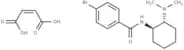
Couleur et forme :PowderMasse moléculaire :3,087.6 g/molBromadoline maleate
CAS :Bromadoline is an opioid analgesic selective for the μ-opioid receptor.Formule :C19H25BrN2O5Degré de pureté :98%Couleur et forme :SolidMasse moléculaire :441.322Ceronapril
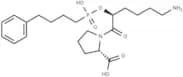
CAS :Ceronapril (SQ 29852) is an orally active and potent angiotensin-converting enzyme (ACE) inhibitor (IC50 : 36 nM) for the study of dementia and hypertension.Formule :C21H33N2O6PDegré de pureté :97.94%Couleur et forme :SolidMasse moléculaire :440.47SR14150
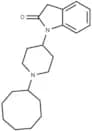
CAS :SR14150 is a partial agonist of high-affinity NOP receptor.Formule :C21H30N2ODegré de pureté :98%Couleur et forme :SolidMasse moléculaire :326.48MOR agonist-1
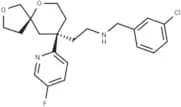
CAS :MOR Agonist-1 is a μ-opioid receptor (MOR) agonist noted for its potent analgesic properties and is utilized in research concerning pain and associated
Formule :C22H26ClFN2O2Degré de pureté :98%Couleur et forme :SolidMasse moléculaire :404.91Estrogen receptor modulator 8
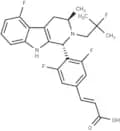
CAS :Estrogen Receptor Modulator 8 (compound 4) is an orally active inhibitor targeting Estrogen Receptor/ERR α with potent efficacy (IC50 = 0.437 nM in MCF-7 cells
Formule :C25H24F4N2O2Degré de pureté :98%Couleur et forme :SolidMasse moléculaire :460.46ALS-I-41
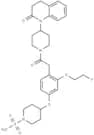
CAS :ALS-I-41 is a novel, potent and selective antagonist of oxytocin receptor.Formule :C30H38FN3O6SDegré de pureté :98%Couleur et forme :SolidMasse moléculaire :587.7
![GIP (1-42)-[C] human](/_next/image/?url=https%3A%2Fstatic.cymitquimica.com%2Fproducts%2F3D%2Fthumb-webp%2FCRB1000509.webp&w=3840&q=75)