Récepteur cannabinoïde
Les récepteurs cannabinoïdes sont des GPCR qui médiatisent les effets des cannabinoïdes endogènes (endocannabinoïdes) et des phytocannabinoïdes, tels que ceux trouvés dans le cannabis. Les deux principaux types de récepteurs cannabinoïdes, CB1 et CB2, sont impliqués dans la régulation d'une large gamme de processus physiologiques, y compris la perception de la douleur, l'appétit, l'humeur et la fonction immunitaire. Les modulateurs des récepteurs cannabinoïdes ont un potentiel thérapeutique dans le traitement de conditions telles que la douleur chronique, l'épilepsie et la sclérose en plaques. Chez CymitQuimica, nous offrons une large gamme de modulateurs de récepteurs cannabinoïdes de haute qualité pour soutenir vos recherches en neuropharmacologie, gestion de la douleur et immunologie.
217 produits trouvés pour "Récepteur cannabinoïde"
Trier par
Degré de pureté (%)
0
100
|
0
|
50
|
90
|
95
|
100
URB447
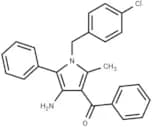
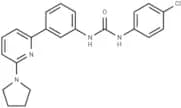
CAS :URB447, a peripherally restricted CB1 cannabinoid antagonist with IC50 values of 313 nM for rat CB1 receptor and 41 nM for human CB2 receptor, effectively reduces food intake and body weight gain in mice. It achieves these effects without penetrating the brain or antagonizing central CB1-dependent responses, making it a potential research tool for obesity studies [1].Formule :C25H21ClN2OCouleur et forme :SolidMasse moléculaire :400.9Tedalinab
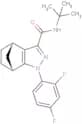
CAS :Tedalinab is an effective and selective cannabinoid receptor 2 agonist.Formule :C19H21F2N3ODegré de pureté :98%Couleur et forme :SolidMasse moléculaire :345.39GW405833 hydrochloride
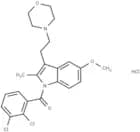
CAS :GW405833 hydrochloride, a potent and selective agonist of the cannabinoid-2 (CB2) receptor (EC 50 = 0.65 nM; maximum inhibition = 44.6%), exhibits significant antihyperalgesic effects in various rodent pain models [1] [2] [3].Formule :C23H25Cl3N2O3Couleur et forme :SolidMasse moléculaire :483.822-Linoleoyl Glycerol
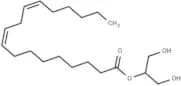
CAS :2-Arachidonoyl glycerol (2-AG), a natural endocannabinoid ligand for the CB1 receptor, was isolated from porcine brain and characterized. Its congener, 2-linoleoyl glycerol (2-LG), which has a linoleoyl group instead of an arachidonoyl group, also exists alongside 2-AG in vivo. While 2-LG exhibits low intrinsic activity, it enhances the activity of 2-AG and other endocannabinoids through an "entourage" effect, attributed to the inhibition of breakdown and reuptake pathways that typically decrease endocannabinoid levels post-release.Formule :C21H38O4Couleur et forme :SolidMasse moléculaire :354.531GSK494581A
CAS :GSK494581A is a GPR55 agonist and glycine transporter subtype 1 inhibitor.Formule :C27H28F2N2O4SDegré de pureté :98%Couleur et forme :SolidMasse moléculaire :514.58PF 514273
CAS :PF 514273 is a CB1 receptor antagonist.Formule :C21H17Cl2F2N3O2Degré de pureté :98%Couleur et forme :SolidMasse moléculaire :452.28PSNCBAM-1
CAS :PSNCBAM-1 (PSNCBAM 1) is a CB1 receptor negative allosteric modulator (EC50 = 0.1 μM) with hypophagic effects in vivo.Formule :C22H21ClN4ODegré de pureté :99.86%Couleur et forme :SolidMasse moléculaire :392.88Hemopressin(rat) TFA
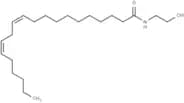
CAS :Hemopressin(rat) TFA, a nonapeptide from hemoglobin α1-chain, selectively inhibits CB1 receptors and reduces inflammatory pain.Formule :C55H78F3N13O14Couleur et forme :SolidMasse moléculaire :1202.2811(Z),14(Z)-Eicosadienoic Acid Ethanolamide
CAS :11(Z),14(Z)-Eicosadienoic acid ethanolamide is an ethanolamide derivative of 11(Z),14(Z)-eicosadienoic acid.Formule :C22H41NO2Couleur et forme :SolidMasse moléculaire :351.57SAD-448
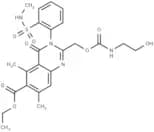
CAS :SAD-448 is a cannabinoid receptor type 1 (CB1) agonist. SAD-448 controls spasticity via action on the peripheral nerve CB1 receptor.Formule :C24H28N4O8SCouleur et forme :SolidMasse moléculaire :532.57O-2545 hydrochloride
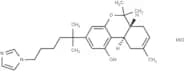
CAS :O-2545 is a potent water-soluble central cannabinoid (CB1) and peripheral cannabinoid (CB2) receptor agonist with Ki values of 1.5 and 0.32 nM, respectively. Typically, cannabinoid agonists are highly lipophilic and require solubilization through surfactant agents or binding to water miscible substances like albumin, Tween 80, or Emulphor for use. When dissolved in saline, O-2545 has shown high efficacy in mouse behavioral models, administered either intravenously or intracerebroventricularly.Formule :C26H36N2O2HClCouleur et forme :SolidMasse moléculaire :445Tricosanoyl Ethanolamide
CAS :Tricosanoyl ethanolamide, a fatty N-acyl ethanolamine within the endocannabinoid family, has an ethanolamine metabolite whose significance remains to be established.Formule :C25H51NO2Couleur et forme :SolidMasse moléculaire :397.688Isopropyl dodec-11-enylfluorophosphonate
CAS :Isopropyl dodec-11-enylfluorophosphonate (IDEFP) is an organophosphorus ester functioning as a central cannabinoid receptor (CB1) antagonist and exhibitsFormule :C15H30FO2PDegré de pureté :98%Couleur et forme :SolidMasse moléculaire :292.37MCHB-1
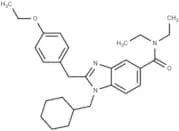
CAS :MCHB-1, a potent agonist of the human cannabinoid 2 (CB2) receptor (EC50= 0.52 nM), demonstrates high selectivity for CB2 over CB1 (Kis = 3.7 and 110 nM, respectively), distinguishing itself from similar benzimidazole compounds that significantly alleviate peripheral pain while minimizing central nervous system side effects in mice.Formule :C28H37N3O2Couleur et forme :SolidMasse moléculaire :447.623CB1 antagonist 1
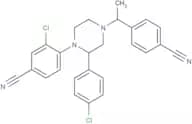
CAS :CB1 antagonist 1 is a CB1 receptor antagonist, used in the research of obesity and metabolic syndrome, neuroinflammatory disorders, cognitive disorders, andFormule :C26H22Cl2N4Degré de pureté :98%Couleur et forme :SolidMasse moléculaire :461.39Amauromine
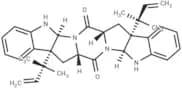
CAS :Amauromine is a peripherally selective and potent cannabinoid receptor type 1 (CB1) receptor antagonist, a novel alkaloid with vasodilatory activity.Formule :C32H36N4O2Couleur et forme :SolidMasse moléculaire :508.65γ-Linolenoyl monoethanolamide
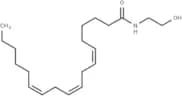
CAS :γ-Linolenoyl monoethanolamide, a fatty N-acyl ethanolamine, acts as an endocannabinoid [1] [2].Formule :C20H35NO2Couleur et forme :SolidMasse moléculaire :321.505CB 65
CAS :CB 65 is a high affinity and selective CB2 receptor agonist with Ki values of 3.3 and > 1000 nM for CB2 and CB1 receptors respectively.Formule :C22H28ClN3O3Degré de pureté :99.53%Couleur et forme :SolidMasse moléculaire :417.93(R)-Monlunabant
CAS :(R)-Monlunabant ((R)-MRI-1891) serves as a CB1 receptor antagonist utilized in obesity and metabolic disease research [1].Formule :C26H22ClF3N6O3SDegré de pureté :98%Couleur et forme :SolidMasse moléculaire :591CB1 inverse agonist 1
CAS :MRL-650 is an oral, selective CB1 agonist; IC50: CB1=7.5 nM, CB2=4100 nM; anorexigenic effects noted.Formule :C25H18Cl3N3O3Degré de pureté :99.92%Couleur et forme :SolidMasse moléculaire :514.79Ref: TM-T10694
1mg50,00€5mg105,00€10mg155,00€25mg224,00€50mg314,00€100mg427,00€200mg577,00€1mL*10mM (DMSO)129,00€