Oligosaccharides
Les oligosaccharides sont des glucides composés d'un petit nombre d'unités monosaccharidiques liées par des liaisons glycosidiques. Ces molécules jouent des rôles importants dans divers processus biologiques, notamment la reconnaissance cellulaire, la signalisation et les réponses immunitaires. Dans cette section, vous trouverez une large sélection d'oligosaccharides essentiels pour la recherche en glycosciences, biochimie et biologie moléculaire. Ces composés sont essentiels pour étudier les structures complexes des glucides, leurs fonctions et leurs interactions avec d'autres biomolécules. Chez CymitQuimica, nous proposons des oligosaccharides de haute qualité pour répondre à vos besoins en recherche et développement, garantissant des résultats précis et fiables dans vos expériences.
Sous-catégories appartenant à la catégorie "Oligosaccharides"
- Aminoéthyl Glycosides, Aminopropyl Glycosides(14 produits)
- Glycanes liant les Asn(33 produits)
- Oligosaccharides biotinées(13 produits)
- Groupes sanguins et antigènes de Lewis(11 produits)
- Oligosaccharides du groupe sanguin(13 produits)
- Cellooligosaccharides(1 produits)
- Cyclodextrines(183 produits)
- Disaccharides(192 produits)
- Oligosaccharides d'épitopes(19 produits)
- Fructooligosaccharides(2 produits)
- Oligosaccharides fonctionnels(554 produits)
- Oligosaccharides fonctionnalisés(1 produits)
- Galactosamine(41 produits)
- Galactoses(261 produits)
- Galb (1-3) GalNAc(21 produits)
- Série Ganglio(11 produits)
- Séries Globo et Isoglobo(17 produits)
- Glucosamine(128 produits)
- Acides glucuroniques(51 produits)
- Glycoprotéines, Glycopeptides(59 produits)
- Glycosaminoglycane(26 produits)
- Oligosaccharides du lait maternel(19 produits)
- O-Glycanes marqués(9 produits)
- Oligosaccharides marqués(36 produits)
- LacNAc(53 produits)
- Séries Lacto et Néolacto(14 produits)
- Lacto-N-biose(10 produits)
- Lactooligosaccharides(7 produits)
- Liaison attachée aux oligosaccharides(19 produits)
- Maltooligosaccharides(6 produits)
- Oligosaccharides du lait(31 produits)
- N-Glycanes(149 produits)
- Glycosides naturels(177 produits)
- Oligosaccharides naturels(103 produits)
- O-Glycane(18 produits)
- Building Blocks d’Oligosaccharides(7 produits)
- Remplacement des oligosaccharides(2 produits)
- Oligosaccharides par composant Sucre(225 produits)
- Oligoses(24 produits)
- Autres Oligosaccharides(14 produits)
- Oligomères de PEG(33 produits)
- Sucres phosphatés(17 produits)
- Sucres protégés(526 produits)
- Réactifs pour la synthèse d'oligosaccharides(254 produits)
- Glycanes de liaison Ser, Thr(9 produits)
- Oligosaccharides sialylés(3 produits)
- Sphingoglycolipides(42 produits)
- Acides aminés de sucre, Peptides de sucre(20 produits)
- Antigènes de sucre(31 produits)
- Building Blocks Sucrés par Oligosaccharides Cibles(225 produits)
- Conjugués de sucre(100 produits)
- Sucres sulfatés(16 produits)
- Tétrasaccharides(34 produits)
- Trisaccharides et autres(95 produits)
- Xylooligosaccharides(5 produits)
Affichez 47 plus de sous-catégories
2278 produits trouvés pour "Oligosaccharides"
Trier par
Degré de pureté (%)
0
100
|
0
|
50
|
90
|
95
|
100
3'-Sialyllacto-N-neotetraose sodium
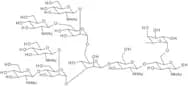
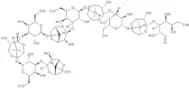
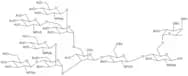
CAS :<p>3'-Sialyllacto-N-neotetraose sodium is a synthetic, fluorinated oligosaccharide with a sialic acid side chain. This compound has been shown to be an inhibitor of lacto-N-neotetraose synthesis in the human gut. It is also used as a raw material for the synthesis of various complex carbohydrates and as a click modification reagent for saccharides and polysaccharides. 3'-Sialyllacto-N-neotetraose sodium can be modified at its methyl group or sugar moiety to produce desired products.</p>Formule :C37H61N2O29NaDegré de pureté :Min. 90%Masse moléculaire :1,020.86 g/molBenzyl 2-acetamido-4-O-{2-acetamido-4-O-[[2,4-Di-O-acetyl-3-O-[2,4-di-O-(2-acetamido-3,4,6-tri-O-acetyl-2-deoxy-b-D-glucopyranosyl)- 3,6-di-O-benzyl-a-D-mannopyranosyl]-6-O-[3,4-di-O-acetyl-2,6-di-O-(2-acetamido-3,4,6-tri-O-acetyl-2-deoxy-b-D-glucopyr
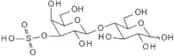
CAS :<p>The carbohydrate is a saccharide that is a modification of the monosaccharide. It is synthesized from D-mannose and D-glucose and has a fluorination at the C4 position. The carbohydrate has been custom synthesized for high purity, methylation, glycosylation, and click modification.</p>Formule :C167H206N6O65SDegré de pureté :Min. 95%Masse moléculaire :3,369.49 g/molLactose 3'-sulfate
CAS :<p>Unusual lactose sulphate isolated from canine milk (beagle-Canis familiaris), which does not appear to have previously been isolated from milk or other natural sources. The structure was established by 2D NMR spectroscopy and mass spectrometry.</p>Formule :C12H22O14SDegré de pureté :Min. 95%Couleur et forme :Beige PowderMasse moléculaire :422.36 g/molDi-N-acetyl-D-lactosamine
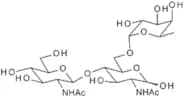
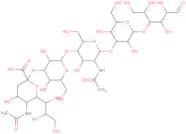
<p>Di-N-acetyl-D-lactosamine (DNL) is a sugar that is found in the mammalian tissues and can be used as a lectin to specifically bind to glycoproteins. It has been shown to have specificities for enteritis, and can be used to detect or analyze the sequences of oligosaccharides. DNL has been immobilized on silica gel, which was then reacted with lectins, such as concanavalin A, wheat germ agglutinin, and soybean agglutinin. This process allows for the detection of high-mannose-type oligosaccharides.</p>Formule :C28H48N2O21Degré de pureté :Min. 95%Couleur et forme :PowderMasse moléculaire :748.68 g/molRobinose
CAS :Robinose is a flavonoid derivative that is used as a conditioning agent in animal health products. It has been shown to increase the efficacy of an antigen by enhancing the immune response. Robinose also has enzyme activities and has been shown to work synergistically with other flavonoids such as quercetin. In addition, it can be used as an analytical method for glycan structures. Robinose is typically produced from the hydrolysis of flavonol glycosides found in plants such as raspberries, blackberries, and blueberries. It can also be extracted from sugar beet molasses or sugar cane molasses.Formule :C12H22O10Degré de pureté :Min. 95%Masse moléculaire :326.3 g/molMaltopentadecaose
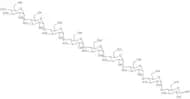
CAS :<p>Produced from starch by transglycosylation-15 a-(1,4) linked glucose residues</p>Formule :C90H152O76Degré de pureté :Min. 85 Area-%Couleur et forme :White PowderMasse moléculaire :2,450.12 g/molNeoagarotetraose
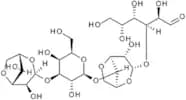
CAS :<p>Agarose is a polysaccharide found in red algae, typically Gelidium and Gracilaria. It is a strictly alternating polysaccharide of α-1,3 linked D-galactose and β-1,4 linked L-3,6 anhydrogalactose with occasional sulfation at position 6 of the anhydrogalactose residue. Agaro-oligosaccharides result from cleavage at galactose residues and neoagaro-oligosaccharides from cleavage at 3,6-anhydro residues. Neoagarotetraose is reported to have potential for novel cosmeceuticals.</p>Formule :C24H38O19Degré de pureté :Min. 98 Area-%Couleur et forme :White PowderMasse moléculaire :630.55 g/mol5-O-(a-D-[6,6'-2H2]Glucopyranosyl)-D-fructopyranose
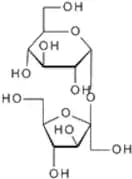
Produit contrôlé<p>5-O-(a-D-[6,6'-2H2]Glucopyranosyl)-D-fructopyranose is a custom synthesis carbohydrate that is an oligosaccharide. It is a saccharide with a general formula of C6H10O5. One of its modifications is methylation. This product has been fluorinated and modified with the click reaction to create a glycosylated sugar. 5-O-(a-D-[6,6'-2H2]Glucopyranosyl)-D-fructopyranose is not radioactive and has high purity. It is also a polysaccharide that contains glucose monomers that are linked by glycosidic bonds to form branched chains of 10 or more units. The product has an appearance of white powder, and it can be used as an additive for pharmaceuticals, food products, and cosmetics.</p>Formule :C12H20O11D2Degré de pureté :Min. 95%Masse moléculaire :344.31 g/mol1,4-b-D-Mannotetraose
CAS :<p>Isolated from ivory-nut mannan, Picea glauca and Pinus strobus glucomannans</p>Formule :C24H42O21Degré de pureté :Min. 95 Area-%Couleur et forme :White PowderMasse moléculaire :666.58 g/molMaltononaose
CAS :<p>α 1,4-glucononasaccharide derived from starch by hydrolysis and chromatography</p>Formule :C54H92O46Couleur et forme :White PowderMasse moléculaire :1,477.28 g/molSialylfucosyllacto-N-tetraose
CAS :<p>Sialylfucosyllacto-N-tetraose is a human milk oligosaccharide (HMO) and is present in lower concentrations than 2â²-fucosyllactose. Sialylfucosyllacto-N-tetraose contains both nitrogen and sialic acid in its chemical structure. It has been demostrated that sialylfucosyllacto-N-tetraose in the HMO pool acts as a prebiotic, protects against infections and inflammation, modulates the immune system, supports brain development, and reduces the risk of necrotizing enterocolitis (WiciÅski, 2020).</p>Formule :C43H72N2O33Degré de pureté :Min. 95 Area-%Couleur et forme :PowderMasse moléculaire :1,145.03 g/molBenzyl 4-O-(2,6-di-O-benzyl-b-D-galactopyranosyl)-2,3,6-tri-O-benzyl-D-glucopyranoside
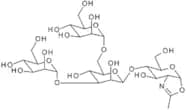
<p>Benzyl 4-O-(2,6-di-O-benzyl-b-D-galactopyranosyl)-2,3,6-tri-O-benzyl-D-glucopyranoside is a carbohydrate that belongs to the oligosaccharide class of saccharides. It is a synthetic compound with a CAS number (CAS No.: 128364-79-5) and a high purity. The carbohydrate has been synthesized by methylation, glycosylation, and click modification. Its chemical name is benzyl 4-[(2,6-di-[3'-O-(4,4'-dimethoxytrityl)butyldimethylsilyl]benzoyl)-a -D--galactopyranosyl]-2,3,6-[3'-O-(4',4''dimethoxytrityl)butyl]tri[3',5']</p>Formule :C34H88O11Degré de pureté :Min. 98 Area-%Couleur et forme :PowderMasse moléculaire :673.06 g/mol2-Methyl-(4-O-(3,6-di-O-a-D-mannopyranosyl)-b-D-mannopyrannosyl)-1,2-dideoxy-a-D-glucopyrano)-[2,1-d]-2-oxazoline
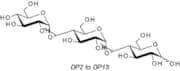
<p>This is a custom synthesis, modification, and fluorination of a polysaccharide. The monosaccharide units are methylated and then modified with a click reaction. The saccharides are glycosylated with 2-O-a-D-mannopyranosyl moieties for the purpose of increasing their water solubility. This saccharide has been synthesized by the modification of an oligosaccharide that has been modified to include a hydroxyl group. The carbohydrate is complex and contains many different types of sugars including glucose, mannose, and galactose.</p>Formule :C26H43NO20Degré de pureté :Min. 95%Couleur et forme :PowderMasse moléculaire :689.61 g/molMaltodextrin oligosaccharides - DP2 to DP15
<p>Produced from starch; white hygroscopic spray-dried powder; easily digestible</p>Degré de pureté :Min. 95%Couleur et forme :White PowderNeoagarodecaose
CAS :<p>Agarose is a polysaccharide found in red algae, typically Gelidium and Gracilaria. It is a strictly alternating polysaccharide of α-1,3 linked D-galactose and β-1,4 linked L-3,6 anhydrogalactose with occasional sulfation at position 6 of the anhydrogalactose residue. Agaro-oligosaccharides result from cleavage at galactose residues and neoagaro-oligosaccharides from cleavage at 3,6-anhydro residues. Neoagarodecaose is reported to have potential for novel cosmeceuticals.</p>Formule :C60H92O46Degré de pureté :Min. 95%Couleur et forme :PowderMasse moléculaire :1,549.34 g/molAllyl a-D-lactose
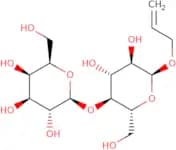
CAS :<p>A functionalized carbohydrate that serves as a valuable precursor for the synthesis of complex glycoconjugates, oligosaccharides, and glycopolymers through reactions like glycosylation and click chemistry</p>Formule :C15H26O11Masse moléculaire :382.36 g/molBlood Group A pentasaccharide
CAS :<p>Core antigen fragment in ABO blood group system</p>Formule :C32H55NO24Degré de pureté :Min. 95%Couleur et forme :White PowderMasse moléculaire :837.77 g/mol4-O-(2-Acetamido-2-deoxy-D-[UL-13C6]glucopyranosyl)-D-ribitol
<p>4-O-(2-Acetamido-2-deoxy-[UL-13C6]glucopyranosyl)-D-ribitol is a custom synthesis of an oligosaccharide, monosaccharide, and polysaccharide. It is a high purity and CAS No. custom synthesis with a high degree of modification. This product has been synthesized by methylation and glycosylation for use in the study of the structure and function of complex carbohydrates. The fluorination was done to the saccharide to give it the desired properties for use in various applications.</p>Formule :C713C6H25NO10Degré de pureté :Min. 95%Masse moléculaire :361.29 g/mol1,3:1,4 b-Glucotetraose (C)
CAS :<p>Glucotetraose (C) is a custom-synthesized carbohydrate that is modified with fluorine, methylation, and click modification. It is a monosaccharide with an Oligosaccharide chain of saccharides. This product has a purity of 99.5%.</p>Formule :C24H42O21Degré de pureté :Min. 95 Area-%Couleur et forme :White PowderMasse moléculaire :666.58 g/molGlycyl-sialyllacto-N-tetraose b
<p>Glycyl-sialyllacto-N-tetraose b is a custom synthesis of an oligosaccharide consisting of four monosaccharides. The monosaccharides are glycyl, sialyllactose and two tetrasaccharides with the configuration of (1,4)-alpha-D-mannopyranosyl-(1,2)-alpha-D-mannopyranosyl-(1,6)-beta-D-glucopyranosyl-(1,4)-alpha-D-mannopyranosyl. Glycyl-sialyllacto-N-tetraose b is a high purity product that can be modified to contain fluorine atoms. This product has been shown to have methylation activity in Methylation reactions.</p>Formule :C39H66N4O29Degré de pureté :Min. 95%Masse moléculaire :1,054.95 g/molBlood Group H disaccharide
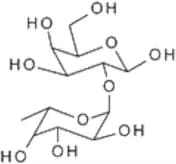
CAS :<p>Core antigen fragment in ABO blood group system</p>Formule :C12H22O10Degré de pureté :Min. 95%Couleur et forme :White PowderMasse moléculaire :326.3 g/molSucralose
CAS :<p>Sucralose, an artificial sweetener, was discovered in a research programme supported by Tate & Lyle to halogenate sucrose. The majority of ingested sucralose is not broken down by the body, so it is noncaloric. In the European Union, it has been given the E number E955. Sucralose is about 320 to 1,000 times sweeter than sucrose, three times as sweet as both aspartame and acesulfame potassium, and twice as sweet as sodium saccharin. It is stable under heat and over a broad range of pH conditions. Therefore, it can be used in baking or in products that require a long shelf life. The commercial success of sucralose-based products stems from its favorable comparison to other low-calorie sweeteners in terms of taste profile, stability, and safety.</p>Formule :C12H19Cl3O8Degré de pureté :Min. 98 Area-%Couleur et forme :White PowderMasse moléculaire :397.63 g/molTrehalulose
CAS :Trehalulose is a sugar that is found in plants, animals, and fungi. It is a reaction product of glucose with the enzyme trehalase, which cleaves off two molecules of water to form one molecule of glucose and one molecule of trehalulose. Trehalulose has been shown to be an inhibitor of phosphofructokinase, an enzyme involved in glycolysis. This inhibition can be reversed by the addition of ATP or pyruvate kinase. Trehalulose also has been shown to inhibit the growth of cells by interfering with protein synthesis. Trehalulose may have biological functions including dietary uses as a replacement for sucrose or lactose due to its low calorie content and high level of sweetness.br>br> Trehalulose is structurally similar to sucrose because it has both a glucose part and a fructose part and it will react with hydrogen fluoride (HF) in dry weight reactions, forming trehalo-sFormule :C12H22O11Degré de pureté :Min. 90 Area-%Couleur et forme :Clear Viscous LiquidMasse moléculaire :342.3 g/molGalactooligosaccharides
Galactooligosaccharides (GOS) have a sweetness of 30–60 % relative to sucrose. They have applications in a wide range of food products such as sweeteners, bulking agents, and sugar substitutes and are found in a range of product types including bread, ‘sports’ drinks, jams, fermented milk, confectionary and desserts. In Europe they are incorporated into infant formula foods.Couleur et forme :PowderForssman antigen pentaose
CAS :<p>Tumor associated antigen and target for the development of anti-cancer vaccines</p>Formule :C34H58N2O26Degré de pureté :Min. 90 Area-%Couleur et forme :White PowderMasse moléculaire :910.82 g/molBlood Group B pentasaccharide
CAS :<p>Core antigen fragment in ABO blood group system</p>Formule :C30H52O24Degré de pureté :Min. 95%Couleur et forme :PowderMasse moléculaire :796.72 g/molMonosialyl, monofucosyl-(1-2)-lacto-N-hexaose
<p>Monosialyl, monofucosyl-(1-2)-lacto-N-hexaose is a synthetic, fluorinated monosaccharide that is used to modify complex carbohydrates. It can be used for the synthesis of oligosaccharides and polysaccharides with a variety of sugar modifications. Monosialyl, monofucosyl-(1-2)-lacto-N-hexaose has the CAS Registry Number 111832-43-9.</p>Degré de pureté :Min. 95%1-O-Aminohexyl 6'-sialyllactose hydrochloride
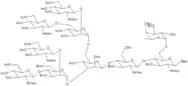
<p>Key synthetic precursor for the synthesis of lacto-oligosaccharides</p>Formule :C29H52N2O19•HClDegré de pureté :Min. 95 Area-%Couleur et forme :White PowderMasse moléculaire :769.23 g/mol4-O-{4-O-[[2,4-Di-O-acetyl-3-O-[2,4-di-O-(3,4,6-tri-O-acetyl-2-deoxy-2-phthalimido-β-D-glucopyranosyl)-3,6-di-O-benzyl-α-D-mannopyra nosyl]-6-O-[3,4-di-O-acetyl-2,6-di-O-(3,4,6-tri-O-acetyl-2-deoxy-2-phthalimido-β-D-glucopyranosyl)-α-D-mannopyranosyl]
CAS :<p>4-O-{4-O-[[2,4-Di-O-acetyl-3-O-[2,4-di-O-(3,4,6-tri-O-acetyl-2-deoxy-2--phthalimido--bD--glucopyranosyl)-3,6--di--O--benzyl aDmannopyra nosyl]-6--O-[3,4--di--O--acetyl 2,6--di--O-(3,4,6--tri - O - acetyl 2 - deoxy 2 - phthalimido bDglucopyranosyl) aDmannopyranosyl] } is a synthetic complex carbohydrate. It is an oligosaccharide that can be used in glycosylation reactions. This carbohydrate has been custom synthesized and modified to include methyl groups. The CAS number for this compound is 9461642899.</p>Formule :C196H200N6O72Degré de pureté :Min. 95%Masse moléculaire :3,791.68 g/mol4-O-(β-D-Glucopyranosyl)-β-D-thioglucopyranose
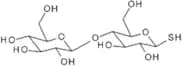
<p>4-O-(b-D-Glucopyranosyl)-b-D-thioglucopyranose is a methylated, saccharide. It is a polysaccharide that can be modified with Click chemistry to introduce a variety of modifications in order to make it more suitable for different applications. This compound may be glycosylated or fluorinated for use in pharmaceuticals, as well as have its carbohydrate content modified. 4-O-(b-D-Glucopyranosyl)-b-D-thioglucopyranose is used as a synthetic sugar and is CAS No. 97787-84-5.</p>Formule :C12H22O10SDegré de pureté :Min. 95%Masse moléculaire :358.36 g/mol3'-Sialylgalactose sodium salt
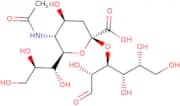
CAS :<p>Sialylated oligosaccharide with the ability to inhibit angiogenesis and tumour development by binding to the vascular endothelial growth factor receptor VEGFR-2. Moreover, sialylated N-glycans in intestinal epithelium of chickens were found to carry terminal sialylgalactose, which interacts with influenza viruses during early stages of infection.</p>Formule :C17H28NO14·NaDegré de pureté :Min. 95%Couleur et forme :White PowderMasse moléculaire :493.39 g/molHeparin derived dp8 saccharide ammonium salt
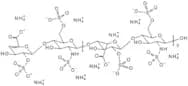
<p>Heparin is a glycosaminoglycan which is a complex carbohydrate that contains repeating disaccharide units of glucosamine and N-acetylglucosamine. Heparin has been shown to inhibit the activity of bacterial enzymes involved in fibrinolysis, such as plasminogen activator inhibitor 1 (PAI-1), and may act as an anticoagulant. Heparin is often used as an anticoagulant in patients with thrombotic disorders, including deep vein thrombosis, pulmonary embolism, or heart attack. Heparin also acts as a cofactor for the activation of clotting factors II (thrombin), VII, IX, X, XI and XII. In addition, it inhibits the activation of factor XIII by preventing its conversion from its inactive form into active factor XIIIa. The molecular weight of heparin is approximately 10 kilodaltons (kDa) and it has a molecular formula</p>Degré de pureté :Min. 95%Couleur et forme :PowderMasse moléculaire :~2400 (Average)Methyl 3-O-(a-D-mannopyranosyl)-a-D-mannopyranoside
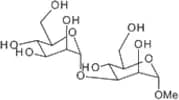
CAS :Used for structural and conformational studies and as enzyme substratesFormule :C13H24O11Degré de pureté :Min. 95%Couleur et forme :PowderMasse moléculaire :356.32 g/mol6'-α-Sialyl-N-acetyllactosamine-sp-biotin
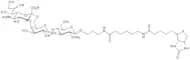
CAS :<p>6'-a-Sialyl-N-acetyllactosamine-sp-biotin is a recombinant modified oligosaccharide. It is an Oligosaccharide that is synthesized by the methylation of 6'-sialyllactose with acetic anhydride and triethylamine in DMF. It has a molecular weight of 805.00 Da and a CAS number of 1038746-08-5. 6'-a-Sialyl-N-acetyllactosamine-sp-biotin may be used as a monomer for click chemistry, as well as for other applications in carbohydrate chemistry, such as the synthesis of polysaccharides and complex carbohydrates. This product has high purity and can be custom synthesized to order.</p>Formule :C44H74N6O22SDegré de pureté :Min. 95%Couleur et forme :White PowderMasse moléculaire :1,071.15 g/molGlycyl-Oligosaccharidesmannose 5
Glycyl-Oligosaccharidesmannose 5 is a high purity, custom synthesis sugar that is fluorinated and glycosylated. It is an oligosaccharide with a mannose backbone and a glycyl group attached to the first mannose. The methylation of the glycyl group on Glycyl-Oligosaccharidesmannose 5 can be modified to produce different derivatives. This carbohydrate has been synthesized and has CAS Number: 68149-46-1.Formule :C48H82N4O36Degré de pureté :Min. 95%Masse moléculaire :1,291.17 g/molStachyose - 70%
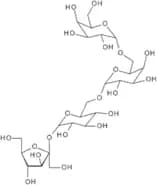
CAS :<p>Non-reducing storage and transport sugar in woody plants; used as a sweetener</p>Formule :C24H42O21Degré de pureté :Min. 70 Area-%Couleur et forme :White PowderMasse moléculaire :666.59 g/mol3'-Sialyllactose-BSA
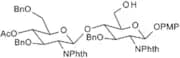
<p>3'-Sialyllactose-BSA binds to human serum albumin. It is used in the detection of tumour cells in blood samples, and has been shown to be sensitive for the detection of malignant cells in sera from patients with metastatic breast cancer. 3'-Sialyllactose-BSA can also be used as a probe for the identification of glycosphingolipids in animal tissues. The antibody's specificity for glycosphingolipids was demonstrated by its ability to bind selectively to glycosphingolipid-containing liposomes, but not lipid vesicles without glycosphingolipids.</p>Couleur et forme :PowderMasse moléculaire :75,595.6 g/mol4-Methoxyphenyl 4-O-(4-O-acetyl-3,6-di-O-benzyl-2-deoxy-2-phthalimido-b-D-glucopyranosyl)-3-O-benzyl-2-deoxy-2-phthalimido-b-D-gluco pyranoside
<p>4-Methoxyphenyl 4-O-(4-O-acetyl-3,6-di-O-benzyl-2-deoxy-2-phthalimido-b-D-glucopyranosyl)-3,6,2′,4′″triphosphate (4MPP) is a methylated saccharide. It can be modified with click chemistry and has been shown to inhibit the synthesis of glycogen in the liver. 4MPP is a high purity product that has been synthesized from naturally occurring carbohydrates. It is also fluorinated for use in research.</p>Formule :C58H54N2O15Degré de pureté :Min. 95%Masse moléculaire :1,019.05 g/mol4'-(D-[UL-13C6]Galactosyl)lactose
CAS :<p>Galactosyllactose attenuated NF-κB inflammatory signaling in human intestinal epithelial cells and in human immature intestine. Thus, galactosyllactoses are strong anti-inflammatory agents in human colostrum and early milk, contributing to innate immune modulation. The potential clinical utility of galactosyllactose warrants investigation.</p>Formule :C6C12H32O16Degré de pureté :Min. 95%Couleur et forme :PowderMasse moléculaire :510.39 g/mol6-a-D-Maltotriosyl-maltotriose
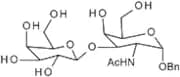
CAS :<p>Derived from pullulan using pullulanase</p>Formule :C36H62O31Degré de pureté :Min. 95%Couleur et forme :PowderMasse moléculaire :990.86 g/molBenzyl 2-acetamido-2-deoxy-3-O-(b-D-galactopyranosyl)-a-D-galactopyranoside
CAS :<p>Benzyl 2-acetamido-2-deoxy-3-O-(b-D-galactopyranosyl)-a-D-galactopyranoside is a lectin that has been found to have agglutinin activity. Lectins are carbohydrate binding proteins that bind to glycoproteins and glycolipids. This protein has also been shown to be an antigen, which can stimulate the production of antibodies in the body.</p>Formule :C21H31NO11Degré de pureté :Min. 95%Couleur et forme :White PowderMasse moléculaire :473.47 g/molGlobotriaosylceramide
CAS :<p>It is one of the few clusters of differentiation that is not a protein and structurally contains a galactose moiety linked α to lactosylceramide. Defects in the enzyme α-galactosidase lead to the buildup of globotriaosylceramide, causing Fabry's disease. The pharmaceutical drug migalastat enhances the function of α-galactosidase and is used to treat Fabry's. Globotriaosylceramide is also one of the targets of Shiga toxin, which is responsible for pathogenicity of enterohemorrhagic E. coli.</p>Formule :C60H113NO18Degré de pureté :Min. 95%Couleur et forme :PowderMasse moléculaire :1135.79577Xyloglucan nonasaccharide
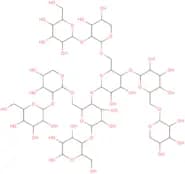
CAS :Xyloglucan is a non-cellulosic polysaccharide polymer that is important in plant cell walls. Xyloglucan nonasaccharide (XN) is a linear molecule with an average molecular weight of 10,000 Da and consists of xylose monomers. The XN molecule has a basic structure, which may be due to the presence of amino acid residues, although the exact function of these amino acids is not known. XN has been shown to inhibit colony-stimulating factor (CSF) production and induce CSF release in mouse bone marrow cells. This inhibition may be due to the binding of XN to the monoclonal antibody CD45R on the surface of mouse bone marrow cells.Formule :C51H86O43Degré de pureté :Min. 95%Couleur et forme :PowderMasse moléculaire :1,387.2 g/molN2F N-Glycan
CAS :<p>N2F N-Glycan is a custom synthesis, modification and fluorination product that contains a methylated monosaccharide and a saccharide. The saccharide is glycosylated with a complex carbohydrate, which is composed of many sugar molecules. This product can be used for the modification of proteins, peptides and nucleic acids. It can also be used to synthesize oligosaccharides or polysaccharides.</p>Formule :C22H38N2O15Degré de pureté :Min. 95 Area-%Couleur et forme :White PowderMasse moléculaire :570.54 g/mol4-Methoxyphenyl 4-O-[3-O-(2,3,4,6-O-acetyl-α-D-mannopyranosyl)-4,6-O-benzylidene-2-O-levulinoyl-β-D-glucopyranosyl]-3,6-di-O-benzyl- 2-deoxy-2-phthalimido-β-D-glucopyranoside
<p>This product is a synthetic, high purity, and custom-synthesized molecule that belongs to the group of saccharide polymers. It is synthesized by methylation of 4-methoxyphenyl 4-O-[3-O-(2,3,4,6-O-acetyl-a-D-mannopyranosyl)-4,6-O-benzylidene-2-O-levulinoyl]-b-Dglucopyranoside and Click modification. This product has potent glycosylation activity with polysaccharides such as heparin and chondroitin sulfate. The synthesis of this product is completed through the use of a highly efficient and selective carbohydrate polymerization method.</p>Formule :C67H71NO24Degré de pureté :Min. 95%Masse moléculaire :1,274.27 g/molMethyl 4-O-(a-D-galactopyranosyl)-a-D-galactopyranoside
CAS :Methyl 4-O-(a-D-galactopyranosyl)-a-D-galactopyranoside (M4G) is a disaccharide that is a residue of the plant indigo dye. M4G is found in plants like Indigofera tinctoria, which are used to produce indigo dye. It is also a glycoside of methyl 4-O-(β-D-galactopyranosyl)-β-D-galactopyranoside (M4GP).Formule :C13H24O11Degré de pureté :Min. 98%Couleur et forme :White PowderMasse moléculaire :356.32 g/mol4-Methoxyphenyl 4-O-[2-O-acetyl-3-O-(2,3,4,6-tetra-O-acetyl-α-D-mannopyranosyl)-4-O-benzyl-b-D-mannopyranosyl]-3,6-di-O-benzyl-2-deo xy-2-phthalimido-β-D-glucopyranoside
<p>This product is a complex carbohydrate that has been modified with fluorination, saccharide modification, and Oligosaccharide synthesis. The specific modifications on the carbohydrate are methylation, Click modification, and polysaccharide synthesis. This product has a CAS No. of _______ and is custom synthesized for _______. It is available in high purity and has an _____ monosaccharide composition.</p>Formule :C64H69NO23Degré de pureté :Min. 95%Masse moléculaire :1,220.23 g/molPenta-mannuronic acid sodium
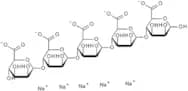
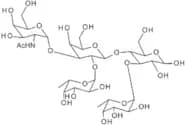
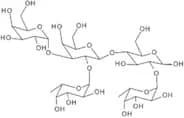
<p>b1-4 penta mannuronosaccharide-from alginate by enzyme or acid hydrolysis</p>Formule :C30H37O31Na5Degré de pureté :Min. 95%Couleur et forme :White PowderMasse moléculaire :1,008.55 g/mol2-Acetamido-4-O-{2-acetamido-4-O-[[3-O-[2,4-di-O-(2-acetamido-2-deoxy-b-D-glucopyranosyl)-a-D-mannopyranosyl]-6-O-[2,6-di-O-(2-aceta mido-2-deoxy-b-D-glucopyranosyl)-b-D-mannopyranosyl]-b-D-mannopyranosyl]]-2-deoxy-b-D-glucopyranosyl}-6-O-(a-L-fucopyr
<p>2-Acetamido-4-O-{2-acetamido-4-O-[3-O-[2,4-di-O-(2-acetamido-2,6-dideoxyb -D-glucopyranosyl)-a,D -mannopyranosyl]-6-O-[2,6 -di(2 -acetamido)-b -D -glucopyranosyl]-b D mannopyranosyl]] b D mannopyranosyl} 2,6 dideoxy b D glucopyranosyl} 6 O-(a L fucopyranosyl)}</p>Formule :C72H120N6O49SDegré de pureté :Min. 95%Masse moléculaire :1,885.8 g/mol2-O-(α-D-Galactopyranosyl)-D-galactopyranose
CAS :<p>Used as enzyme substrates, analytical standards and for in vitro diagnostics</p>Formule :C12H22O11Degré de pureté :Min. 97 Area-%Couleur et forme :White PowderMasse moléculaire :342.3 g/mol



![5-O-(a-D-[6,6'-2H2]Glucopyranosyl)-D-fructopyranose](/_next/image/?url=https%3A%2Fstatic.cymitquimica.com%2Fproducts%2F3D%2Fthumb-webp%2FOG11201.webp&w=3840&q=75)

![4-O-(2-Acetamido-2-deoxy-D-[UL-13C6]glucopyranosyl)-D-ribitol](/_next/image/?url=https%3A%2Fstatic.cymitquimica.com%2Fproducts%2F3D%2Fthumb-webp%2FOA44753.webp&w=3840&q=75)






![4'-(D-[UL-13C6]Galactosyl)lactose](/_next/image/?url=https%3A%2Fstatic.cymitquimica.com%2Fproducts%2F3D%2Fthumb-webp%2FOG159775.webp&w=3840&q=75)