Colorants, teintes, teintures, imagerie fluorescente
Les colorants, teintures et solutions colorantes sont des outils essentiels en biologie moléculaire, cruciaux pour visualiser et étudier l'ADN, les chromosomes et les noyaux cellulaires. Ces composés permettent aux chercheurs de mettre en évidence des composants cellulaires spécifiques, facilitant ainsi l'observation et l'analyse détaillées au microscope. Dans cette catégorie, vous trouverez une large gamme de colorants et de teintures de haute qualité utilisés dans diverses techniques de coloration, y compris des colorants fluorescents pour l'analyse de l'ADN et des chromosomes, des colorants histologiques pour les échantillons de tissus et des colorants spécifiques pour les structures cellulaires. Ces outils sont indispensables en recherche génétique, cytologie, histologie et diagnostics, offrant clarté et contraste dans les échantillons biologiques. Chez CymitQuimica, nous proposons une sélection complète de colorants, teintures et solutions colorantes pour soutenir vos recherches en biologie moléculaire et garantir des résultats précis et fiables dans vos études.
Sous-catégories appartenant à la catégorie "Colorants, teintes, teintures, imagerie fluorescente"
- Colorants acides(49 produits)
- Azobenzènes(270 produits)
- Colorants azoïques(7 produits)
- Colorants de base(27 produits)
- Colorants de coumarine(71 produits)
- Colorants cyanine, colorants squarylium(53 produits)
- Colorants DCM(4 produits)
- Diarylethenes(12 produits)
- Colorants dipyrrométhéniques(26 produits)
- Colorants directs(17 produits)
- Colorants dispersés(2 produits)
- Sensibilisateurs de colorants(12 produits)
- Colorants(416 produits)
- Teintures et colorants(911 produits)
- Génération de colorants insolubles(14 produits)
- Génération de colorants solubles(11 produits)
- Hexaarylbiimidazole(4 produits)
- Indicateurs(575 produits)
- Colorants mordants(10 produits)
- Colorants dans le proche infrarouge (NIR)(28 produits)
- Colorants à l'huile(15 produits)
- Autres teintures et colorants(2 produits)
- Colorants au pérylène(17 produits)
- Colorants photochromiques(40 produits)
- Colorants phtalocyaniques, colorants porphyriniques(101 produits)
- Colorants à base de quinacridone(8 produits)
- Spiropyranes(16 produits)
- Réactifs colorés et colorants(243 produits)
- Réactifs colorés et colorants pour la microscopie(5 produits)
- Colorants de cuve(5 produits)
- Colorants xanthènes(65 produits)
Affichez 23 plus de sous-catégories
755 produits trouvés pour "Colorants, teintes, teintures, imagerie fluorescente"
Trier par
Degré de pureté (%)
0
100
|
0
|
50
|
90
|
95
|
100
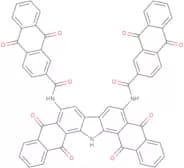
C.I.Vat green 13
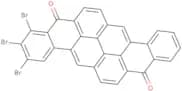
CAS :<p>C.I.Vat green 13 is a versatile research chemical that finds application in various fields. It is commonly used in the synthesis of copolymers and as a dye for staining purposes. C.I.Vat green 13 has shown promising results in crystallization studies and can be used as an indicator or probe in different experiments. Additionally, it has been found to have inhibitory effects on certain growth factors and enzymes such as epoxomicin. With its unique properties, C.I.Vat green 13 is a valuable tool for researchers and scientists working in diverse areas ranging from polymer chemistry to biological studies.</p>Degré de pureté :Min. 95%C.I.Vat Orange 4
CAS :<p>C.I. Vat Orange 4 is a synthetic organic compound that is used as a pigment and a coating. It is soluble in organic solvents and can be used as an additive to polyethylene glycols, monomers, and coatings. C.I. Vat Orange 4 has been shown to react with radiation and metal hydroxides to form the polymerization inhibitor propionate. This polymerization inhibitor prevents polymerization reactions from occurring at high temperatures or when exposed to thermal energy.</p>Degré de pureté :Min. 95%5-Cyano-2,3-di-(p-tolyl)tetrazolium chloride
CAS :<p>5-Cyano-2,3-di-(p-tolyl)tetrazolium chloride is a tetrazolium dye used as an indicator of eukaryotic cells in a range or media including waste water resulting in a cyan color. It is commonly used in microbiology laboratories to measure the viability of cells. The redox potentials of 5-Cyano-2,3-di-(p-tolyl)tetrazolium chloride are reduced by the presence of active respiratory cells, resulting in fluorescent formazan.</p>Formule :C16H14ClN5Couleur et forme :PowderMasse moléculaire :311.77 g/molC.I.Reactive Yellow 162
CAS :<p>Please enquire for more information about C.I.Reactive Yellow 162 including the price, delivery time and more detailed product information at the technical inquiry form on this page</p>Degré de pureté :Min. 95%6-Carboxy-X-rhodamine
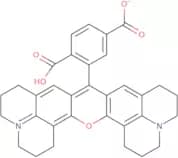
CAS :<p>Single isomer of 5(6)-ROX. It is a fluorescent dye used in RT-PCR methods as an internal reference to determine fluorescence variation that is not associated with the amplification process (plastic of the wells, small differences in concentration or volume, instrument measurements). It produces a constant fluorescence emission signal during the PCR process that is used to normalise the emission produced by the reporter. The fluorescence signal is compatible with most reporters. It is used to label the 5â end of oligonucleotides as a reporter in the presence of a quencher at the 3â end (dual labelled probe). During the amplification, the dye is cleaved, and the fluorescence increases proportionally with the amount of the specific sequence amplified during the PCR process. The development of the fluorescence signal is therefore specifically related to the amplification of the target sequence. 6-ROX with NHS-activated carboxylic acids reacts with primary amines.</p>Formule :C33H30N2O5Degré de pureté :Min. 95%Couleur et forme :Red PowderMasse moléculaire :534.6 g/molC.I.Reactive Red 223
CAS :<p>Please enquire for more information about C.I.Reactive Red 223 including the price, delivery time and more detailed product information at the technical inquiry form on this page</p>Degré de pureté :Min. 95%C.I.Vat green 17
CAS :<p>Please enquire for more information about C.I.Vat green 17 including the price, delivery time and more detailed product information at the technical inquiry form on this page</p>Degré de pureté :Min. 95%C.I.Acid Yellow 19
CAS :<p>Please enquire for more information about C.I.Acid Yellow 19 including the price, delivery time and more detailed product information at the technical inquiry form on this page</p>Degré de pureté :Min. 95%Acid red 128
CAS :<p>Acid Red 128 is a red dye that is used as a food colorant and as a pharmaceutical drug. Acid Red 128 is used in the diagnosis of bacterial strains, viruses, and human proteins. It has been shown to have antiviral activity against influenza virus and HIV. The hydroxyl group on the molecule reacts with the amino group of an amino acid or protein to form an ester bond, which links two molecules together. This reaction product is called a cross-link. Acid Red 128 can also be used as a growth factor by increasing cellular protein synthesis.</p>Degré de pureté :Min. 95%Brilliant blue FCF
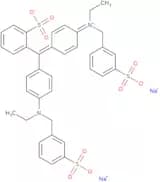
CAS :<p>Brilliant blue FCF is a water-soluble dye that has been used for many purposes, including as a food coloring and in wastewater treatment. It is an intensely blue powder that is soluble in water and reactive to acids. The toxicity of this substance has been extensively studied, with long-term studies showing no significant negative effects on the liver or other organs. In addition, it does not cause any toxic effects when tested on human serum. The adsorption of brilliant blue FCF onto activated carbon or silica gel beads has been shown to be reversible and time-dependent. This dye can also be quantified using an analytical method involving surface methodology coupled with electrochemical impedance spectroscopy.</p>Formule :C37H34N2Na2O9S3Couleur et forme :PowderMasse moléculaire :792.85 g/molDirect Black 22
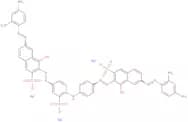
CAS :<p>Direct Black 22 is a carbon-based nanomaterial that can be used for wastewater treatment. This material is photoelectrochemical and has been shown to have the ability to mineralize organic matter and other pollutants in wastewater. Direct Black 22 is biodegradable, which means it will break down into carbon dioxide and water. Direct Black 22 also has an affinity for estrogen and hydrogen peroxide, which makes it a good candidate for removing these substances from wastewater. Direct Black 22 has been shown to be efficient in treatments of high salinity wastewaters.</p>Formule :C44H32N13Na3O11S3Couleur et forme :Brown PowderMasse moléculaire :1,083.97 g/molPigment Yellow 116
CAS :<p>Pigment Yellow 116 is a yellow pigment that is used in the production of plastics and paints. It absorbs light in the blue region of the spectrum and has an average particle diameter of 3.5 nm. Pigment Yellow 116 is a polycarboxylic acid with a heterocycle, which allows it to be soluble in organic solvents. Pigment Yellow 116 has been shown to be photostable, meaning that it does not break down when exposed to ultraviolet radiation. This pigment can be polymerized by free radicals or radiation initiated polymerization, allowing for patterning applications such as printing on textiles, paper, or film.</p>Degré de pureté :Min. 95%C.I.Disperse Blue 291:1
CAS :<p>Please enquire for more information about C.I.Disperse Blue 291:1 including the price, delivery time and more detailed product information at the technical inquiry form on this page</p>Degré de pureté :Min. 95%C.I.Solubilised Sulphur Blue 7
CAS :<p>C.I. Solubilised Sulphur Blue 7 is a research chemical that belongs to the group of copolymers. It is commonly used in the field of biomaterials and cellulose research. This compound has been found to have neuroprotective properties, making it potentially beneficial for the treatment of neurological disorders. C.I. Solubilised Sulphur Blue 7 has also been used in various applications such as dyeing, staining, and as an indicator or probe in scientific experiments. It can be dissolved in solvents like methanol or isooctane for ease of use. This compound has shown interactions with substances like buserelin, xylose, arachidonic acid, and aluminum, indicating its versatility and potential for further research.</p>Degré de pureté :Min. 95%C.I.Reactive Red 111
CAS :<p>C.I.Reactive Red 111 is a reactive dye that can be used in the manufacture of textile and paper products. It has been shown to have optimum reactivity with anionic groups, such as sulfonic acid and carboxylate, at pH levels between 2-11. This dye has a wide range of application parameters, including stability and color development time. C.I.Reactive Red 111 is also resistant to oxidation by sulfuric acid and other corrosive chemicals at high concentrations, which makes it suitable for use in industrial environments where strong oxidizing agents are present.</p>Degré de pureté :Min. 95%Pigment Red 32
CAS :<p>Pigment Red 32 is an organic pigment that is soluble in propylene glycol and surface-active agents. It has a particle diameter of about 0.1 microns and an average particle size of 0.2 microns, with a maximum of 100% dispersion in water. Pigment Red 32 has been shown to be acidic, fluorescent, thiophosphoric, non-polar, styrene-based, and organic solvent-soluble. This pigment is used in the production of plastics and paints for devices such as TV screens due to its ability to liquefy under radiation or heat. Pigment Red 32 also contains functional groups that impart both hydrophobic and hydrophilic properties to the molecule.br>br><br>Pigment Red 32 can be found in paint products including acrylics, alkyds, latexes, oil paints, and watercolors.br>br><br>Pigment Red 32 can be found in plastics products including ABS res</p>Degré de pureté :Min. 95%Pigment Orange 64
CAS :<p>Pigment Orange 64 is an organic solvent that can be used as a polymerization initiator. Pigment Orange 64 has been extensively used in the production of polyester, polyurethane, and epoxy resins. It is also used as a colorant in paints and textiles. Pigment Orange 64 can be detected using high-performance liquid chromatography (HPLC) with detection sensitivity of 0.01 ppm. The skeleton of Pigment Orange 64 consists of a hydrophobic benzene ring with two hydroxyl groups on either side and two double bonds on each end. It has four functional groups: a carboxylic acid group, an aromatic ring, a phenol group, and an alcohol group. Pigment Orange 64 is soluble in water to form orange solutions and can be detected by its characteristic odor. In addition, it can act as a matrix polymer for metal particles due to its basic properties.</p>Formule :C12H10N6O4Degré de pureté :Min. 95%Couleur et forme :PowderMasse moléculaire :302.25 g/molC.I.Disperse Red 200
CAS :<p>Please enquire for more information about C.I.Disperse Red 200 including the price, delivery time and more detailed product information at the technical inquiry form on this page</p>Degré de pureté :Min. 95%Cyanine dye 5
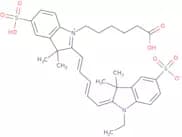
CAS :<p>Cyanine dye 5 is a disulfide-linked dye that has been used as a fluorescence probe in the detection of reactive oxygen species. It has been shown to be reactive with mouse monoclonal antibodies and has been used as a model system for studying calcium binding and DNA duplexes. Cyanine dye 5 is also capable of detecting human serum, mitochondrial membrane potential, and clinical pathology.</p>Formule :C33H40N2O8S2Degré de pureté :Min. 95%Couleur et forme :PowderMasse moléculaire :656.81 g/molDirect Blue 202
CAS :<p>Direct Blue 202 is a reactive dye that is used in the treatment of wastewater. It has been shown to be effective for the removal of color from wastewater, with a high degree of efficiency. Direct Blue 202 has been shown to have low toxicity and does not persist in water. This dye also has dichroic properties and can be used as a polymerization initiator or coagulant.</p>Degré de pureté :Min. 95%