Colorants, teintes, teintures, imagerie fluorescente
Les colorants, teintures et solutions colorantes sont des outils essentiels en biologie moléculaire, cruciaux pour visualiser et étudier l'ADN, les chromosomes et les noyaux cellulaires. Ces composés permettent aux chercheurs de mettre en évidence des composants cellulaires spécifiques, facilitant ainsi l'observation et l'analyse détaillées au microscope. Dans cette catégorie, vous trouverez une large gamme de colorants et de teintures de haute qualité utilisés dans diverses techniques de coloration, y compris des colorants fluorescents pour l'analyse de l'ADN et des chromosomes, des colorants histologiques pour les échantillons de tissus et des colorants spécifiques pour les structures cellulaires. Ces outils sont indispensables en recherche génétique, cytologie, histologie et diagnostics, offrant clarté et contraste dans les échantillons biologiques. Chez CymitQuimica, nous proposons une sélection complète de colorants, teintures et solutions colorantes pour soutenir vos recherches en biologie moléculaire et garantir des résultats précis et fiables dans vos études.
Sous-catégories appartenant à la catégorie "Colorants, teintes, teintures, imagerie fluorescente"
- Colorants acides(49 produits)
- Azobenzènes(270 produits)
- Colorants azoïques(7 produits)
- Colorants de base(27 produits)
- Colorants de coumarine(71 produits)
- Colorants cyanine, colorants squarylium(53 produits)
- Colorants DCM(4 produits)
- Diarylethenes(12 produits)
- Colorants dipyrrométhéniques(26 produits)
- Colorants directs(17 produits)
- Colorants dispersés(2 produits)
- Sensibilisateurs de colorants(12 produits)
- Colorants(416 produits)
- Teintures et colorants(911 produits)
- Génération de colorants insolubles(14 produits)
- Génération de colorants solubles(11 produits)
- Hexaarylbiimidazole(4 produits)
- Indicateurs(575 produits)
- Colorants mordants(10 produits)
- Colorants dans le proche infrarouge (NIR)(28 produits)
- Colorants à l'huile(15 produits)
- Autres teintures et colorants(2 produits)
- Colorants au pérylène(17 produits)
- Colorants photochromiques(40 produits)
- Colorants phtalocyaniques, colorants porphyriniques(101 produits)
- Colorants à base de quinacridone(8 produits)
- Spiropyranes(16 produits)
- Réactifs colorés et colorants(243 produits)
- Réactifs colorés et colorants pour la microscopie(5 produits)
- Colorants de cuve(5 produits)
- Colorants xanthènes(65 produits)
Affichez 23 plus de sous-catégories
755 produits trouvés pour "Colorants, teintes, teintures, imagerie fluorescente"
Trier par
Degré de pureté (%)
0
100
|
0
|
50
|
90
|
95
|
100
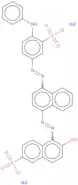
Direct Black 22
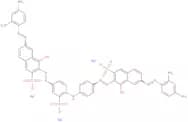
CAS :<p>Direct Black 22 is a carbon-based nanomaterial that can be used for wastewater treatment. This material is photoelectrochemical and has been shown to have the ability to mineralize organic matter and other pollutants in wastewater. Direct Black 22 is biodegradable, which means it will break down into carbon dioxide and water. Direct Black 22 also has an affinity for estrogen and hydrogen peroxide, which makes it a good candidate for removing these substances from wastewater. Direct Black 22 has been shown to be efficient in treatments of high salinity wastewaters.</p>Formule :C44H32N13Na3O11S3Couleur et forme :Brown PowderMasse moléculaire :1,083.97 g/molPigment Yellow 116
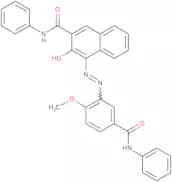
CAS :Pigment Yellow 116 is a yellow pigment that is used in the production of plastics and paints. It absorbs light in the blue region of the spectrum and has an average particle diameter of 3.5 nm. Pigment Yellow 116 is a polycarboxylic acid with a heterocycle, which allows it to be soluble in organic solvents. Pigment Yellow 116 has been shown to be photostable, meaning that it does not break down when exposed to ultraviolet radiation. This pigment can be polymerized by free radicals or radiation initiated polymerization, allowing for patterning applications such as printing on textiles, paper, or film.Degré de pureté :Min. 95%C.I.Disperse Blue 291:1
CAS :<p>Please enquire for more information about C.I.Disperse Blue 291:1 including the price, delivery time and more detailed product information at the technical inquiry form on this page</p>Degré de pureté :Min. 95%C.I.Solubilised Sulphur Blue 7
CAS :<p>C.I. Solubilised Sulphur Blue 7 is a research chemical that belongs to the group of copolymers. It is commonly used in the field of biomaterials and cellulose research. This compound has been found to have neuroprotective properties, making it potentially beneficial for the treatment of neurological disorders. C.I. Solubilised Sulphur Blue 7 has also been used in various applications such as dyeing, staining, and as an indicator or probe in scientific experiments. It can be dissolved in solvents like methanol or isooctane for ease of use. This compound has shown interactions with substances like buserelin, xylose, arachidonic acid, and aluminum, indicating its versatility and potential for further research.</p>Degré de pureté :Min. 95%C.I.Reactive Red 111
CAS :<p>C.I.Reactive Red 111 is a reactive dye that can be used in the manufacture of textile and paper products. It has been shown to have optimum reactivity with anionic groups, such as sulfonic acid and carboxylate, at pH levels between 2-11. This dye has a wide range of application parameters, including stability and color development time. C.I.Reactive Red 111 is also resistant to oxidation by sulfuric acid and other corrosive chemicals at high concentrations, which makes it suitable for use in industrial environments where strong oxidizing agents are present.</p>Degré de pureté :Min. 95%Pigment Red 32
CAS :<p>Pigment Red 32 is an organic pigment that is soluble in propylene glycol and surface-active agents. It has a particle diameter of about 0.1 microns and an average particle size of 0.2 microns, with a maximum of 100% dispersion in water. Pigment Red 32 has been shown to be acidic, fluorescent, thiophosphoric, non-polar, styrene-based, and organic solvent-soluble. This pigment is used in the production of plastics and paints for devices such as TV screens due to its ability to liquefy under radiation or heat. Pigment Red 32 also contains functional groups that impart both hydrophobic and hydrophilic properties to the molecule.br>br><br>Pigment Red 32 can be found in paint products including acrylics, alkyds, latexes, oil paints, and watercolors.br>br><br>Pigment Red 32 can be found in plastics products including ABS res</p>Degré de pureté :Min. 95%Pigment Orange 64
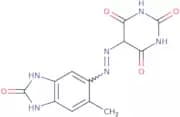
CAS :<p>Pigment Orange 64 is an organic solvent that can be used as a polymerization initiator. Pigment Orange 64 has been extensively used in the production of polyester, polyurethane, and epoxy resins. It is also used as a colorant in paints and textiles. Pigment Orange 64 can be detected using high-performance liquid chromatography (HPLC) with detection sensitivity of 0.01 ppm. The skeleton of Pigment Orange 64 consists of a hydrophobic benzene ring with two hydroxyl groups on either side and two double bonds on each end. It has four functional groups: a carboxylic acid group, an aromatic ring, a phenol group, and an alcohol group. Pigment Orange 64 is soluble in water to form orange solutions and can be detected by its characteristic odor. In addition, it can act as a matrix polymer for metal particles due to its basic properties.</p>Formule :C12H10N6O4Degré de pureté :Min. 95%Couleur et forme :PowderMasse moléculaire :302.25 g/molC.I.Disperse Red 200
CAS :<p>Please enquire for more information about C.I.Disperse Red 200 including the price, delivery time and more detailed product information at the technical inquiry form on this page</p>Degré de pureté :Min. 95%Cyanine dye 5
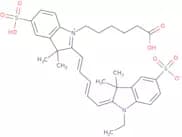
CAS :<p>Cyanine dye 5 is a disulfide-linked dye that has been used as a fluorescence probe in the detection of reactive oxygen species. It has been shown to be reactive with mouse monoclonal antibodies and has been used as a model system for studying calcium binding and DNA duplexes. Cyanine dye 5 is also capable of detecting human serum, mitochondrial membrane potential, and clinical pathology.</p>Formule :C33H40N2O8S2Degré de pureté :Min. 95%Couleur et forme :PowderMasse moléculaire :656.81 g/molDirect Blue 202
CAS :<p>Direct Blue 202 is a reactive dye that is used in the treatment of wastewater. It has been shown to be effective for the removal of color from wastewater, with a high degree of efficiency. Direct Blue 202 has been shown to have low toxicity and does not persist in water. This dye also has dichroic properties and can be used as a polymerization initiator or coagulant.</p>Degré de pureté :Min. 95%C.I.Reactive Yellow 84
CAS :<p>C.I.Reactive Yellow 84 is a sulfate that is used in analytical chemistry to quantify an unknown amount of potassium chloride. This compound can be quantified using anova, which is a statistical method for comparing several different treatments in order to determine which treatments have the largest effect. C.I.Reactive Yellow 84 can also be quantified by electrolysis, which involves passing an electric current through a solution and measuring the electrical charge created by the reaction between hydrogen ions and electrons from the cathode during the process of oxidation-reduction reactions with the electrolyte (solution). The reactive square can also be used to quantify C.I.Reactive Yellow 84, as it provides a comparison between two reactants and allows for optimization of reaction time and spectra over time.</p>Degré de pureté :Min. 95%Reactive blue 220
CAS :<p>Reactive blue 220 is a synthetic, reactive dye with aldehyde groups. It is used in gene analysis and as a stain in electron microscopy. Reactive blue 220 stains the nucleus of cells purple and the cytoplasm red. The color of the nuclei indicates the presence of active substances such as ATP, NADH, or GTP. This dye has been used to identify bacteria by their ability to produce CO2 from glucose when grown on an acidic nutrient solution with deionized water and sodium carbonate. The optical properties of this dye are dependent on pH level, becoming more red at lower pH levels (acidic).</p>Degré de pureté :Min. 95%C.I.Acid Orange 127
CAS :<p>C.I. Acid Orange 127 is a synthetic dyestuff that is used in the textile industry as a reactive dye and as a colorant in paints, plastics, paper, leather, and textiles. It has also been used as an indicator for alkali metals. This compound reacts with an ethyl group to form a quaternary ammonium salt. The dyebath is often made of water and sodium hydroxide or potassium hydroxide at temperatures between 120-140 degrees Celsius. C.I. Acid Orange 127 is characterized by its ability to produce multicolour effects when treated with amines or carboxylates. The reactive properties of this compound make it suitable for use in dyeing wool and other animal fibres where the presence of fatty acids will increase the intensity of the colouration by C.I. Acid Orange 127.br>br></p>Degré de pureté :Min. 95%C.I.Disperse Red 362
CAS :<p>Disperse Red 362 is a yellow pigment that can be used in inkjet printing. It has an express color and is typically used in the printing of textiles, paper, plastics, and other materials. The color of Disperse Red 362 is similar to that of cadmium yellow.</p>Degré de pureté :Min. 95%Acid red 252
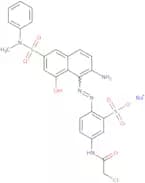
CAS :<p>Acid Red 252 (AR252) is a natural dye that is used as a colorant in textile dyeing and printing. This compound has a molecular weight of 212.2, a melting point of 137°C, and an acid value of 2-5. AR252 is soluble in organic solvents such as acetone, ethanol, ether, and chloroform. It can be polymerized with an initiator to make polymers for use as absorbers in radiation protection items such as goggles and aprons. Acid Red 252 also has hydrophobic properties that are favorable for use as a surfactant to stabilize emulsions or suspensions in water-based paints.</p>Formule :C25H22ClN5O7S2·NaDegré de pureté :Min. 95%Masse moléculaire :627.05 g/molBis(5-bromo-4-chloro-3-indoxyl)pyrophosphoric acid, disodium salt
<p>Bis(5-bromo-4-chloro-3-indoxyl)pyrophosphoric acid, disodium salt is a high quality reagent that is used as a useful intermediate or a speciality chemical. It reacts with alcohols and amines to produce substituted indoles. Bis(5-bromo-4-chloro-3-indoxyl)pyrophosphoric acid, disodium salt can be used in the synthesis of complex compounds and has been used as a building block for the synthesis of some pharmaceuticals. This compound is also useful in the production of research chemicals such as amphetamines and MDMA.</p>Formule :C16H8Br2Cl2N2Na2O7P2Masse moléculaire :678.90 g/molC.I.Sulphur Blue 15
CAS :<p>C.I.Sulphur Blue 15 is a nanocomposite of sulfur and titanium dioxide, which is used in dyeing textiles and other materials. The colorant is soluble in water and can be used as a solution or paste. C.I.Sulphur Blue 15 has been shown to have antimicrobial properties against Gram-positive bacteria, such as Staphylococcus aureus and Clostridium perfringens, but not against Gram-negative bacteria, such as Pseudomonas aeruginosa and Escherichia coli.</p>Degré de pureté :Min. 95%Bromophenol Red Free acid
CAS :<p>Bromophenol Red Free Acid is a synthetic substrate used in microbial infection and wastewater treatment. It has a pH of 2.0-3.0, which is acidic enough to disrupt the integrity of cellular membranes and cause cell lysis. Bromophenol Red Free Acid can be used as a lysing agent for human serum or cells in culture. This product is not soluble in water, so it must be dissolved in an organic solvent before it can be used. Bromophenol Red Free Acid reacts with hydrochloric acid to produce chemiluminescence that can be measured by luminometry, which is a quantitative technique for measuring light emission from chemical reactions. The hydroxyl group on the molecule reacts with the bromophenol group to form a bromohydrin intermediate, which reacts with hydrogen peroxide to produce chemiluminescence.</p>Formule :C19H12Br2O5SDegré de pureté :Min. 95%Masse moléculaire :512.17 g/molAcid Black 26, Technical grade
CAS :<p>Acid Black 26 is a polyphenol with antioxidant properties. It has been shown to have an inhibitory effect on the oxidation of basic dyes and control agents. Acid Black 26 has also been used in biological treatment to remove organic matter from wastewater. The thermodynamic data for Acid Black 26 are complex, but it displays a high reactivity toward particle surfaces and functional groups. Immobilized Acid Black 26 can be used as a surface methodology for the production of activated carbon filters, which removes reactive substances from air streams.</p>Degré de pureté :Min. 95%Pigment Yellow 108
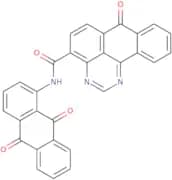
CAS :<p>Pigment Yellow 108 is a polycarboxylic acid that is used in the production of printing ink, paint, and plastic. It has a molecular weight of 284.40 g/mol and a viscosity of 2.00 cps at 20°C. Pigment Yellow 108 contains a hydroxyl group (-OH), carbonyl group (-CO), aromatic hydrocarbon (benzene ring), and hydrogen chloride (HCl). The reaction products are glycol ester, magnesium oxide, primary amino (-NH2), radiation, thermal expansion, and functional groups (-OH).</p>Formule :C30H15N3O4Degré de pureté :Min. 95%Masse moléculaire :481.46 g/mol