Colorants, teintes, teintures, imagerie fluorescente
Les colorants, teintures et solutions colorantes sont des outils essentiels en biologie moléculaire, cruciaux pour visualiser et étudier l'ADN, les chromosomes et les noyaux cellulaires. Ces composés permettent aux chercheurs de mettre en évidence des composants cellulaires spécifiques, facilitant ainsi l'observation et l'analyse détaillées au microscope. Dans cette catégorie, vous trouverez une large gamme de colorants et de teintures de haute qualité utilisés dans diverses techniques de coloration, y compris des colorants fluorescents pour l'analyse de l'ADN et des chromosomes, des colorants histologiques pour les échantillons de tissus et des colorants spécifiques pour les structures cellulaires. Ces outils sont indispensables en recherche génétique, cytologie, histologie et diagnostics, offrant clarté et contraste dans les échantillons biologiques. Chez CymitQuimica, nous proposons une sélection complète de colorants, teintures et solutions colorantes pour soutenir vos recherches en biologie moléculaire et garantir des résultats précis et fiables dans vos études.
Sous-catégories appartenant à la catégorie "Colorants, teintes, teintures, imagerie fluorescente"
- Colorants acides(49 produits)
- Azobenzènes(270 produits)
- Colorants azoïques(7 produits)
- Colorants de base(27 produits)
- Colorants de coumarine(71 produits)
- Colorants cyanine, colorants squarylium(53 produits)
- Colorants DCM(4 produits)
- Diarylethenes(12 produits)
- Colorants dipyrrométhéniques(26 produits)
- Colorants directs(17 produits)
- Colorants dispersés(2 produits)
- Sensibilisateurs de colorants(12 produits)
- Colorants(416 produits)
- Teintures et colorants(911 produits)
- Génération de colorants insolubles(14 produits)
- Génération de colorants solubles(11 produits)
- Hexaarylbiimidazole(4 produits)
- Indicateurs(575 produits)
- Colorants mordants(10 produits)
- Colorants dans le proche infrarouge (NIR)(28 produits)
- Colorants à l'huile(15 produits)
- Autres teintures et colorants(2 produits)
- Colorants au pérylène(17 produits)
- Colorants photochromiques(40 produits)
- Colorants phtalocyaniques, colorants porphyriniques(101 produits)
- Colorants à base de quinacridone(8 produits)
- Spiropyranes(16 produits)
- Réactifs colorés et colorants(243 produits)
- Réactifs colorés et colorants pour la microscopie(5 produits)
- Colorants de cuve(5 produits)
- Colorants xanthènes(65 produits)
Affichez 23 plus de sous-catégories
755 produits trouvés pour "Colorants, teintes, teintures, imagerie fluorescente"
Trier par
Degré de pureté (%)
0
100
|
0
|
50
|
90
|
95
|
100
Evans blue
CAS :<p>Evans blue is a basic protein that binds to the active site of metalloproteinases, such as MMP-9. It is used in the study of enzyme activities and in biological samples for determining levels of MMP-9 activity. Caproic acid is capable of chelating metal ions and is often used as a substrate for measuring water permeability. Evans blue has been shown to have a hypoglycemic effect and can be used as a pharmacological agent for treating conditions such as ischemia-reperfusion injury, congestive heart failure, and toll-like receptor 4 (TLR4) mediated inflammation.</p>Formule :C34H24N6O14S4Na4Degré de pureté :Min. 95%Masse moléculaire :960.81 g/molPigment blue 60 - technical grade
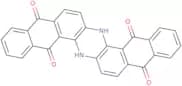
CAS :<p>Pigment blue 60 is a water-soluble dye that is used as a pigment in paints, inks, and textiles. Pigment blue 60 is also used as an indicator of the presence of alkanoic acids in wastewater. The reaction mechanism for the formation of pigment blue 60 has not been fully elucidated; however, it is thought to involve the oxidation of benzalkonium chloride by hydroxyl radicals from hydrogen peroxide. This reaction solution can be analysed using phosphorus pentoxide or nitrogen atoms to determine the quantity of pigment blue 60 present. Pigment blue 60 has been shown to have antibacterial activity against several bacterial strains including Escherichia coli and Staphylococcus aureus. Pigment blue 60 is also used as an analytical method for measuring the amount of oxygen in air or other gasses by reacting with nitrogen oxides at elevated temperatures.</p>Formule :C28H14N2O4Degré de pureté :(With Total Nitrogen) Min. 97.0%Couleur et forme :PowderMasse moléculaire :442.42 g/molC.I.Disperse Orange 25
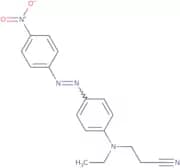
CAS :<p>C.I. Disperse Orange 25 is a dye that has been used in the textile industry for over 30 years. It is soluble in water and has low toxicity, and is not considered hazardous to health. C.I. Disperse Orange 25 is used as an optical sensor and fluorescent agent in kinetic studies of biological treatment of wastewater, and it can also be used as a reactive or activated antimicrobial agent. The dye can be synthesized using supercritical fluid technology, which makes it a potential candidate for use with radiation-sensitive polymers to form polymer matrices with antimicrobial properties that are resistant to microbial attack by radiation.</p>Formule :C17H17N5O2Degré de pureté :Min. 95%Masse moléculaire :323.35 g/molXTT sodium
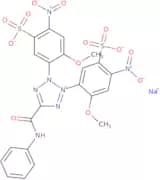
CAS :<p>XTT sodium salt is a tetrazolium salt, which forms water-soluble formazan on bioreduction and has been used to assess cell viability by production of an orange colour.</p>Formule :C22H17N7O13S2•NaDegré de pureté :Min. 95%Couleur et forme :PowderMasse moléculaire :674.53 g/molAcid Yellow 3 Aluminum Lake
CAS :<p>Please enquire for more information about Acid Yellow 3 Aluminum Lake including the price, delivery time and more detailed product information at the technical inquiry form on this page</p>Degré de pureté :Min. 95%Couleur et forme :PowderPigment red 48 (C.I. 15865)
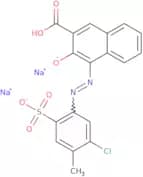
CAS :<p>Pigment Red 48 (C.I. 15865) is a red organic pigment that is soluble in water and most organic solvents. It has a melting point of 200°C and is used in paints, plastics, textiles, paper, and other products. Pigment Red 48 (C.I. 15865) can be synthesized by the diazonium salt coupling reaction between an aromatic amine and an acid chloride. The pigment also has a hydroxyl group that enables it to form covalent bonds with other molecules such as polymers or proteins. Pigment Red 48 (C.I. 15865) is used in many products because of its high stability, excellent heat resistance, low toxicity, non-irritating properties, high transparency, and good color fastness to light and washing.BR> Pigment Red 48 (C.I. 15865) is not considered hazardous according to the Globally Harmonized System of Classification and Lab</p>Formule :C18H11ClN2Na2O6SDegré de pureté :Min. 95%Masse moléculaire :464.79 g/molROSE BENGAL
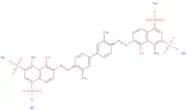
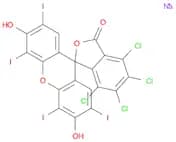
CAS :Formule :C20H2Cl4I4Na2O5Degré de pureté :95%+Couleur et forme :SolidMasse moléculaire :1017.6363Benz[b]indeno[1,2-d]pyran-3,4,6a,9,10(6H)-pentol, 7,11b-dihydro-,(6aS,11bR)-
CAS :Formule :C16H14O6Degré de pureté :97%Couleur et forme :SolidMasse moléculaire :302.27876Ref: IN-DA00I98R
Produit arrêtéReactive orange 35
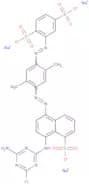
CAS :<p>Reactive orange 35 is a functional group that is used as an analytical reagent in organic solvents. It is also used to introduce additives into polymers, oligosaccharides, and other compounds. Reactive orange 35 has been shown to react with amide groups in the presence of an amine or ammonia at elevated temperatures. This reaction system can be used to produce a variety of compounds, including pharmaceuticals and pesticides. The reactive nature of this compound makes it an excellent plant cell penetrant.</p>Formule :C27H19ClN9Na3O9S3Degré de pureté :Min. 95%Masse moléculaire :814.12 g/molEriochrome Black A
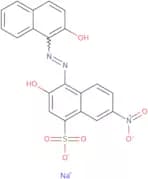
CAS :<p>Eriochrome Black A is a dye that absorbs light in the near-infrared region. It is used as an indicator for thermal expansion and water vapor, and has been shown to be effective against infectious and inflammatory diseases. Eriochrome Black A forms a complex with metal ions such as iron or copper, which can be chelated by hydroxyl groups. This complex is then able to bind to cellular receptors, which causes an increase in oxidative stress, leading to cell death. Eriochrome Black A has also been shown to have antioxidant properties, which may be due to its ability to scavenge free radicals.</p>Degré de pureté :Min. 95%Fluorescein Isothiocyanate (mixture of 5- and 6- isomers)
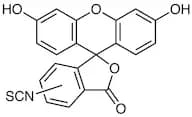
CAS :Formule :C21H11NO5SDegré de pureté :>97.0%(T)(HPLC)Couleur et forme :Light yellow to Brown powder to crystalMasse moléculaire :389.38Patent Blue A
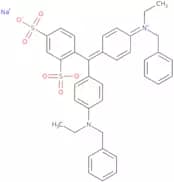
CAS :<p>Patent Blue A is a blue pigment with a deep color, which is used in detergent compositions. This pigment has a hydroxyl group on the surface and can be synthesized by reacting zirconium oxide with quinoline derivatives in an acidic solution. Patent Blue A has been shown to have good dispersibility and stability. It is insoluble in water but soluble in organic solvents such as chloroform and benzene. It also shows good radiation resistance and thermodynamic stability, making it suitable for use in medical devices or other products exposed to radiation, such as blood culture plates.</p>Formule :C37H35N2O6S2NaDegré de pureté :Min. 95%Couleur et forme :PowderMasse moléculaire :690.81 g/molMercuric oxide red
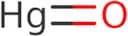
CAS :Produit contrôlé<p>Mercuric oxide red is a dinucleotide phosphate that has been used as an oxidation catalyst in organic synthesis. Mercuric oxide red is also used as a reagent for the conversion of glycoside derivatives to their corresponding mercuric salts. It can be used in the determination of certain metabolites, such as amino acids and fatty acids, in biological samples. In addition, it can be used to detect lipid peroxidation and oxidative stress. For example, Mercuric oxide red has been shown to have the ability to bind to Toll-like receptor 4 (TLR4). This binding induces the production of pro-inflammatory cytokines, including IL-6. Mercuric oxide red also inhibits plasma mass spectrometry by suppressing ionization and reducing fragmentation.</p>Formule :HgODegré de pureté :Min. 95%Couleur et forme :PowderMasse moléculaire :216.60 g/molIron oxide black
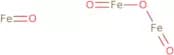
CAS :Produit contrôlé<p>Iron oxide black is a reactive dye that is used in wastewater treatment. It is an oxide of iron that can be synthesized from sodium carbonate and langmuir adsorption isotherm. Iron oxide black has been shown to have a colloidal gold-like color, chemical stability, and constant pressure. The particle size of this compound ranges from 10-1000 nm and it reacts with a solution containing anhydrous sodium carbonate to form magnetite nanoparticles. Iron oxide black also has an asymmetric synthesis reaction with ferric chloride and nitric acid, which produces magnetic nanoparticles.</p>Formule :Fe3O4Degré de pureté :Min. 95%Couleur et forme :PowderMasse moléculaire :231.53 g/molSilicon nitride - predominantly β-phase, -325 mesh
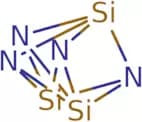
CAS :<p>Silicon nitride is a compound of silicon and nitrogen. It is used in the preparation of high purity silicon, as well as in the production of semiconductors, electronic devices, and other products. Silicon nitride is also used to make parts for aircraft engines and turbines. The thermal expansion coefficient of silicon nitride is typically 5x10⁻⁶/°C, which makes it ideal for use in high-temperature environments. Silicon nitride has antimicrobial properties that may be due to its ability to release hydrogen fluoride and water vapor when heated. These compounds are toxic to bacteria and fungi, making silicon nitride a potential candidate for use in biomedical implants or medical devices such as catheters or prosthetic joints. Silicon nitride is chemically stable at temperatures up to 1000°C, making it an excellent material for high-temperature applications such as aerospace engine components. Silicon nitride can also be used as a sample preparation tool because it can remove impurities from samples without</p>Formule :N4Si3Degré de pureté :Min. 95%Couleur et forme :PowderMasse moléculaire :140.28 g/mol


![Benz[b]indeno[1,2-d]pyran-3,4,6a,9,10(6H)-pentol, 7,11b-dihydro-,(6aS,11bR)-](/_next/image/?url=https%3A%2Fstatic.cymitquimica.com%2Fproducts%2FIN%2Fthumb-webp%2FDA00I98R.webp&w=3840&q=75)