Colorants, teintes, teintures, imagerie fluorescente
Les colorants, teintures et solutions colorantes sont des outils essentiels en biologie moléculaire, cruciaux pour visualiser et étudier l'ADN, les chromosomes et les noyaux cellulaires. Ces composés permettent aux chercheurs de mettre en évidence des composants cellulaires spécifiques, facilitant ainsi l'observation et l'analyse détaillées au microscope. Dans cette catégorie, vous trouverez une large gamme de colorants et de teintures de haute qualité utilisés dans diverses techniques de coloration, y compris des colorants fluorescents pour l'analyse de l'ADN et des chromosomes, des colorants histologiques pour les échantillons de tissus et des colorants spécifiques pour les structures cellulaires. Ces outils sont indispensables en recherche génétique, cytologie, histologie et diagnostics, offrant clarté et contraste dans les échantillons biologiques. Chez CymitQuimica, nous proposons une sélection complète de colorants, teintures et solutions colorantes pour soutenir vos recherches en biologie moléculaire et garantir des résultats précis et fiables dans vos études.
Sous-catégories appartenant à la catégorie "Colorants, teintes, teintures, imagerie fluorescente"
- Colorants acides(49 produits)
- Azobenzènes(270 produits)
- Colorants azoïques(7 produits)
- Colorants de base(27 produits)
- Colorants de coumarine(71 produits)
- Colorants cyanine, colorants squarylium(53 produits)
- Colorants DCM(4 produits)
- Diarylethenes(12 produits)
- Colorants dipyrrométhéniques(26 produits)
- Colorants directs(17 produits)
- Colorants dispersés(2 produits)
- Sensibilisateurs de colorants(12 produits)
- Colorants(416 produits)
- Teintures et colorants(911 produits)
- Génération de colorants insolubles(14 produits)
- Génération de colorants solubles(11 produits)
- Hexaarylbiimidazole(4 produits)
- Indicateurs(575 produits)
- Colorants mordants(10 produits)
- Colorants dans le proche infrarouge (NIR)(28 produits)
- Colorants à l'huile(15 produits)
- Autres teintures et colorants(2 produits)
- Colorants au pérylène(17 produits)
- Colorants photochromiques(40 produits)
- Colorants phtalocyaniques, colorants porphyriniques(101 produits)
- Colorants à base de quinacridone(8 produits)
- Spiropyranes(16 produits)
- Réactifs colorés et colorants(243 produits)
- Réactifs colorés et colorants pour la microscopie(5 produits)
- Colorants de cuve(5 produits)
- Colorants xanthènes(65 produits)
Affichez 23 plus de sous-catégories
755 produits trouvés pour "Colorants, teintes, teintures, imagerie fluorescente"
Trier par
Degré de pureté (%)
0
100
|
0
|
50
|
90
|
95
|
100
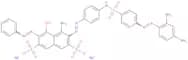
Acid Black 234, Technical grade
CAS :<p>Acid Black 234 is a reactive dye that is used in the textile industry. It has a hydroxy group and can be used for wastewater treatment. Acid Black 234 is not soluble in water but can be dissolved in organic solutions. It has high penetrant properties and its chemical stability depends on the pH of the solution. Acid Black 234 undergoes an adsorption mechanism, which involves a reaction with chloride ions to form a complex that binds to the surface of the fabric.</p>Degré de pureté :Min. 95%Acridine orange biological stain
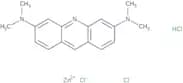
CAS :<p>Acridine orange is a fluorescent dye that is used as a biological stain. It binds to DNA and stains the cells it has bound to, making them more visible under an ultraviolet light. This dye also produces kinetic data on the micronucleus test in mice and rats. Acridine orange can be used to detect genotoxic effects in animals and humans, such as genetic damage or cancer. Kinetic studies have shown statistically significant increases in plasma mass spectrometry, but no significant changes in erythrosine uptake were observed. Acridine orange has been shown to cause genotoxic effects on brain cells and testicular cells.</p>Formule :C17H20ClN3ZnCl2Couleur et forme :PowderMasse moléculaire :369.96 g/molC.I.Acid Yellow 42
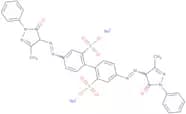
CAS :<p>C.I.Acid Yellow 42 is a reactive dye that belongs to the class of chromatic compounds. It is used in photolithography and as a pH indicator, but is also an environmental pollutant. C.I.Acid Yellow 42 is hydrated and has radical mechanism of photodecomposition, which makes it subject to radiation and mineralization. C.I.Acid Yellow 42 can be used in assays for detecting ions such as copper, iron, zinc, or mercury at efficiencies greater than other dyes in the same class. It can also be synthesized from organic materials or biodegradable substances such as dyes from natural sources or phenol-formaldehyde resins with low toxicity to humans and the environment.>>END>></p>Formule :C32H26N8O8S2•Na2Degré de pureté :Min. 95%Couleur et forme :PowderMasse moléculaire :760.71 g/molBromocresol green
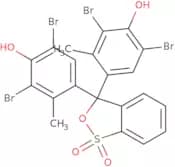
CAS :<p>Bromocresol green is a cationic surfactant that is used as a fluorescent indicator dye. It binds to proteins and can be detected with an optical sensor. Bromocresol green has been shown to react with hydrochloric acid, which may be due to the protonation of the cationic group. This reaction is reversible and depends on pH. The binding of bromocresol green to serum proteins results in a decrease in fluorescence intensity due to quenching by adsorption at the protein-protein interface. The kinetic data for this dye have been found to depend on α1-acid glycoprotein concentration.</p>Formule :C21H14Br4O5SCouleur et forme :PowderMasse moléculaire :698.01 g/molDirect Yellow 96, Technical grade
CAS :<p>Direct Yellow 96 is a Direct Fast to Light dye (DFL) also known as diphenyl Brilliant Flavine 7GFF, direct Yellow 7GFF, Solophenyl Flavine 7GFE and Solophenyl Flavine 7GFE 500. Direct Yellow 96 is ideal for application on cellulosic fibres, making it suitable for textile and paper colouring. Solophenyl Flavine 7GFE 500 has been described as useful dye of fungal cell walls. The dye yields fluorescently stained material generally in the blue to green wavelengths and provides an excellent alternative to the more commonly used fluorophore, Calcofluor White M2R.</p>Formule :C39H34N10O13S4Couleur et forme :PowderMasse moléculaire :979.01 g/molDisperse Orange 3
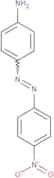
CAS :<p>Disperse Orange 3 is a diazonium salt that has been used in the textile industry as a dye, but has also been used as a reagent for the synthesis of organic compounds. Disperse Orange 3 is synthesized by reacting an azobenzene with a fatty acid, which yields an unstable intermediate. The intermediate undergoes photochemical reactions when exposed to ultraviolet light or moisture. This reaction produces benzalkonium chloride and ft-ir spectroscopy, which confirms the identity of Disperse Orange 3. Disperse Orange 3 is used in biological treatment and binding constants experiments to measure the strength of interactions between molecules. It has clinical relevance in magnetic resonance spectroscopy because it can be used to probe molecular interactions with proteins or nucleic acids. It also has solubility data that can be used to determine its solubility in water and other solvents.<br>Disperse Orange 3 is soluble in supercritical carbon dioxide at high temperatures, but insoluble at room temperature</p>Formule :C12H10N4O2Degré de pureté :Min. 65%Couleur et forme :PowderMasse moléculaire :242.23 g/molOrange G, Technical grade
CAS :Orange G is a quaternary ammonium salt that can be used for the treatment of wastewater. It has been shown to adsorb to the surface of bacterial cells and inhibit their growth by preventing enzyme activity. Orange G has also been shown to have carcinogenic potential in experimental models, although it is less potent than dimethylhydrazine or N-nitrosodiethylamine. Orange G has genotoxic effects on human serum, as seen by increased DNA fragmentation and chromosomal aberrations. The kinetic and redox properties of Orange G are still being investigated.Formule :C16H10N2Na2O7S2Degré de pureté :Min. 95 Area-%Couleur et forme :Orange PowderMasse moléculaire :452.37 g/molIohexol
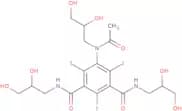
CAS :<p>a contrast agent used in medical imaging such as angiography, CT scans, and MRI.</p>Formule :C19H26I3N3O9Degré de pureté :98.0 To 102.0%Couleur et forme :White PowderMasse moléculaire :821.14 g/molBis(5-bromo-6-chloro-3-indoxyl)pyrophosphoric acid, disodium salt
<p>Bis(5-bromo-6-chloro-3-indoxyl)pyrophosphoric acid, disodium salt is a versatile building block that can be used to synthesize complex compounds. This compound is a reagent for research and also has many uses in the pharmaceutical industry as a useful intermediate and scaffold. Bis(5-bromo-6-chloro-3-indoxyl)pyrophosphoric acid, disodium salt is an excellent high quality product that can be used in many reactions.</p>Formule :C16H8Br2Cl2N2Na2O7P2Masse moléculaire :678.90 g/molRef: 3D-B-3370
1gÀ demander5gÀ demander10gÀ demander500mgÀ demander2500mgÀ demander-Unit-ggÀ demanderDisperse blue 60, technical grade dye content
CAS :<p>Disperse Blue 60 is a stilbene-based dye that absorbs ultraviolet light and emits red fluorescent light. It is used in wastewater treatment, biological treatment, and supercritical water oxidation processes. Disperse Blue 60 is activated by fatty acid, alkanoic acid, or polymeric matrix to form an antimicrobial agent that can be used in radiation sterilization of food products. This dye also has the ability to absorb radiation in the range of 200 - 300 nm and emit fluorescence at 590 nm. The oxidation catalyst provides stability for the dye molecule under conditions of high temperature or pressure.</p>Formule :C20H17N3O5Degré de pureté :Min. 95%Couleur et forme :PowderMasse moléculaire :379.37 g/molAcid Red 357
CAS :<p>Acid Red 357 is a basic dye, which is used in the treatment of wastewater. It binds to the surface of particles and reacts with sodium carbonate to form a hydroxide precipitate. This reaction leads to removal of colorants from the water. Acid Red 357 is also reactive, nucleophilic, and has high values for both kinetic data and transfer mechanism.</p>Degré de pureté :Min. 95%Light green SF yellowish
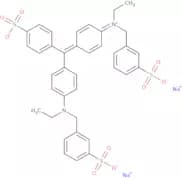
CAS :<p>Sodium salts are colloidal gold particles that are dispersed in aqueous solution and have a light green SF yellowish color. This type of salt is used for plant physiology studies, due to their ability to provide an accurate measurement of the surface area of leaves. Sodium salts can be used as biological samples, such as liver lesions or langmuir adsorption isotherm, to investigate kinetic data. They also have been shown to be useful in the study of human serum and particle interactions. The sodium salts form a thin layer on the surface of the particle, which makes it possible to measure the concentration of fatty acids or basic proteins on its surface. Sodium salts are also commonly used in toxicology studies and histological analyses.</p>Formule :C37H34N2O9S3Na2Degré de pureté :(%) Min. 80%Couleur et forme :PowderMasse moléculaire :792.85 g/molC.I.Solvent Blue 13
CAS :<p>Please enquire for more information about C.I.Solvent Blue 13 including the price, delivery time and more detailed product information at the technical inquiry form on this page</p>Degré de pureté :Min. 95%Acid Black ATT
CAS :<p>Acid Black ATT is a chemical compound that is used to adjust the pH and remove organic matter in wastewater. It is a mixture of trimethyl, collagen, sodium carbonate, calcium carbonate, and sodium chloride. Acid Black ATT can be used as an additive for the treatment of wastewater because it has been shown to inhibit enzymes. This product should be added slowly to water in order to avoid inhaling the vaporized acid. The use of this chemical must be carefully monitored because it can cause corrosion and damage to pipes.</p>Degré de pureté :Min. 95%Pigment Yellow 127
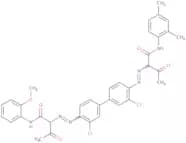
CAS :<p>Please enquire for more information about Pigment Yellow 127 including the price, delivery time and more detailed product information at the technical inquiry form on this page</p>Degré de pureté :Min. 95%Reactive Blue 19, Technical grade
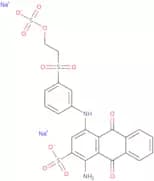
CAS :<p>Reactive Blue 19 is a chemical compound that has been used extensively in biological, biochemical, and clinical research. It is a reactive dye with the chemical formula C20H14N2Na4O8S4. The molecule's structure consists of two benzene rings linked by two amine groups, which are connected to an aromatic ring with four sulfonic acid side chains. Reactive Blue 19 has been shown to inhibit the activity of enzymes such as hydroxylase and nitrite reductase. This compound also reacts with protocatechuic acid to form an intense blue-colored complex that can be detected using electrochemical detection.</p>Formule :C22H16N2Na2O11S3Degré de pureté :Min. 95%Couleur et forme :PowderMasse moléculaire :626.55 g/molFuchsin, for flagella staining, certified
CAS :<p>Please enquire for more information about Fuchsin, for flagella staining, certified including the price, delivery time and more detailed product information at the technical inquiry form on this page</p>Formule :C20H20ClN3Degré de pureté :Min. 95%Couleur et forme :PowderMasse moléculaire :337.8 g/molWeak Acid Yellow 3G
CAS :<p>Weak Acid Yellow 3G is a benzyl ester of an aliphatic polyhydric alcohol. It is a clear, amber liquid with a pH of 6.5-7.5 and can be used in the production of microspheres and monomers for organic solvent extraction and surface treatment. When diluted with water, it has an alkaline reaction system. This product is soluble in aliphatic hydrocarbons, alcohols and ethers, but insoluble in water and most other common solvents. Weak Acid Yellow 3G can be used as a surfactant and surface active agent to simplify reactions systems by removing the need for additional reagents or solvents.</p>Formule :C39H26Cl4N8Na2O8S2Degré de pureté :Min. 95%Masse moléculaire :986.6 g/molSolvent Red 149
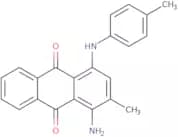
CAS :<p>Solvent Red 149 is an organic solvent that is used in the development of photographic emulsions. It has a low average particle diameter, high thermal expansion, and low volatility. Solvent Red 149 has been used as a sensor for environmental pollution. This compound has been shown to inhibit polymerization reactions by acting as an inhibitor of an essential step in the process. The hydroxyl group on the molecule can be used for authenticating purposes because it reacts with sulfuric acid to form a red dye.</p>Formule :C23H22N2O2Degré de pureté :Min. 95%Couleur et forme :PowderMasse moléculaire :358.43 g/molC.I.Disperse Orange 32
CAS :<p>Please enquire for more information about C.I.Disperse Orange 32 including the price, delivery time and more detailed product information at the technical inquiry form on this page</p>Degré de pureté :Min. 95%