Colorants, teintes, teintures, imagerie fluorescente
Les colorants, teintures et solutions colorantes sont des outils essentiels en biologie moléculaire, cruciaux pour visualiser et étudier l'ADN, les chromosomes et les noyaux cellulaires. Ces composés permettent aux chercheurs de mettre en évidence des composants cellulaires spécifiques, facilitant ainsi l'observation et l'analyse détaillées au microscope. Dans cette catégorie, vous trouverez une large gamme de colorants et de teintures de haute qualité utilisés dans diverses techniques de coloration, y compris des colorants fluorescents pour l'analyse de l'ADN et des chromosomes, des colorants histologiques pour les échantillons de tissus et des colorants spécifiques pour les structures cellulaires. Ces outils sont indispensables en recherche génétique, cytologie, histologie et diagnostics, offrant clarté et contraste dans les échantillons biologiques. Chez CymitQuimica, nous proposons une sélection complète de colorants, teintures et solutions colorantes pour soutenir vos recherches en biologie moléculaire et garantir des résultats précis et fiables dans vos études.
Sous-catégories appartenant à la catégorie "Colorants, teintes, teintures, imagerie fluorescente"
- Colorants acides(49 produits)
- Azobenzènes(270 produits)
- Colorants azoïques(7 produits)
- Colorants de base(27 produits)
- Colorants de coumarine(71 produits)
- Colorants cyanine, colorants squarylium(53 produits)
- Colorants DCM(4 produits)
- Diarylethenes(12 produits)
- Colorants dipyrrométhéniques(26 produits)
- Colorants directs(17 produits)
- Colorants dispersés(2 produits)
- Sensibilisateurs de colorants(12 produits)
- Colorants(416 produits)
- Teintures et colorants(911 produits)
- Génération de colorants insolubles(14 produits)
- Génération de colorants solubles(11 produits)
- Hexaarylbiimidazole(4 produits)
- Indicateurs(575 produits)
- Colorants mordants(10 produits)
- Colorants dans le proche infrarouge (NIR)(28 produits)
- Colorants à l'huile(15 produits)
- Autres teintures et colorants(2 produits)
- Colorants au pérylène(17 produits)
- Colorants photochromiques(40 produits)
- Colorants phtalocyaniques, colorants porphyriniques(101 produits)
- Colorants à base de quinacridone(8 produits)
- Spiropyranes(16 produits)
- Réactifs colorés et colorants(243 produits)
- Réactifs colorés et colorants pour la microscopie(5 produits)
- Colorants de cuve(5 produits)
- Colorants xanthènes(65 produits)
Affichez 23 plus de sous-catégories
755 produits trouvés pour "Colorants, teintes, teintures, imagerie fluorescente"
Trier par
Degré de pureté (%)
0
100
|
0
|
50
|
90
|
95
|
100
5-Chloro-2-methyl-3-isothiazolone - Active Ingredient >14%, CMI/MI 2.5 - 4.0
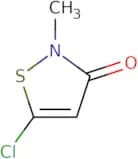
CAS :<p>5-Chloro-2-methyl-3-isothiazolone (CMIT) is a highly water-soluble apoptotic agent and preservative with numerous applications. It is used in anti-microbial coatings, latex formulations, hydraulic fracturing fluids, pesticides and cosmetics. CMIT in conjunction with 2-methyl-4-isothiazolin-3-one (MIT) is marketed as Kathon. CMIT is also an allergen. CMIT is active against gram-positive and gram-negative bacteria, yeasts and fungi. CMIT is believed to form mixed disulfides with protein thiol groups which then undergo thiol-disulfide exchange reactions to give mixed protein thiol disulfides leading to cell apoptosis and necrosis.</p>Formule :C4H4ClNOSCouleur et forme :Yellow Clear LiquidMasse moléculaire :149.6 g/molMethylene violet
CAS :<p>Please enquire for more information about Methylene violet including the price, delivery time and more detailed product information at the technical inquiry form on this page</p>Formule :C14H12N2OSDegré de pureté :65%Masse moléculaire :256.32 g/mol6β-Hydroxy prednisolone
Produit contrôlé<p>6b-Hydroxy prednisolone is a metabolite of prednisolone. The metabolism of prednisolone to 6b-hydroxy prednisolone is catalyzed by the enzyme CYP3A4, which results in the formation of 6β-hydroxyprednisolone and a hydrogen peroxide that reacts with catalase to form water and oxygen. The conversion is dependent on the concentration of galactose, as it provides substrate for CYP3A4. If cyclosporine or other drugs are taken concurrently, they may inhibit the metabolism of 6b-hydroxy prednisolone. The kinetics of 6β-hydroxyprednisolone have been investigated in tissues and plasma samples, and it has been shown that this metabolite has a short half-life in both tissues and plasma samples. This drug can be analysed using chromatography, but endogenous substances such as cortisol can interfere with the process.</p>Formule :C21H28O6Degré de pureté :Min. 95%Couleur et forme :Light (Or Pale) Yellow SolidMasse moléculaire :376.44 g/mol9,10-Bis[2-(4-methoxyphenyl)ethynyl]anthracene
CAS :<p>9,10-Bis[2-(4-methoxyphenyl)ethynyl]anthracene is a reagent for chemiluminescence research.</p>Formule :C32H22O2Degré de pureté :Min. 98.0 Area-%Masse moléculaire :438.52 g/molMethyl orange
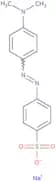
CAS :<p>Methyl orange is a dye that is used as an indicator in acid-base titrations. It has a basic structure and can be prepared by the oxidation of para-aminobenzoic acid with hydrogen peroxide. Methyl orange has been shown to exhibit synergistic effects with other antimicrobial agents, such as phenol, methylene blue, and chlorhexidine at pH levels of 4.5 to 7.0. The optimum concentration for the matrix effect is 0.01% at pH range from 2.5 to 4.5 and 1% at pH range from 5 to 7.5. Methyl orange is activated by light with wavelengths between 300 nm and 500 nm and can be used in wastewater treatment processes where there are high levels of organic matter or radiation, such as carthamus tinctorius or zirconium oxide.</p>Formule :C14H15N3O3S•NaDegré de pureté :Min. 95%Couleur et forme :PowderMasse moléculaire :328.34 g/molRhodamine WT, 20% aqueous solution
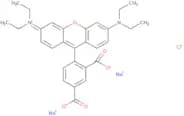
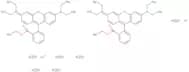
CAS :<p>Rhodamine is a fluorescent compound that, in a 20% aqueous solution, serves as an effective fluorescent probe for detecting nitrite ions (NO2). When exposed to ultraviolet light, it undergoes a remarkable color change in response to nitrite presence. Beyond nitrite detection, rhodamine also interacts with various chemical substances, including organic solvents commonly found in wastewater treatment systems, which shows its potential, especially in environmental monitoring and analytical chemistry applications. This 20% solution is 20% w/w. Our sales mass in g is the final mass of the solution.</p>Formule :C29H29N2O5·Cl·2NaDegré de pureté :Min. 95%Couleur et forme :Clear LiquidMasse moléculaire :567 g/molDulbecco's phosphate buffered saline
Produit contrôlé<p>Dulbecco's phosphate buffered saline is a sterile solution of the following components: • Sodium chloride • Potassium chloride • Calcium chloride • Magnesium chloride • Disodium phosphate dodecahydrate • Monopotassium phosphate • Potassium dihydrogenphosphate • Sodium dihydrogenphosphate • Glucose • Dextrose • Sodium pyruvate • L-Lysine hydrochloride Dulbecco's phosphate buffered saline is commonly used in cardiovascular research to simulate the fluid environment of the heart. It is also used for blood sampling and as a culture medium for animal cells. This solution has been shown to have high cholesterol concentrations, which may be due to its uptake of fatty acids from the environment.</p>Degré de pureté :Min. 95%Couleur et forme :Clear Liquid(E)-8-Methyl-6-nonenoic acid - predominantly trans
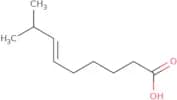
CAS :<p>(E)-8-Methyl-6-nonenoic acid is a fatty acid that is found in the acetate extract of Capsicum annuum. It is an analog of the natural compound (E)-8-methyl-6-nonenal, which has been shown to have anticancer properties. The synthesis of this compound has been achieved using a novel approach based on enzymatic reactions and chemical transformations. This compound has been shown to have potential anticancer activity against human prostate cancer cells in vitro and to inhibit the growth of triticum aestivum seeds.</p>Formule :C10H18O2Degré de pureté :Min. 95%Masse moléculaire :170.25 g/molPrednisolone disodium phosphate
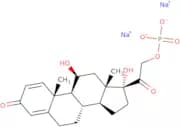
CAS :<p>Prednisolone is a corticosteroid that is used to treat inflammation and reduce the body's immune response. Prednisolone disodium phosphate (PDSP) is an enteric-coated tablet that releases prednisolone in the small intestine, where it can be absorbed into the bloodstream. It has been shown to be effective at reducing bowel disease activity in patients with inflammatory bowel disease. Prednisolone disodium phosphate may also have a role in controlling infectious diseases, such as tuberculosis, due to its ability to inhibit toll-like receptor 4 signaling. The drug has been studied as a model system for predicting drug interactions by monitoring the rate constant for benzalkonium chloride binding to human serum albumin.</p>Formule :C21H29O8P•Na2Degré de pureté :Min. 95%Couleur et forme :PowderMasse moléculaire :486.4 g/molBrilliant cresyl blue
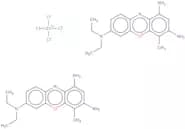
CAS :<p>Brilliant cresyl blue is a reactive dye that is used as a model system for mitochondrial membrane potential. It is injected into the oocyte and polymerase chain reaction (PCR) is performed to detect mitochondrial functions. The dye can be detected with optical sensors, which are sensitive to UV light. When the dye migrates from the mitochondria to the cytoplasm, it can be detected by UV-sensitive sensors. This process can help scientists determine if there are any defects in mitochondrial membrane potential.</p>Formule :(C17H21N4O)2•ZnCl4Couleur et forme :Green PowderMasse moléculaire :400.97 g/molSolvent yellow 98
CAS :<p>Solvent Yellow 98 is a fluorescent dye that belongs to the class of organic solvents. It is used in a variety of applications, such as deionized water, emulsions, and fluorescent light. The Solvent Yellow 98 molecule consists of an aliphatic hydrocarbon chain with a cationic surfactant at one end. This surfactant is responsible for the fluorescence of this compound.</p>Formule :C36H45NO2SDegré de pureté :Min. 95%Couleur et forme :PowderMasse moléculaire :555.81 g/molMetanil yellow, 95%
CAS :<p>Please enquire for more information about Metanil yellow, 95% including the price, delivery time and more detailed product information at the technical inquiry form on this page</p>Formule :C18H15N3O3S•NaDegré de pureté :Min. 95%Masse moléculaire :376.39 g/molSandoal gold 4N
<p>Please enquire for more information about Sandoal gold 4N including the price, delivery time and more detailed product information at the technical inquiry form on this page</p>Degré de pureté :Min. 95%16α-Butyloxyprednisolone
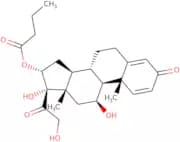
CAS :Produit contrôlé<p>Please enquire for more information about 16alpha-Butyloxyprednisolone including the price, delivery time and more detailed product information at the technical inquiry form on this page</p>Formule :C25H34O7Degré de pureté :Min. 95%Couleur et forme :PowderMasse moléculaire :446.53 g/molVictoria Blue R
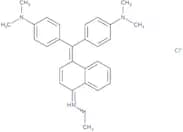
CAS :<p>Victoria Blue R is a dye that is used in histology and cytology to stain tissue sections and cell smears. It binds to the amyloid protein in the extracellular matrix of cells, which causes them to turn blue when stained with this dye. Victoria Blue R is a synthetic dye that has been prepared by various methods, including synthesis from diazotized benzidine and phenol. The specific antibody for Victoria Blue R binds to an epitope on the amyloid protein, which is then stained by the dye. The main use of Victoria Blue R is as a counterstain in immunohistochemistry, where it can be used to identify glandular cells or tissues containing mitochondria. Victoria Blue R can also be used as an analytical method for determining phosphotungstic acid-haematoxylin reactions or as a reaction mechanism for polymeric matrix formation.</p>Formule :C29H32N3ClCouleur et forme :PowderMasse moléculaire :458.04 g/molDisperse Yellow 23, technical grade dye content
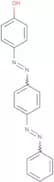
CAS :<p>Disperse Yellow 23 is a synthetic, industrial dye that is used in the manufacturing of plastics, textiles, and paper. It has a molecular formula of C10H16ClN2O and an x-ray crystal structure with one molecule in the asymmetric unit. Disperse Yellow 23 reacts with hydroxyl groups to form a diazonium salt. It is soluble in water and has a neutral pH. Disperse Yellow 23 is highly reactive and should be handled with care as it may cause burns on contact. The chemical structures of Disperse Yellow 23 are shown below:</p>Formule :C18H14N4ODegré de pureté :Min. 95%Masse moléculaire :302.33 g/molFast blue RR salt
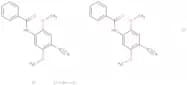
CAS :<p>Fast blue RR salt is a phosphatase inhibitor that belongs to the group of diazonium salts. It is used as an indicator for damaged cells, and it can be used in cell culture. Fast blue RR salt can also be used in biological samples for radiation detection. Fast blue RR salt has been shown to inhibit p-nitrophenyl phosphate (PNPP) phosphatase activity in erythrocytes and lymphocytes from healthy humans. The inhibition is due to the binding of the molecule to the enzyme's active site, which prevents the binding of phosphate ions. This results in a decrease in PNPP hydrolysis, leading to a build-up of PNPP and a decrease in ATP levels. Fast blue RR salt has been shown to have low energy radiation properties, making it more suitable for use with biological samples than other diazonium salts such as Fast red TR salt or Fast green BB salt.</p>Formule :C15H14CIN3O3•(ZnCl2)0Couleur et forme :PowderMasse moléculaire :491.35 g/molPigment Red 169
CAS :Produit contrôlé<p>Pigment Red 169 is a red dye that is soluble in both water and organic solvents. It has a particle size of 10-40 nm and a molecular weight of approximately 600 g/mol. Pigment Red 169 absorbs light at the maximum wavelength of 659 nm, with an optimum concentration of 0.5%, and can be used as a thermal expansion agent or as a solid catalyst. Pigment Red 169 is polymerized by thermal decomposition, which produces polymers with low molecular weights. The pigment is also used in the production of microspheres for use in industrial applications such as aliphatic hydrocarbons or fatty acids.</p>Formule :C66H70CuFeN10O6Degré de pureté :Min. 95%Masse moléculaire :1,218.72 g/mol2,7-Dichlorofluorescein
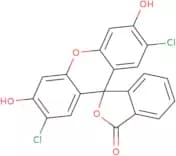
CAS :<p>Fluorophore used in biological assays and for labeling cells and tissues</p>Formule :C20H10Cl2O5Degré de pureté :Min. 95%Couleur et forme :PowderMasse moléculaire :401.2 g/molBasic violet 3
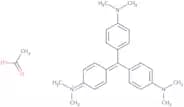
CAS :<p>Basic violet 3 is a light-sensitive dye that can be used for the detection of metals. It is a basic dye with a high resistance to water vapor and other solvents. Basic violet 3 has been shown to be carcinogenic in animal studies, but has not been shown to have any adverse effects on humans. The dye reacts with metal hydroxides such as aluminum hydroxide, iron(III) oxide, and calcium hydroxide by absorbing UV radiation. This reaction produces an increased amount of light that can be detected using a spectrophotometer. Basic violet 3 is used in surface methodology because it is able to react with particles and then bind to them through van der Waals forces. Basic violet 3 is also used for kinetic experiments because it provides data about the rate of chemical reactions or chemical processes. Kinetic data from these experiments can be used to determine the mechanism of the reaction or process being studied.</p>Formule :C25H30N3·C2H3O2Couleur et forme :PowderMasse moléculaire :431.57 g/mol


![9,10-Bis[2-(4-methoxyphenyl)ethynyl]anthracene](/_next/image/?url=https%3A%2Fstatic.cymitquimica.com%2Fproducts%2F3D%2Fthumb-webp%2FJ-650272.webp&w=3840&q=75)