Composés polycycliques
Les composés polycycliques sont des molécules organiques contenant plusieurs cycles interconnectés. Ces composés incluent les hydrocarbures aromatiques polycycliques et d'autres systèmes de cycles complexes. Ils sont importants dans les sciences des matériaux, les produits pharmaceutiques et l'électronique organique. Chez CymitQuimica, nous proposons des composés polycycliques de haute qualité pour soutenir vos recherches et applications industrielles, garantissant des résultats fiables et efficaces dans vos projets.
Sous-catégories appartenant à la catégorie "Composés polycycliques"
- Acridines(97 produits)
- Anthraquinones(533 produits)
- Acides anthraquinonesulfoniques(16 produits)
- Azobenzènes(270 produits)
- Azonaphtalènes(98 produits)
- Azoxybenzènes(12 produits)
- Azulènes(11 produits)
- Benzimidazoles(1.470 produits)
- Benzodioxanes(27 produits)
- Benzofuranes(923 produits)
- Benzothiophènes(690 produits)
- Benzotriazoles(436 produits)
- Binaphthyls(133 produits)
- Carbazoles(462 produits)
- Chromanes, Chromenes(480 produits)
- Coumarines(1.121 produits)
- Cyclophanes(11 produits)
- Fluorènes et Fluorénones(381 produits)
- Imidazopyridines(10 produits)
- Indans(118 produits)
- Indazoles(2.029 produits)
- Indenes(22 produits)
- Indoles(3.984 produits)
- Indolines(119 produits)
- Isatines(231 produits)
- Isobenzofuranes(17 produits)
- Phtalimides N-substitués(153 produits)
- Naphtalènes(2.427 produits)
- Naphtyridine(17 produits)
- Naphtoquinone(2 produits)
- Perylènes(36 produits)
- Phénazines(25 produits)
- Phtalazines(33 produits)
- Phtalimide(153 produits)
- Hydrocarbures aromatiques polycycliques (HAP)(270 produits)
- Polyphénol(261 produits)
- Ptéridines(52 produits)
- Pyrènes(87 produits)
- Quinuclidine(1 produits)
- Tétracènes(7 produits)
Affichez 32 plus de sous-catégories
4574 produits trouvés pour "Composés polycycliques"
Trier par
Degré de pureté (%)
0
100
|
0
|
50
|
90
|
95
|
100
L-(2S,3aS,7aS)-Octahydro-1H-indole-2-carboxylic acid benzyl ester tosylate salt
CAS :<p>Please enquire for more information about L-(2S,3aS,7aS)-Octahydro-1H-indole-2-carboxylic acid benzyl ester tosylate salt including the price, delivery time and more detailed product information at the technical inquiry form on this page</p>Formule :C23H29NO5SDegré de pureté :Min. 95%Masse moléculaire :431.55 g/molAnomelin
<p>Anomelin is a synthetic anticancer compound, which is derived from complex organic synthesis methodologies. This compound is typically produced through careful laboratory processes due to its intricate chemical structure, which is crafted to target specific molecular pathways involved in cancer cell proliferation.</p>Degré de pureté :Min. 95%Methyl 4-methoxy-1-methyl-1H-indole-2-carboxylate
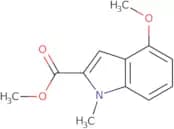
CAS :Produit contrôlé<p>Please enquire for more information about Methyl 4-methoxy-1-methyl-1H-indole-2-carboxylate including the price, delivery time and more detailed product information at the technical inquiry form on this page</p>Formule :C12H13NO3Degré de pureté :Min. 95%Masse moléculaire :219.24 g/moltert-Butyl 4,7-diazaspiro[2.5]octane-7-carboxylate
CAS :<p>Please enquire for more information about tert-Butyl 4,7-diazaspiro[2.5]octane-7-carboxylate including the price, delivery time and more detailed product information at the technical inquiry form on this page</p>Degré de pureté :Min. 95%Methyl 4,5-dimethoxy-1-methyl-1H-indole-2-carboxylate
CAS :Produit contrôlé<p>Please enquire for more information about Methyl 4,5-dimethoxy-1-methyl-1H-indole-2-carboxylate including the price, delivery time and more detailed product information at the technical inquiry form on this page</p>Formule :C13H15NO4Degré de pureté :Min. 95%Masse moléculaire :249.26 g/mol3-(2-Aminoethyl)-N-methyl-1H-indole-5-methanesulfonamide
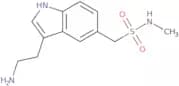
CAS :<p>3-(2-Aminoethyl)-N-methyl-1H-indole-5-methanesulfonamide (AMIS) is an intermediate in the preparation of medicaments. It is a stable process and can be used as an intermediate for other compounds. AMIS is prepared by reacting methanesulfonic acid with methanol and ammonium carbonate, which produces methanesulfonamide, succinic acid and ammonium hydroxide. The reaction liquid is then heated to produce a crystalline solid. The crystals are then recrystallized to yield AMIS as a white solid.</p>Formule :C12H17N3O2SDegré de pureté :Min. 95%Couleur et forme :Off-White To Beige To Light Brown SolidMasse moléculaire :267.35 g/mol3-Azabicyclo[3,3,0]octane HCl
CAS :<p>3-Azabicyclo[3,3,0]octane HCl is an inorganic base that is used as a catalyst for organic reactions. It is often used to convert ester hydrochlorides into chiral esters. 3-Azabicyclo[3,3,0]octane HCl has been shown to be a suitable reducing agent for the reduction of various substances. The reaction proceeds via an intramolecular process and can be used with various parameters. 3-Azabicyclo[3,3,0]octane HCl is crystalline and has a melting point of 179 degrees Celsius. It also has optical activity due to its chirality.</p>Formule :C7H14ClNDegré de pureté :Min. 98 Area-%Couleur et forme :White Off-White PowderMasse moléculaire :147.65 g/molMoluccanin
CAS :<p>Please enquire for more information about Moluccanin including the price, delivery time and more detailed product information at the technical inquiry form on this page</p>Degré de pureté :Min. 95%2-[2-(1H-Indol-3-yl)ethyl]-1,3-dioxoisoindoline-5-carboxylic acid
CAS :Produit contrôlé<p>Please enquire for more information about 2-[2-(1H-Indol-3-yl)ethyl]-1,3-dioxoisoindoline-5-carboxylic acid including the price, delivery time and more detailed product information at the technical inquiry form on this page</p>Formule :C19H14N2O4Degré de pureté :Min. 95%Masse moléculaire :334.33 g/mol4-Methylquinoline
CAS :<p>4-Methylquinoline is a natural compound that is structurally related to coumarin. It serves as an enzyme substrate for various types of enzymes, and has been shown to inhibit the activity of enzymes such as N-acetyltransferase, indoleamine 2,3-dioxygenase, and tryptophan 2,3-dioxygenase. 4-Methylquinoline has also been shown to be effective against infectious diseases such as toxoplasmosis and leishmaniasis. Furthermore, 4-methylquinoline has been shown to have anti-inflammatory properties in autoimmune diseases such as multiple sclerosis. The mechanism of action of 4-methylquinoline is not fully understood but it may interfere with the production of nitric oxide by inhibiting the enzyme nitric oxide synthase.</p>Formule :C10H9NDegré de pureté :Min. 95%Masse moléculaire :143.19 g/mol1,4-Diazabicyclo[2.2.2]octane
CAS :<p>1,4-Diazabicyclo[2.2.2]octane is an organic compound that belongs to the group of coordination compounds and has antimicrobial activity. It is a colorless solid with a melting point of -117°C and a boiling point of 245°C. The molecular geometry is planar, which means that all bonds are linear. The compound can be found in water vapor or as colloidal gold sols in reaction with water vapor. It can also be obtained by reacting triethylenediamine with hydrochloric acid at 100°C under vacuum conditions. 1,4-Diazabicyclo[2.2.2]octane has been shown to have antibiotic properties and is able to inhibit the growth of bacteria through coordination geometry and phase transition temperature effects on the bacterial cell membrane.</p>Formule :C6H12N2Degré de pureté :Min. 98%Couleur et forme :PowderMasse moléculaire :112.17 g/mol5-Nitrosoquinolin-8-ol
CAS :<p>5-Nitrosoquinolin-8-ol is a chemical inhibitor that can be used in the study of enzyme function. It reacts with the active site of the enzymes and prevents them from carrying out their normal functions. 5-Nitrosoquinolin-8-ol has been shown to inhibit the growth of cancer cells and to have antiinflammatory properties. 5-Nitrosoquinolin-8-ol has been shown to bind to sephadex G-100 and potassium dichromate, which are both types of ion exchangers. The redox potential for this compound is -0.84 V. This means it will not react easily with other compounds, which makes it a good candidate for use as an inhibitor in biochemical studies. The nitrogen atoms in this compound are reactive, which means they can form covalent bonds with other molecules in a reaction called nitrosation. Structural biology is a branch of science that deals with studying the three dimensional structure of biological mac</p>Formule :C9H6N2O2Degré de pureté :Min. 95%Couleur et forme :Yellow To Green SolidMasse moléculaire :174.16 g/mol1-Bicyclo[2.2.1]hept-2-ylethanone
CAS :<p>The bicyclo[2.2.1]hept-2-ylethanone is an isomer of the bicyclo[2.2.1]heptane, with a ketone group in place of a methylene group on one ring. It is a mixture of two isomers: the cis and trans form, which are in equilibrium with each other at room temperature. The equilibrium constants for this reaction are Kcis = 6.6×10 and Ktrans = 1.4×10 at 25°C and pH 7, respectively, which means that the trans isomer predominates at low concentrations and the cis form predominates at high concentrations.</p>Formule :C9H14ODegré de pureté :Min. 95%Masse moléculaire :138.21 g/molTert-butyl(8-anti)-3-azabicyclo[3.2.1]oct-8-ylcarbamate
CAS :<p>Tert-butyl(8-anti)-3-azabicyclo[3.2.1]oct-8-ylcarbamate (tBAA) is a heterocycle that has been modified to enhance its pharmacokinetic properties. Tert-butyl(8-anti)-3-azabicyclo[3.2.1]oct-8-ylcarbamate was designed to be metabolically stable and have a high bioavailability and isosteric properties with phosphatidylinositol, which it uses as a substrate in the catalytic cycle. This modification also increased tBAA's stability in vivo, leading to an increase in efficacy. The covalent attachment of the phenyl ring on the tertiary amine nitrogen of tBAA provides additional protection against hepatic metabolism by CYP450 enzymes, making it more potent than other compounds with similar structures that are not covalently attached to the amine group.</p>Formule :C12H22N2O2Degré de pureté :Min. 95%Masse moléculaire :226.32 g/molCichoriin
CAS :<p>Cichoriin is a coumarin glycoside, which is a type of phytochemical compound found in certain plants. It is primarily sourced from plants of the Asteraceae family, particularly chicory (Cichorium intybus). The compound exhibits its biochemical effects by interacting with various cellular pathways, including acting as an antioxidant and displaying potential anti-inflammatory and antimicrobial properties.</p>Formule :C15H16O9Degré de pureté :Min. 95%Masse moléculaire :340.28 g/molSelinidin
CAS :<p>Selinidin is a phytochemical compound, which is derived from the natural source of the Brunsvigia bosmaniae plant. As a bioactive constituent of this plant, it is characterized by its unique structure and chemical properties, enabling it to interact with a variety of cellular targets, primarily through modulation of inflammatory pathways. The mode of action of Selinidin involves the inhibition of pro-inflammatory cytokines and mediators, thereby reducing inflammation and oxidative stress at the cellular level.</p>Formule :C19H20O5Degré de pureté :Min. 95%Masse moléculaire :328.36 g/mol3-{[(3,4-Dichlorophenyl)amino]carbonyl}bicyclo[2.2.1]hept-5-ene-2-carboxylic acid
CAS :<p>Please enquire for more information about 3-{[(3,4-Dichlorophenyl)amino]carbonyl}bicyclo[2.2.1]hept-5-ene-2-carboxylic acid including the price, delivery time and more detailed product information at the technical inquiry form on this page</p>Formule :C15H13Cl2NO3Degré de pureté :Min. 95%Masse moléculaire :326.17 g/molCalipteryxin
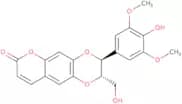
CAS :<p>Please enquire for more information about Calipteryxin including the price, delivery time and more detailed product information at the technical inquiry form on this page</p>Formule :C24H26O7Degré de pureté :Min. 95%Masse moléculaire :426.46 g/mol3-Oxabicyclo[3.1.0]hexane-2,4-dione
CAS :<p>3-Oxabicyclo[3.1.0]hexane-2,4-dione is a cocatalyst with a molecular formula of C6H14O3. It is a synthetic compound that is used as an inhibitor in organic synthesis reactions and as a cocatalyst for the ring-opening polymerization of cyclic olefins. 3-Oxabicyclo[3.1.0]hexane-2,4-dione binds to the receptor subtype site on the benzene ring of benzoate, amines, and acid catalysts. This binding prevents the formation of an enzyme/substrate complex at the active site of the enzyme, inhibiting its activity and leading to cell death.</p>Degré de pureté :95%Nmr3-Isoquinolinecarboxylic acid
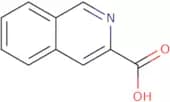
CAS :<p>3-Isoquinolinecarboxylic acid is a molecule with a reactive group that can form cyclic structures. It has been shown that 3-Isoquinolinecarboxylic acid is an apoptotic agent in human macrophages and induces the release of picolinic acid from these cells. This molecule also has a high affinity for α7 nicotinic acetylcholine receptors, which are present on the surface of nerve cells. 3-Isoquinolinecarboxylic acid can be synthesized by condensing picolinic acid, an aromatic aminoacid, with an appropriate amine. The synthesis of this heterocycle is catalyzed by an enzyme called quinolinate synthase. The product of this reaction is oxidized to form 3-isoquinolyl carboxylic acid. The final step in the synthesis involves the oxidative cleavage of a disulfide bond using hydrogen peroxide, yielding 3-isoquinoly</p>Formule :C10H7NO2Degré de pureté :Min. 95%Masse moléculaire :173.17 g/mol


![tert-Butyl 4,7-diazaspiro[2.5]octane-7-carboxylate](/_next/image/?url=https%3A%2Fstatic.cymitquimica.com%2Fproducts%2F3D%2Fthumb-webp%2FFB141975.webp&w=3840&q=75)

![3-Azabicyclo[3,3,0]octane HCl](/_next/image/?url=https%3A%2Fstatic.cymitquimica.com%2Fproducts%2F3D%2Fthumb-webp%2FFA38235.webp&w=3840&q=75)
![2-[2-(1H-Indol-3-yl)ethyl]-1,3-dioxoisoindoline-5-carboxylic acid](/_next/image/?url=https%3A%2Fstatic.cymitquimica.com%2Fproducts%2F3D%2Fthumb-webp%2FFI124769.webp&w=3840&q=75)

![1,4-Diazabicyclo[2.2.2]octane](/_next/image/?url=https%3A%2Fstatic.cymitquimica.com%2Fproducts%2F3D%2Fthumb-webp%2FFD14322.webp&w=3840&q=75)

![1-Bicyclo[2.2.1]hept-2-ylethanone](/_next/image/?url=https%3A%2Fstatic.cymitquimica.com%2Fproducts%2F3D%2Fthumb-webp%2FFB114448.webp&w=3840&q=75)
![Tert-butyl(8-anti)-3-azabicyclo[3.2.1]oct-8-ylcarbamate](/_next/image/?url=https%3A%2Fstatic.cymitquimica.com%2Fproducts%2F3D%2Fthumb-webp%2FFT167890.webp&w=3840&q=75)


![3-{[(3,4-Dichlorophenyl)amino]carbonyl}bicyclo[2.2.1]hept-5-ene-2-carboxylic acid](/_next/image/?url=https%3A%2Fstatic.cymitquimica.com%2Fproducts%2F3D%2Fthumb-webp%2FFD136060.webp&w=3840&q=75)

![3-Oxabicyclo[3.1.0]hexane-2,4-dione](/_next/image/?url=https%3A%2Fstatic.cymitquimica.com%2Fproducts%2F3D%2Fthumb-webp%2FFO62778.webp&w=3840&q=75)