Composés polycycliques
Les composés polycycliques sont des molécules organiques contenant plusieurs cycles interconnectés. Ces composés incluent les hydrocarbures aromatiques polycycliques et d'autres systèmes de cycles complexes. Ils sont importants dans les sciences des matériaux, les produits pharmaceutiques et l'électronique organique. Chez CymitQuimica, nous proposons des composés polycycliques de haute qualité pour soutenir vos recherches et applications industrielles, garantissant des résultats fiables et efficaces dans vos projets.
Sous-catégories appartenant à la catégorie "Composés polycycliques"
- Acridines(97 produits)
- Anthraquinones(533 produits)
- Acides anthraquinonesulfoniques(16 produits)
- Azobenzènes(270 produits)
- Azonaphtalènes(98 produits)
- Azoxybenzènes(12 produits)
- Azulènes(11 produits)
- Benzimidazoles(1.470 produits)
- Benzodioxanes(27 produits)
- Benzofuranes(923 produits)
- Benzothiophènes(690 produits)
- Benzotriazoles(436 produits)
- Binaphthyls(133 produits)
- Carbazoles(462 produits)
- Chromanes, Chromenes(480 produits)
- Coumarines(1.121 produits)
- Cyclophanes(11 produits)
- Fluorènes et Fluorénones(381 produits)
- Imidazopyridines(10 produits)
- Indans(118 produits)
- Indazoles(2.029 produits)
- Indenes(22 produits)
- Indoles(3.984 produits)
- Indolines(119 produits)
- Isatines(231 produits)
- Isobenzofuranes(17 produits)
- Phtalimides N-substitués(153 produits)
- Naphtalènes(2.427 produits)
- Naphtyridine(17 produits)
- Naphtoquinone(2 produits)
- Perylènes(36 produits)
- Phénazines(25 produits)
- Phtalazines(33 produits)
- Phtalimide(153 produits)
- Hydrocarbures aromatiques polycycliques (HAP)(270 produits)
- Polyphénol(261 produits)
- Ptéridines(52 produits)
- Pyrènes(87 produits)
- Quinuclidine(1 produits)
- Tétracènes(7 produits)
Affichez 32 plus de sous-catégories
4574 produits trouvés pour "Composés polycycliques"
Trier par
Degré de pureté (%)
0
100
|
0
|
50
|
90
|
95
|
100
(1R,4R,5R)-4,7,7-Trimethyl-6-thiabicyclo[3.2.1]octane
CAS :<p>Please enquire for more information about (1R,4R,5R)-4,7,7-Trimethyl-6-thiabicyclo[3.2.1]octane including the price, delivery time and more detailed product information at the technical inquiry form on this page</p>Formule :C10H18SDegré de pureté :90%MinMasse moléculaire :170.32 g/molHeratomol
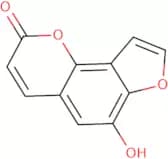
CAS :<p>Please enquire for more information about Heratomol including the price, delivery time and more detailed product information at the technical inquiry form on this page</p>Formule :C11H6O4Degré de pureté :Min. 95%Masse moléculaire :202.16 g/molBis(tricyclohexylphosphine)palladium(II) Dichloride
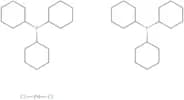
CAS :Produit contrôlé<p>Bis(tricyclohexylphosphine)palladium(II) Dichloride is a cross-coupling agent that is used for the synthesis of organic and organometallic compounds. It reacts with terminal alkynes to form a phosphine oxide, which can then be converted into an arylated product. The reaction proceeds by the formation of a palladium-carbon bond and subsequent cleavage of the carbon-palladium bond in the presence of ammonium formate. Bis(tricyclohexylphosphine)palladium(II) Dichloride is insoluble in water, but soluble in organic solvents such as dichloromethane, 1,2-dichloroethane, or chloroform. This reagent has been shown to enhance the rate of transfer reactions between monomers.</p>Formule :C36H66Cl2P2PdDegré de pureté :Min. 95%Masse moléculaire :738.18 g/molN10-Methyl pteroic acid
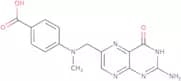
CAS :<p>N10-Methyl pteroic acid is a novel immunosuppressant that inhibits T-cell proliferation and promotes regression of inflammatory bowel disease. It has been shown to be effective in treating cancer patients, with the terminal half-life being approximately 20 hours. N10-Methyl pteroic acid is a potent inhibitor of human acute lymphoblastic leukemia cells. It can also be used as an immunosuppressant for organ transplantation, with desorption from gels using matrix-assisted laser desorption/ionization time-of-flight mass spectrometry (MALDI TOF MS) and bioanalytical methods such as high performance liquid chromatography (HPLC).</p>Formule :C15H14N6O3Degré de pureté :Min. 95%Masse moléculaire :326.31 g/molByakangelicol methanolate
<p>Byakangelicol methanolate is a bioactive compound, which is a derivative of furanocoumarins, typically found in various plant species. It is naturally sourced from Angelica plants, known for their rich profile of therapeutic compounds. The mode of action of Byakangelicol methanolate involves the inhibition of specific enzymes related to inflammatory pathways, potentially modulating immune responses and reducing inflammation. This compound is of significant interest due to its potential applications in developing treatments for inflammatory-related conditions and possibly other therapeutic areas. Research into Byakangelicol methanolate focuses on understanding its pharmacological properties and exploring its benefits within pharmaceuticals for treating a range of inflammatory disorders. Its ability to act on specific biological pathways might provide insights into new therapeutic mechanisms, making it a subject of interest for scientists investigating novel anti-inflammatory agents.</p>Formule :C19H22O7Degré de pureté :Min. 95%Masse moléculaire :362.37 g/mol1-Methylindole-3-acetic acid
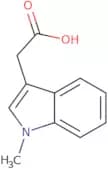
CAS :Produit contrôlé<p>1-Methylindole-3-acetic acid is a biologically active compound that has been used as a medicine. It can be synthesized by the oxidation of 1-methylindole with trifluoroacetic acid and 3-bromopropylamine hydrobromide. The reaction produces a radical species that reacts with dioxetanes to form linear plots. 1-Methylindole-3-acetic acid is also susceptible to light, which leads to the formation of peroxy dioxetanes, amides, and protonated derivatives. The biological relevance is not yet known.</p>Formule :C11H11NO2Degré de pureté :Min. 95%Couleur et forme :PowderMasse moléculaire :189.21 g/mol8-Hydroxyquinoline copper(II)
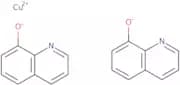
CAS :<p>8-Hydroxyquinoline copper(II) salt is a metal chelate that can be used as an analytical reagent. It is prepared by the reaction of ethylene diamine with 8-hydroxyquinoline and copper(II) chloride. The product has been found to emit light when irradiated with UV light. This product is also used as a substrate for methyl transferase, which is an enzyme involved in the metabolism of drugs. 8-Hydroxyquinoline copper(II) salt has been shown to inhibit the activity of P-glycoprotein (Pgp), which is a drug transporter protein found in mammalian cells that functions to pump xenobiotics from the inside of cells out into the bloodstream. When Pgp is inhibited, it causes cellular accumulation of certain drugs, such as cyclosporin A and tacrolimus.</p>Formule :C18H12CuN2O2Degré de pureté :Min. 95%Couleur et forme :PowderMasse moléculaire :351.85 g/molTert-butyl(8-anti)-3-azabicyclo[3.2.1]oct-8-ylcarbamate
CAS :<p>Tert-butyl(8-anti)-3-azabicyclo[3.2.1]oct-8-ylcarbamate (tBAA) is a heterocycle that has been modified to enhance its pharmacokinetic properties. Tert-butyl(8-anti)-3-azabicyclo[3.2.1]oct-8-ylcarbamate was designed to be metabolically stable and have a high bioavailability and isosteric properties with phosphatidylinositol, which it uses as a substrate in the catalytic cycle. This modification also increased tBAA's stability in vivo, leading to an increase in efficacy. The covalent attachment of the phenyl ring on the tertiary amine nitrogen of tBAA provides additional protection against hepatic metabolism by CYP450 enzymes, making it more potent than other compounds with similar structures that are not covalently attached to the amine group.</p>Formule :C12H22N2O2Degré de pureté :Min. 95%Masse moléculaire :226.32 g/moltrans-Khellactone
CAS :<p>Trans-Khellactone is a naturally occurring lactone derivative, which is isolated from plants of the Apiaceae family. This compound exhibits a variety of biological functions due to its unique chemical structure, which includes a dihydropyran ring. Trans-Khellactone's mode of action involves interacting with various cellular pathways, potentially modulating enzyme activity, receptor binding, and influencing signal transduction processes.</p>Formule :C14H14O5Degré de pureté :Min. 95%Masse moléculaire :262.26 g/mol3-Methyl-5-pinacolatoboryl-indazole
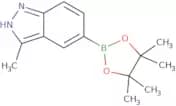
CAS :<p>Please enquire for more information about 3-Methyl-5-pinacolatoboryl-indazole including the price, delivery time and more detailed product information at the technical inquiry form on this page</p>Formule :C14H19BN2O2Degré de pureté :Min. 95%Masse moléculaire :258.12 g/mol1,3-Dipropyl-7-methylxanthine
CAS :Produit contrôlé<p>1,3-Dipropyl-7-methylxanthine is a xanthine compound that is structurally related to caffeine. It has been shown to have an inhibitory effect on the production of reactive oxygen species and cytosolic calcium levels in primary cells, as well as a nonselective adenosine receptor antagonist activity. It has also been shown to antagonize the effects of adenosine receptors, p2 receptors, and p2y receptors. This drug is used for the treatment of basophilic leukemia.</p>Formule :C12H18N4O2Degré de pureté :Min. 95%Masse moléculaire :250.3 g/molVaginidin
CAS :<p>Please enquire for more information about Vaginidin including the price, delivery time and more detailed product information at the technical inquiry form on this page</p>Formule :C19H22O6Degré de pureté :Min. 95%Masse moléculaire :346.37 g/molTegerrardin A
CAS :<p>Tegerrardin A is an innovative biopesticide derived from microbial fermentation processes, harnessing the potency of naturally occurring microorganisms. It is formulated to exploit the specific biochemical mechanisms within targeted pest populations, effectively disrupting their vital physiological functions. This selective mode of action is achieved through the inhibition of key enzymes essential for pest survival and proliferation, resulting in decreased pest pressure and improved crop health.</p>Formule :C15H13NO3Degré de pureté :Min. 95%Masse moléculaire :255.27 g/mol4-Aminobicyclo[2.2.2]octane-1-carboxylic acid methyl ester
CAS :<p>Please enquire for more information about 4-Aminobicyclo[2.2.2]octane-1-carboxylic acid methyl ester including the price, delivery time and more detailed product information at the technical inquiry form on this page</p>Formule :C10H17NO2Degré de pureté :Min. 95%Masse moléculaire :183.25 g/mol5-Bromo-1-methyl-1H-indole-3-carboxylic acid
CAS :Produit contrôlé<p>Please enquire for more information about 5-Bromo-1-methyl-1H-indole-3-carboxylic acid including the price, delivery time and more detailed product information at the technical inquiry form on this page</p>Formule :C10H8BrNO2Degré de pureté :Min. 95%Masse moléculaire :254.08 g/mol1,3-Diethyl-8-phenylxanthine
CAS :Produit contrôlé<p>1,3-Diethyl-8-phenylxanthine is a p2y receptor antagonist that inhibits bacterial growth by interfering with the energy metabolism of the cell. It is an analytical reagent that can be used to measure specific DNA sequences and has been shown to have genotoxic effects on cultured human cells. 1,3-Diethyl-8-phenylxanthine has also been shown to inhibit the growth of infectious bacteria such as staphylococcus aureus and Mycobacterium tuberculosis in vitro. This compound may be used as a potential biomarker for the identification of antimicrobial peptides that are active against Mycobacterium tuberculosis in humans.</p>Formule :C15H16N4O2Degré de pureté :Min. 95%Masse moléculaire :284.31 g/mol2-Amino-6-hydroxy-8-mercaptopurine
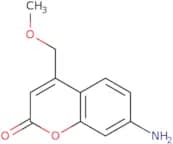
CAS :<p>2-Amino-6-hydroxy-8-mercaptopurine is an antimicrobial agent that inhibits the growth of bacteria by binding to their ribosomes. It has been shown to have a cytotoxic effect in vivo on cancer cells and intestinal parasites, as well as a protective effect against infectious diseases. 2-Amino-6-hydroxy-8-mercaptopurine has also been shown to inhibit the synthesis of proteins in vitro, which may be due to its ability to bind to the ribosomal subunit and inhibit protein synthesis. 2-Amino-6-hydroxy-8-mercaptopurine inhibits bacterial growth by binding to DNA dependent RNA polymerase, thereby preventing transcription and replication. The high frequency of human activity has been shown using a patch clamp technique on human erythrocytes. This active form is metabolized through a number of metabolic transformations, including hydrolysis by esterases or gluc</p>Formule :C5H5N5OSDegré de pureté :Min. 95%Couleur et forme :PowderMasse moléculaire :183.19 g/mol7-Amino-4-(methoxymethyl)coumarin
CAS :<p>7-Amino-4-(methoxymethyl)coumarin is a fluorogenic compound, which is synthesized chemically for bioanalytical applications. This compound serves as a substrate in enzyme assays and is particularly valuable in studying enzymatic activity due to its fluorescent properties.</p>Formule :C11H11NO3Degré de pureté :Min. 95%Masse moléculaire :205.21 g/moltert-Butyl 2,7-diazaspiro[3.5]nonane-7-carboxylate
CAS :<p>Please enquire for more information about tert-Butyl 2,7-diazaspiro[3.5]nonane-7-carboxylate including the price, delivery time and more detailed product information at the technical inquiry form on this page</p>Formule :C12H22N2O2Degré de pureté :Min. 95%Masse moléculaire :226.32 g/molPraeruptorin E
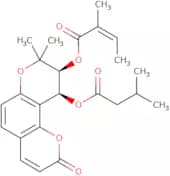
CAS :<p>Praeruptorin E is a natural furanocoumarin, which is derived from the roots of Peucedanum praeruptorum, a plant commonly used in traditional Chinese medicine. As a bioactive compound, Praeruptorin E exhibits significant pharmacological activities, particularly in cardiovascular, anti-inflammatory, and cytoprotective domains.</p>Degré de pureté :Min. 95%
![(1R,4R,5R)-4,7,7-Trimethyl-6-thiabicyclo[3.2.1]octane](/_next/image/?url=https%3A%2Fstatic.cymitquimica.com%2Fproducts%2F3D%2Fthumb-webp%2FFT60017.webp&w=3840&q=75)

![Tert-butyl(8-anti)-3-azabicyclo[3.2.1]oct-8-ylcarbamate](/_next/image/?url=https%3A%2Fstatic.cymitquimica.com%2Fproducts%2F3D%2Fthumb-webp%2FFT167890.webp&w=3840&q=75)


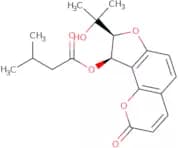
![4-Aminobicyclo[2.2.2]octane-1-carboxylic acid methyl ester](/_next/image/?url=https%3A%2Fstatic.cymitquimica.com%2Fproducts%2F3D%2Fthumb-webp%2FFA44258.webp&w=3840&q=75)

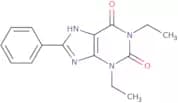
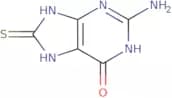
![tert-Butyl 2,7-diazaspiro[3.5]nonane-7-carboxylate](/_next/image/?url=https%3A%2Fstatic.cymitquimica.com%2Fproducts%2F3D%2Fthumb-webp%2FFT138842.webp&w=3840&q=75)