


Composés polycycliques
Les composés polycycliques sont des molécules organiques contenant plusieurs cycles interconnectés. Ces composés incluent les hydrocarbures aromatiques polycycliques et d'autres systèmes de cycles complexes. Ils sont importants dans les sciences des matériaux, les produits pharmaceutiques et l'électronique organique. Chez CymitQuimica, nous proposons des composés polycycliques de haute qualité pour soutenir vos recherches et applications industrielles, garantissant des résultats fiables et efficaces dans vos projets.
Sous-catégories appartenant à la catégorie "Composés polycycliques"
- Acridines(97 produits)
- Anthraquinones(532 produits)
- Acides anthraquinonesulfoniques(16 produits)
- Azobenzènes(270 produits)
- Azonaphtalènes(98 produits)
- Azoxybenzènes(12 produits)
- Azulènes(11 produits)
- Benzimidazoles(1.469 produits)
- Benzodioxanes(27 produits)
- Benzofuranes(923 produits)
- Benzothiophènes(690 produits)
- Benzotriazoles(436 produits)
- Binaphthyls(133 produits)
- Carbazoles(462 produits)
- Chromanes, Chromenes(480 produits)
- Coumarines(1.121 produits)
- Cyclophanes(11 produits)
- Fluorènes et Fluorénones(381 produits)
- Imidazopyridines(10 produits)
- Indans(118 produits)
- Indazoles(2.016 produits)
- Indenes(22 produits)
- Indoles(3.983 produits)
- Indolines(119 produits)
- Isatines(231 produits)
- Isobenzofuranes(17 produits)
- Phtalimides N-substitués(153 produits)
- Naphtalènes(2.426 produits)
- Naphtyridine(17 produits)
- Naphtoquinone(2 produits)
- Perylènes(36 produits)
- Phénazines(25 produits)
- Phtalazines(33 produits)
- Phtalimide(153 produits)
- Hydrocarbures aromatiques polycycliques (HAP)(270 produits)
- Polyphénol(261 produits)
- Ptéridines(52 produits)
- Pyrènes(87 produits)
- Quinuclidine(1 produits)
- Tétracènes(7 produits)
Affichez 32 plus de sous-catégories
4574 produits trouvés pour "Composés polycycliques"
Trier par
Degré de pureté (%)
0
100
|
0
|
50
|
90
|
95
|
100
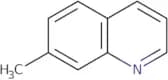
7-Methylquinoline
CAS :<p>7-Methylquinoline is an organic compound that can be used to synthesize antimalarial drugs. It is a quinoline derivative with a methyl group at the 7th position. The structure of 7-methylquinoline contains a nitrogen atom and hydrogen atoms, which are bonded to fluorine, chlorine, and bromine atoms. This molecule has been shown to be stable in the presence of Friedel-Crafts catalysts and chloride ions. The reaction mechanism for 7-methylquinoline is intramolecular hydrogen transfer from the chloroform molecule to the quinoline ring system. The formation rate for this compound is slow because it requires two steps: nucleophilic substitution and electrophilic addition reactions.</p>Formule :C10H9NDegré de pureté :Min. 95%Masse moléculaire :143.19 g/molNeobyakangelicol
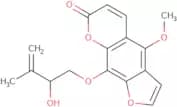
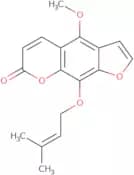
CAS :<p>Neobyakangelicol is a phytochemical compound, which is a natural product derived from various plant species. Its source is predominantly the roots of certain medicinal plants that are known for their array of bioactive constituents. The mode of action of Neobyakangelicol primarily involves interacting with specific biochemical pathways, potentially including modulation of enzyme activity or receptor binding, which could result in diverse pharmacological effects.</p>Formule :C17H16O6Degré de pureté :Min. 95%Masse moléculaire :316.31 g/mol4,7-Dihydroxy-1,10-phenanthroline
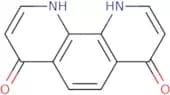
CAS :<p>4,7-Dihydroxy-1,10-phenanthroline is an organometallic compound that has been shown to inhibit the growth of tumour cells. It is a protonated molecule and can be classified as a reactive intermediate. The reaction mechanism for this intermediate is nucleophilic attack by the hydroxy group on the carbon atom adjacent to the aromatic ring. This results in the formation of a cationic intermediate, which undergoes protonation to form the final product. 4,7-Dihydroxy-1,10-phenanthroline has been found to have anti-tumor effects against l1210 murine leukemia cell lines.</p>Formule :C12H8N2O2Degré de pureté :Min. 95%Masse moléculaire :212.2 g/mol3-Isoquinolinecarboxylic acid
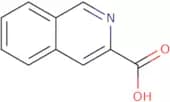
CAS :<p>3-Isoquinolinecarboxylic acid is a molecule with a reactive group that can form cyclic structures. It has been shown that 3-Isoquinolinecarboxylic acid is an apoptotic agent in human macrophages and induces the release of picolinic acid from these cells. This molecule also has a high affinity for α7 nicotinic acetylcholine receptors, which are present on the surface of nerve cells. 3-Isoquinolinecarboxylic acid can be synthesized by condensing picolinic acid, an aromatic aminoacid, with an appropriate amine. The synthesis of this heterocycle is catalyzed by an enzyme called quinolinate synthase. The product of this reaction is oxidized to form 3-isoquinolyl carboxylic acid. The final step in the synthesis involves the oxidative cleavage of a disulfide bond using hydrogen peroxide, yielding 3-isoquinoly</p>Formule :C10H7NO2Degré de pureté :Min. 95%Masse moléculaire :173.17 g/mol4-Aminobicyclo[2.2.2]octan-1-ol hydrochloride
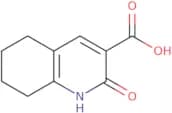
CAS :<p>Please enquire for more information about 4-Aminobicyclo[2.2.2]octan-1-ol hydrochloride including the price, delivery time and more detailed product information at the technical inquiry form on this page</p>Formule :C8H15NO•HClDegré de pureté :Min. 95%Masse moléculaire :177.67 g/mol2-Oxo-1,2,5,6,7,8-hexahydroquinoline-3-carboxylic acid
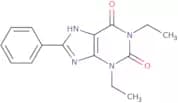
CAS :<p>Please enquire for more information about 2-Oxo-1,2,5,6,7,8-hexahydroquinoline-3-carboxylic acid including the price, delivery time and more detailed product information at the technical inquiry form on this page</p>Formule :C10H11NO3Degré de pureté :Min. 95%Masse moléculaire :193.2 g/mol1,3-Diethyl-8-phenylxanthine
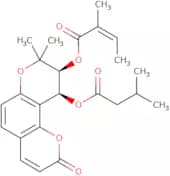
CAS :Produit contrôlé<p>1,3-Diethyl-8-phenylxanthine is a p2y receptor antagonist that inhibits bacterial growth by interfering with the energy metabolism of the cell. It is an analytical reagent that can be used to measure specific DNA sequences and has been shown to have genotoxic effects on cultured human cells. 1,3-Diethyl-8-phenylxanthine has also been shown to inhibit the growth of infectious bacteria such as staphylococcus aureus and Mycobacterium tuberculosis in vitro. This compound may be used as a potential biomarker for the identification of antimicrobial peptides that are active against Mycobacterium tuberculosis in humans.</p>Formule :C15H16N4O2Degré de pureté :Min. 95%Masse moléculaire :284.31 g/molPraeruptorin E
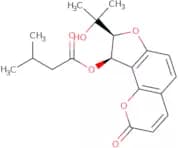
CAS :<p>Praeruptorin E is a natural furanocoumarin, which is derived from the roots of Peucedanum praeruptorum, a plant commonly used in traditional Chinese medicine. As a bioactive compound, Praeruptorin E exhibits significant pharmacological activities, particularly in cardiovascular, anti-inflammatory, and cytoprotective domains.</p>Degré de pureté :Min. 95%cis-Isokhellactone
CAS :<p>cis-Isokhellactone is a bioactive compound that belongs to the class of sesquiterpene lactones, which is isolated from plants in the genus Khella. With a well-characterized molecular structure, this compound exhibits significant binding affinity for cellular targets that are crucial in the regulation of cell proliferation and apoptosis. The mode of action involves the modulation of signaling pathways involved in cell cycle regulation and the induction of apoptosis in neoplastic cells.</p>Formule :C14H14O5Degré de pureté :Min. 95%Masse moléculaire :262.26 g/molPhellopterin
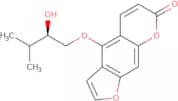
CAS :<p>Phellopterin is a bioactive compound belonging to the class of furanocoumarins. It is extracted from various plants within the Apiaceae family, notably Angelica and Peucedanum species. These plants are found in diverse geographical regions and have been used in traditional medicine for centuries.</p>Degré de pureté :Min. 95%4-fluoro-1-methyl-1,4-diazoniabicyclo[2.2.2]octane
CAS :<p>4-fluoro-1-methyl-1,4-diazoniabicyclo[2.2.2]octane (ditetrafluor) is a fluorine containing compound that can be used to treat cancer cells. It is a chiral molecule with four stereoisomers, two of which are active against cancer cells and the other two are inactive. Ditetrafluor has been shown to have antiviral activity against influenza A virus by inhibiting viral replication, but it does not have any effect on the common cold virus. This drug is also able to inhibit syncytia formation in cultured cells and has been shown to be effective in treating malaria caused by Plasmodium falciparum.</p>Formule :C7H15B2F9N2Degré de pureté :Min. 95%Masse moléculaire :319.82 g/molGraveolone
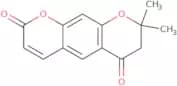
CAS :<p>Graveolone is a bioactive compound that functions as a plant defense enhancer, which is derived from certain plant species known for their antimicrobial properties. Its mode of action involves the activation of multiple signaling pathways that bolster the plant's innate immune response. By enhancing the synthesis of defensive proteins and secondary metabolites, Graveolone effectively fortifies plants against pathogenic challenges and abiotic stresses.</p>Formule :C21H22O7Degré de pureté :Min. 95%Masse moléculaire :386.4 g/molVaginidin
CAS :<p>Please enquire for more information about Vaginidin including the price, delivery time and more detailed product information at the technical inquiry form on this page</p>Formule :C19H22O6Degré de pureté :Min. 95%Masse moléculaire :346.37 g/mol3-Chloro-7-nitro-1H-indole
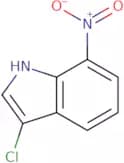
CAS :<p>3-Chloro-7-nitro-1H-indole is a chemical compound that has been shown to have antitumor activity in clinical trials. It is catalysed by the addition of chloride ions to the nitro group, yielding an aminocarbonyl intermediate. This intermediate reacts with hydrogen chloride to form a chlorinating agent that can react with DNA and protein bases. The chlorinating agent has been shown to be efficient in screening for anticancer drugs. 3-Chloro-7-nitro-1H-indole is currently being tested for efficacy against colon carcinoma cells and human colon carcinoma xenografts.</p>Formule :C8H5ClN2O2Degré de pureté :Min. 95%Masse moléculaire :196.59 g/molPranferol
CAS :<p>Pranferol is a phytochemical compound, which is derived from natural plant sources. It possesses unique immunomodulatory properties, affecting cellular pathways that regulate immune responses. The bioactive components in Pranferol interact with specific receptors on immune cells, modulating signaling cascades and gene expression to enhance or suppress specific immune functions depending on the physiological context.</p>Formule :C16H16O5Degré de pureté :Min. 95%Masse moléculaire :288.3 g/mol4-Aminobicyclo[2.2.2]octane-1-carboxylic acid methyl ester
CAS :<p>Please enquire for more information about 4-Aminobicyclo[2.2.2]octane-1-carboxylic acid methyl ester including the price, delivery time and more detailed product information at the technical inquiry form on this page</p>Formule :C10H17NO2Degré de pureté :Min. 95%Masse moléculaire :183.25 g/mol7-Prenyloxyumbelliferone
<p>7-Prenyloxyumbelliferone is a natural coumarin derivative, which is primarily sourced from plants belonging to the Rutaceae and Apiaceae families. This compound exhibits a range of biological activities, including anti-inflammatory, antioxidant, and antimicrobial properties. The mode of action of 7-Prenyloxyumbelliferone involves the modulation of specific enzymes and signaling pathways, such as the inhibition of cyclooxygenase and lipoxygenase, and the scavenging of free radicals, which collectively contribute to its pharmacological effects.</p>Degré de pureté :Min. 95%5-Bromo-1-methyl-1H-indole-3-carboxylic acid
CAS :Produit contrôlé<p>Please enquire for more information about 5-Bromo-1-methyl-1H-indole-3-carboxylic acid including the price, delivery time and more detailed product information at the technical inquiry form on this page</p>Formule :C10H8BrNO2Degré de pureté :Min. 95%Masse moléculaire :254.08 g/mol4-Amino-3-bromoisoquinoline
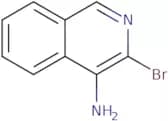
CAS :<p>4-Amino-3-bromoisoquinoline is an isocyanide that reacts with nucleophilic heteroatoms such as the amino group. It also reacts with bromine to form a bromopyridine. The nitrile group of 4-amino-3-bromoisoquinoline can be reduced with sodium borohydride to produce 4-aminoquinoline. This compound has shown potential for use in chemotherapy and treating bacterial infections.</p>Degré de pureté :Min. 95%2,3-Dihydro-1-(3-hydroxypropyl)-5-[(2R)-2-[[2-[2-(2,2,2-trifluoroethoxy)phenoxy]ethyl]amino]propyl]-1H-indole-7-carbonitrile
CAS :<p>Please enquire for more information about 2,3-Dihydro-1-(3-hydroxypropyl)-5-[(2R)-2-[[2-[2-(2,2,2-trifluoroethoxy)phenoxy]ethyl]amino]propyl]-1H-indole-7-carbonitrile including the price, delivery time and more detailed product information at the technical inquiry form on this page</p>Formule :C25H30F3N3O3Degré de pureté :Min. 95%Masse moléculaire :477.52 g/mol

![4-Aminobicyclo[2.2.2]octan-1-ol hydrochloride](/_next/image/?url=https%3A%2Fstatic.cymitquimica.com%2Fproducts%2F3D%2Fthumb-webp%2FFA63102.webp&w=3840&q=75)
![4-fluoro-1-methyl-1,4-diazoniabicyclo[2.2.2]octane](/_next/image/?url=https%3A%2Fstatic.cymitquimica.com%2Fproducts%2F3D%2Fthumb-webp%2FFF106220.webp&w=3840&q=75)
![4-Aminobicyclo[2.2.2]octane-1-carboxylic acid methyl ester](/_next/image/?url=https%3A%2Fstatic.cymitquimica.com%2Fproducts%2F3D%2Fthumb-webp%2FFA44258.webp&w=3840&q=75)

![2,3-Dihydro-1-(3-hydroxypropyl)-5-[(2R)-2-[[2-[2-(2,2,2-trifluoroethoxy)phenoxy]ethyl]amino]propyl…](/_next/image/?url=https%3A%2Fstatic.cymitquimica.com%2Fproducts%2F3D%2Fthumb-webp%2FFD103483.webp&w=3840&q=75)