Composés polycycliques
Les composés polycycliques sont des molécules organiques contenant plusieurs cycles interconnectés. Ces composés incluent les hydrocarbures aromatiques polycycliques et d'autres systèmes de cycles complexes. Ils sont importants dans les sciences des matériaux, les produits pharmaceutiques et l'électronique organique. Chez CymitQuimica, nous proposons des composés polycycliques de haute qualité pour soutenir vos recherches et applications industrielles, garantissant des résultats fiables et efficaces dans vos projets.
Sous-catégories appartenant à la catégorie "Composés polycycliques"
- Acridines(97 produits)
- Anthraquinones(533 produits)
- Acides anthraquinonesulfoniques(16 produits)
- Azobenzènes(270 produits)
- Azonaphtalènes(98 produits)
- Azoxybenzènes(12 produits)
- Azulènes(11 produits)
- Benzimidazoles(1.469 produits)
- Benzodioxanes(27 produits)
- Benzofuranes(923 produits)
- Benzothiophènes(690 produits)
- Benzotriazoles(436 produits)
- Binaphthyls(133 produits)
- Carbazoles(462 produits)
- Chromanes, Chromenes(480 produits)
- Coumarines(1.121 produits)
- Cyclophanes(11 produits)
- Fluorènes et Fluorénones(381 produits)
- Imidazopyridines(10 produits)
- Indans(118 produits)
- Indazoles(2.016 produits)
- Indenes(22 produits)
- Indoles(3.983 produits)
- Indolines(119 produits)
- Isatines(231 produits)
- Isobenzofuranes(17 produits)
- Phtalimides N-substitués(153 produits)
- Naphtalènes(2.426 produits)
- Naphtyridine(17 produits)
- Naphtoquinone(2 produits)
- Perylènes(36 produits)
- Phénazines(25 produits)
- Phtalazines(33 produits)
- Phtalimide(153 produits)
- Hydrocarbures aromatiques polycycliques (HAP)(270 produits)
- Polyphénol(261 produits)
- Ptéridines(52 produits)
- Pyrènes(87 produits)
- Quinuclidine(1 produits)
- Tétracènes(7 produits)
Affichez 32 plus de sous-catégories
4574 produits trouvés pour "Composés polycycliques"
Trier par
Degré de pureté (%)
0
100
|
0
|
50
|
90
|
95
|
100
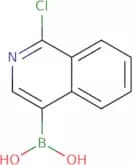
(1-Chloroisoquinolin-4-yl)boronic acid
CAS :<p>Please enquire for more information about (1-Chloroisoquinolin-4-yl)boronic acid including the price, delivery time and more detailed product information at the technical inquiry form on this page</p>Formule :C9H7BClNO2Degré de pureté :Min. 95%Masse moléculaire :207.42 g/mol4-Chloro-5H-pyrimido[5,4-b]indole
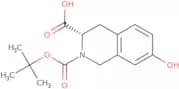
CAS :<p>Please enquire for more information about 4-Chloro-5H-pyrimido[5,4-b]indole including the price, delivery time and more detailed product information at the technical inquiry form on this page</p>Formule :C10H6ClN3Degré de pureté :Min. 95%Masse moléculaire :203.63 g/molBoc-(3S)-1,2,3,4-tetrahydroisoquinoline-7-hydroxy-3-carboxylic acid
CAS :<p>Boc-(3S)-1,2,3,4-tetrahydroisoquinoline-7-hydroxy-3-carboxylic acid is a synthetic opioid that is chemically related to morphine. It binds to the δ opioid receptor and has a clinical development in the treatment of pain. The drug has been shown to inhibit the binding of gtpγs, which leads to the suppression of neuronal activity. Boc-(3S)-1,2,3,4-tetrahydroisoquinoline-7-hydroxy-3-carboxylic acid also has low molecular weight and low toxicity.</p>Formule :C15H19NO5Degré de pureté :Min. 95%Couleur et forme :PowderMasse moléculaire :293.32 g/mol5,7-Dichloro-8-hydroxyquinoline
CAS :<p>5,7-Dichloro-8-hydroxyquinoline (5,7-DC8HQ) is a mitochondrial drug that inhibits mitochondrial functions by binding to the ATP synthase. It has been shown to be effective against bacteria resistant to antimicrobial agents in vivo and also showed genotoxic activity in vitro. 5,7-DC8HQ binds to the magnesium site of the ATP synthase protein and prevents the formation of an intramolecular hydrogen bond, which leads to inhibition of ATP synthesis. This drug has also been shown to cause membrane potential depolarization in mitochondria.</p>Formule :C9H5Cl2NODegré de pureté :Min. 98.5 Area-%Couleur et forme :White PowderMasse moléculaire :214.05 g/mol8-Bromoisoquinoline
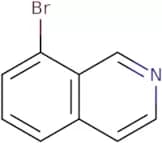
CAS :<p>8-Bromoisoquinoline is a bifunctional alkylating agent that is used to synthesize esters and amides. It is commonly used for the synthesis of amino acids, peptides, and other biologically active molecules. 8-Bromoisoquinoline has been shown to have a synergistic effect with hydroxyalkyl carbamates, which may be due to its ability to form an ionic bond with the carboxylic acid in these compounds. This chemical can also react with nitro groups and serve as a chlorinating agent, as well as react with anions such as phosphate and acetate. 8-Bromoisoquinoline can be synthesized by reacting ethyl bromoacetate with tetrahydroisoquinolinium chloride in hydrochloric acid or isopropyl alcohol.</p>Formule :C9H6BrNDegré de pureté :Min. 95%Couleur et forme :PowderMasse moléculaire :208.05 g/mol1,1'-Bicyclo[1,1,1]pentane-1,3-dicarboxylic acid monomethyl ester
CAS :<p>1,1'-Bicyclo[1,1,1]pentane-1,3-dicarboxylic acid monomethyl ester is a chemical compound used in research and as a building block for complex compounds. It is a high quality and versatile compound that has a wide range of uses in the production of fine chemicals. This compound is an intermediate for the synthesis of 1,4-benzodioxan. CAS No. 83249-10-9</p>Formule :C8H10O4Degré de pureté :Min. 95%Couleur et forme :White PowderMasse moléculaire :170.16 g/molIsobergapten
CAS :<p>Isobergapten is a naturally occurring furanocoumarin, which is primarily derived from plants in the Apiaceae family, such as celery and parsley. The compound is structurally characterized by its fused furan and coumarin rings. It exerts its effects through its ability to interact with cellular enzymes and DNA, often influencing photodynamic processes. This interaction can result in modifications to DNA replication and transcription, making it a compound of interest in photochemotherapy and photobiology.</p>Formule :C12H8O4Degré de pureté :Min. 95%Couleur et forme :PowderMasse moléculaire :216.19 g/mol4-Hydroxy-3-nitro-2(1H)-quinolinone
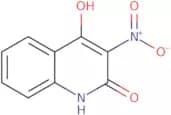
CAS :<p>4-Hydroxy-3-nitro-2(1H)-quinolinone is a quinoline derivative that has been shown to have anticancer activity against cancer cells. It can be used for the treatment of various types of cancer, including lung cancer, breast cancer, and colon cancer. This drug inhibits the growth of cancer cells by blocking the cycle at the G1 phase and inducing apoptosis. It also disrupts mitochondrial membrane potential, leading to an increase in reactive oxygen species and DNA damage. 4-Hydroxy-3-nitro-2(1H)-quinolinone is an epidermal growth factor receptor (EGFR) antagonist and blocks epidermal growth factor signaling through its inhibition of EGFR tyrosine kinase activity. It also downregulates TNFα expression in tumor cells by inhibiting NFκB activation.</p>Formule :C9H6N2O4Degré de pureté :Min. 95%Masse moléculaire :206.16 g/molIndole-3-acetyl-L-glutamic acid
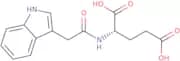
CAS :<p>Indole-3-acetyl-L-glutamic acid is an endogenous substance that is found in plants. It is the conjugated form of indole-3-acetaldehyde and L-glutamic acid. Indole-3-acetylglutamic acid has shown to have antioxidant potential and can be used to regulate plant growth, as well as protect against environmental stresses. Indole-3-acetylglutamic acid also has a role in regulating the production of other hormones, such as ethylene and auxin, which are involved in plant growth regulation.</p>Formule :C15H16N2O5Degré de pureté :Min. 98 Area-%Couleur et forme :PowderMasse moléculaire :304.3 g/mol2-Methyl-1H-imidazole-5-carboxylic acid
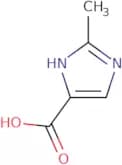
CAS :<p>2-Methyl-1H-imidazole-5-carboxylic acid is a molecule that belongs to the class of antibiotics. It has been shown to be an effective inhibitor of lipases and other enzymes, which is due to its carboxylate group. The immobilization of this molecule has been studied by X-ray crystallography. The oxygen atoms in the molecule are covalently immobilized on a silica surface via a linker chain, which prevents the loss of these atoms. Dichroism spectroscopy was used to study the effects of different solvents on this molecule's ability to rotate light. 2-Methyl-1H-imidazole-5-carboxylic acid was also successfully immobilized using an enzyme called lipase, with residue carboxylate groups positioned at the bottom of the binding cavity.</p>Formule :C5H6N2O2Degré de pureté :Min. 95%Couleur et forme :PowderMasse moléculaire :126.11 g/mol1-Allyl-3,7-dimethyl-8-phenylxanthine
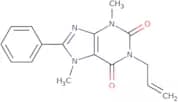
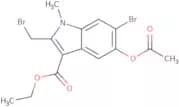
CAS :Produit contrôlé<p>Please enquire for more information about 1-Allyl-3,7-dimethyl-8-phenylxanthine including the price, delivery time and more detailed product information at the technical inquiry form on this page</p>Formule :C16H16N4O2Degré de pureté :Min. 95%Masse moléculaire :296.32 g/molEthyl5-acetoxy-6-bromo-2-(bromomethyl)-1-methyl-1H-indole-3-carboxylate
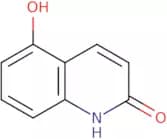
CAS :Produit contrôlé<p>Ethyl 5-acetoxy-6-bromo-2-(bromomethyl)-1-methyl-1H-indole-3-carboxylate is a chemical compound that has been shown to have anti viral activity in vitro. The structure of the compound suggests that it may inhibit the production of inflammatory cytokines. This drug inhibits the activity of enzymes such as hydroxylases and lipases, which are important for the inflammatory process. Ethyl 5-acetoxy-6-bromo-2-(bromomethyl)-1-methyl-1H-indole-3 carboxylate may be an effective treatment for bowel disease and other inflammatory conditions.</p>Formule :C15H15Br2NO4Degré de pureté :Min. 95%Masse moléculaire :433.09 g/mol5-Hydroxyquinolin-2(1H)-one
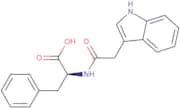
CAS :<p>5-Hydroxyquinolin-2(1H)-one is a chalcone that can be synthesized from 2,5-dihydroxybenzaldehyde and quinoline. It is a bacteriostatic agent that inhibits bacterial growth by binding to the 50S ribosomal subunit, blocking the formation of an antibiotic-substrate complex with the enzyme cell wall synthesis that is required for cell wall biosynthesis, inhibiting protein synthesis and cell division. 5-Hydroxyquinolin-2(1H)-one has shown activity against methicillin resistant Staphylococcus aureus (MRSA) and methicillin resistant Enterococcus faecium. 5-Hydroxyquinolin-2(1H)-one also represses the expression of DNA topoisomerase II genes, which may be associated with its inhibitory effects on bacterial growth.</p>Formule :C9H7NO2Degré de pureté :Min. 95%Masse moléculaire :161.16 g/molIndole-3-acetyl-L-phenylalanine
CAS :<p>Indole-3-acetyl-L-phenylalanine is a plant growth regulator that inhibits the transport of auxin in the plant. It is used as a regulatory agent to inhibit the growth of plants by interfering with their natural regulatory mechanisms. Indole-3-acetyl-L-phenylalanine is an effective inhibitor of auxin transport and has been shown to have an inhibitory effect on plant growth. This compound also binds to acid conjugates, which are found in plants, and blocks their ability to bind to auxin receptors, preventing them from activating the cell's responses. This inhibition leads to decreased cell division and reduced root growth.</p>Formule :C19H18N2O3Couleur et forme :PowderMasse moléculaire :322.36 g/mol4-Chloro-1H-imidazo[4,5-c]pyridine
CAS :<p>4-Chloro-1H-imidazo[4,5-c]pyridine (4CI) is a nucleoside analog that inhibits the replication of RNA and DNA. It has significant inhibitory activity against herpes simplex virus type 1 and human immunodeficiency virus type 1 (HIV-1). 4CI inhibits the synthesis of adenosine, an important component in the synthesis of RNA and DNA. This drug also has antiviral properties against influenza A and B viruses. 4CI's effect on plasma cholesterol levels is thought to be due to inhibition of 3-hydroxy-3-methylglutaryl coenzyme A reductase.</p>Formule :C6H4ClN3Degré de pureté :Min. 95%Couleur et forme :Off-White SolidMasse moléculaire :153.57 g/mol1,3-Dipropyl-7-methylxanthine
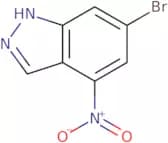
CAS :Produit contrôlé<p>1,3-Dipropyl-7-methylxanthine is a xanthine compound that is structurally related to caffeine. It has been shown to have an inhibitory effect on the production of reactive oxygen species and cytosolic calcium levels in primary cells, as well as a nonselective adenosine receptor antagonist activity. It has also been shown to antagonize the effects of adenosine receptors, p2 receptors, and p2y receptors. This drug is used for the treatment of basophilic leukemia.</p>Formule :C12H18N4O2Degré de pureté :Min. 95%Masse moléculaire :250.3 g/mol6-Bromo-4-nitro-1H-indazole
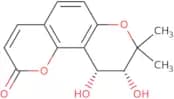
CAS :<p>Please enquire for more information about 6-Bromo-4-nitro-1H-indazole including the price, delivery time and more detailed product information at the technical inquiry form on this page</p>Formule :C7H4BrN3O2Degré de pureté :Min. 95%Masse moléculaire :242.03 g/molcis-Khellactone
CAS :<p>cis-Khellactone is a naturally occurring organic compound, which is a type of coumarin derivative sourced predominantly from the roots of Peucedanum and Angelica species, plants native to various regions. These botanical sources are known for yielding secondary metabolites with diverse biological properties.</p>Formule :C14H14O5Degré de pureté :Min. 95%Masse moléculaire :262.26 g/mol(S)-1,2,3,4,5,6,7,8-Octahydro-1-[(4-methoxyphenyl)methyl]isoquinoline (acetate salt )
CAS :<p>(S)-1,2,3,4,5,6,7,8-Octahydro-1-[(4-methoxyphenyl)methyl]isoquinoline (acetate salt ) is a diphosphine that can be used as a catalyst to produce formic acid from methanol and carbon monoxide. This product is an enantiomer of picric acid and has been shown to be an effective additive in the crystallization of picric acid. The acetate salt is also optically pure.</p>Degré de pureté :Min. 95%Ethyl 1,2-dimethyl-5-hydroxyindole-3-carboxylate
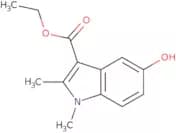
CAS :Produit contrôlé<p>Ethyl 1,2-dimethyl-5-hydroxyindole-3-carboxylate (EDMC) is an implantable drug that is used to treat hypertension. It is a diuretic that can be taken orally or injected. EDMC works by reducing the amount of urea nitrogen in the blood and increasing the amount of chlorine atom in the urine. This leads to an increase in active substances such as malonic acid and a decrease in arthropoda. EDMC has been shown to have antihypertensive activity due to its ability to lower diastolic and systolic pressure. The molecule also contains hydroxyl group and aldehyde groups that are analyzed by analytical chemistry.</p>Formule :C13H15NO3Degré de pureté :Min. 95%Masse moléculaire :233.26 g/mol

![4-Chloro-5H-pyrimido[5,4-b]indole](/_next/image/?url=https%3A%2Fstatic.cymitquimica.com%2Fproducts%2F3D%2Fthumb-webp%2FFC118328.webp&w=3840&q=75)

![1,1'-Bicyclo[1,1,1]pentane-1,3-dicarboxylic acid monomethyl ester](/_next/image/?url=https%3A%2Fstatic.cymitquimica.com%2Fproducts%2F3D%2Fthumb-webp%2FFB33677.webp&w=3840&q=75)

![4-Chloro-1H-imidazo[4,5-c]pyridine](/_next/image/?url=https%3A%2Fstatic.cymitquimica.com%2Fproducts%2F3D%2Fthumb-webp%2FFC32403.webp&w=3840&q=75)

![(S)-1,2,3,4,5,6,7,8-Octahydro-1-[(4-methoxyphenyl)methyl]isoquinoline (acetate salt )](/_next/image/?url=https%3A%2Fstatic.cymitquimica.com%2Fproducts%2F3D%2Fthumb-webp%2FFO29465.webp&w=3840&q=75)