Ligands organométalliques
Sous-catégories appartenant à la catégorie "Ligands organométalliques"
- Ligands de Buchwald(22 produits)
- DPEN(4 produits)
- DPHEN(4 produits)
- JOSIPHOS(4 produits)
- Phosphine(497 produits)
- Porphyrines(75 produits)
2889 produits trouvés pour "Ligands organométalliques"
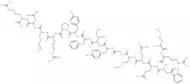
[Ala113]-MBP (104-118)
CAS :[Ala113]-MBP (104-118) is a synthetic peptide, which is derived from human myelin basic protein (MBP). It is used as a tool in neurobiological research to study demyelinating diseases such as multiple sclerosis. The peptide is synthesized by replacing the serine at position 113 with alanine in the MBP (104-118) sequence. This modification allows researchers to investigate the structural and functional roles of specific amino acids in interactions with cellular receptors or other proteins.
Formule :C67H104N20O19Degré de pureté :Min. 95%Masse moléculaire :1,493.7 g/molAlphos Pd G6 otf
CAS :Alphos Pd G6 otf is a fumigant formulation that releases phosphine gas, sourced from metal phosphides such as aluminum or magnesium phosphide. When exposed to moisture, the product undergoes hydrolysis, liberating phosphine, a potent gaseous phosphine (PH₃) compound. This mode of action is based on phosphine’s ability to disrupt cellular respiration in pests, leading to their effective eradication.
Formule :C60H71F10O4PPdSDegré de pureté :Min. 95%Masse moléculaire :1,215.65 g/molP73B, gst tagged human
CAS :P73B is a GST-tagged human protein, which is a recombinant fusion protein derived from an expression vector that incorporates a glutathione S-transferase (GST) tag. The GST tag originates from the parasitic helminth Schistosoma japonicum, and the fusion allows for a convenient purification process of the target protein through glutathione affinity chromatography.
Degré de pureté :Min. 95%CD 3254
CAS :CD 3254 is a biocidal agent, which is synthesized through a proprietary chemical process involving quaternary ammonium compounds. This agent acts by disrupting the cell membranes of bacteria, leading to cell lysis and death. The mode of action involves binding to the negatively charged bacterial cell surfaces, which compromises cell integrity and ultimately results in the leakage of cytoplasmic contents.
Formule :C24H28O3Degré de pureté :Min. 95%Masse moléculaire :364.48 g/molCimlanod
CAS :Please enquire for more information about Cimlanod including the price, delivery time and more detailed product information at the technical inquiry form on this page
Formule :C5H7NO4SDegré de pureté :Min. 95%Masse moléculaire :177.18 g/molJasplakinolide
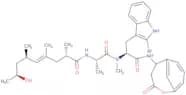
CAS :Jasplakinolide is a cyclodepsipeptide, which is isolated from marine sponge species, particularly of the genus Jaspis. It functions by binding to actin, a critical component of cellular cytoskeletons, where it induces polymerization and stabilization of actin filaments. This action results in the disruption of normal actin dynamics, impeding processes such as cell motility and division.
Formule :C36H45BrN4O6Degré de pureté :Min. 95%Couleur et forme :PowderMasse moléculaire :709.67 g/mol(3,5-Dibromo-4-hydroxyphenyl)(2-ethyl-6-hydroxybenzofuran-3-yl)methanone
CAS :(3,5-Dibromo-4-hydroxyphenyl)(2-ethyl-6-hydroxybenzofuran-3-yl)methanone is a specialized synthetic compound, often utilized in the field of biochemical research. Originating from organic synthesis, this compound is designed to interact with specific biological targets, typically involved in enzymatic or receptor-mediated pathways. Its dual-ring structure, incorporating bromine atoms, contributes to its unique reactivity and potential selectivity in biological systems.Formule :C17H12Br2O4Degré de pureté :Min. 95%Masse moléculaire :440.1 g/molVER-50589
CAS :VER-50589 is a broad-spectrum antibiotic, which is synthesized via a semi-synthetic process derived from natural penicillin compounds. This antibiotic exerts its effects predominantly through inhibiting the transpeptidation enzyme essential for bacterial cell wall synthesis. By binding to specific penicillin-binding proteins (PBPs) within the bacterial cell, it disrupts the formation of peptidoglycan cross-links, compromising cell wall integrity and leading to cell lysis.
Formule :C19H17ClN2O5Degré de pureté :Min. 95%Masse moléculaire :388.8 g/molTopfluor lyso pa
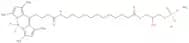
CAS :TopFluor Lyso PA is a fluorescently labeled lipid analog, derived from a lysophosphatidic acid (LPA) source, designed to facilitate the study of lipid-protein and lipid-lipid interactions. Its mode of action involves the integration of a fluorescent moiety onto the LPA backbone, enabling visualization and tracking within biological systems.
Formule :C32H54BF2N4O8PDegré de pureté :Min. 95%Masse moléculaire :702.57 g/molAdriforant hydrochloride
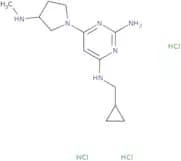
CAS :Adriforant hydrochloride is a synthetic histamine H4 receptor antagonist, which is derived through chemical synthesis. This compound specifically targets the H4 receptor, a member of the histamine receptor family, playing a crucial role in the modulation of immune response and inflammatory processes. The mode of action of adriforant hydrochloride involves competitive inhibition of the H4 receptor, thereby blocking the signaling pathways that contribute to the recruitment and activation of immune cells, such as eosinophils and T cells, which are pivotal in allergic and inflammatory conditions.
Formule :C13H25Cl3N6Degré de pureté :Min. 95%Masse moléculaire :371.7 g/molJNJ 10191584
CAS :JNJ 10191584 is a chemical compound that functions as a selective adrenergic receptor antagonist, developed through synthetic organic chemistry processes. This compound primarily affects the adrenergic system by blocking specific adrenergic receptors in the central nervous system. Its mode of action involves the inhibition of receptor activity, which modulates neurotransmitter release and influences various physiological responses.
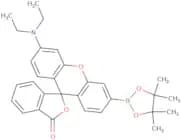
Formule :C13H15ClN4ODegré de pureté :Min. 95%Masse moléculaire :278.74 g/molPy1
CAS :Py1 is a biopesticide, which is a product derived from natural sources with a focus on sustainable agriculture. It is designed to harness the bioactive compounds produced by certain microbial strains. This biopesticide functions through a multifaceted mode of action, primarily targeting specific physiological and biochemical pathways within pest organisms, thereby inhibiting their growth and reproduction.
Formule :C30H32BNO5Degré de pureté :Min. 95%Masse moléculaire :497.39 g/molMots-C
CAS :Mots-C is a mitochondrial-derived peptide, which is encoded by the small open reading frame found within the mitochondrial 12S rRNA. This peptide functions by interacting with the cellular metabolic pathways to enhance mitochondrial bioenergetics and overall cellular metabolism. Mechanistically, Mots-C modulates the folate–methionine cycle, directly impacting glucose regulation and energy utilization, and consequently facilitating cellular adaptation to metabolic stress.
Formule :C101H152N28O22S2Degré de pureté :Min. 95%Masse moléculaire :2,174.6 g/molTubulin, gst tagged human
CAS :Tubulin, GST tagged human, is a recombinant protein used extensively in cell biology research. It is derived from a human source, with genetic engineering employed to append a Glutathione S-transferase (GST) tag. This tagging facilitates purification and enhances solubility, crucial for downstream applications.
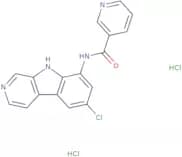
Degré de pureté :Min. 95%Ps-1145 dihydrochloride
CAS :PS-1145 dihydrochloride is a synthetic chemical compound that acts as a selective inhibitor of the enzyme IκB kinase β (IKK-β). This compound is typically derived through complex chemical synthesis techniques in laboratory environments. PS-1145 targets the NF-κB signaling pathway by directly binding to IKK-β, thereby inhibiting its activity. This inhibition prevents the phosphorylation and subsequent degradation of IκB proteins, which in turn retains NF-κB in the cytoplasm and prevents its transcriptional activity in the nucleus.
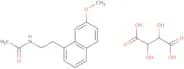
Formule :C17H13Cl3N4ODegré de pureté :Min. 95%Masse moléculaire :395.7 g/molAgomelatine (L(+)-tartaric acid)
CAS :Produit contrôléAgomelatine (L(+)-tartaric acid) is a synthetic antidepressant, which is derived from chemical synthesis. It acts primarily by serving as an agonist at melatonin MT1 and MT2 receptors and as an antagonist at 5-HT2C serotonin receptors. This dual mechanism of action is particularly significant as it helps regulate sleep-wake cycles and mood by re-establishing normal circadian rhythms.
Formule :C19H23NO8Degré de pureté :Min. 95%Masse moléculaire :393.4 g/mol(2S)-1-(7-Ethylfuro[2,3-G]indazol-1-yl)propan-2-amine
CAS :(2S)-1-(7-Ethylfuro[2,3-G]indazol-1-yl)propan-2-amine is a pharmacologically active compound that acts as a synthetic amine derivative. This compound is derived from the indazole class of heterocyclic aromatic organic compounds, which are renowned for their significant biological activities. The mechanism of action primarily involves its interaction with molecular targets within cancerous cells, potentially leading to the modulation of signal transduction pathways or inhibition of specific enzymes crucial for tumor growth and survival.
Formule :C14H17N3ODegré de pureté :Min. 95%Masse moléculaire :243.3 g/molMLT-747
CAS :MLT-747 is a high-performance polymer composite, which is a synthetic material derived from advanced polymerization techniques involving specific monomers and additives. Its formulation is designed to provide exceptional mechanical properties and thermal stability through the integration of reinforcing agents and proprietary chemical modifications.
Formule :C20H21Cl2N7O3Degré de pureté :Min. 95%Masse moléculaire :478.3 g/mol(D)-PPA 1
CAS :(D)-PPA, known as (D)-phenylpropanolamine, is a chiral compound frequently utilized in chemical research and synthesis. It is derived from the stereospecific synthesis of phenylpropanolamine, a known sympathomimetic compound. The mode of action of (D)-PPA involves interaction with adrenergic receptors, exhibiting a preference for specific binding characteristics associated with its stereochemistry. This interaction can influence various biochemical pathways, making it a valuable tool in the study of adrenergic functions on a molecular level.
Formule :C70H98N20O21Degré de pureté :Min. 95%Masse moléculaire :1,555.6 g/molPRT062607 (P505-15) HCl
CAS :PRT062607 (P505-15) HCl is a small-molecule inhibitor, which is a synthetic compound with a highly specific action on the 3-phosphoinositide-dependent protein kinase-1 (PDK1). This compound is derived through rational drug design processes aimed at modulating intracellular signaling pathways. PRT062607 acts by selectively binding to the ATP-binding site of PDK1, thereby inhibiting its kinase activity. This inhibition disrupts downstream signaling mediated by the phosphoinositide 3-kinase (PI3K) pathway, which is pivotal in regulating various cellular processes, including growth, survival, and metabolism.
Formule :C19H23N9O·HClDegré de pureté :Min. 95%Masse moléculaire :429.91 g/mol
![[Ala113]-MBP (104-118)](/_next/image/?url=https%3A%2Fstatic.cymitquimica.com%2Fproducts%2F3D%2Fthumb-webp%2FZDA02678.webp&w=3840&q=75)




![(2S)-1-(7-Ethylfuro[2,3-G]indazol-1-yl)propan-2-amine](/_next/image/?url=https%3A%2Fstatic.cymitquimica.com%2Fproducts%2F3D%2Fthumb-webp%2FXPA16384.webp&w=3840&q=75)