Composés organosiliciés
Sous-catégories appartenant à la catégorie "Composés organosiliciés"
4338 produits trouvés pour "Composés organosiliciés"
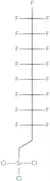
Trichloro(1H,1H,2H,2H-heptadecafluorodecyl)silane
CAS :Produit contrôléTrichloro(1H,1H,2H,2H-heptadecafluorodecyl)silane is a chemical substance that belongs to the group of synthetic substances. It has been shown to have antiviral properties in clinical studies. Trichloro(1H,1H,2H,2H-heptadecafluorodecyl)silane is used to synthesize thymidylate by a two-step process. The first step involves the hydrolysis of sodium hydroxide solution in the presence of hydroxide solution and chemical substances. The second step involves the reaction of synthase enzyme with waveform and water vapor to produce monolayer. This product also has antiviral activity against human pathogens such as HIV and herpes simplex virus type 1 (HSV-1).Formule :C10H4Cl3F17SiDegré de pureté :Min. 95%Couleur et forme :Clear LiquidMasse moléculaire :581.56 g/mol3-Aminopropyltrimethoxysilane
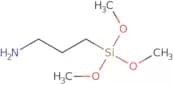
CAS :3-Aminopropyltrimethoxysilane is a chemical that belongs to the group of aminopropyltriethoxysilanes. It is a reactive substance and is commonly used as an additive in adhesives and sealants. 3-Aminopropyltrimethoxysilane has been shown to be an efficient coupling agent for the formation of hydroxyl groups on nanoparticles, which are then used as drug carriers. The optimum concentration of 3-aminopropyltrimethoxysilane lies between 0.01 and 0.1 M, with a pH range of 6 and 8. This chemical can react with hydrochloric acid, resulting in the production of hydrogen gas; with cervical cancer cells in culture, leading to cell death; or with skin cells, causing damage to their transport properties.Formule :C6H17NO3SiDegré de pureté :Min. 95%Couleur et forme :Clear LiquidMasse moléculaire :179.29 g/molDichloro(methyl)octadecylsilane
CAS :Dichloro(methyl)octadecylsilane is a liquid that is used to coat the inside of tubes in chromatographic columns. The coating ensures that the stationary phase (the material on which the analyte travels) remains stationary and is not carried away with the mobile phase. It has been shown to be effective at removing hydrogen chloride from water and can be used as a fabricating agent for coatings. Dichloro(methyl)octadecylsilane is used in analytical chemistry, where it has been shown to have a number of uses including being able to remove hydroxy groups from molecules and electron microscopy, where it can be used as a coating for nonpolar solvents.Degré de pureté :Min. 95%1-Methyl-3-(4,4,5,5-tetramethyl-1,3,2-dioxaborolan-2-yl)-1h-pyrazole
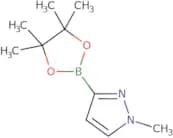
CAS :1-Methyl-3-(4,4,5,5-tetramethyl-1,3,2-dioxaborolan-2-yl)-1h-pyrazole is a reagent in organic synthesis. It is an intermediate in the synthesis of pinacol esters and isomers thereof. 1-Methyl-3-(4,4,5,5-tetramethyl-1,3,2-dioxaborolan-2-yl)-1h pyrazole can be prepared by diazotization with sodium nitrite and hydrochloric acid followed by heating in an alcoholic solution of pinacol. The synthetic method for this compound has been described.br>br> The target product of this chemical reaction is pinacol ester. Pinacol esters are used as intermediates for the synthesis of many other compounds including pharmaceuticals and fragrances. Diazotization with sodium nitrite and hydrochlorFormule :C10H17BN2O2Degré de pureté :Min. 95%Masse moléculaire :208.07 g/mol1-Hexyl-o-carborane
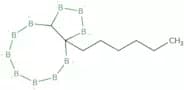
CAS :Produit contrôlé1-Hexyl-o-carborane is a human bioassay that has shown carcinogenic activity. It has been observed to cause cancer in humans through its ability to bind to DNA and alter the cell cycle. 1-Hexyl-o-carborane is an organometallic compound that binds to ferrocene and other organometallic compounds, preventing their use as anticancer drugs. 1-Hexyl-o-carborane can be synthesized by reacting hexylmagnesium bromide with ammonium carbonyl chloride in a one pot reaction.Formule :C8B10H24Degré de pureté :Min. 95%Masse moléculaire :228.39 g/molTrimethylsilylmethanethiol
CAS :Trimethylsilylmethanethiol (TMSET) is a thiol that is used as a reagent in organic synthesis. It is soluble in water and it has a high boiling point, making it useful for reactions that require heat. TMSET has been shown to be an effective antiviral agent against hepatitis C virus (HCV) and influenza A virus by binding to the viral receptor on the cell surface and preventing its entry into the cell. TMSET also inhibits neuronal function by binding to the hydroxy group of proteins, thereby disrupting their structure and function.Formule :C4H12SSiDegré de pureté :Min. 95%Masse moléculaire :120.29 g/molEpsilon-Carotene
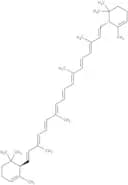
CAS :Epsilon-Carotene is a carotenoid that is found in plants. It is synthesized from beta-carotene through the action of enzymes called beta-carotene ketolases. Epsilon-Carotene can be cleaved by enzymes to produce lycopene and beta-cryptoxanthin. The biosynthesis of Epsilon-Carotene has been studied in a number of clinical studies, including the effect on human tissues and the prevention of cancer. Epsilon-Carotene has also been shown to have anti-inflammatory properties, which may be due to its ability to inhibit prostaglandin synthesis.Formule :C40H56Degré de pureté :Min. 95%Masse moléculaire :536.87 g/molEthylamine-boron trifluoride
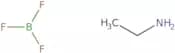
CAS :Produit contrôléEthylanine-boron trifluoride complex (EBTF) is a reactive intermediate that is used in the synthesis of epoxy resins. EBTF reacts with dibutyltin oxide to produce a boron-containing reaction product. The mechanism of this reaction has been studied using fluorescence probes and is found to be dependent on temperature and concentration. EBTF also reacts with epoxides, glycol ethers, and fatty acids to form similar products with different structures. This chemical can be used as a thermal expansion agent for coatings or as a crosslinking agent in polymers.Formule :C2H7BF3NDegré de pureté :Min. 95%Couleur et forme :White To Off-White SolidMasse moléculaire :112.89 g/mol2-Methoxypyrimidine-5-boronic acid
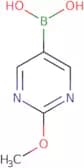
CAS :Please enquire for more information about 2-Methoxypyrimidine-5-boronic acid including the price, delivery time and more detailed product information at the technical inquiry form on this pageFormule :C5H7BN2O3Degré de pureté :Min. 95%Masse moléculaire :153.93 g/mol2-(4-(4,4,5,5-Tetramethyl-l.3,2-dioxaborolan-2-yl)phenyl)ethanol
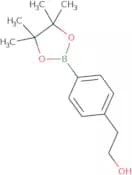
CAS :2-(4-(4,4,5,5-Tetramethyl-l,3,2-dioxaborolan-2-yl)phenyl)ethanol is a fine chemical that has been used as a reagent and as a building block for the synthesis of complex compounds. It is also an intermediate in organic reactions and has been used as a reaction component in the synthesis of various drugs and agrochemicals. 2-(4-(4,4,5,5-Tetramethyl-l,3,2-dioxaborolan-2-yl)phenyl)ethanol is useful as a scaffold in organic synthesis. This compound can be converted to other useful chemicals such as tetrahydropyranones and dibenzalacetone derivatives. 2-(4-(4,4,5,5-Tetramethyl-l,3,2-dioxaborolan-2-yl)phenyl)ethanolFormule :C14H21BO3Degré de pureté :Min. 95%Couleur et forme :White PowderMasse moléculaire :248.13 g/mol1-Butyl-3-methylimidazolium terafluoroborate
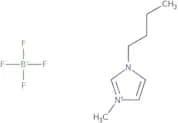
CAS :1-Butyl-3-methylimidazolium terafluoroborate is an ionic liquid that has been used in a number of research applications.Formule :C8H15N2·BF4Degré de pureté :Min. 95%Couleur et forme :Colorless PowderMasse moléculaire :226.02 g/molTetrahydroxydiborane
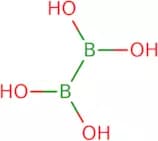
CAS :Tetrahydroxydiborane is an organic compound that contains a hydroxyl group. It has been shown to be an effective nucleophile in the mechanism studies of hydrolysis of halides and nitro compounds. Tetrahydroxydiborane is also used in the Suzuki coupling reaction, which is a chemical reaction between an aryl halide and sodium carbonate, as well as in cationic polymerization. This compound may also have biological applications such as the use of tetrahydroxydiborane as a fluorescence probe for optical sensor detection of autoimmune diseases.
Formule :H4B2O4Degré de pureté :Min. 95%Couleur et forme :White PowderMasse moléculaire :89.65 g/mol3-Chloro-4-cyanophenylboronic acid
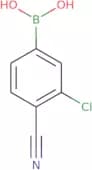
CAS :Produit contrôléPlease enquire for more information about 3-Chloro-4-cyanophenylboronic acid including the price, delivery time and more detailed product information at the technical inquiry form on this pageFormule :C7H5BClNO2Degré de pureté :Min. 95%Masse moléculaire :181.38 g/mol(-)-B-Chlorodiisopinocampheylborane, 65% heptane solution
CAS :(-)-B-Chlorodiisopinocampheylborane is a synthetic compound that belongs to the class of diketones. It has been used in asymmetric synthesis, metathesis reactions, and as a catalyst for the preparation of chiral compounds. (-)-B-Chlorodiisopinocampheylborane can be synthesized from trifluoromethylation using chlorodiphenylsilane and sodium borohydride in heptane. This agent has been shown to be effective for the production of β-unsaturated ketones by reaction with carbonyl groups. The reaction produces a racemic mixture of enantiomers, which are isomers that are not identical but have the same chemical formula and similar physical properties. (-)-B-Chlorodiisopinocampheylborane can also be used as an intermediate for the synthesis of latanoprost lactol, which is a prostaglandinFormule :C20H34BClDegré de pureté :Min. 95%Couleur et forme :Clear LiquidMasse moléculaire :320.75 g/molDimethylphenylsilane
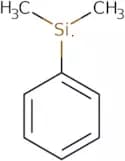
CAS :Dimethylphenylsilane is a chemical compound that belongs to the group of trifluoroacetic acid derivatives. It is used as an antimicrobial agent and has been shown to be effective against Gram-positive bacteria, Gram-negative bacteria, and yeast. Dimethylphenylsilane has been shown to inhibit the proliferation of microorganisms by binding to the hydroxyl group in methacrylates and irreversible oxidation of unsaturated alkyl compounds. The reaction mechanism for this process is still unclear but it is thought that it may involve a transfer reaction or a reaction intermediate. Dimethylphenylsilane can be used as a solid catalyst in reactions involving unsaturated alkyl compounds.
Formule :C8H12SiDegré de pureté :Min. 95%Couleur et forme :Clear LiquidMasse moléculaire :136.27 g/mol(2,4-Dimethylphenyl)boronic acid
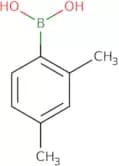
CAS :(2,4-Dimethylphenyl)boronic acid is an arylboronic acid that is used in organic synthesis. The boron atom of the 2,4-dimethylphenyl group coordinates with the metal atom in the catalyst to form a stable complex. This allows for a multilayer reaction and fluorescence to occur. The activated fluorine atoms can be used to boost the reaction by adding them to the substrate and increasing the rate of oxidation. Astragalus membranaceus and rapeseed extracts have been shown to increase the rate of oxidation as well as inhibiting the formation of disaccharides. These extracts also have shown anti-inflammatory effects when tested on rats. (2,4-Dimethylphenyl)boronic acid has also been found to interact with dihydroisoquinolines, which are compounds that are structurally similar to morphine and codeine.Formule :C8H11BO2Degré de pureté :Min. 95%Masse moléculaire :149.98 g/mol4-(4-Oxopiperidine-1-carbonyl)phenylboronic acid
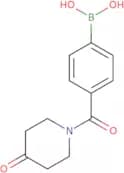
CAS :Produit contrôléPlease enquire for more information about 4-(4-Oxopiperidine-1-carbonyl)phenylboronic acid including the price, delivery time and more detailed product information at the technical inquiry form on this pageFormule :C12H14BNO4Degré de pureté :Min. 95%Masse moléculaire :247.05 g/molSilver tetrafluoroborate
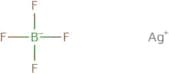
CAS :Silver tetrafluoroborate (AgBF) is a chemical reagent that is used in analytical chemistry and structural analysis. It has shown to be a stable complex with organic molecules, such as fatty acids, and has been used to study the properties of these compounds. AgBF is an inorganic salt that can be synthesized by reacting silver nitrate and barium fluoride in the presence of trifluoroacetic acid. This compound has also been found to form stable complexes with organic molecules containing a hydroxyl group or nitrogen atom. The structure of AgBF has been determined through X-ray crystal structures and electron diffraction patterns. The molecule consists of two symmetric chains joined by a central disulfide bond.
Formule :AgBF4Degré de pureté :Min. 95%Couleur et forme :PowderMasse moléculaire :194.67 g/molBis (1,5-Cyclooctadiene) rhodium(I)tetrafluoroborate
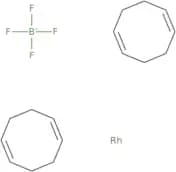
CAS :Bis (1,5-Cyclooctadiene) rhodium(I)tetrafluoroborate (BODIPY) is a catalyst that enhances the rate of hydrosilylation reactions. This catalyst has been shown to be effective in the synthesis of aryl chlorides from amines and aldehydes with high enantioselectivity. BODIPY is also immobilized on silica gel to create an active catalyst for asymmetric synthesis. The immobilization process on silica gel is done by reacting BODIPY with ammonium formate and amines. The resulting catalyst can be used for the synthesis of functionalized organic compounds, such as pyrrolidines, tetrahydrofurans, and thiophenes.Formule :C16H24BF4RhDegré de pureté :Min. 95%Masse moléculaire :406.07 g/molIsopentylboronic acid
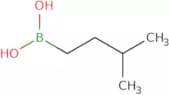
CAS :Isopentylboronic acid is a boron-containing organic compound that is used for the catalysis of cross-coupling reactions, such as the Suzuki reaction. It reacts with aryl halides to form an alkylboronic ester and a metal salt. Isopentylboronic acid is also used to produce trimers in the presence of formyl or nitro groups. Isopentylboronic acid may also be used as a reagent to convert alcohols into chlorides or bromides. This compound has been shown to react with alkali metal ions on one side and alkyl substituents on the other side, leading to deuterium incorporation at the carbon atom adjacent to the carboxylic acid group. Isopentylboronic acid can also be used for dehydrating alcohols and converting alkynes into alkenes when heated in the presence of an alkali metal chloride.
Formule :C5H13BO2Degré de pureté :Min. 95%Masse moléculaire :115.97 g/mol