Halogénures organiques
Sous-catégories appartenant à la catégorie "Halogénures organiques"
20442 produits trouvés pour "Halogénures organiques"
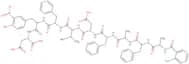
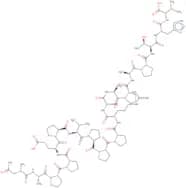
Dnp-(Leu421)-Collagen Type VIII a1 Chain (419-426) amide (human, mouse) trifluoroacetate salt
Please enquire for more information about Dnp-(Leu421)-Collagen Type VIII a1 Chain (419-426) amide (human, mouse) trifluoroacetate salt including the price, delivery time and more detailed product information at the technical inquiry form on this page
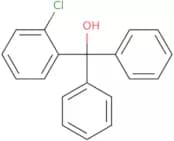
Formule :C40H64N14O12SDegré de pureté :Min. 95%Masse moléculaire :965.09 g/mol(2-Chlorophenyl)diphenylmethanol
CAS :2-Chlorophenyl)diphenylmethanol is an antifungal drug that blocks the function of a calcium ionophore in fungal cells. It has been shown to be effective against a variety of filamentous fungi, including Aspergillus fumigatus, Candida albicans, and Trichosporon cutaneum. This drug is used as a topical antifungal agent for treatment of skin infections caused by these fungi. 2-Chlorophenyl)diphenylmethanol has been shown to have anti-inflammatory properties in animal models of kidney fibrosis and cell binding. Clinical data suggests that it can be used for the prevention or treatment of stem cell transplantation complications such as graft versus host disease and leukemia.
Formule :C19H15ClODegré de pureté :Min. 95%Couleur et forme :PowderMasse moléculaire :294.77 g/mol3-Amino-4-fluorobenzoic acid
CAS :3-Amino-4-fluorobenzoic acid is a hydrocarbon that is used as an analgesic. It has been shown to be nontoxic and has analgesic effects in the intestinal tract. 3-Amino-4-fluorobenzoic acid also has radiopaque properties, which makes it useful for diagnosis and treatment of certain types of cancer and other tumors. The analgesic effect of 3-amino-4-fluorobenzoic acid may be due to its ability to act as a competitive antagonist at the N -methyl--aspartate (NMDA) receptor, which is important in pain perception.
Formule :C7H6FNO2Degré de pureté :Min. 95%Masse moléculaire :155.13 g/mol9-Fluorenone hydrazone
CAS :9-Fluorenone hydrazone is a compound that belongs to the group of chemical compounds known as heterocycles. It can be synthesized by reacting 9-fluorenone with hydrazine. The synthesis proceeds via an intramolecular hydrogen transfer reaction, which forms an unsymmetrical aldehyde. This aldehyde is oxidized to form the corresponding hydrazone through protonation and subsequent attack of a nitrogen nucleophile. Hydrazones are important for their antimicrobial properties and are used in the treatment of bacterial infections such as tuberculosis and leprosy. They are also used in the production of dyes and pharmaceuticals. The mechanism for this reaction involves the formation of an intermediate carbocation, followed by deprotonation to form the final product.
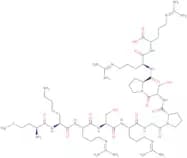
Formule :C13H10N2Degré de pureté :Min. 95%Couleur et forme :Yellow PowderMasse moléculaire :194.23 g/molBradykinin-Like Neuropeptide (Aplysia californica) trifluoroacetate salt
CAS :Please enquire for more information about Bradykinin-Like Neuropeptide (Aplysia californica) trifluoroacetate salt including the price, delivery time and more detailed product information at the technical inquiry form on this page
Formule :C53H98N24O14SDegré de pureté :Min. 95%Masse moléculaire :1,327.56 g/mol8-Chloroimidazo[1,2-a]pyrazine
CAS :Please enquire for more information about 8-Chloroimidazo[1,2-a]pyrazine including the price, delivery time and more detailed product information at the technical inquiry form on this page
Formule :C6H4ClN3Degré de pureté :Min. 95%Masse moléculaire :153.57 g/molRef: 3D-FC125475
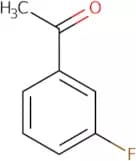
Produit arrêté1-Acetyl-3-fluorobenzene
CAS :1-Acetyl-3-fluorobenzene is a fluorinated aldehyde that reacts with tetrazolium chloride to form a red, insoluble precipitate. This reaction can be used as an indicator of the presence of colon cancer. The optimal reaction conditions are at pH 7 and a temperature between 60 and 70 °C. 1-Acetyl-3-fluorobenzene has shown significant cytotoxic activity against colon cancer cells in vitro and in vivo.
Formule :C8H7FODegré de pureté :Min. 95%Couleur et forme :Colorless Clear LiquidMasse moléculaire :138.14 g/mol6-Bromo-pyrazolo[1,5-a]pyrimidine
CAS :6-Bromo-pyrazolo[1,5-a]pyrimidine is a bone morphogenetic protein (BMP) inhibitor. It has been shown to be a potent inhibitor of the tyrosine kinase activity of BMP receptors and may be useful for the development of new strategies for the treatment of osteoporosis. 6-Bromo-pyrazolo[1,5-a]pyrimidine is also an effective inhibitor of the proliferation and survival of cancer cells. It inhibits cell growth by interfering with cellular signaling pathways that regulate these processes. 6-Bromo-pyrazolo[1,5-a]pyrimidine was also found to inhibit the production of bone morphogenetic protein 2 (BMP2) in mouse calvaria cells without affecting other bone metabolism markers such as alkaline phosphatase or osteocalcin.
Formule :C6H4BrN3Degré de pureté :Min. 95%Couleur et forme :PowderMasse moléculaire :198.02 g/molRef: 3D-FB140359
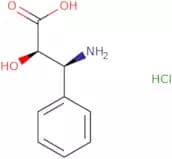
Produit arrêté(2R,3S)-3-Amino-2-hydroxy-3-phenylpropanoic acid hydrochloride
CAS :(2R,3S)-3-Amino-2-hydroxy-3-phenylpropanoic acid hydrochloride is an organic compound that is used in the manufacture of taxol, an anticancer drug. It is synthesized by reacting chloroacetic acid with a metal hydroxide, such as sodium hydroxide or potassium hydroxide. The reaction proceeds spontaneously to form the enantiomerically pure (2R,3S) form and unreacted (2S,3R) form. The (2R,3S) enantiomer has been found to be more reactive than the (2S,3R) form. Quaternary ammonium salts are formed when the (2R,3S) enantiomer reacts with quaternary ammonium compounds such as benzyltrimethylammonium chloride. This compound can also be used in catalytic reactions to produce drugs such as carbapenems and pen
Formule :C9H12ClNO3Degré de pureté :Min. 95%Masse moléculaire :217.65 g/mol2-Bromopyrazine
CAS :2-Bromopyrazine is a heterocyclic chemical compound that inhibits the activity of enzymes such as kinases. It has been shown to have anti-tumor properties in clinical studies and has been used in cancer research. 2-Bromopyrazine binds to nicotinic acetylcholine receptors, which are found on the surface of tumor cells. The binding of 2-bromopyrazine to these receptors causes an increase in ion flow across the membrane and leads to cell death. This drug also inhibits kinase activity, leading to decreased protein synthesis, which may account for its anti-tumor properties. 2-Bromopyrazine is soluble in organic solvents and insoluble in water. 2-Bromopyrazine is stable under acidic conditions but undergoes hydrolysis by hydrochloric acid, forming a salt and hydrogen bromide gas.
Formule :C4H3BrN2Degré de pureté :Min. 95%Couleur et forme :Colorless Clear LiquidMasse moléculaire :158.98 g/molRef: 3D-FB11224
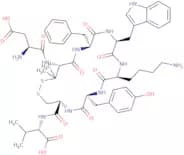
Produit arrêté(Pen 5)-Urotensin II (4-11) (human) trifluoroacetate salt
CAS :Please enquire for more information about (Pen 5)-Urotensin II (4-11) (human) trifluoroacetate salt including the price, delivery time and more detailed product information at the technical inquiry form on this page
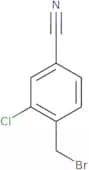
Formule :C52H68N10O12S2Degré de pureté :Min. 95%Masse moléculaire :1,089.29 g/mol4-(Bromomethyl)-3-chlorobenzonitrile
CAS :4-(Bromomethyl)-3-chlorobenzonitrile is a radioactive compound that has no specific use. It is used for the production of butylamino, which is a precursor to various other compounds. 4-(Bromomethyl)-3-chlorobenzonitrile can be used as an unlabelled replacement for any other radioactive compound in a laboratory setting.
Formule :C8H5BrClNDegré de pureté :Min. 95%Couleur et forme :SolidMasse moléculaire :230.49 g/molRef: 3D-FB163820
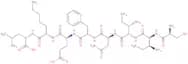
Produit arrêtéOvalbumin (257-264) (chicken) trifluoroacetate salt
CAS :Please enquire for more information about Ovalbumin (257-264) (chicken) trifluoroacetate salt including the price, delivery time and more detailed product information at the technical inquiry form on this page
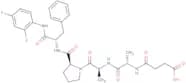
Formule :C45H74N10O13·C2HF3O2Degré de pureté :Min. 95%Masse moléculaire :1,077.15 g/molSuc-Ala-Ala-Pro-Phe-2,4-difluoroanilide
CAS :Please enquire for more information about Suc-Ala-Ala-Pro-Phe-2,4-difluoroanilide including the price, delivery time and more detailed product information at the technical inquiry form on this page
Formule :C30H35F2N5O7Degré de pureté :Min. 95%Masse moléculaire :615.63 g/mol6-Bromoisoquinoline
CAS :6-Bromoisoquinoline is a tetradentate ligand that can be used as a molecular model to study the binding of metal ions and organic molecules. 6-Bromoisoquinoline has been shown to bind covalently and noncovalently with phosphate groups on the surface of Caco-2 cells and to induce surface-enhanced Raman spectroscopy. This ligand has a high nucleophilicity and reacts readily with chloride, which is an acidic functional group. The reaction products are hydrochloric acid, trifluoroacetic acid, or both. 6-Bromoisoquinoline can also act as an allosteric modulator in some enzymes, such as phosphofructokinase in glycolysis.
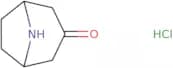
Formule :C9H6BrNDegré de pureté :Min. 95%Masse moléculaire :208.05 g/molNortropinone hydrochloride
CAS :Nortropinone hydrochloride is a molecule with a pyridinium moiety. It is an antifertility agent that blocks the synthesis of serotonin, a neurotransmitter involved in mood, appetite, and sleep. Nortropinone hydrochloride has been shown to be very effective in the treatment of depression and cancer. Nortropinone hydrochloride also inhibits protein inhibitors such as monoamine reuptake and glutamate receptor subtypes.
Formule :C7H12ClNODegré de pureté :Min. 95%Masse moléculaire :161.63 g/molRef: 3D-FN26479
Produit arrêtéAmylin (human) trifluoroacetate salt
CAS :Amylin is a hormone that regulates the release of insulin from the pancreas. Amylin is a protein that consists of 39 amino acids, and in its natural form it is not soluble in water. The amyloid fibrils are insoluble aggregates of proteins that can be found in the brain tissue of patients with Alzheimer's disease. Amylin has been shown to have an entrapment efficiency greater than 96% by using polymeric particles with a diameter less than 50 microns. These particles are able to increase water solubility and nutrient metabolism, as well as improve evaporation rates. They also provide an increased surface area for absorption and pharmacological properties. Amylin has been shown to lower postprandial glycemia when used with insulin in type II diabetes mellitus patients, and may also be an anorectic agent.
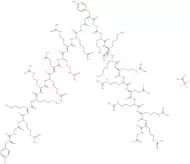
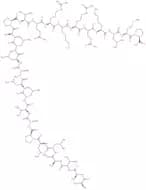
Formule :C165H261N51O55S2Degré de pureté :Min. 95%Masse moléculaire :3,903.28 g/molNuclear Factor NF-KB Inhibitor SN50 trifluoroacetate salt
CAS :SN50 is a nuclear factor NF-KB inhibitor that blocks the activity of transcription factors that are involved in inflammation and cancer. SN50 inhibits protease activity, which may be due to its ability to bind to response elements on DNA, leading to cytosolic calcium release and activation of signal pathways. It also binds to endothelin-a receptor and induces apoptosis. SN50 has been shown to have anti-tumour effects in resistant breast cancer cells as well as reducing serum aminotransferase levels in rats. This drug also activates transcriptional regulation by binding toll-like receptors and inducing colony stimulating factors. SN50 also has cardioprotective properties, which may be due to its ability to inhibit fatty acid synthase in cardiomyocytes.Formule :C129H230N36O29SDegré de pureté :Min. 95%Masse moléculaire :2,781.5 g/molFlunarizine dihydrochloride
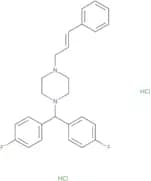
CAS :T-type calcium channel inhibitor
Formule :C26H28Cl2F2N2Degré de pureté :Min. 95%Couleur et forme :PowderMasse moléculaire :477.42 g/molMethyl 3-chlorophenylacetate
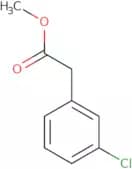
CAS :Methyl 3-chlorophenylacetate is a chemical intermediate that has been used in the synthesis of pharmaceuticals and organic compounds. It has also been used as a reagent for research, especially in the study of organic chemistry. Methyl 3-chlorophenylacetate is a versatile building block and can be used as a reaction component to synthesize other chemicals. This compound is also an excellent scaffold for medicinal chemistry.
Formule :C9H9ClO2Degré de pureté :Min. 95%Couleur et forme :Clear LiquidMasse moléculaire :184.62 g/molPAR-2 (1-6) amide (human) trifluoroacetate salt
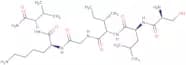
CAS :PAR-2 (1-6) amide (human) trifluoroacetate salt H-Ser-Leu-Ile-Gly-Lys-Val-NH2 trifluoroacetate salt is a protease inhibitor that inhibits the activity of PAR2, a protein receptor. PAR2 is implicated in cancer and inflammation. It has been shown to inhibit growth factor signaling, as well as activate toll-like receptor 4 and other inflammatory pathways. PAR2 inhibition has also been studied in vivo and found to be effective in treating wild type mice with melanoma cells. In vitro studies have shown that PAR2 inhibition by PAR 2 (1-6) amide (human) trifluoroacetate salt H-Ser-Leu-Ile-Gly-Lys-Val NH2 trifluoroacetate salt blocks the production of tumour necrosis factor alpha and interleukin 6.Formule :C28H54N8O7Degré de pureté :Min. 95%Masse moléculaire :614.78 g/molH-Asp(OtBu)-2-chlorotrityl resin (200-400 mesh)
Please enquire for more information about H-Asp(OtBu)-2-chlorotrityl resin (200-400 mesh) including the price, delivery time and more detailed product information at the technical inquiry form on this page
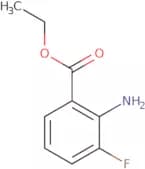
Degré de pureté :Min. 95%2-Amino-3-fluorobenzoic acid ethyl ester
CAS :Please enquire for more information about 2-Amino-3-fluorobenzoic acid ethyl ester including the price, delivery time and more detailed product information at the technical inquiry form on this pageFormule :C9H10FNO2Degré de pureté :Min. 95%Couleur et forme :PowderMasse moléculaire :183.18 g/mol1-(4,4'-Difluorobenzhydry)piperazine
CAS :1-(4,4'-Difluorobenzhydry)piperazine (1-DFBP) is a potential antitumor agent that has been shown to inhibit the growth of leukemia cells. It may be an inhibitor of apoptotic cell death, as it has been shown to induce hydrogen bond formation with coumarin derivatives. 1-DFBP has also been shown to have inhibitory activities against leukemia HL-60 cells, and is a competitive inhibitor of cinnarizine. The catalytic mechanism for 1-DFBP is not known, although kinetic data suggest that it involves hydrogen bonding and/or pi stacking interactions.
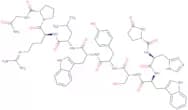
Formule :C17H18F2N2Degré de pureté :Min. 95%Masse moléculaire :288.34 g/mol(D-Ser4,D-Trp6)-LHRH trifluoroacetate salt
CAS :Please enquire for more information about (D-Ser4,D-Trp6)-LHRH trifluoroacetate salt including the price, delivery time and more detailed product information at the technical inquiry form on this pageFormule :C64H82N18O13Degré de pureté :Min. 95%Masse moléculaire :1,311.45 g/molH-Ala-2-chlorotrityl resin (200-400 mesh) (Low Substitution)
Please enquire for more information about H-Ala-2-chlorotrityl resin (200-400 mesh) (Low Substitution) including the price, delivery time and more detailed product information at the technical inquiry form on this page
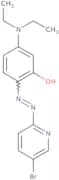
Degré de pureté :Min. 95%2-(5-Bromo-2-pyridylazo)-5-(diethylamino)phenol
CAS :2-(5-Bromo-2-pyridylazo)-5-(diethylamino)phenol is a chemical that is used for the detection of hydrochloric acid in water vapor. It reacts with zirconium oxide, which generates a red fluorescing complex. The reaction can be detected by using a fluorescence spectrometer with a test sample. 2-(5-Bromo-2-pyridylazo)-5-(diethylamino)phenol is also used to detect the presence of nitrogen atoms and sodium citrate in samples by reacting with them. This chemical reacts with an acid complex to form stable complexes. The analytical method is based on measuring the redox potential of this reaction. The flow system of this technique allows for dehydration of dehydroascorbic acid (DHA).
Formule :C15H17BrN4ODegré de pureté :Min. 95%Couleur et forme :PowderMasse moléculaire :349.23 g/molRef: 3D-FB71704
Produit arrêtéAmyloid beta-Protein (33-42) trifluoroacetate salt
CAS :Please enquire for more information about Amyloid beta-Protein (33-42) trifluoroacetate salt including the price, delivery time and more detailed product information at the technical inquiry form on this pageFormule :C41H74N10O11SDegré de pureté :Min. 95%Masse moléculaire :915.15 g/molNeuroendocrine Regulatory Peptide-4 (human, mouse, rat) trifluoroacetate salt
CAS :Please enquire for more information about Neuroendocrine Regulatory Peptide-4 (human, mouse, rat) trifluoroacetate salt including the price, delivery time and more detailed product information at the technical inquiry form on this pageFormule :C87H135N25O24Degré de pureté :Min. 95%Masse moléculaire :1,915.16 g/mol4-Bromobenzo[b]thiophene
CAS :Intermediate in the synthesis of brexpiprazole
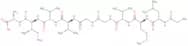
Formule :C8H5BrSDegré de pureté :Min. 95%Masse moléculaire :213.1 g/molAbz-Ala-Phe-Ala-Phe-Asp-Val-Phe-3-nitro-Tyr-Asp-OH trifluoroacetate salt
CAS :Please enquire for more information about Abz-Ala-Phe-Ala-Phe-Asp-Val-Phe-3-nitro-Tyr-Asp-OH trifluoroacetate salt including the price, delivery time and more detailed product information at the technical inquiry form on this pageFormule :C62H71N11O18Degré de pureté :Min. 95%Masse moléculaire :1,258.29 g/molTAT 2-4 trifluoroacetate salt
CAS :Trifluoroacetate saltFormule :C132H240N66O29Degré de pureté :Min. 95%Masse moléculaire :3,215.75 g/molAtrial Natriuretic Factor (1-28) (human) hydrochloride salt
CAS :Produit contrôléPlease enquire for more information about Atrial Natriuretic Factor (1-28) (human) hydrochloride salt including the price, delivery time and more detailed product information at the technical inquiry form on this pageFormule :C127H203N45O39S3Degré de pureté :Min. 95%Masse moléculaire :3,080.45 g/molAmmonium Undecafluorohexanoate
CAS :Undecafluorohexanoic acid is a perfluoroalkyl carboxylic acid that has been shown to disrupt steroidogenesis in vitro. It may be able to inhibit the transport of cholesterol, fats, and other lipids in cells, which causes disruption in steroidogenesis. This compound also has anti-cancer properties due to its ability to induce apoptosis and arrest cancer cell proliferation. Undecafluorohexanoic acid may also have developmental effects on animals because it can bind to estrogen receptors and disrupt the normal process of estrogen-mediated signaling pathways.
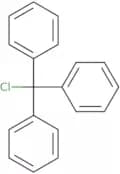
Formule :C6H4F11NO2Degré de pureté :Min. 95%Masse moléculaire :331.08 g/molTrityl chloride resin
CAS :Trityl chloride resin is a chemical compound that is used as a model system for the study of trifluoroacetic acid and its reactions. Trityl chloride resin is insoluble in water and has been used as a reaction solution for transfer reactions. It has been shown to be an effective ligand for many types of receptors, with binding constants ranging from 10 M-1 to 10 M-10. Trityl chloride resin can also be chiral, which means that it may exist in two forms that are mirror images of each other. The physiological effects of this compound are not well understood, but it has been shown to have an effect on coordination geometry.
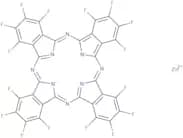
Couleur et forme :PowderZinc 1,2,3,4,8,9,10,11,15,16,17,18,22,23,24,25-hexadecafluoro-29H,31H-phthalocyanine
CAS :Please enquire for more information about Zinc 1,2,3,4,8,9,10,11,15,16,17,18,22,23,24,25-hexadecafluoro-29H,31H-phthalocyanine including the price, delivery time and more detailed product information at the technical inquiry form on this pageFormule :C32F16N8ZnDegré de pureté :Min. 95%Masse moléculaire :865.75 g/molRef: 3D-FZ101052
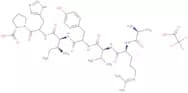
Produit arrêtéAngiotensin A (1-7) trifluoroacetate
CAS :Endogenous heptapetide which causes vasodilation and has anti-hypertensive properties.
Formule :C40H62N12O9•(C2HF3O2)xDegré de pureté :Min. 95%Couleur et forme :PowderMasse moléculaire :855 g/mol2,3,5-Trichlorobenzaldehyde
CAS :2,3,5-Trichlorobenzaldehyde is a chemical compound that has been shown to have anticancer and apoptotic effects. It inhibits the growth of bacteria by chelating iron ions and inhibiting bacterial dna synthesis. 2,3,5-Trichlorobenzaldehyde has also been shown to inhibit the growth of cancer cells in culture in an experimental study. This chemical has been used as a substrate for nmr spectroscopy to study its functional groups and radical scavenging activities. 2,3,5-Trichlorobenzaldehyde can be synthesized from phenacyl chloride and benzaldehyde in the presence of hydrogen chloride gas. The carbonyl group in 2,3,5-trichlorobenzaldehyde may cause metabolic disorders such as diabetes mellitus or hyperglycemia.
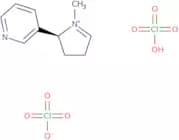
Formule :C7H3Cl3ODegré de pureté :Min. 95%Couleur et forme :PowderMasse moléculaire :209.46 g/molS-(-)-Nicotine-delta1’-(5’)-iminium diperchlorate salt
CAS :Please enquire for more information about S-(-)-Nicotine-delta1’-(5’)-iminium diperchlorate salt including the price, delivery time and more detailed product information at the technical inquiry form on this page
Formule :C10H14Cl2N2O8Degré de pureté :Min. 95%Masse moléculaire :361.13 g/molRef: 3D-FN26207
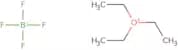
Produit arrêtéTriethyloxonium tetrafluoroborate
CAS :Triethyloxonium tetrafluoroborate is an antimicrobial agent that inhibits the transfer of electrons from one molecule to another. It has been shown to be effective against methicillin-resistant Staphylococcus aureus and Mycobacterium tuberculosis. Triethyloxonium tetrafluoroborate binds to the bacterial enzyme, Jak1, which is involved in the formation of cytokines and interleukins. This binding inhibits the production of these molecules, leading to cell death by apoptosis. The use of triethyloxonium tetrafluoroborate as a research tool has facilitated its discovery as a potential anti-inflammatory drug for autoimmune diseases such as type 1 diabetes mellitus and rheumatoid arthritis. Triethyloxonium tetrafluoroborate can be used to inhibit amide synthesis, which may have applications in the study of carbohydrate chemistry and nitrogen atoms in biological systems. This compound has also been used
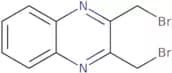
Formule :C6H15BF4ODegré de pureté :Min. 95%Couleur et forme :PowderMasse moléculaire :189.99 g/mol2,3-Bis(bromomethyl)quinoxaline
CAS :2,3-Bis(bromomethyl)quinoxaline is a nitrogenous heterocyclic compound that has a coordination geometry of square planar. It has been used as an inhibitor for the protein p21 and the nucleophile in palladium complexes. 2,3-Bis(bromomethyl)quinoxaline is also a model system for studying reaction mechanisms and chemical structures. The electron density map of the compound was obtained by X-ray crystal structure analysis. The reaction mechanism of this molecule is proposed to be through a chelate ring cross-coupling process.
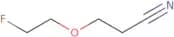
Formule :C10H8Br2N2Degré de pureté :Min. 95%Couleur et forme :Brown PowderMasse moléculaire :315.99 g/mol3-(2-Fluoroethoxy)Propanenitrile
CAS :3-(2-Fluoroethoxy)Propanenitrile is a chemical with toxic properties. It is classified as a fluoroacetic acid and has been used in the production of other chemicals. Fluoroacetic acid is toxic to humans, showing signs of skin irritation, respiratory tract irritation, and kidney damage. 3-(2-Fluoroethoxy)Propanenitrile is not found naturally and has been sponsored by many companies.
Formule :C5H8FNODegré de pureté :Min. 95%Masse moléculaire :117.12 g/mol



![8-Chloroimidazo[1,2-a]pyrazine](/_next/image/?url=https%3A%2Fstatic.cymitquimica.com%2Fproducts%2F3D%2Fthumb-webp%2FFC125475.webp&w=3840&q=75)
![6-Bromo-pyrazolo[1,5-a]pyrimidine](/_next/image/?url=https%3A%2Fstatic.cymitquimica.com%2Fproducts%2F3D%2Fthumb-webp%2FFB140359.webp&w=3840&q=75)




![4-Bromobenzo[b]thiophene](/_next/image/?url=https%3A%2Fstatic.cymitquimica.com%2Fproducts%2F3D%2Fthumb-webp%2FFB57657.webp&w=3840&q=75)