Halogénures organiques
Dans cette catégorie, vous trouverez des molécules organiques contenant un ou plusieurs atomes d'halogène dans leur structure. Ces halogénures organiques incluent des composés bromés, iodés, chlorés et des halogénures cycliques. Les halogénures organiques sont largement utilisés en synthèse organique, en pharmaceutique, en agrochimie et en science des matériaux en raison de leur réactivité et de leur capacité à subir une variété de transformations chimiques. Chez CymitQuimica, nous offrons une sélection complète d'halogénures organiques de haute qualité pour soutenir vos applications de recherche et industrielles, garantissant une performance fiable et efficace dans vos projets synthétiques et analytiques.
Sous-catégories appartenant à la catégorie "Halogénures organiques"
20440 produits trouvés pour "Halogénures organiques"
Trier par
Degré de pureté (%)
0
100
|
0
|
50
|
90
|
95
|
100
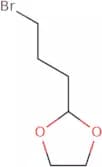
2-(3-Bromopropyl)-1,3-dioxolane
CAS :<p>2-(3-Bromopropyl)-1,3-dioxolane is a detectable, organometallic compound with the chemical formula CHBrO. It has been used in asymmetric synthesis as an intermediate for the construction of alcohols and aldehydes. The compound reacts with aldehydes to form 2-bromoacetophenones or 2-bromoacetals, which are useful intermediates for the synthesis of other compounds. 2-(3-Bromopropyl)-1,3-dioxolane has also been shown to be effective against Gram-negative bacteria and resistant parasites such as ectoparasites and cross-coupling. Trifluoroacetic acid is used in multidrug efflux pump inhibition studies on Gram-negative bacteria.</p>Formule :C6H11BrO2Degré de pureté :Min. 95%Masse moléculaire :195.05 g/mol[(4-Methyl-1,3-thiazol-2-yl)methyl]amine dihydrochloride
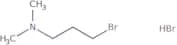
CAS :Please enquire for more information about [(4-Methyl-1,3-thiazol-2-yl)methyl]amine dihydrochloride including the price, delivery time and more detailed product information at the technical inquiry form on this pageFormule :C5H8N2SDegré de pureté :Min. 95%Masse moléculaire :128.2 g/mol3-Bromo-N,N-dimethylpropan-1-amine hydrobromide
CAS :<p>Please enquire for more information about 3-Bromo-N,N-dimethylpropan-1-amine hydrobromide including the price, delivery time and more detailed product information at the technical inquiry form on this page</p>Degré de pureté :Min. 95%3,5-Dinitrobenzylchloride
CAS :3,5-Dinitrobenzylchloride is a chemical compound that belongs to the family of phenylchloroformates. It is an aminoacylated derivative of subtilisin and was synthesized by reacting 3,5-dinitrobenzyl chloride with glutamate in methanol. The reaction yielded a mixture of two products: one with an aminoacyl group at the C-terminal end and the other without. The latter product contains a carbonyl group at the C-terminal end instead. 3,5-Dinitrobenzylchloride has been used as a reagent for detection of proteins with high sensitivity by gel electrophoresis. It also has thermal expansion properties that are greater than those of chromatography columns, which makes it useful in supramolecular chemistry or spectrometric analysis where these properties may be advantageous. 3,5-Dinitrobenzylchloride is not effective against methyl ketonesFormule :C7H5ClN2O4Degré de pureté :Min. 95%Masse moléculaire :216.58 g/mol2,3-Difluorobenzyl amine
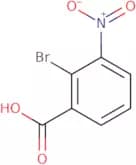
CAS :<p>2,3-Difluorobenzyl amine is a versatile building block that is used in the synthesis of complex organic compounds. It is a high quality reagent and can be used as a reaction component. 2,3-Difluorobenzyl amine can be synthesized from 3-fluoroaniline and difluoroacetic acid using a nitrite salt as the oxidant. The reaction yields the desired product in good yield with no side products.</p>Formule :C7H7F2NDegré de pureté :Min. 95%Couleur et forme :Colorless PowderMasse moléculaire :143.13 g/mol2-Bromo-3-nitrobenzoic acid
CAS :<p>2-Bromo-3-nitrobenzoic acid is a reactive chemical used as an antibacterial agent. It inhibits the growth of staphylococcus by inhibiting the synthesis of DNA and protein, which are required for cell division. 2-Bromo-3-nitrobenzoic acid is also effective against mammalian cells, but not against bacteria that grow in a thionyl environment. The chemical reacts with chloride to form 2-bromo-3-chlorobenzoic acid, which can be converted to mercaptoacetic acid by means of reduction with sodium dithionite. Mercaptoacetic acid inhibits bacterial growth by blocking the synthesis of proteins necessary for cell division. 2-Bromo-3-nitrobenzoic acid is synthesized from bromine and nitric acid, while mercaptoacetic acid is synthesized from bromine and acetic anhydride.</p>Formule :C7H4BrNO4Degré de pureté :Min. 95%Couleur et forme :PowderMasse moléculaire :246.02 g/mol4-(Trifluoromethyl)benzyl amine
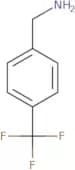
CAS :<p>4-(Trifluoromethyl)benzyl amine is a nucleophilic reagent that is used for the asymmetric synthesis of chiral amines. The reaction mechanism involves the nucleophilic attack of the trifluoromethyl group on an electron-deficient carbon atom of a substrate, followed by elimination of hydrogen fluoride. The trifluoromethyl group also acts as a light emitter when irradiated with UV light. 4-(Trifluoromethyl)benzyl amine is able to produce carbonyl groups through irreversible oxidation and has been shown to inhibit cancer cell proliferation in vitro and in vivo. This compound can be found as white crystals and has a polymorphic nature.</p>Formule :C8H8F3NDegré de pureté :Min. 95%Couleur et forme :PowderMasse moléculaire :175.15 g/molN,N,N-Trimethyl-1-decanaminium bromide
CAS :<p>N,N,N-Trimethyl-1-decanaminium bromide is a quaternary ammonium salt with the chemical formula CH3(CH2)5COOB. It is an ionic surfactant that is used as an emulsifier for water and oil based systems. N,N,N-Trimethyl-1-decanaminium bromide has been shown to be able to stabilize the surface tension in aqueous solutions and can be used in biomedical research. This compound also has the ability to bind proteins and other organic molecules. N,N,N-Trimethyl-1-decanaminium bromide may be used as a fluorescent probe for detecting hydrophobic effects in biological systems.</p>Formule :C13H30NBrDegré de pureté :Min. 95%Masse moléculaire :280.29 g/molBenzyl N-(2-aminoethyl)carbamate hydrochloride
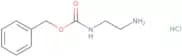
CAS :Please enquire for more information about Benzyl N-(2-aminoethyl)carbamate hydrochloride including the price, delivery time and more detailed product information at the technical inquiry form on this pageFormule :C10H15ClN2O2Degré de pureté :Min. 95%Masse moléculaire :230.69 g/molNG,NG'-Dimethyl-L-arginine dihydrochloride
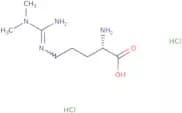
CAS :NG,NG'-Dimethyl-L-arginine dihydrochloride is a substrate for nitrite reductase and is used to diagnose kidney disease. It has been shown in vitro to inhibit the activity of steroidogenic enzymes in the zona fasciculata of the adrenal gland. NG,NG'-Dimethyl-L-arginine dihydrochloride is also used as a diagnostic agent in pediatric patients with hypogonadotropic hypogonadism and during inhalation therapy in adults with asthma. NG,NG'-Dimethyl-L-arginine dihydrochloride has been shown to reduce inflammatory diseases such as rheumatoid arthritis and Crohn's disease by inhibiting arginine methylation. The drug also reduces age-related changes in steroidogenesis and blood pressure.Formule :C8H18N4O2·2HClDegré de pureté :Min. 95%Couleur et forme :PowderMasse moléculaire :275.18 g/mol(2S,3S)-5-[2-(Dimethylamino)ethyl]-3-hydroxy-2-(4-methoxyphenyl)-2,3-dihydro-1,5-benzothiazepin-4-one hydrochloride
CAS :(2S,3S)-5-[2-(Dimethylamino)ethyl]-3-hydroxy-2-(4-methoxyphenyl)-2,3-dihydro-1,5-benzothiazepin-4-one hydrochloride is a racemic mixture of two enantiomers. It is a prodrug that is hydrolyzed to its active form, diltiazem. The drug has been shown to be effective in the treatment of hypertension and angina pectoris. (2S,3S)-5-[2-(Dimethylamino)ethyl]-3-hydroxy-2-(4-methoxyphenyl)-2,3-dihydro-1,5-benzothiazepin-4-one hydrochloride has been shown to inhibit the activity of the enzyme phosphodiesterase which breaks down cyclic AMP. This inhibition results in an increase in levels ofFormule :C20H24N2O3S·HClDegré de pureté :Min. 95%Masse moléculaire :408.94 g/molEthyl 5-chloro-1,3-dimethyl-1H-indole-2-carboxylate
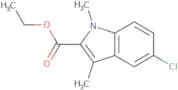
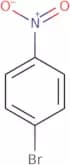
CAS :Produit contrôlé<p>Please enquire for more information about Ethyl 5-chloro-1,3-dimethyl-1H-indole-2-carboxylate including the price, delivery time and more detailed product information at the technical inquiry form on this page</p>Formule :C13H14ClNO2Degré de pureté :Min. 95%Masse moléculaire :251.71 g/mol1-Bromo-4-nitrobenzene
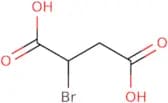
CAS :<p>1-Bromo-4-nitrobenzene is a bromonitrile that is used to synthesize optical sensors. It is an intermediate in the synthesis of 1,5-dibromo-4-nitrobenzane, which was used as a model system for the reaction mechanism of coupling reactions. The coupling of 1-bromo-4-nitrobenzane with hydrochloric acid and palladium catalysts leads to the formation of a diazonium salt. This reaction can be analyzed by looking at the nitro group and the halides in the molecule. The nitro group reacts with ammonia to form an aminonitrile and water. Halides react with ammonia to form ammonium salts and hydrogen halides. Diazonium salts are then generated by adding nitrous acid (HNO2) or hydroxylamine (NHOH) to these compounds. Finally, transfer reactions are carried out by heating 1</p>Formule :C6H4BrNO2Degré de pureté :Min. 95%Masse moléculaire :202.01 g/molBromosuccinic acid
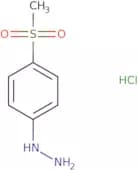
CAS :Bromosuccinic acid is a type of organic compound with the chemical formula HOCCH=CHOH. It is an ester that contains a hydroxyl group, a carboxylic acid group, and a bromine atom. Bromosuccinic acid has been shown to have biocompatible properties and can be used as a polymer for biomedical applications. It also has the ability to form covalent bonds with basic proteins due to its hydroxyl group, which is important for protein stability. Bromosuccinic acid has been shown to inhibit trypsin activity in soybean trypsin, which may be due to its disulfide bond or low energy content. This substance also reacts with malonic acid and carbonic acid, producing galacturonic acid and fatty acids respectively. Bromosuccinic acid is produced by bacteria of the genus Enterobacteriaceae and belongs to the family of short-chain fatty acids.Degré de pureté :Min. 95%4-(Methylsulfonyl)phenylhydrazine hydrochloride
CAS :<p>4-(Methylsulfonyl)phenylhydrazine hydrochloride is a sulfone that is used as a radiopharmaceutical agent. It can be used in the diagnosis of Alzheimer's disease and other neurodegenerative diseases. 4-(Methylsulfonyl)phenylhydrazine hydrochloride binds to carbonic anhydrase I and II, which are membrane-bound enzymes that catalyze the reversible hydration of carbon dioxide. This inhibition leads to increased blood pressure and decreased production of platelets, which can lead to thrombocytopenia. The inhibitory potency of 4-(methylsulfonyl)phenylhydrazine hydrochloride on Cox-1 and Cox-2 has been shown to be similar to that of aspirin, but it is more selective for Cox-2.</p>Formule :C7H10N2O2S•HClDegré de pureté :Min. 95%Couleur et forme :PowderMasse moléculaire :222.69 g/mol5-Iodo-2,3-dihydro-1H-inden-2-amine hydrochloride hydrate
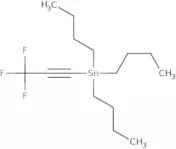
Produit contrôlé<p>Please enquire for more information about 5-Iodo-2,3-dihydro-1H-inden-2-amine hydrochloride hydrate including the price, delivery time and more detailed product information at the technical inquiry form on this page</p>Formule :C9H13ClINODegré de pureté :Min. 95%Masse moléculaire :313.56 g/mol1-Tributylstannyl-3,3,3-trifluoro-1-propyne
CAS :Produit contrôlé1-Tributylstannyl-3,3,3-trifluoro-1-propyne is an organic solvent that can be used as a reagent in the trifluoromethylation of hexane and diazomethane. It has been shown to be regioselective in the 1,3-dipolar cycloaddition of acetonitrile and oxide. It also reacts efficiently with aryl groups to produce yields.Formule :C15H27F3SnDegré de pureté :Min. 95%Masse moléculaire :383.08 g/mol9-Ethyl-8-iodo-6,6-dimethyl-11-oxo-6,11-dihydro-5H-benzo[b]carbazole-3-carbonitrile
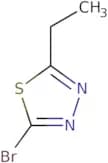
CAS :Alectinib intermediateFormule :C21H17IN2ODegré de pureté :Min. 95%Couleur et forme :White PowderMasse moléculaire :440.28 g/mol2-Bromo-5-ethyl-1,3,4-thiadiazole
CAS :Please enquire for more information about 2-Bromo-5-ethyl-1,3,4-thiadiazole including the price, delivery time and more detailed product information at the technical inquiry form on this pageFormule :C4H5BrN2SDegré de pureté :Min. 95%Masse moléculaire :193.07 g/moltert-Butyl 4-(2-bromophenyl)piperazine-1-carboxylate
CAS :Produit contrôléPlease enquire for more information about tert-Butyl 4-(2-bromophenyl)piperazine-1-carboxylate including the price, delivery time and more detailed product information at the technical inquiry form on this pageDegré de pureté :Min. 95%

![[(4-Methyl-1,3-thiazol-2-yl)methyl]amine dihydrochloride](/_next/image/?url=https%3A%2Fstatic.cymitquimica.com%2Fproducts%2F3D%2Fthumb-webp%2FFM124176.webp&w=3840&q=75)



![(2S,3S)-5-[2-(Dimethylamino)ethyl]-3-hydroxy-2-(4-methoxyphenyl)-2,3-dihydro-1,5-benzothiazepin-4-…](/_next/image/?url=https%3A%2Fstatic.cymitquimica.com%2Fproducts%2F3D%2Fthumb-webp%2FFD45531.webp&w=3840&q=75)

![9-Ethyl-8-iodo-6,6-dimethyl-11-oxo-6,11-dihydro-5H-benzo[b]carbazole-3-carbonitrile](/_next/image/?url=https%3A%2Fstatic.cymitquimica.com%2Fproducts%2F3D%2Fthumb-webp%2FFE137738.webp&w=3840&q=75)