Halogénures organiques
Dans cette catégorie, vous trouverez des molécules organiques contenant un ou plusieurs atomes d'halogène dans leur structure. Ces halogénures organiques incluent des composés bromés, iodés, chlorés et des halogénures cycliques. Les halogénures organiques sont largement utilisés en synthèse organique, en pharmaceutique, en agrochimie et en science des matériaux en raison de leur réactivité et de leur capacité à subir une variété de transformations chimiques. Chez CymitQuimica, nous offrons une sélection complète d'halogénures organiques de haute qualité pour soutenir vos applications de recherche et industrielles, garantissant une performance fiable et efficace dans vos projets synthétiques et analytiques.
Sous-catégories appartenant à la catégorie "Halogénures organiques"
20440 produits trouvés pour "Halogénures organiques"
Trier par
Degré de pureté (%)
0
100
|
0
|
50
|
90
|
95
|
100
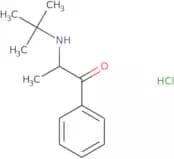
2-(tert-Butylamino)propiophenone hydrochloride
CAS :Produit contrôléPlease enquire for more information about 2-(tert-Butylamino)propiophenone hydrochloride including the price, delivery time and more detailed product information at the technical inquiry form on this pageFormule :C13H20ClNODegré de pureté :Min. 95%Masse moléculaire :241.76 g/mol2,2,3,3,4,4-Hexafluoro-1,5-pentanediol
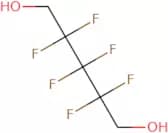
CAS :Produit contrôlé<p>2,2,3,3,4,4-Hexafluoro-1,5-pentanediol is a colorless liquid with a boiling point of 155°C. It is soluble in water and has an odor similar to that of hexane. 2,2,3,3,4,4-Hexafluoro-1,5-pentanediol is used as a chemical intermediate for the production of sodium salts and quaternary ammonium compounds. This substance can be obtained by reacting butanediol with hydrofluoric acid or trifluoromethanesulfonic acid. The most common use of 2,2,3,3,4,4-hexafluoro-1,5-pentanediol is in the synthesis of amines. It also has been used as a solvent for electroplating metals and as a high boiling point solvent in organic reactions. This compound exhibits nucleophilic properties with amines and can</p>Formule :C5H6F6O2Degré de pureté :Min. 95%Masse moléculaire :212.09 g/mol5-Bromo-3-methoxybenzaldehyde
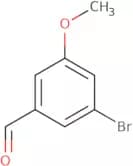
CAS :5-Bromo-3-methoxybenzaldehyde is a type of growth factor that is synthesized by cancer cells. It has been shown to have anticancer activity when used in conjunction with other drugs. 5-Bromo-3-methoxybenzaldehyde has been shown to inhibit tumor growth in mice, which may be due to its ability to prevent the activation of PD-L1. This compound interacts with a tetranuclear ligand and can be activated by light.Formule :C8H7BrO2Degré de pureté :Min. 95%Couleur et forme :PowderMasse moléculaire :215.04 g/molEthyl 4-chloroacetoacetate
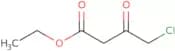
CAS :<p>Ethyl 4-chloroacetoacetate is a chiral organic compound that is synthesized by the asymmetric synthesis of ethyl chloroacetate. This reaction is performed in an organic solution, using sodium salts as the solvent. The expression plasmid and logarithmic growth phase are needed for the enzyme catalysis and stereoselective reactions. The reaction solution is recombined with hydrochloric acid and chiral compound to produce high yields of ethyl 4-chloroacetoacetate.</p>Formule :C6H9ClO3Degré de pureté :Min. 95%Couleur et forme :Colorless Clear LiquidMasse moléculaire :164.59 g/mol4-(Bromomethyl)benzeneboronic acid pinacol ester
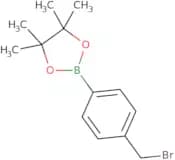
CAS :4-(Bromomethyl)benzeneboronic acid pinacol ester (BBBA) is a hypochlorous acid derivative with a structural formula of C6H5BrOCH2. It is used as a fluorophore and has been shown to have anticancer activity. 4-Bromomethylbenzeneboronic acid pinacol ester reacts with hydrophobic molecules in the cell membrane, leading to disruption of the membrane and ultimately cell death. This compound can be used as an active oxygen source in biological assays, such as functional assays, because it generates reactive oxygen species and can act as a fluorescence probe for detection of biological samples.Formule :C13H18BBrO2Degré de pureté :Min. 95 Area-%Couleur et forme :White PowderMasse moléculaire :297 g/mol4-Fluoroaniline
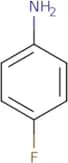
CAS :<p>4-Fluoroaniline is an antimicrobial agent that inhibits microbial metabolism by binding to enzymes and blocking their activity. The enzyme activities are affected by the hydrogen bonding interactions between the 4-fluoroaniline molecule and other molecules in the enzyme active site. 4-Fluoroaniline can be used for wastewater treatment, as it has been shown to inhibit bacterial growth and help remove nitrogen from wastewater. Hydrogen fluoride (HF) is generated when 4-fluoroaniline is exposed to water, which may be toxic to aquatic life. The reaction mechanism of 4-fluoroaniline with a tetrazolium dye is dependent on the presence of nitrogens. Nitrogen atoms in the 4-fluoroaniline react with diazonium salt to form a diazonium intermediate, which reacts with a tetrazolium dye to produce a red compound that can be detected at low concentrations. A model system of 4-fluoro</p>Formule :C6H6FNDegré de pureté :Min. 95%Masse moléculaire :111.12 g/mol5-Bromo-2-chloro-3-fluoropyridine
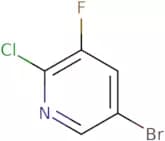
CAS :5-Bromo-2-chloro-3-fluoropyridine is a catalytic reagent for the amination of anilines. It is extracted from coal tar, and is used in the manufacture of pesticides and pharmaceuticals. 5-Bromo-2-chloro-3-fluoropyridine has been shown to be an effective catalyst for the synthesis of functionalized adducts. This compound can also be used as a chemoselective agent in palladium catalysis, where it selectively adds hydrogen bromide to form aryl halides.Formule :C5H2BrCIFNDegré de pureté :Min. 95%Masse moléculaire :210.43 g/mol2-(Chloromethyl)-1-methyl-1H-benzimidazole hydrochloride
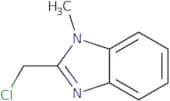
CAS :Produit contrôlé2-(Chloromethyl)-1-methyl-1H-benzimidazole hydrochloride (CMMB) is a synthetic compound that inhibits the enzyme tyrosinase, which is responsible for catalyzing the production of melanin. The tetradentate ligand in CMMB binds to the active site of tyrosinase and prevents it from catalyzing reactions. The redox potentials of CMMB make it possible to oxidize and reduce the compound, which allows for an easy synthesis. The dihedral angle between the amine and pyrimidine rings in CMMB provides a biomimetic structure that can be used to synthesize other aromatic compounds.Formule :C9H9ClN2Degré de pureté :Min. 95%Masse moléculaire :180.63 g/mol2-Chloropropionyl chloride
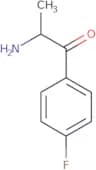
CAS :<p>2-Chloropropionyl chloride is a phase-transition catalyst that has been shown to be a solid catalyst for the detection of hydroxyl groups in organic solvents. It has been used as an extractant for acetate from soybean lipoxygenase and as a fluorescence probe for copper chloride. 2-Chloropropionyl chloride is also an acylation agent, which can be used in reactions with malonic acid to produce 2,4-dichlorobenzene. This chemical is moderately acidic and hydrolyzes readily in water to form hydrochloric acid and propionic acid.</p>Formule :C3H4Cl2ODegré de pureté :Min. 95%Masse moléculaire :126.97 g/mol2-Amino-1-(4-fluorophenyl)-1-propanone
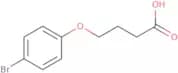
CAS :Produit contrôlé<p>2-Amino-1-(4-fluorophenyl)-1-propanone (Fluoroamphetamine) is a chemical that binds to the serotonin transporter, which is responsible for the reuptake of serotonin into the presynaptic neuron. Fluoroamphetamine has been shown to lower empathy and increase feelings of reward in animals. This drug has no significant effect on dopamine and noradrenaline levels but does cause an increase in metabolic acidosis. Fluoroamphetamine is most often used by analytical laboratories as a synthetic intermediate, but it can also be used as a strategy to develop specific antidotes against serotonin blockers. Fluoroamphetamine's health effects are similar to those of amphetamine with regards to cardiovascular risks and addictive potential.</p>Formule :C9H10FNODegré de pureté :Min. 95%Masse moléculaire :167.18 g/mol4-(4-Bromophenoxy)butanoic acid
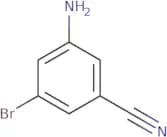
CAS :Produit contrôlé<p>Please enquire for more information about 4-(4-Bromophenoxy)butanoic acid including the price, delivery time and more detailed product information at the technical inquiry form on this page</p>Formule :C10H11BrO3Degré de pureté :Min. 95%Masse moléculaire :259.1 g/mol3-Amino-5-bromobenzonitrile
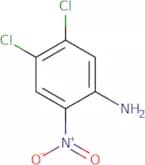
CAS :<p>Please enquire for more information about 3-Amino-5-bromobenzonitrile including the price, delivery time and more detailed product information at the technical inquiry form on this page</p>Formule :C7H5BrN2Degré de pureté :Min. 95%Masse moléculaire :197.03 g/mol4,5-Dichloro-2-nitroaniline
CAS :<p>4,5-Dichloro-2-nitroaniline is a chemical compound that has been shown to be an uncoupler of oxidative phosphorylation in ciliates. It is experimentally shown that the reaction yield for 4,5-Dichloro-2-nitroaniline is much higher than that of the corresponding methylbenzene. The two isomers are not detected in the gaseous phase, but only as products of thermal decomposition at high temperatures. Linear regression analysis and predictive models were used to evaluate the transfer and population growth rates at different temperatures. Narcosis was observed in rats exposed to 4,5-Dichloro-2-nitroaniline at concentrations greater than 0.1 ppm (0.1 mg/L).</p>Formule :C6H4Cl2N2O2Degré de pureté :Min. 95%Masse moléculaire :207.01 g/molO-tert-Butyl-D-serine methyl ester hydrochloride
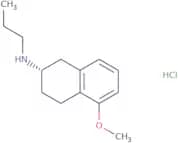
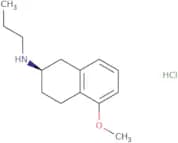
CAS :<p>Please enquire for more information about O-tert-Butyl-D-serine methyl ester hydrochloride including the price, delivery time and more detailed product information at the technical inquiry form on this page</p>Formule :C8H17NO3·HClDegré de pureté :Min. 95%Masse moléculaire :211.69 g/mol(S)-1,2,3,4-Tetrahydro-5-methoxy-N-propyl-2-naphthalenamine hydrochloride
CAS :Produit contrôlé<p>Please enquire for more information about (S)-1,2,3,4-Tetrahydro-5-methoxy-N-propyl-2-naphthalenamine hydrochloride including the price, delivery time and more detailed product information at the technical inquiry form on this page</p>Formule :C14H22ClNODegré de pureté :Min. 95%Masse moléculaire :255.78 g/mol1-(4-Fluorophenyl)pyrazole-4-boronic acid
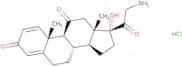
CAS :<p>Please enquire for more information about 1-(4-Fluorophenyl)pyrazole-4-boronic acid including the price, delivery time and more detailed product information at the technical inquiry form on this page</p>Formule :C9H8BFN2O2Degré de pureté :Min. 95%Masse moléculaire :205.98 g/mol21-Amino-17-hydroxypregna-1,4-diene-3,11,20-trioneHydrochloride
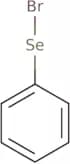
CAS :Produit contrôléPlease enquire for more information about 21-Amino-17-hydroxypregna-1,4-diene-3,11,20-trioneHydrochloride including the price, delivery time and more detailed product information at the technical inquiry form on this pageFormule :C21H28ClNO4Degré de pureté :Min. 95%Masse moléculaire :393.9 g/molPhenylselenenyl bromide
CAS :<p>Phenylselenenyl bromide is a fatty acid with a selenium atom in the side chain. It has an unsymmetrical structure and reacts with thrombin receptor, leading to the activation of protein C. Phenylselenenyl bromide is also converted to a glucuronide conjugate in the liver. This compound can be used as an immunosuppressant and has been shown to have anti-inflammatory effects in animal models of autoimmune diseases. Phenylselenenyl bromide may also inhibit nitric oxide production by reacting with nitro groups.br> Phenylselenenyl bromide contains nitrogen atoms that are asymmetric because they are not paired together. This means that one of the two nitrogen atoms is surrounded by four different substituents, while the other nitrogen atom is only surrounded by three different substituents. The structure of phenylselenenynl bromide makes it difficult</p>Formule :C6H5BrSeDegré de pureté :Min. 95%Couleur et forme :PowderMasse moléculaire :235.97 g/mol(R)-1,2,3,4-Tetrahydro-5-methoxy-N-propyl-2-naphthalenamine hydrochloride
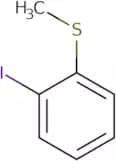
CAS :Produit contrôléPlease enquire for more information about (R)-1,2,3,4-Tetrahydro-5-methoxy-N-propyl-2-naphthalenamine hydrochloride including the price, delivery time and more detailed product information at the technical inquiry form on this pageFormule :C14H22ClNODegré de pureté :Min. 95%Masse moléculaire :255.78 g/mol2-Iodothioanisole
CAS :<p>2-Iodothioanisole is a synthetic compound that is used as an inhibitor of the enzyme cox-2. It has been shown to inhibit the production of prostaglandins, which are involved in inflammation and pain. 2-Iodothioanisole also inhibits chloride channels, which may be related to its anti-inflammatory activity. This molecule was synthesized by coupling two chlorides with a palladium catalyst. The chlorine atoms were introduced into the molecule using a cross-coupling reaction. 2-Iodothioanisole has been shown to inhibit cox-2 by binding to the active site of this enzyme. 2-Iodothioanisole has also been found to have anti-inflammatory properties, mediated by its inhibition of prostaglandin synthesis and chloride channels.</p>Formule :C7H7ISDegré de pureté :Min. 95%Masse moléculaire :250.1 g/mol