Halogénures organiques
Dans cette catégorie, vous trouverez des molécules organiques contenant un ou plusieurs atomes d'halogène dans leur structure. Ces halogénures organiques incluent des composés bromés, iodés, chlorés et des halogénures cycliques. Les halogénures organiques sont largement utilisés en synthèse organique, en pharmaceutique, en agrochimie et en science des matériaux en raison de leur réactivité et de leur capacité à subir une variété de transformations chimiques. Chez CymitQuimica, nous offrons une sélection complète d'halogénures organiques de haute qualité pour soutenir vos applications de recherche et industrielles, garantissant une performance fiable et efficace dans vos projets synthétiques et analytiques.
Sous-catégories appartenant à la catégorie "Halogénures organiques"
20440 produits trouvés pour "Halogénures organiques"
Trier par
Degré de pureté (%)
0
100
|
0
|
50
|
90
|
95
|
100
2-Bromopentane
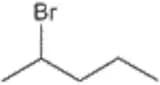
CAS :2-Bromopentane is a thiourea that is synthesized from bromoethane, an enthalpic reaction. The elimination reactions of 2-bromopentane are the reverse of the addition reactions. This product has been shown to be useful in an imaging technique that utilizes the viscosity of solids and liquids. 2-Bromopentane has also been shown to have a high rate of dehalogenase activity, which can be used for the removal of halogens from organic compounds. This product can undergo chromatographic analysis at temperatures up to 150°C and with high concentrations (>1 M).Formule :C5H11BrDegré de pureté :90%MinMasse moléculaire :151.04 g/mol1-(3-Chlorobenzyl)piperazine
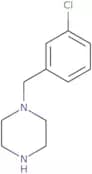
CAS :Produit contrôlé1-(3-Chlorobenzyl)piperazine (1CBPZ) is a selective and reversible inhibitor of ns3 protease, which plays an important role in plant resistance. 1CBPZ was found to be effective in controlling the growth of certain bacteria. It also has been shown to be useful for the prevention of liver lesions caused by casein in rats. 1CBPZ has optical properties that are sensitive to boron nitride and can be used as a control analysis for experiments involving this material. This chemical has been shown to inhibit the reaction mechanism of ns3 protease and is being used as an experimental model for studying this enzyme. The detection time for 1CBPZ is 3 hours, which makes it more energy efficient than other compounds.Formule :C11H15ClN2Degré de pureté :Min. 95%Masse moléculaire :210.7 g/mol2-Amino-6-chloropyrazine
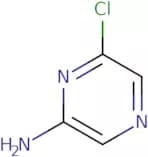
CAS :<p>2-Amino-6-chloropyrazine (2ACP) is an inhibitor that binds to the active site on human protein kinase C (PKC). It has been shown to inhibit PKC by hydrogen bonding with the hydroxide ion, which blocks its catalytic activity. 2ACP has been studied for its potential use in treating cancer and for inhibiting amine oxidases, which are enzymes associated with inflammation and chronic obstructive pulmonary disease. The inhibition of these enzymes may help to reduce stenosis in the lungs or other organs. 2ACP also has been shown to have antimycobacterial activity against Mycobacterium tuberculosis, M. avium complex, and M. leprae by inhibiting DNA synthesis and RNA synthesis. 2ACP inhibits the kinase receptor on the cell membrane that phosphorylates a water molecule into a chlorine atom, which then reacts with hydrogen peroxide to form free radicals that can kill bacteria</p>Formule :C4H4ClN3Degré de pureté :Min. 95%Masse moléculaire :129.55 g/mol(Methoxymethyl) triphenylphosphonium chloride
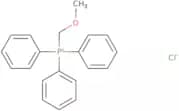
CAS :<p>Methoxymethyl triphenylphosphonium chloride (MMTPC) is a chemical compound that has been used in vitro as an inhibitor of microbial growth. MMTPC has been shown to be effective against a number of bacterial strains, including methicillin-resistant Staphylococcus aureus and Mycobacterium tuberculosis. This agent inhibits the synthesis of proteins and nucleic acids, which may lead to cell death by inhibiting protein synthesis or by preventing DNA synthesis. MMTPC has been shown to be effective for the treatment of congestive heart failure, coronary heart disease, and autoimmune diseases. It also binds to receptors on cells that are involved in the inflammatory response, such as cytokines and leukocytes.</p>Formule :C20H20ClOPDegré de pureté :Min. 95%Couleur et forme :White PowderMasse moléculaire :342.8 g/mol3-Bromo-5-fluoropyridine
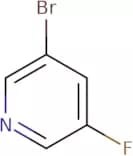
CAS :<p>3-Bromo-5-fluoropyridine is a synthetic dyestuff that is used in the production of dyes and pigments. It has an analogous structure to 3-amino-5-bromopyridine, which is used as a medicine for treating epilepsy. 3-Bromo-5-fluoropyridine reacts with acetoacetate or ethyl acetoacetate to form methylated products, such as 3-(4'-hydroxyphenyl)propionate. This compound can be synthesized by halogenation with bromine or chlorination followed by hydrolysis. The synthesis of 3-bromo-5-fluoropyridine from 3-amino-5-bromopyridine involves a series of reactions, including diazonium salt formation, followed by bromination and reduction to produce the desired product.</p>Formule :C5H3BrFNDegré de pureté :Min. 95%Couleur et forme :PowderMasse moléculaire :175.9 g/molalpha,alpha-Difluorophenylacetic acid
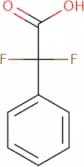
CAS :<p>Please enquire for more information about alpha,alpha-Difluorophenylacetic acid including the price, delivery time and more detailed product information at the technical inquiry form on this page</p>Formule :C8H6F2O2Degré de pureté :Min. 95%Masse moléculaire :172.13 g/molTimapiprant
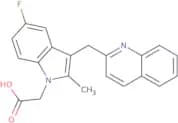
CAS :Produit contrôléTimapiprant is an amide that acts as a selective inhibitor of the prostanoid receptor CRTH2, which is involved in regulating the inflammatory response. Timapiprant inhibits skin eosinophilia, which is associated with inflammatory skin diseases such as atopic dermatitis and psoriasis. It has been shown to be safe in clinical trials and has a good safety profile. The drug's mechanism of action may be due to its ability to inhibit the production of IL-4 and IL-13 by Th2 cells and its ability to inhibit lung function. Timapiprant has shown efficacy in treating allergic rhinitis, asthma, chronic obstructive pulmonary disease, erythema multiforme, pyoderma gangrenosum, and other types of inflammatory skin diseases.Formule :C21H17FN2O2Degré de pureté :Min. 95%Masse moléculaire :348.37 g/mol4-Bromo-2,5-difluoroaniline
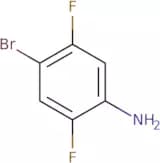
CAS :A useful building block for organic synthesis.Formule :C6H4BrF2NDegré de pureté :Min. 95%Masse moléculaire :208 g/molChlorophosphonazo III
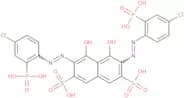
CAS :Chlorophosphonazo III is a malonic acid derivative. It reacts with hydrochloric acid in the presence of an optical sensor to form a reaction solution that can be analyzed by plasma mass spectrometry. Chlorophosphonazo III has been used as a diagnostic agent and as a physiological activity indicator for damaged tissue, such as adhesions. This compound is also acidic, so it should not be stored in contact with human serum or other biological fluids because it will react with them.Formule :C22H16Cl2N4O14P2S2Couleur et forme :PowderMasse moléculaire :757.36 g/mol4,4-difluorocyclohexane-1-carbaldehyde
CAS :<p>Please enquire for more information about 4,4-difluorocyclohexane-1-carbaldehyde including the price, delivery time and more detailed product information at the technical inquiry form on this page</p>Formule :C7H10F2ODegré de pureté :Min. 95%Couleur et forme :Colorless PowderMasse moléculaire :148.15 g/mol4-(Trifluoromethyl)phenylacetylene
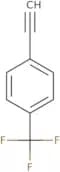
CAS :<p>4-(Trifluoromethyl)phenylacetylene is a functional group that has been synthesized by reacting an azide with a terminal alkynes. 4-(Trifluoromethyl)phenylacetylene can be used as a ligand in biomolecular syntheses and has shown fluorescence properties. It has been used to study the reactivity of metal complexes, such as copper and mercury, with other ligands. The crystal x-ray diffraction of 4-(trifluoromethyl)phenylacetylene shows that it is an unsymmetrical molecule. This functional group is not commercially available but can be recycled.</p>Formule :C9H5F3Degré de pureté :Min. 95%Couleur et forme :Clear LiquidMasse moléculaire :170.13 g/mol2,2'-Dichlorodiethyl ether
CAS :Produit contrôlé<p>2,2'-Dichlorodiethyl ether (2,2-DDE) is a cationic surfactant that is used in the production of fluorocarbons and other chemicals. It is also used in wastewater treatment as an oxidizing agent. 2,2'-DDE is toxic to humans, with a blood group toxicity profile similar to that of ethylene glycol and diethylene glycol. 2,2'-DDE can be found in the environment due to its use as a component in products and its presence in wastewaters. 2,2'-DDE has been shown to be reactive with hydrogen fluoride and oxidation catalyst, which may cause interactive effects when it is present at high concentrations. This chemical has been shown to induce cell death through histological analysis on cell cultures. Reaction mechanism for this chemical is not known.</p>Formule :C4H8Cl2ODegré de pureté :Min. 95%Couleur et forme :Clear LiquidMasse moléculaire :143.01 g/molTrichlorooctadecylsilane
CAS :<p>Trichlorooctadecylsilane is a model system that consists of a monolayer of octadecyltrichlorosilane particles. The dispersive solid-phase extraction technique can be used to extract analytes from the surface of this particle. This technique involves removing the solvent from a sample by passing it through an adsorbent. The hydrophobic effect, which is the phenomenon that a nonpolar substance is dissolved in a nonpolar solvent, will cause analytes to bind to the hydrophobic surface of octadecyltrichlorosilane particles because they are hydrophobic.</p>Degré de pureté :Min. 95%(S)-2-Methylpyrrolidine hydrochloride
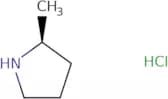
CAS :Please enquire for more information about (S)-2-Methylpyrrolidine hydrochloride including the price, delivery time and more detailed product information at the technical inquiry form on this pageFormule :C5H12ClNDegré de pureté :Min. 95%Masse moléculaire :121.61 g/molrac-N-ethyl amphetamine hydrochloride
CAS :Produit contrôlé<p>Racemic amphetamine is a psychoactive substance that has been extensively used in the past as a stimulant, for example in the treatment of ADHD and narcolepsy. Racemic amphetamine is typically used to monitor drug use or to identify adulterants in urine samples. It is also used in the analysis of psychoactive substances and for the detection of phenylpropanolamine (PPA) and formic acid. Racemic amphetamine is a controlled substance that can be found in various forms, including methanolic solution, dilution, analyze, and reaction monitoring. Its use has been shown to be linear and it can be quantified by high-performance liquid chromatography.</p>Formule :C11H18ClNDegré de pureté :Min. 95%Masse moléculaire :199.72 g/mol4,16a-Dibromoestrone
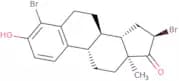
CAS :Produit contrôlé4,16a-Dibromoestrone is a brominated triol that is synthesized by the reductive borohydride reduction of estriol. The reduction of estriol with sodium borohydride in methanol yields 4,16a-dibromoestrone in high yield. The conversion from estriol to 4,16a-dibromoestrone can be performed using either palladium or chloride. This product has been shown to be an efficient reductive agent for the synthesis of methyl esters from carboxylic acids. This product also undergoes glucuronidation.Formule :C18H20Br2O2Degré de pureté :Min. 95%Masse moléculaire :428.16 g/mol(2-(Bromomethyl)phenyl)methanol
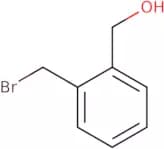
CAS :(2-(Bromomethyl)phenyl)methanol is an acceptor of a palladium complex. It is used in the synthesis of amides and other functional groups, as well as in catalysis. 2-(Bromomethyl)phenyl)methanol can be quaternized with methyl iodide to form a bromoalkylamine. The reaction proceeds via an amide group on the bromoalkylamine and a hydrogen atom from the alkyl halide. This process is known as "supramolecular" or "intermolecular" hydrogen bonding. It has been found that 2-(Bromomethyl)phenyl)methanol forms complexes with palladium through intermolecular hydrogen bonding, which are more stable than those formed by other ligands such as phosphines and cyanides.Formule :C8H9BrODegré de pureté :95%NmrMasse moléculaire :201.06 g/molrac-cis despropionyl mefentanyl N-trifluoroacetate
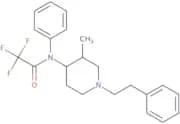
CAS :Produit contrôlé<p>Please enquire for more information about rac-cis despropionyl mefentanyl N-trifluoroacetate including the price, delivery time and more detailed product information at the technical inquiry form on this page</p>Formule :C22H25F3N2ODegré de pureté :Min. 95%Masse moléculaire :390.44 g/mol(1-Fluorovinyl)methyldiphenylsilane
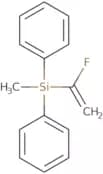
CAS :<p>1-Fluorovinylmethyldiphenylsilane is a reactive, cross-coupling reagent that is used to synthesize organofluorine compounds. It reacts with nucleophiles such as sulfoxides, peroxides, halides, and amines to form an organofluorine compound. The nucleophile can be either in the presence or absence of hydrogen peroxide as a catalyst. The product of this reaction can be a sulfoxide, peroxide, or amine. 1-Fluorovinylmethyldiphenylsilane has been shown to react with nitro groups and iodides to form organofluorine compounds. 1-Fluorovinylmethyldiphenylsilane is soluble in organic solvents such as hexane and chloroform. This reagent should not be stored in metal containers because it will react with them spontaneously.</p>Formule :C15H15FSiDegré de pureté :Min. 95%Masse moléculaire :242.36 g/molClobetasol Propionate - Impurity C
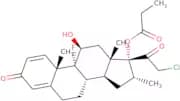
CAS :Produit contrôlé21-Chloro-9-fluoro-11beta,17-dihydroxy-16alpha-methylpregna-1,4-diene-3,20-dione 17-propionate is an ester of ketoconazole and the propionic acid. It is used as a pharmaceutical formulation and has been shown to be stable in an HPLC method. This compound also has an optical isomer that was validated by a stability test. This product has been shown to have antiinflammatory properties and may be used as a topical treatment for skin disorders such as clobetasol propionate.Formule :C25H32ClFO5Degré de pureté :Min. 95%Masse moléculaire :466.97 g/mol