Halogénures organiques
Dans cette catégorie, vous trouverez des molécules organiques contenant un ou plusieurs atomes d'halogène dans leur structure. Ces halogénures organiques incluent des composés bromés, iodés, chlorés et des halogénures cycliques. Les halogénures organiques sont largement utilisés en synthèse organique, en pharmaceutique, en agrochimie et en science des matériaux en raison de leur réactivité et de leur capacité à subir une variété de transformations chimiques. Chez CymitQuimica, nous offrons une sélection complète d'halogénures organiques de haute qualité pour soutenir vos applications de recherche et industrielles, garantissant une performance fiable et efficace dans vos projets synthétiques et analytiques.
Sous-catégories appartenant à la catégorie "Halogénures organiques"
20440 produits trouvés pour "Halogénures organiques"
Trier par
Degré de pureté (%)
0
100
|
0
|
50
|
90
|
95
|
100
Tetrafluoroterephthalonitrile
CAS :<p>Tetrafluoroterephthalonitrile is a hydroxyl group-containing organic chemical compound with the molecular formula (CF)CO. It has been used in analytical chemistry as a reagent for the determination of peptide binding constants and disulfide bonds. Tetrafluoroterephthalonitrile binds to nucleophilic sites on proteins, such as the pim-1 protein, and can be used to transport other molecules across cell membranes. In addition, it has been used to produce polymers for use in analytical chemistry. This chemical is also able to bind with magnetic particles under constant pressure conditions, which makes it useful for optical sensor applications. Tetrafluoroterephthalonitrile is a hydroxyl group-containing organic chemical compound with the molecular formula (CF)CO. It has been used in analytical chemistry as a reagent for the determination of peptide binding constants and disulfide bonds. Tetrafluoroterephthal</p>Formule :C8F4N2Degré de pureté :Min. 95%Masse moléculaire :200.09 g/mol1-Methylimidazole-2-sulfonyl chloride
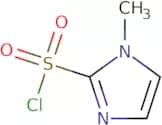
CAS :<p>1-Methylimidazole-2-sulfonyl chloride is a synthetic estrogen that is used for the treatment of estrogen deficiency in women. It has been shown to increase plasma estradiol levels and reduce plasma testosterone levels. This drug is not active at physiological levels, but was found to have biological relevance when administered at higher doses. 1-Methylimidazole-2-sulfonyl chloride has been found to be effective in the treatment of cancer in humans, with a specific effect on breast cancer cells.</p>Formule :C4H5ClN2O2SDegré de pureté :Min. 95%Masse moléculaire :180.61 g/mol4-(2-Chloro-4-nitrophenyl)piperazine-1-carboxamide
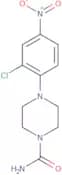
CAS :<p>Please enquire for more information about 4-(2-Chloro-4-nitrophenyl)piperazine-1-carboxamide including the price, delivery time and more detailed product information at the technical inquiry form on this page</p>Formule :C11H13ClN4O3Degré de pureté :Min. 95%Masse moléculaire :284.7 g/mol(Perfluorohexyl)phenyliodonium Trifluoromethanesulfonate
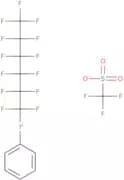
CAS :Please enquire for more information about (Perfluorohexyl)phenyliodonium Trifluoromethanesulfonate including the price, delivery time and more detailed product information at the technical inquiry form on this pageFormule :C13H5F16IO3SDegré de pureté :Min. 95%Masse moléculaire :672.12 g/mol5-Bromo-2-furaldehyde
CAS :<p>5-Bromo-2-furaldehyde is a chemical compound that belongs to the class of heterocycles. It is used in industry as a precursor for the synthesis of other organic compounds. 5-Bromo-2-furaldehyde has been shown to have anti-inflammatory properties, which may be due to its ability to inhibit prostaglandin synthesis. The use of this chemical has been linked with autoimmune diseases and cancer development in animal models. 5-Bromo-2-furaldehyde is an environmental pollutant that can enter the body by ingestion or inhalation, and it can cause irritation of the skin, eyes, nose, throat, and lungs. This chemical is also known as amide or suzuki coupling reaction (SCR).</p>Formule :C5H3BrO2Degré de pureté :Min. 98%Couleur et forme :Off-White To Yellow To Light Brown SolidMasse moléculaire :174.98 g/molDesethyl chloroquine
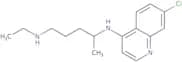
CAS :Desethyl chloroquine is a drug that is used to treat malaria and other infectious diseases. It is an antimalarial drug that has been shown to be effective in the treatment of malaria and related diseases such as toxoplasmosis, amebiasis, trypanosomiasis, and leishmaniasis. Methods for the preparation of desethyl chloroquine are described in the analytical section. To measure the concentration of desethyl chloroquine in blood, it is recommended to collect a sample of blood by venipuncture or fingerstick. The concentration-time curve in blood can be analyzed using a fluorescence detector and LC-MS/MS method. When analyzing pharmacokinetic properties, it is important to take into account the matrix effect due to human serum proteins. Desethyl chloroquine has potent inducers that affect its pharmacokinetics and metabolism, including CYP3A4 enzymes and glutathione reductase.Formule :C16H22ClN3Degré de pureté :Min. 95%Couleur et forme :Slightly Yellow PowderMasse moléculaire :291.82 g/mol4-Bromo-2-fluoro-1,1'-biphenyl
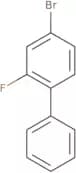
CAS :<p>4-Bromo-2-fluoro-1,1'-biphenyl is a chemical compound that is used for the synthesis of biphenyl. It reacts with an ethyl acetate and sodium bicarbonate to produce the desired product. 4-Bromo-2-fluoro-1,1'-biphenyl has been shown to be stable in acidic conditions, but susceptible to hydrolysis in basic environments. This compound can be synthesized by the Suzuki coupling reaction between aryl halides and organometallic compounds. The chloride groups on 4-bromo-2-fluoro-1,1'-biphenyl are good leaving groups during the cross coupling reaction, which are easily replaced by other functional groups.</p>Formule :C12H8BrFDegré de pureté :Min. 95%Couleur et forme :PowderMasse moléculaire :251.09 g/mol2-Fluoro-5-methoxyaniline
CAS :<p>2-Fluoro-5-methoxyaniline is a high quality reagent that is used as an intermediate in the synthesis of various complex compounds. The CAS number for this chemical is 62257-15-2 and it has been shown to be useful as a building block for the synthesis of fine chemicals, speciality chemicals, and research chemicals with many different uses. It is also a versatile building block that can be used in reactions involving amines, alcohols, thiols, and nitriles. 2-Fluoro-5-methoxyaniline may also be used as a reaction component in organic syntheses.</p>Formule :C7H8FNODegré de pureté :Min. 95%Couleur et forme :PowderMasse moléculaire :141.14 g/mol1-[4-(4-bromophenyl)piperazin-1-yl]ethanone
CAS :Produit contrôléPlease enquire for more information about 1-[4-(4-bromophenyl)piperazin-1-yl]ethanone including the price, delivery time and more detailed product information at the technical inquiry form on this pageFormule :C12H15BrN2ODegré de pureté :Min. 95%Masse moléculaire :283.16 g/mol4'-Methyl-a-pyrrolidinopropiophenone hydrochloride
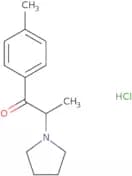
CAS :Produit contrôléPlease enquire for more information about 4'-Methyl-a-pyrrolidinopropiophenone hydrochloride including the price, delivery time and more detailed product information at the technical inquiry form on this pageFormule :C14H20ClNODegré de pureté :Min. 95%Masse moléculaire :253.77 g/mol4-Iodoaniline
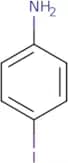
CAS :<p>4-Iodoaniline is a molecule that can be synthesized by the reaction of an arylamine with sodium nitrite and hydrochloric acid. The product of this reaction is converted to 4-iodoaniline by oxidation with hydrogen peroxide in the presence of potassium iodide. This molecule has been used as a model system to study enzyme activities, such as amines oxidase, which catalyzes the conversion of amines to nitrosoamines. The diphenyl ether group has been shown to bind to hydroxyl groups and form hydrogen bonds. The analytical chemistry for 4-iodoaniline includes high performance liquid chromatography (HPLC) and gas chromatography (GC).</p>Formule :C6H6INDegré de pureté :Min. 95%Masse moléculaire :219.02 g/mol4-Dimethylaminopyridinium Bromide Perbromide
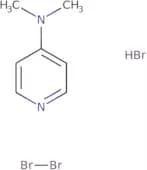
CAS :Produit contrôlé<p>4-Dimethylaminopyridinium Bromide Perbromide is a synthetic compound that contains a phenolic hydroxyl group. It reacts with chloride to form the perbromide salt, which is anhydrous and insoluble in water. The compound has been shown to inhibit the growth of cancer cells by interfering with DNA replication and transcription.</p>Formule :C7H11Br3N2Degré de pureté :Min. 95%Masse moléculaire :362.89 g/mol[Hydroxy(methanesulfonyloxy)iodo]benzene
CAS :[Hydroxy(methanesulfonyloxy)iodo]benzene is an aromatic ketone that is used as a ligand in asymmetric synthesis. It is prepared by the reaction of phenyliodonium hexafluorophosphate with a mixture of water and hexane, followed by hydrolysis of the resulting ester. The reaction yields enol ethers and alicyclic ketones, along with the conjugate base of the aromatic ketone. This ligand can be used to form a complex with copper metal ions, which is then used for catalyzing organic reactions.Formule :C7H9IO4SDegré de pureté :Min. 95%Masse moléculaire :316.11 g/mol1-(2,3-Dimethylphenyl)-piperazine monohydrochloride
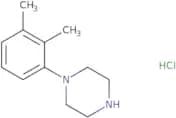
CAS :Produit contrôlé<p>Piperazine monohydrochloride is a white crystalline powder that is soluble in water and ethanol. It has a molecular weight of 208.23 and a melting point of 117-119°C. Piperazine monohydrochloride exhibits anti-inflammatory properties, which may be due to its inhibition of prostaglandin synthesis.</p>Degré de pureté :Min. 95%Ent-paroxetine hydrochloride
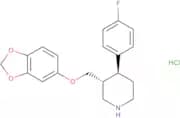
CAS :Produit contrôlé<p>Please enquire for more information about Ent-paroxetine hydrochloride including the price, delivery time and more detailed product information at the technical inquiry form on this page</p>Formule :C19H21ClFNO3Degré de pureté :Min. 95%Couleur et forme :PowderMasse moléculaire :365.83 g/molCyclopropylacetyl chloride
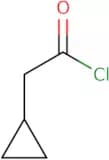
CAS :<p>Cyclopropylacetyl chloride is a reactive chemical that is used in the synthesis of pharmaceuticals and agrochemicals. Cyclopropylacetyl chloride binds to glutamate receptors, which are associated with a variety of neurological disorders, including cancer and inflammatory bowel disease. It also inhibits the cb2 receptor, which has been shown to be involved in inflammatory bowel disease. Cyclopropylacetyl chloride has been shown to cause insulin resistance and amide formation, which can lead to diabetes-induced neuropathy. In addition, carbonyl groups have been shown to induce bowel diseases such as ulcerative colitis and Crohn's disease.</p>Formule :C5H7ClODegré de pureté :Min. 95%Masse moléculaire :118.56 g/mol4-(2-Chlorophenyl)-9-methyl-6H-thieno[3,2-f][1,2,4]triazolo[4,3-a][1,4]diazepine-2-propanoic acid
CAS :Produit contrôlé<p>Please enquire for more information about 4-(2-Chlorophenyl)-9-methyl-6H-thieno[3,2-f][1,2,4]triazolo[4,3-a][1,4]diazepine-2-propanoic acid including the price, delivery time and more detailed product information at the technical inquiry form on this page</p>Formule :C18H15ClN4O2SDegré de pureté :Min. 95%Masse moléculaire :386.86 g/mol2-(3-Bromopropyl)-1,3-dioxolane
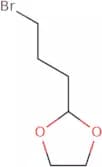
CAS :<p>2-(3-Bromopropyl)-1,3-dioxolane is a detectable, organometallic compound with the chemical formula CHBrO. It has been used in asymmetric synthesis as an intermediate for the construction of alcohols and aldehydes. The compound reacts with aldehydes to form 2-bromoacetophenones or 2-bromoacetals, which are useful intermediates for the synthesis of other compounds. 2-(3-Bromopropyl)-1,3-dioxolane has also been shown to be effective against Gram-negative bacteria and resistant parasites such as ectoparasites and cross-coupling. Trifluoroacetic acid is used in multidrug efflux pump inhibition studies on Gram-negative bacteria.</p>Formule :C6H11BrO2Degré de pureté :Min. 95%Masse moléculaire :195.05 g/mol1-(4-(Aminomethyl)phenyl)pyridin-1-ium chloride
CAS :<p>1-(4-(Aminomethyl)phenyl)pyridin-1-ium chloride is a chemical compound that belongs to the class of pyridines and has pinpoint as its molecular weight. It is an ionic liquid that can be used in analytical methods, such as liquid chromatography and ionization techniques, for the identification of unsaturated fatty acids. This compound can be analyzed by gas chromatography with either electron capture detection or chemical ionization. The GC separation column used for this analysis would have to be a phase column with an unsaturated fatty acid stationary phase. GC-EID and GC-CI are two common ionization techniques that could be used in conjunction with this analytical method. The lower limit of detection for this technique is about 0.1 ppm, which makes it a sensitive analytical tool for use in food production and quality control laboratories. The yield of 1-(4-(Aminomethyl)phenyl)pyridin-1-</p>Degré de pureté :Min. 95%L-Pyroglutamic acid pentachlorophenyl ester
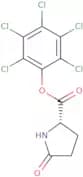
CAS :Produit contrôléPlease enquire for more information about L-Pyroglutamic acid pentachlorophenyl ester including the price, delivery time and more detailed product information at the technical inquiry form on this pageFormule :C11H6Cl5NO3Degré de pureté :Min. 95%Masse moléculaire :377.43 g/mol




![1-[4-(4-bromophenyl)piperazin-1-yl]ethanone](/_next/image/?url=https%3A%2Fstatic.cymitquimica.com%2Fproducts%2F3D%2Fthumb-webp%2FFB137350.webp&w=3840&q=75)
![[Hydroxy(methanesulfonyloxy)iodo]benzene](/_next/image/?url=https%3A%2Fstatic.cymitquimica.com%2Fproducts%2F3D%2Fthumb-webp%2FFH60683.webp&w=3840&q=75)
![4-(2-Chlorophenyl)-9-methyl-6H-thieno[3,2-f][1,2,4]triazolo[4,3-a][1,4]diazepine-2-propanoic acid](/_next/image/?url=https%3A%2Fstatic.cymitquimica.com%2Fproducts%2F3D%2Fthumb-webp%2FFC20336.webp&w=3840&q=75)