Halogénures organiques
Dans cette catégorie, vous trouverez des molécules organiques contenant un ou plusieurs atomes d'halogène dans leur structure. Ces halogénures organiques incluent des composés bromés, iodés, chlorés et des halogénures cycliques. Les halogénures organiques sont largement utilisés en synthèse organique, en pharmaceutique, en agrochimie et en science des matériaux en raison de leur réactivité et de leur capacité à subir une variété de transformations chimiques. Chez CymitQuimica, nous offrons une sélection complète d'halogénures organiques de haute qualité pour soutenir vos applications de recherche et industrielles, garantissant une performance fiable et efficace dans vos projets synthétiques et analytiques.
Sous-catégories appartenant à la catégorie "Halogénures organiques"
20440 produits trouvés pour "Halogénures organiques"
Trier par
Degré de pureté (%)
0
100
|
0
|
50
|
90
|
95
|
100
Pentachlorophenyl N-[(benzyloxy)carbonyl]glycinate
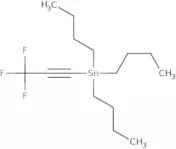
CAS :Produit contrôléPlease enquire for more information about Pentachlorophenyl N-[(benzyloxy)carbonyl]glycinate including the price, delivery time and more detailed product information at the technical inquiry form on this pageFormule :C16H10Cl5NO4Degré de pureté :Min. 95%Masse moléculaire :457.52 g/mol1-Tributylstannyl-3,3,3-trifluoro-1-propyne
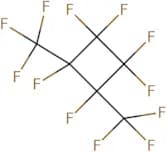
CAS :Produit contrôlé1-Tributylstannyl-3,3,3-trifluoro-1-propyne is an organic solvent that can be used as a reagent in the trifluoromethylation of hexane and diazomethane. It has been shown to be regioselective in the 1,3-dipolar cycloaddition of acetonitrile and oxide. It also reacts efficiently with aryl groups to produce yields.Formule :C15H27F3SnDegré de pureté :Min. 95%Masse moléculaire :383.08 g/molPerfluorodimethylcyclobutane
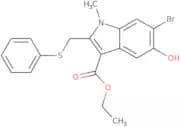
CAS :Produit contrôlé<p>Perfluorodimethylcyclobutane is an organic compound that belongs to the class of perfluorinated compounds. It is a polymer film-forming agent with a chemical formula of C5H8F2. The chemical structure of this drug consists of a chlorine atom, two fluorine atoms, and two hydrogen atoms. The molecular weight is 126.7 g/mol. Perfluorodimethylcyclobutane has been used in microcapsules as an analytical chemistry tool and in the development of pharmaceutical drugs for cardiac conditions. This molecule has been used as a chromatographic science analytical method to identify fatty acids in petroleum products and chlorinated solvents.</p>Formule :C6F12Degré de pureté :Min. 95%Masse moléculaire :300.05 g/molEthyl 6-bromo-5-hydroxy-1-methyl-2-(phenylsulfanylmethyl)indole-3-carboxylate
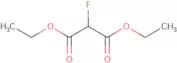
CAS :Produit contrôléPlease enquire for more information about Ethyl 6-bromo-5-hydroxy-1-methyl-2-(phenylsulfanylmethyl)indole-3-carboxylate including the price, delivery time and more detailed product information at the technical inquiry form on this pageDegré de pureté :Min. 95%Diethyl fluoromalonate
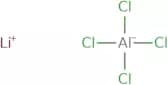
CAS :<p>Diethyl fluoromalonate is a chemical that can be used to generate fluoroacetic acid. It has been shown to be an effective inhibitor of the growth of resistant mutants in vitro with magnetic resonance spectroscopy. The mechanism of action is not known, but it may involve the formation of a carbonyl group due to elimination of hydrogen fluoride. Diethyl fluoromalonate also reacts with malonic acid to form an aryl halide, which can then react with nitrogen atoms in cells and produce reactive oxygen species. This chemical has been shown to have anti-inflammatory effects in rats.</p>Formule :C7H11FO4Degré de pureté :Min. 95%Masse moléculaire :178.16 g/molLithium tetrachloroaluminate
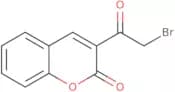
CAS :<p>Lithium tetrachloroaluminate is a compound that consists of lithium, copper, and aluminum. It has an average particle diameter of about 1 micrometer. Lithium tetrachloroaluminate can be used as a catalyst for the reduction of inorganic and organic solutes. This compound is soluble in water and organic solvents, which may be due to its ionic nature. Lithium tetrachloroaluminate can be used as a rechargeable battery electrode material because it has a high capacity for storing lithium ions. The reaction with chloride ions produces chlorine gas, which is corrosive and toxic under certain conditions.</p>Formule :LiAlCl4Degré de pureté :(%) Min. 98%Couleur et forme :White PowderMasse moléculaire :175.73 g/mol3-(2-Bromoacetyl)-2H-chromen-2-one
CAS :<p>3-(2-Bromoacetyl)-2H-chromen-2-one is a compound that has been shown to inhibit the growth of human liver cancer cells and has been used in the treatment of some cancers. 3-(2-Bromoacetyl)-2H-chromen-2-one is a nucleophile, which reacts with electrophiles, such as 2Nal, to form an intermediate covalent bond. The reaction mechanism for this process involves a nucleophilic substitution reaction, where one atom (the nucleophile) attacks another atom (the electrophile) from the side opposite its electron cloud. This process results in the formation of a covalent bond between the two atoms and the release of water. 3-(2-Bromoacetyl)-2H-chromen-2one was found to be effective against Streptococcus faecalis and other bacteria after being tested in vitro with these organisms. In addition to being</p>Formule :C11H7BrO3Degré de pureté :Min. 95%Couleur et forme :PowderMasse moléculaire :267.08 g/mol2-Chloro-7H-pyrrolo[2,3-d]pyrimidin-4-amine
CAS :<p>Please enquire for more information about 2-Chloro-7H-pyrrolo[2,3-d]pyrimidin-4-amine including the price, delivery time and more detailed product information at the technical inquiry form on this page</p>Formule :C6H5ClN4Degré de pureté :Min. 95%Masse moléculaire :168.58 g/mol(-)-Ecgonine hydrochloride
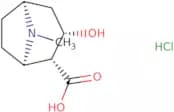
CAS :Produit contrôlé<p>(-)-Ecgonine hydrochloride is a benzoyl ester that is used as an analytical reagent. It is a precursor in the synthesis of cocaine and other drugs. Ecgonine hydrochloride can be extracted from plant sources, such as coca leaves or khat leaves, by acid-base extraction. It has been shown to have toxic effects on human serum and the liver, which may be due to its structural similarity to cocaine.</p>Formule :C9H16ClNO3Degré de pureté :Min. 95%Masse moléculaire :221.68 g/mol2-(4-Bromo-benzyl)-pyrrolidine
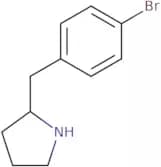
CAS :Produit contrôléPlease enquire for more information about 2-(4-Bromo-benzyl)-pyrrolidine including the price, delivery time and more detailed product information at the technical inquiry form on this pageFormule :C11H14BrNDegré de pureté :Min. 95%Masse moléculaire :240.14 g/molTrifluoromethanesulfonyl chloride
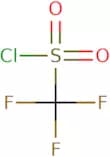
CAS :<p>Trifluoromethanesulfonyl chloride is a reactive chemical that reacts with nucleophilic groups in biological molecules. It is used for the treatment of infectious diseases and metabolic disorders. Trifluoromethanesulfonyl chloride has been shown to have receptor activity against various microorganisms, including resistant strains. Structural analysis has shown that the active form of trifluoromethanesulfonyl chloride binds to malonic acid and other coumarin derivatives. This binding prevents the formation of hydrogen bonds, which would otherwise stabilize the molecule, leading to its degradation. Trifluoromethanesulfonyl chloride also reacts with magnesium salt to produce trifluoroacetic acid, which is an organic solvent that can be used as a reaction medium or a reagent in organic synthesis.</p>Formule :CClF3O2SDegré de pureté :Min. 95%Masse moléculaire :168.52 g/mol3-(trifluoromethoxy)aniline
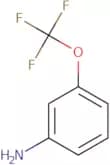
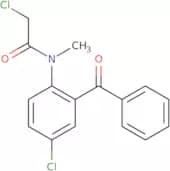
CAS :<p>3-(trifluoromethoxy)aniline is a compound that contains a trifluoromethoxy group. It has been shown to have antiproliferative effects in prostate cancer cells. 3-(trifluoromethoxy)aniline inhibits the activity of pim-1, which is important for cell proliferation and differentiation. The synthesis of 3-(trifluoromethoxy)aniline can be accomplished by one of two methods. In the first method, 3-chloroaniline is reacted with trifluoroacetic acid and bis(trimethylsilyl)acetamide in dichloromethane to form 3-hydroxy-4-chlorobenzenesulfonyl chloride (3HCBSCl). In the second method, the desired product is synthesized from 3-aminophenol and trifluoroacetic acid in acetonitrile. These two methods produce different isomers</p>Formule :C7H6F3NODegré de pureté :Min. 95%Couleur et forme :PowderMasse moléculaire :177.12 g/molN-(2-Benzoyl-4-chlorophenyl)-2-chloro-N-methylacetamide
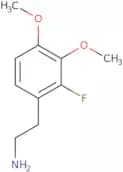
CAS :Please enquire for more information about N-(2-Benzoyl-4-chlorophenyl)-2-chloro-N-methylacetamide including the price, delivery time and more detailed product information at the technical inquiry form on this pageFormule :C16H13Cl2NO2Degré de pureté :Min. 95%Masse moléculaire :322.19 g/mol2-(2-Fluoro-3,4-dimethoxyphenyl)ethanamine
CAS :Produit contrôlé<p>Please enquire for more information about 2-(2-Fluoro-3,4-dimethoxyphenyl)ethanamine including the price, delivery time and more detailed product information at the technical inquiry form on this page</p>Formule :C10H14FNO2Degré de pureté :Min. 95%Masse moléculaire :199.22 g/mol[1-Methyl-2-(7-methyl-1H-indol-3-yl)ethyl]amine hydrochloride
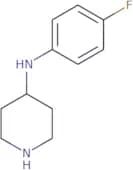
CAS :Produit contrôlé<p>Please enquire for more information about [1-Methyl-2-(7-methyl-1H-indol-3-yl)ethyl]amine hydrochloride including the price, delivery time and more detailed product information at the technical inquiry form on this page</p>Formule :C12H16N2Degré de pureté :Min. 95%Masse moléculaire :188.27 g/molN-(4-Fluorophenyl)piperidin-4-amine
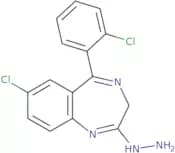
CAS :Produit contrôlé<p>Fentanyl is a synthetic opioid that is similar to morphine. It has been used in human studies for its analgesic effects. Fentanyl has been shown to have a high potential for abuse and can cause life-threatening respiratory depression. It can be administered orally, intravenously, or by inhalation. The drug is metabolized by the liver into several inactive metabolites. Fentanyl is an analog of the natural opioid peptide endorphin and binds to δ-opioid receptors in the central nervous system, which are involved in the regulation of pain. This drug also has antinociceptive properties at low doses and δ-opioid agonist activity at higher doses.</p>Formule :C11H15FN2Degré de pureté :Min. 95%Masse moléculaire :194.25 g/mol7-Chloro-5-(2-chlorophenyl)-2-hydrazinyl-3H-1,4-benzodiazepine
CAS :Produit contrôléPlease enquire for more information about 7-Chloro-5-(2-chlorophenyl)-2-hydrazinyl-3H-1,4-benzodiazepine including the price, delivery time and more detailed product information at the technical inquiry form on this pageFormule :C15H12Cl2N4Degré de pureté :Min. 95%Masse moléculaire :319.19 g/mol3-[4-(3,4-Dichlorophenyl)piperazin-1-yl]-3-oxopropanenitrile
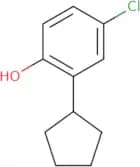
CAS :Produit contrôlé<p>Please enquire for more information about 3-[4-(3,4-Dichlorophenyl)piperazin-1-yl]-3-oxopropanenitrile including the price, delivery time and more detailed product information at the technical inquiry form on this page</p>Formule :C13H13Cl2N3ODegré de pureté :Min. 95%Masse moléculaire :298.17 g/mol2-Cyclopentyl-4-chlorophenol
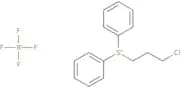
CAS :<p>2-Cyclopentyl-4-chlorophenol is a synthetic fatty acid that is used as an antiviral agent. It inhibits the synthesis of fatty acids by inhibiting the conversion of 2,4-dienoyl CoA to 3-hydroxyacyl CoA. 2-Cyclopentyl-4-chlorophenol has been shown to be effective against a number of test organisms, including bacteria such as staphylococcus and virus such as herpes simplex virus. 2-Cyclopentyl-4-chlorophenol inhibits viral protein synthesis by blocking the action of host enzymes required for this process. The target cell for this drug is the host cell infected with a virus. This drug also has antihelminthic properties and can be used to treat parasitic infections caused by schistosoma haematobium and clonorchis sinensis worms. 2CPCP's structural formula is shown below:</p>Formule :C11H13ClODegré de pureté :Min. 95%Masse moléculaire :196.67 g/mol(3-Chloropropyl)diphenylsulfonium tetrafluoroborate
CAS :<p>Please enquire for more information about (3-Chloropropyl)diphenylsulfonium tetrafluoroborate including the price, delivery time and more detailed product information at the technical inquiry form on this page</p>Formule :C15H16ClS•BF4Degré de pureté :Min. 95%Masse moléculaire :350.61 g/mol
![Pentachlorophenyl N-[(benzyloxy)carbonyl]glycinate](/_next/image/?url=https%3A%2Fstatic.cymitquimica.com%2Fproducts%2F3D%2Fthumb-webp%2FFP123081.webp&w=3840&q=75)

![2-Chloro-7H-pyrrolo[2,3-d]pyrimidin-4-amine](/_next/image/?url=https%3A%2Fstatic.cymitquimica.com%2Fproducts%2F3D%2Fthumb-webp%2FFC63357.webp&w=3840&q=75)
![[1-Methyl-2-(7-methyl-1H-indol-3-yl)ethyl]amine hydrochloride](/_next/image/?url=https%3A%2Fstatic.cymitquimica.com%2Fproducts%2F3D%2Fthumb-webp%2FFM123634.webp&w=3840&q=75)
![3-[4-(3,4-Dichlorophenyl)piperazin-1-yl]-3-oxopropanenitrile](/_next/image/?url=https%3A%2Fstatic.cymitquimica.com%2Fproducts%2F3D%2Fthumb-webp%2FFD118649.webp&w=3840&q=75)