Halogénures organiques
Dans cette catégorie, vous trouverez des molécules organiques contenant un ou plusieurs atomes d'halogène dans leur structure. Ces halogénures organiques incluent des composés bromés, iodés, chlorés et des halogénures cycliques. Les halogénures organiques sont largement utilisés en synthèse organique, en pharmaceutique, en agrochimie et en science des matériaux en raison de leur réactivité et de leur capacité à subir une variété de transformations chimiques. Chez CymitQuimica, nous offrons une sélection complète d'halogénures organiques de haute qualité pour soutenir vos applications de recherche et industrielles, garantissant une performance fiable et efficace dans vos projets synthétiques et analytiques.
Sous-catégories appartenant à la catégorie "Halogénures organiques"
20440 produits trouvés pour "Halogénures organiques"
Trier par
Degré de pureté (%)
0
100
|
0
|
50
|
90
|
95
|
100
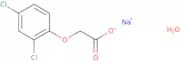
(2,4-Dichlorophenoxy)acetic acid sodium salt monohydrate
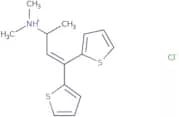
CAS :<p>(2,4-Dichlorophenoxy)acetic acid sodium salt monohydrate is a chemical that belongs to the phenoxy herbicides. It is used as a selective herbicide for control of annual and perennial grasses and broadleaf weeds in noncrop areas. This compound has been detected by gas chromatography/mass spectrometric analysis after a dispersive solid-phase extraction procedure. The target analytes were found to be acidic with an unknown molecular weight.</p>Formule :C8H5Cl2O3·Na·H2ODegré de pureté :Min. 95%Couleur et forme :PowderMasse moléculaire :261.03 g/molDimethylthiambutene hydrochloride
CAS :Produit contrôlé<p>Please enquire for more information about Dimethylthiambutene hydrochloride including the price, delivery time and more detailed product information at the technical inquiry form on this page</p>Formule :C14H18ClNS2Degré de pureté :Min. 95%Masse moléculaire :299.88 g/mol(2-Bromoethoxy)-tert-butyldimethylsilane
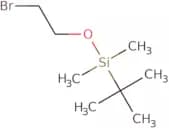
CAS :<p>2-Bromoethoxy-tert-butyldimethylsilane is a conjugate that has been shown to have anticancer efficacy in vivo. It is a pyrimidine derivative and inhibits the viral enzyme RNA polymerase, thereby inhibiting viral replication. 2-Bromoethoxy-tert-butyldimethylsilane also inhibits glyceraldehyde 3-phosphate dehydrogenase, which is an enzyme that catalyzes the conversion of glucose into glyceraldehyde 3-phosphate and plays an important role in glycolysis. The compound has been shown to be active against mouse tumors, which are associated with endogenous retroviruses. The compound has also been shown to inhibit gapdh, an enzyme involved in energy metabolism and cancer therapy.</p>Formule :C8H19BrOSiDegré de pureté :Min. 95%Couleur et forme :Colorless Clear LiquidMasse moléculaire :239.23 g/mol1-(2,6-Dichlorobenzyl)piperazine
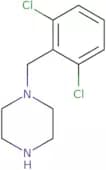
CAS :Produit contrôlé1-(2,6-Dichlorobenzyl)piperazine is a benzylpiperazine that emits light in the visible region. It is an acidic reagent that can be used as an electron donating agent in organic synthesis. 1-(2,6-Dichlorobenzyl)piperazine reacts with amines to form substituted phenylpiperazines. This reaction is widely used to investigate the structure and reactivity of amines. 1-(2,6-Dichlorobenzyl)piperazine reacts with phenols to form piperazines. It also reacts with aliphatic compounds to form a trifluoromethyl group.Formule :C11H14Cl2N2Degré de pureté :Min. 95%Masse moléculaire :245.15 g/mol7-Chloro-1,2,3,4-tetrahydrobenzo[b]azepin-5-one
CAS :<p>7-Chloro-1,2,3,4-tetrahydrobenzo[b]azepin-5-one (7CTB) is a synthetic vasopressin analogue that is used as a vasopressin receptor antagonist. It is a competitive inhibitor of the vasopressin V2 receptor and has been shown to be effective in the treatment of diabetes insipidus. 7CTB has also been shown to bind to and inhibit the binding of arginine, an acid binding agent, preventing hydrolysis reactions with other compounds. 7CTB has been shown to be an effective agent for the treatment of congestive heart failure and chronic kidney disease in animal models. The synthesis process involves sulfonylation followed by dieckmann condensation and organic solvent extraction.</p>Formule :C10H10ClNODegré de pureté :Min. 95%Masse moléculaire :195.65 g/mol1-Benzyl-3-carbethoxy-4-piperidone hydrochloride
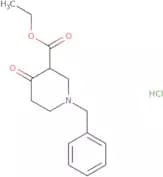
CAS :<p>1-Benzyl-3-carbethoxy-4-piperidone hydrochloride is a carboxylic acid that is used as a waterproofing agent in cyclohexane. It is absorbed by the skin and other tissues, which may lead to adverse effects on the body. Exposure to this compound has been shown to result in irritation of the skin, eyes, and respiratory tract, as well as changes in heart rate and blood pressure.</p>Formule :C15H19NO3•HClDegré de pureté :Min. 95%Masse moléculaire :297.78 g/mol3,3,3-Trifluoro-1-propanol
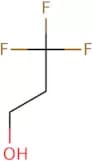
CAS :<p>3,3,3-Trifluoro-1-propanol is a chemical that is used in pharmaceutical dosage formulations. It has a relatively low toxicity and is not readily absorbed through the skin. 3,3,3-Trifluoro-1-propanol has been shown to be an effective inhibitor of fatty acid oxidation and protein synthesis. The structure of this compound consists of three carbon atoms connected by single bonds to one hydrogen atom each and one fluorine atom. This molecule also contains a hydroxyl group at one end and two nitrogen atoms at the other end. These nitrogen atoms are stabilized by intramolecular hydrogen bonds with the hydrogen atoms on the hydroxyl group. 3,3,3-Trifluoro-1-propanol can be used as a cationic polymerization catalyst for perfluoroalkyls and aromatic hydrocarbons.</p>Formule :C3H5F3ODegré de pureté :Min. 95%Masse moléculaire :114.07 g/mol2,6-Dibromo-3-nitropyridine
CAS :2,6-Dibromo-3-nitropyridine is a chemical compound that has been shown to inhibit serine protease activity. The compound was shown to be an inhibitor of the enzyme trypsin, and showed some activity against a number of other proteases. 2,6-Dibromo-3-nitropyridine has also been shown to inhibit nucleophilic alkylation of DNA bases by 2,6-dichloroquinoxaline. 2,6-Dibromo-3-nitropyridine is a targeted inhibitor that binds to the active site of the enzyme and prevents the formation of an enzyme-substrate complex. This inhibition leads to a decrease in the production of proteins essential for cell division.Formule :C5H2Br2N2O2Degré de pureté :Min. 95%Masse moléculaire :281.89 g/molMethyl dichlorophosphite
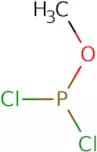
CAS :<p>Methyl dichlorophosphite is a chemical compound that is used as an antimicrobial agent. It reacts with hydroxyl groups on the surface of bacteria, forming a polymerase chain reaction (PCR) product that inhibits the growth and reproduction of bacteria. Methyl dichlorophosphite also reacts with β-amino acids to form amides, which are then hydrolyzed to produce fatty acids and phosphites. This chemical can be used as a solid catalyst for reactions involving alkylthio groups or amides.</p>Formule :CH3Cl2OPDegré de pureté :Min. 95%Couleur et forme :Clear LiquidMasse moléculaire :132.91 g/molN6-(1-Iminoethyl)-L-lysine hydrochloride
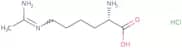
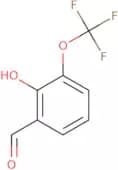
CAS :<p>N6-(1-Iminoethyl)-L-lysine hydrochloride is an experimental drug that inhibits bacterial translocation, a process which occurs when bacteria from the gastrointestinal tract invade organs and tissues in the body that are not protected by a mucous barrier. It has been shown to be effective in reducing chronic pulmonary inflammation and fibrosis, as well as inhibiting emphysema-like lesions, in mice. N6-(1-Iminoethyl)-L-lysine hydrochloride also has anti-inflammatory effects on the skin and reduces the production of proinflammatory cytokines such as PGE2.</p>Formule :C8H18ClN3O2Degré de pureté :Min. 95%Masse moléculaire :223.7 g/mol2-Hydroxy-3-(Trifluoromethoxy)Benzaldehyde
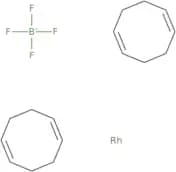
CAS :<p>2-Hydroxy-3-(trifluoromethoxy)benzaldehyde is a coordination compound that is used as a ligand. It has two-dimensional and crystal structures. The ligated molecule is usually coordinated to the metal ion, forming a dimer.</p>Formule :C8H5F3O3Degré de pureté :Min. 95%Masse moléculaire :206.12 g/molBis (1,5-Cyclooctadiene) rhodium(I)tetrafluoroborate
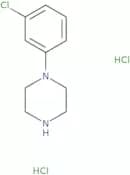
CAS :<p>Bis (1,5-Cyclooctadiene) rhodium(I)tetrafluoroborate (BODIPY) is a catalyst that enhances the rate of hydrosilylation reactions. This catalyst has been shown to be effective in the synthesis of aryl chlorides from amines and aldehydes with high enantioselectivity. BODIPY is also immobilized on silica gel to create an active catalyst for asymmetric synthesis. The immobilization process on silica gel is done by reacting BODIPY with ammonium formate and amines. The resulting catalyst can be used for the synthesis of functionalized organic compounds, such as pyrrolidines, tetrahydrofurans, and thiophenes.</p>Formule :C16H24BF4RhDegré de pureté :Min. 95%Masse moléculaire :406.07 g/mol1-(3-Chlorophenyl)piperazine dihydrochloride
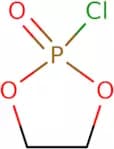
CAS :Produit contrôlé1-(3-Chlorophenyl)piperazine dihydrochloride is a serotonin antagonist that has been shown to cause an increase in cortisol levels. It is also a serotonergic agent, which may be related to its antidepressant activity. 1-(3-Chlorophenyl)piperazine dihydrochloride has been shown to have a matrix effect on the brain and can be used as a drug for treating primary pulmonary hypertension. It can also induce behavioral changes and stimulate ovarian activity. The compound 1-(3-Chlorophenyl)piperazine dihydrochloride is an antagonist of 5-HT2C receptors, and it has no affinity for the 5-HT2A receptor.Formule :C10H15Cl3N2Degré de pureté :Min. 95%Couleur et forme :White To Yellow Or Beige SolidMasse moléculaire :269.6 g/mol2-Chloro-1,3,2-dioxaphospholane-2-oxide
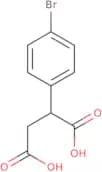
CAS :<p>2-Chloro-1,3,2-dioxaphospholane-2-oxide is a reactive compound that has inhibitory properties. It is used in the synthesis of biocompatible polymers and can be used as a phase transition temperature regulator. This molecule has been studied using FTIR spectroscopy and in vitro assays. It has also been shown to react with fatty acids to form a molecule with low energy. 2-Chloro-1,3,2-dioxaphospholane-2-oxide reacts with hydrogen chloride to form benzyl groups, which may be due to its nucleophilic attack on the chlorine atom. 2CPDO is an organic compound that is part of the molecule class known as phospholanes.</p>Formule :C2H4ClO3PDegré de pureté :Min. 95%Masse moléculaire :142.48 g/mol2-(4-Bromophenyl)succinic acid
CAS :<p>Please enquire for more information about 2-(4-Bromophenyl)succinic acid including the price, delivery time and more detailed product information at the technical inquiry form on this page</p>Formule :C10H9BrO4Degré de pureté :Min. 95%Masse moléculaire :273.08 g/mola-Prodine hydrochloride
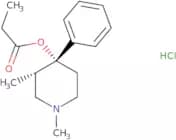
CAS :Produit contrôlé<p>a-Prodine hydrochloride (AP) is an opioid analgesic. It is a synthetic drug that belongs to the piperidine class of drugs. AP has been shown to have a rapid onset of action and is used in the treatment of moderate to severe pain, as well as in sedation prior to surgery. AP is also used for the management of postoperative pain following oral or maxillofacial surgery, and for the relief of pain in patients with cancer. AP may be given intravenously, intramuscularly, or orally. Oral administration should be avoided in patients with depression or those who are receiving monoamine oxidase inhibitors (MAOIs). The salt form of this drug is hydrochloride, which is soluble in water.</p>Formule :C16H24ClNO2Degré de pureté :Min. 95%Masse moléculaire :297.82 g/molEthyl 2-chloroacetoacetate
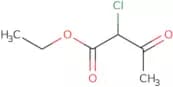
CAS :<p>Ethyl 2-chloroacetoacetate is an organic compound that is prepared industrially by the chlorination of acetoacetic acid. It has been shown to have antimicrobial activity against human pathogens, such as Staphylococcus aureus and Escherichia coli. The kinetic constants for this reaction are pH dependent and depend on the ionic strength of the solution. Ethyl 2-chloroacetoacetate reacts with hydroxide to form ethyl chlorocarbonate, which is hydrolyzed to give carbon dioxide and hydrogen chloride. The hydrogen bonding interactions between these two molecules are important in the mechanism of this reaction. This reaction also generates a characteristic NMR spectrum in which six peaks can be seen. Ethyl 2-chloroacetoacetate is acidic and hemolytic when dissolved in water, but it does not react with trifluoroacetic acid or low energy radiation.</p>Formule :C6H9ClO3Degré de pureté :Min. 95%Couleur et forme :Clear LiquidMasse moléculaire :164.59 g/mol3-Picolyl chloride hydrochloride
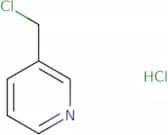
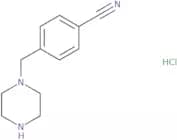
CAS :<p>3-Picolyl chloride hydrochloride is a white crystalline solid that can be obtained by the reaction of thionyl chloride and 3-picolyl chloride. It has a melting point of 146°C, a boiling point of 317°C, and a density of 1.33g/cm3. The compound exhibits luminescence properties when exposed to ultraviolet light or x-rays. 3-Picolyl chloride hydrochloride is a synthetic compound that may be used as an intermediate in the preparation of other compounds with anti-inflammatory, antihistamine, or antimalarial activities.</p>Formule :C6H6NCl·HClDegré de pureté :Min. 95%Masse moléculaire :164.03 g/mol4-(Piperazinomethyl)benzonitrile, hydrochloride
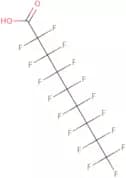
CAS :Produit contrôléPlease enquire for more information about 4-(Piperazinomethyl)benzonitrile, hydrochloride including the price, delivery time and more detailed product information at the technical inquiry form on this pageFormule :C12H16ClN3Degré de pureté :Min. 95%Masse moléculaire :237.73 g/molHeptadecafluorononanoic acid
CAS :<p>Heptadecafluorononanoic acid is a long-chain fatty acid that has been used as a building block in the synthesis of polymers. It has been shown to have an effect on locomotor activity and thermal expansion in human serum, as well as on maternal blood. Heptadecafluorononanoic acid has also been found to be effective for the treatment of hepatic steatosis and may have long-term efficacy. This compound is also able to bind with receptors, which can contribute to its biological properties. Heptadecafluorononanoic acid has been shown to inhibit geriatric patients' reaction solution. The analytical method for heptadecafluorononanoic acid consists of gas chromatography with flame ionization detection (GC-FID).</p>Formule :C9HF17O2Degré de pureté :Min. 95%Couleur et forme :PowderMasse moléculaire :464.08 g/mol

![7-Chloro-1,2,3,4-tetrahydrobenzo[b]azepin-5-one](/_next/image/?url=https%3A%2Fstatic.cymitquimica.com%2Fproducts%2F3D%2Fthumb-webp%2FFC51283.webp&w=3840&q=75)