Halogénures organiques
Dans cette catégorie, vous trouverez des molécules organiques contenant un ou plusieurs atomes d'halogène dans leur structure. Ces halogénures organiques incluent des composés bromés, iodés, chlorés et des halogénures cycliques. Les halogénures organiques sont largement utilisés en synthèse organique, en pharmaceutique, en agrochimie et en science des matériaux en raison de leur réactivité et de leur capacité à subir une variété de transformations chimiques. Chez CymitQuimica, nous offrons une sélection complète d'halogénures organiques de haute qualité pour soutenir vos applications de recherche et industrielles, garantissant une performance fiable et efficace dans vos projets synthétiques et analytiques.
Sous-catégories appartenant à la catégorie "Halogénures organiques"
20440 produits trouvés pour "Halogénures organiques"
Trier par
Degré de pureté (%)
0
100
|
0
|
50
|
90
|
95
|
100
12-Amino-1-dodecanoic acid methyl ester hydrochloride salt
CAS :<p>12-Amino-1-dodecanoic acid methyl ester hydrochloride salt (12ADM) has been shown to have immunomodulatory properties. It has a nanomolar range of activity, which is the optimal for an immunosuppressant. 12ADM inhibits the transcriptional activity of human immunodeficiency virus type 1 (HIV-1) and HIV-2, as well as other retroviruses, through interactions with specific RNA sequences in the viral genome. The amide group in this compound is essential for its antiviral activity, and it also interacts with betulinic acid to enhance its cytotoxicity.</p>Formule :C13H28ClNO2Degré de pureté :Min. 95%Couleur et forme :PowderMasse moléculaire :265.82 g/mol7-Bromo-[1,2,4]triazolo[1,5-a]pyridin-2-ylamine
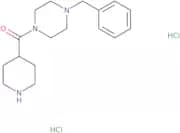
CAS :<p>Please enquire for more information about 7-Bromo-[1,2,4]triazolo[1,5-a]pyridin-2-ylamine including the price, delivery time and more detailed product information at the technical inquiry form on this page</p>Formule :C6H5BrN4Degré de pureté :Min. 95%Masse moléculaire :213.03 g/mol(4-Benzylpiperazin-1-yl)piperidin-4-yl-methanone dihydrochloride
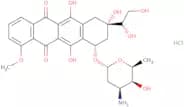
CAS :Produit contrôléPlease enquire for more information about (4-Benzylpiperazin-1-yl)piperidin-4-yl-methanone dihydrochloride including the price, delivery time and more detailed product information at the technical inquiry form on this pageFormule :C17H27Cl2N3ODegré de pureté :Min. 95%Masse moléculaire :360.32 g/molDoxorubicinol hydrochloride - Mixture of Diasteromers
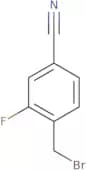
CAS :Please enquire for more information about Doxorubicinol hydrochloride - Mixture of Diasteromers including the price, delivery time and more detailed product information at the technical inquiry form on this pageFormule :C27H32ClNO11Degré de pureté :Min. 95%Masse moléculaire :582 g/mol4-Cyano-2-fluorobenzyl bromide
CAS :<p>4-Cyano-2-fluorobenzyl bromide is a methyl ester that can be used as a reagent for the synthesis of chiral α-amino acids. It can also be used as an enantioselective methylating agent for the synthesis of γ-secretase inhibitors. The methodology for the convergent synthesis of this compound includes alkylation with glycine followed by an enantioselective hydrolysis, which results in optically pure 4-cyano-2-fluorobenzyl bromide.</p>Formule :C8H5BrFNDegré de pureté :Min. 95%Couleur et forme :PowderMasse moléculaire :214.03 g/molPenetratin trifluoroacetate
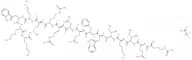
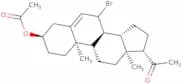
CAS :<p>Cell-penetrating peptide derived from the third helix of the Antennapedia protein homeodomain. Penetratin also shows antimicrobial and antifungal activity.</p>Formule :C104H169N35O19S•(C2HF3O2)xDegré de pureté :Min. 95%Masse moléculaire :2,245.75 g/mol7-Bromo-3-O-acetyl pregnenolone
CAS :Produit contrôlé<p>Please enquire for more information about 7-Bromo-3-O-acetyl pregnenolone including the price, delivery time and more detailed product information at the technical inquiry form on this page</p>Formule :C23H33BrO3Degré de pureté :Min. 95%Masse moléculaire :437.41 g/molSodium tetrachloropalladate(II)
CAS :<p>Sodium tetrachloropalladate(II) is a photoelectron acceptor that absorbs x-rays in the wavelength range of 0.2-1.5 Å. It is used as a nanomaterial for the preparation of microspheres and optical devices. Sodium tetrachloropalladate(II) has been shown to have a chloride ion content of 36%. The chemical composition of this element can be determined by using preparative methods such as suzuki coupling reaction, phase chromatography, or elemental analysis. The isolated yield of sodium tetrachloropalladate(II) can be determined by immobilizing it on an ion exchange resin and eluting with 0.1 M HCl.</p>Formule :Cl4Na2PdDegré de pureté :Min. 95%Masse moléculaire :294.21 g/mol[1,4-Bis(diphenylphosphino)butane]palladium(II) Dichloride
CAS :Produit contrôlé<p>[1,4-Bis(diphenylphosphino)butane]palladium(II) dichloride (PdCl2(DPPB)) is a covalent catalyst that is used in the cross-coupling of styrene with chlorides. It has been shown to be a very effective catalyst for this reaction and yields high yields. The use of this catalyst allows for the quantification of the phosphine ligand that is used in the reaction. [1,4-Bis(diphenylphosphino)butane]palladium(II) dichloride has also been shown to be an efficient catalyst for other reactions, such as solvents and diphosphine ligands.</p>Formule :C28H28Cl2P2PdDegré de pureté :Min. 95%Masse moléculaire :603.79 g/molTetrachlorophthalic anhydride
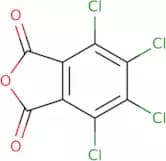
CAS :Produit contrôlé<p>Tetrachlorophthalic anhydride (TCPA) is a reactive chemical that has been shown to have anti-inflammatory activity. TCPA has been found to inhibit the release of histamine from mast cells in humans, and it inhibits the production of pro-inflammatory cytokines such as tumor necrosis factor alpha (TNF-α). TCPA has also been shown to have a toxic effect on human lymphocyte transformation, which may be due to its ability to induce apoptosis. The toxicity of TCPA was studied in rats and mice, where it was found that TCPA did not cause any significant changes in clinical pathology or hydroxyl group levels.</p>Formule :C8Cl4O3Degré de pureté :Min. 97.5 Area-%Couleur et forme :White/Off-White SolidMasse moléculaire :285.89 g/mol2,2',4,5,5'-Pentachlorobiphenyl
CAS :Produit contrôlé2,2',4,5,5'-Pentachlorobiphenyl is an environmental pollutant that is not naturally produced. It has been detected in animal tissues and faeces, as well as human tissues and faeces. The metabolite 2,4,5-trichlorophenol has been found to be a precursor of this compound. 2,2',4,5,5'-Pentachlorobiphenyl can persist in the environment for centuries and is difficult to detect because it does not react with many detection methods. This compound has been shown to alter the structure of DNA molecules in animals by inducing mutations in their offspring. The compound also induces changes in the structure of DNA molecules in tissue samples and alters protein synthesis.br>Formule :C12H5Cl5Degré de pureté :Min. 95%Masse moléculaire :326.43 g/mol2,2',5,5'-Tetrachlorobiphenyl
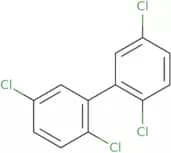
CAS :Produit contrôlé<p>2,2',5,5'-Tetrachlorobiphenyl (PCB) is a biphenyl that has been shown to cause toxicity and oxidative injury in liver cells. PCB interacts with mitochondrial membrane potential by binding to adenine nucleotide and dinucleotide phosphate. This interaction leads to the release of reactive oxygen species, which damages cells by causing oxidative injury. The mechanism of this interaction is not well understood, but it is hypothesized that PCB may bind to the electron transport chain. PCB may also be toxicologically active through its ability to induce cancer gene therapy by inhibiting the activity of a tumor suppressor protein called p53.</p>Formule :C12H6Cl4Degré de pureté :Min. 95%Masse moléculaire :291.99 g/molPotassium chlorate
CAS :Produit contrôlé<p>Potassium chlorate is a strong oxidizing agent and a salt of potassium and chlorate. Potassium chlorate is used as an oxidizer in fireworks, propellants, and for the treatment of wastewater. It can also be used to generate chlorine dioxide, which is used as a disinfectant. Potassium chlorate has been shown to have genotoxic effects on rat liver cells, which may be due to its ability to induce transcriptional regulation by altering DNA methylation status. Chronic exposure to high concentrations of potassium chlorate can cause apical necrosis in rats. This type of necrosis is caused by the accumulation of potassium ions that lead to a disruption in membrane integrity. Chlorates are also known to cause chronic renal toxicity via oxidative stress mechanisms.</p>Formule :ClKO3Degré de pureté :Min. 95%Couleur et forme :White SolidMasse moléculaire :122.55 g/mol4-Amino-3,5-difluorobenzonitrile
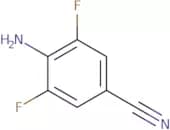
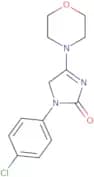
CAS :<p>4-Amino-3,5-difluorobenzonitrile is a fine chemical used as a building block in research chemicals, reagent, and speciality chemical. It is versatile and can be used as a reaction component in the synthesis of complex compounds with various applications. CAS No. 110301-23-0 is an important intermediate for the synthesis of organic compounds and pharmaceuticals. 4-Amino-3,5-difluorobenzonitrile is also used as a scaffold for the synthesis of organic compounds.</p>Formule :C7H4F2N2Degré de pureté :Min. 95%Couleur et forme :PowderMasse moléculaire :154.12 g/mol1-(4-Chlorophenyl)-1,5-dihydro-4-(4-morpholinyl)-2H-imidazol-2-one
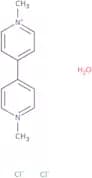
CAS :<p>1-(4-Chlorophenyl)-1,5-dihydro-4-(4-morpholinyl)-2H-imidazol-2-one is a fatty acid. It has been shown to have clinical relevance in the treatment of epilepsy. The effective dose for this drug is unknown, but it is believed to be between 100 and 200mg per day. Benzalkonium chloride, which is used as a preservative in food products, may interfere with the absorption of 1-(4-chlorophenyl)-1,5-dihydro-4-(4-morpholinyl)-2H-imidazol-2-one. This drug should not be used by pregnant women or children. Long term efficacy studies are unavailable for this drug. Controlled release preparations are available for this medication that can help improve compliance with dosing requirements. Benzodiazepine binding sites are found in the central nervous system and benzodiazepines may bind to</p>Formule :C13H14ClN3O2Degré de pureté :Min. 95%Masse moléculaire :279.72 g/mol1,1'-Dimethyl-4,4'-bipyridinium dichloride hydrate
CAS :<p>1,1'-Dimethyl-4,4'-bipyridinium dichloride hydrate is a bipyridine with a divalent chloride. It has been shown to have synergic effects in the presence of dextran sulfate and paraquat. This compound has good photochemical properties, which are used for wastewater treatment and surface methodology. 1,1'-Dimethyl-4,4'-bipyridinium dichloride hydrate also has toxicological studies that show it does not cause any cellular toxicity or mitochondrial membrane potential changes. It also reduces potassium dichromate toxicity in glomerular filtration rate studies. This compound can be used as an analytical method for other bipyridines.</p>Formule :C12H14Cl2N2•(H2O)xDegré de pureté :Min. 95%Couleur et forme :PowderMasse moléculaire :257.16 g/mol4-(Trifluoromethoxy)phenylboronic Acid (contains varying amounts of Anhydride)
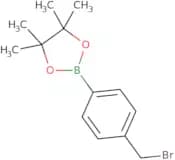
CAS :<p>4-(Trifluoromethoxy)phenylboronic acid is a boron-containing compound that has been shown to be a potent inhibitor of the histone deacetylase (HDAC) enzyme. It also has surfactant properties and can be used as a photochemical reagent. 4-(Trifluoromethoxy)phenylboronic acid is orally bioavailable and may have therapeutic potential for neurodegenerative diseases, such as Alzheimer's disease, Parkinson's disease, and Huntington's disease. It also has the ability to inhibit cancer cell growth by inhibiting HDAC activity. This drug has been found to cross-couple with organosilicon compounds in order to form new compounds with potent inhibitory activity against HDAC enzymes.</p>Formule :C7H6BF3O3Degré de pureté :Min. 95%Masse moléculaire :205.93 g/mol4-(Bromomethyl)benzeneboronic acid pinacol ester
CAS :<p>4-(Bromomethyl)benzeneboronic acid pinacol ester (BBBA) is a hypochlorous acid derivative with a structural formula of C6H5BrOCH2. It is used as a fluorophore and has been shown to have anticancer activity. 4-Bromomethylbenzeneboronic acid pinacol ester reacts with hydrophobic molecules in the cell membrane, leading to disruption of the membrane and ultimately cell death. This compound can be used as an active oxygen source in biological assays, such as functional assays, because it generates reactive oxygen species and can act as a fluorescence probe for detection of biological samples.</p>Formule :C13H18BBrO2Degré de pureté :Min. 95 Area-%Couleur et forme :White PowderMasse moléculaire :297 g/mol2,3,5-Trichloropyridine
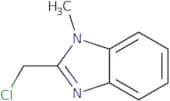
CAS :<p>2,3,5-Trichloropyridine is a chemical compound that reacts with chlorine and hydroxide to form hydrogen chloride and sodium hydroxide. It is used in the wastewater treatment process as an oxidizing agent for the removal of organic compounds from water. 2,3,5-Trichloropyridine is also used as a chlorinating agent for various purposes such as the production of acrylonitrile or the destruction of hazardous wastes. The reaction products are hydrochloric acid and sodium carbonate. This substance may react with nucleophiles to form more reactive species such as nitronium ions.</p>Formule :C5H2Cl3NDegré de pureté :Min. 95%Masse moléculaire :180.925282-(Chloromethyl)-1-methyl-1H-benzimidazole hydrochloride
CAS :Produit contrôlé<p>2-(Chloromethyl)-1-methyl-1H-benzimidazole hydrochloride (CMMB) is a synthetic compound that inhibits the enzyme tyrosinase, which is responsible for catalyzing the production of melanin. The tetradentate ligand in CMMB binds to the active site of tyrosinase and prevents it from catalyzing reactions. The redox potentials of CMMB make it possible to oxidize and reduce the compound, which allows for an easy synthesis. The dihedral angle between the amine and pyrimidine rings in CMMB provides a biomimetic structure that can be used to synthesize other aromatic compounds.</p>Formule :C9H9ClN2Degré de pureté :Min. 95%Masse moléculaire :180.63 g/mol


![7-Bromo-[1,2,4]triazolo[1,5-a]pyridin-2-ylamine](/_next/image/?url=https%3A%2Fstatic.cymitquimica.com%2Fproducts%2F3D%2Fthumb-webp%2FFB140382.webp&w=3840&q=75)

![[1,4-Bis(diphenylphosphino)butane]palladium(II) Dichloride](/_next/image/?url=https%3A%2Fstatic.cymitquimica.com%2Fproducts%2F3D%2Fthumb-webp%2FFB60968.webp&w=3840&q=75)