Produits biochimiques et réactifs
Les biochimiques et réactifs sont des substances fondamentales pour la recherche et le développement dans des domaines tels que la biotechnologie, la biologie moléculaire, la pharmacologie et la médecine. Ces produits sont essentiels pour une variété d'applications, y compris la synthèse de composés, l'analyse d'échantillons biologiques, la recherche sur les processus métaboliques et la production de médicaments. Chez CymitQuimica, nous proposons une large sélection de biochimiques et réactifs de haute qualité et pureté, adaptés à divers besoins scientifiques et industriels. Notre catalogue comprend des enzymes, des anticorps, des acides nucléiques, des acides aminés et de nombreux autres produits, tous conçus pour soutenir les chercheurs et les professionnels dans leurs projets de recherche et développement, garantissant des résultats fiables et reproductibles.
Sous-catégories appartenant à la catégorie "Produits biochimiques et réactifs"
- Biomolécules(99.129 produits)
- Par Biological Target(99.160 produits)
- Par usage/effets pharmacologiques(6.787 produits)
- Cryoconservation et composés associés aux cryoconservateurs(21 produits)
- Désinfectants, additifs pour les fluides pour bains chauffants et composés apparentés(28 produits)
- Hormones(346 produits)
- Biologie végétale(6.742 produits)
- Métabolites secondaires(14.222 produits)
130579 produits trouvés pour "Produits biochimiques et réactifs"
Trier par
Degré de pureté (%)
0
100
|
0
|
50
|
90
|
95
|
100
Glycerol Trilinoleate
CAS :<p>Applications Polyunsaturaded fatty acid.<br></p>Formule :C57H98O6Couleur et forme :NeatMasse moléculaire :879.38Sucrose Monocaprate (~90%)
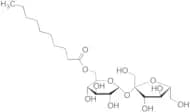
CAS :Produit contrôlé<p>Applications Sucrose Monocaprate is a potentially useful biochemical also known as sucrose monodecanoate.<br></p>Formule :C22H40O12Degré de pureté :~90%Couleur et forme :NeatMasse moléculaire :496.55UDP-3-O-[R-3-Hydroxymyristoyl]-N-[R-3-hydroxymyristoyl] Glucosamine Tris Salt
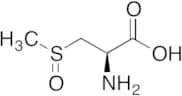
CAS :Produit contrôlé<p>Applications UDP-3-O-[R-3-Hydroxymyristoyl]-N-[R-3-hydroxymyristoyl] Glucosamine Tris Salt is the salt version of [2(R),3(R)]-P'-[2-Deoxy-3-O-(3-hydroxy-1-oxotetradecyl)-2-[(3-hydroxy-1-oxotetradecyl)amino]-α-D-glucopyranosyl] Ester Uridine 5'-(trihydrogen diphosphate) (CAS 90293-60-0) which can be used in biological study for reconstruction of metabolic network in bovine mammary gland tissue. Potent drug or API metabolite.<br>References Wang, C., et al.: Mol. Biol. Rep., 39, 7311-7318 (2012);<br></p>Formule :C43H77N3O20P2·C4H11NO3Couleur et forme :NeatMasse moléculaire :1139.16S-Methyl-L-cysteine sulfoxide
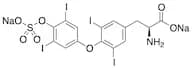
CAS :Produit contrôléFormule :C4H9NO3SCouleur et forme :Off-WhiteMasse moléculaire :151.18Thyroxine 4’-O-Sulfate Disodium Salt
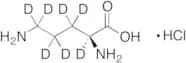
<p>Applications Thyroxine 4’-O-Sulfate Disodium Salt, is a metabolite and sulfoconjugated derivative of Thyroxine (T425600).<br></p>Formule :C15H9I4NNa2O7SCouleur et forme :NeatMasse moléculaire :900.9L-Ornithine-2,3,3,4,4,5,5-d7 hydrochloride
CAS :Produit contrôlé<p>Applications L-Ornithine-2,3,3,4,4,5,5-d7 hydrochloride is the labelled analogue of L-Ornithine Hydrochloride (O695550), a non-essential amino acid for human development but is required intermediate in arginine biosynthesis. L-Ornithine is found in virtually all vertebrate tissues as well as incorporated into proteins, such as tyrocidine. Isolation from chicken excreta.<br>References Fattori, D., et al.: J. Med. Chem., 50, 550 (2007), Gomez-Alonso, S., et al.: J. Agric. Food Chem., 55, 608 (2007), Subramaniam, R., et al.: Bioorg. Med. Chem. Lett., 18, 3333 (2008),<br></p>Formule :C5D7H5N2O2·ClHCouleur et forme :NeatMasse moléculaire :175.1104926088D-Gulose
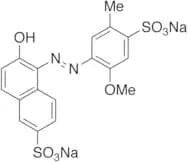
CAS :<p>Applications D-Glucose is a aldohexose sugar that is very rare in nature but has been found in archaea, bacteria and other eukaryotes. Gulose is the C-3 Epimer of galactose (G155250).<br>References Sun, Y.X., et al.: Biosci. Biotech. Biochem., 70, 598 (2006); Bhuiyan, S.H., et al.: J. Biosci. Bioengin., 88, 567 (1999);<br></p>Formule :C6H12O6Couleur et forme :Off White SolidMasse moléculaire :180.1559Allura Red AC (Technical Grade)
CAS :<p>Stability Very Hygroscopic, Light Sensitive<br>Applications Color additive in foods, drugs and cosmetics. It is used as a food dye and has the E number E129. The study found increased levels of hyperactivity and attention deficit hyperactivity disorder and lower IQs were observed in children consuming the chemicals. It is banned in Denmark, Belgium, France, Switzerland, Sweden. Dyes and metabolites, Environmental Testing.<br>References Kirschbaum, J., et al.: Eur. Food Res. Technol., 222, 572 (2006), Yoshioka, N., et al.: Talanta, 74, 1408 (2008), Al-Degs, Y., et al.: Food Chem., 117, 485 (2009),<br></p>Formule :C18H14N2O8S2·2NaCouleur et forme :NeatMasse moléculaire :496.42Benzyl D-Glucuronate
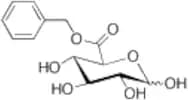
CAS :Produit contrôlé<p>Stability Hygroscopic<br>Applications Used in efficient synthesis of 1β-O-acyl glucuronides via regioselective acylation<br>References Meng, X., et al.: J. Med. Chem., 50, 6165 (2007),<br></p>Formule :C13H16O7Couleur et forme :NeatMasse moléculaire :284.26Pentaethylene glycol dichloride
CAS :Produit contrôlé<p>Applications Pentaethylene glycol dichloride is a useful synthetic intermediate. Pentaethylene glycol dichloride is used as a reagent to prepare various Crown Ethers.<br>References Peng, C., et al.: J. Appl. Polym. Sci., 70, 501 (1998); Park, S., et al.: Chem. Lett., 35, 1024 (2006)<br></p>Formule :C10H20Cl2O4Couleur et forme :NeatMasse moléculaire :275.17N-Acetyl-S-(3-carboxy-2-propyl)-L-cysteine-d3 Disodium Salt
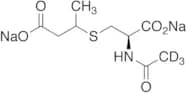
CAS :Produit contrôlé<p>Applications A labelled metabolite of Crotonaldehyde.<br>References Gray, J.M., et al.: Xenobiotica, 1, 55 (1971), Chung, F., et al.: Mutat. Res., 424, 71 (1999), Smith, C., et al.: Food Chem. Toxicol., 38, 637 (2000), Pan, J., et al.: Chem. Res. Toxicol., 15, 367 (2002),<br></p>Formule :C9H10D3NNa2O5SCouleur et forme :NeatMasse moléculaire :310.29Tiopronin-d3
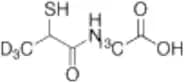
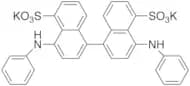
CAS :Produit contrôlé<p>Applications Labelled Tiopronin. It is used as antidote against heavy metal poisoning; hepatoprotectant; mucolytic.<br>References Capasso, F., et al.: Agents Actions, 11, 741 (1981), Amor, B., et al.: Arthritis Rheum., 25, 698 (1982), Ichida, F., et al.: J. Int. Med. Res., 10, 325 (1982),<br></p>Formule :C5H6D3NO3SCouleur et forme :NeatMasse moléculaire :166.214,4'-Dianilino-1,1'-binaphthyl-5,5'-disulfonic Acid Dipotassium
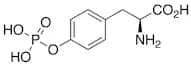
CAS :Produit contrôlé<p>Applications 4,4'-Dianilino-1,1'-binaphthyl-5,5'-disulfonic Acid is a bifunctional fluorescent probe for proteins.<br>References Hawe, A., et al.: Anal. Biochem., 378, 115 (2008), Hawe, A., et al.: Eur. J. Pharm. Sci., 38, 79 (2009), Hawe, A., et al.: Pharm. Res., 27, 314 (2010),<br></p>Formule :C32H22N2O6S2·2KCouleur et forme :NeatMasse moléculaire :672.854O-Phospho-L-tyrosine
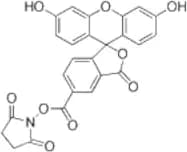
CAS :<p>Applications Useful in the study of tyrosine-phosphorylation, which has been linked with the malignant transformation of cells by some RNA tumour viruses.<br>References Sefton, B.M., et al.: Cell, 20, 807 (1980), Erikson, R., et al.: Perspect. Virol., 11, 93 (1981), Lee, E-S, et al.: J. Org. Chem., 59, 2086 (1994)<br></p>Formule :C9H12NO6PCouleur et forme :NeatMasse moléculaire :261.175-Carboxyfluorescein-N-hydroxysuccinimide Ester
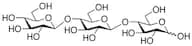
CAS :Produit contrôlé<p>Applications 5-Carboxyfluorescein-N-hydroxysuccinimide Ester is one of the most popular green fluorescent probe used for labeling peptides, proteins and nucleotides. It was used as a reagent in the determination of the intracellular pH in bacteria.<br>References Breeuwer, P., et al.: Appl. Environ. Microbiol., 62, 178 (1996);<br></p>Formule :C25H15NO9Couleur et forme :NeatMasse moléculaire :473.39D-(+)-Cellotriose
CAS :Produit contrôlé<p>Stability Hygroscopic<br>Applications D-(+)-Cellotriose (cas# 33404-34-1) is a compound useful in organic synthesis.<br></p>Formule :C18H32O16Couleur et forme :NeatMasse moléculaire :504.44D-Erythrulose (~0.3 M in Water, ~90%)
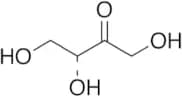
CAS :Produit contrôlé<p>Applications D-Erythrulose is a tetrose carbohydrate that is used in various self-tanning cosmetics combined with dihydroxyacetone.<br>References Maeda, M., et al.: J. Biochem., 123, 602 (1998); Baykal, A., et al.: Bioorg. Chem., 34, 380 (2006);<br></p>Formule :C4H8O4Degré de pureté :~90%Couleur et forme :NeatMasse moléculaire :120.10Thiodiglycolic Acid-d4
CAS :Produit contrôlé<p>Applications Thiodiglycolic Acid-d4 acts as a reagent for the synthesis of metabolites of S-carboxymethyl-L-cysteine and S-methyl-L-Cysteine and of some isotoically labelled (2H, 13C) analogs.<br>References Meese, C. O., et al.: Archiv der Pharmazie, 323, 957 (1990)<br></p>Formule :C4D4H2O4SCouleur et forme :NeatMasse moléculaire :154.17


![UDP-3-O-[R-3-Hydroxymyristoyl]-N-[R-3-hydroxymyristoyl] Glucosamine Tris Salt](/_next/image/?url=https%3A%2Fstatic.cymitquimica.com%2Fproducts%2FTR%2Fthumb-webp%2FU250535.webp&w=3840&q=75)