Antibiotiques
Les antibiotiques sont des composés conçus pour détruire ou inhiber la croissance de divers microorganismes, jouant un rôle crucial dans le traitement des infections et la prévention de la propagation des maladies. Cette catégorie offre une gamme diversifiée d'ingrédients actifs spécifiquement destinés à la recherche dans le domaine biochimique. Ces composés sont des outils essentiels pour étudier les mécanismes bactériens, les modèles de résistance et le développement de nouveaux agents thérapeutiques. Les chercheurs peuvent explorer une large variété d'antibiotiques pour comprendre leurs effets, optimiser leur utilisation et développer de nouveaux traitements pour combattre les menaces microbiennes émergentes. La disponibilité d'un spectre aussi large d'antibiotiques soutient la recherche avancée et l'innovation en microbiologie et en sciences pharmaceutiques.
Sous-catégories appartenant à la catégorie "Antibiotiques"
- Antibiotiques macrolides(26 produits)
- Antibiotiques stéroïdiens(31 produits)
- Antibiotiques de type tétracycline(20 produits)
- antibiotiques β-lactames(11 produits)
4102 produits trouvés pour "Antibiotiques"
Trier par
Degré de pureté (%)
0
100
|
0
|
50
|
90
|
95
|
100
Doxorubicin Impurity B
CAS :Doxorubicin Impurity B is a chemical impurity of doxorubicin with no direct therapeutic action but used in research and quality control.Formule :C29H34BrNO11Degré de pureté :Min. 95%Couleur et forme :Red PowderMasse moléculaire :652.48 g/molVancomycin hydrochloride, Antibiotic for Culture Media Use Only
CAS :<p>Vancomycin hydrochloride is an antibiotic that is used against Gram-positive bacteria, including Staphylococcus aureus. It has been shown to inhibit the growth of bacteria by binding the D-alanyl-D-alanine moiety of the peptidoglycan cell wall precursor, inhibiting the peptidoglycan synthesis and disrupting its cross linking. It also inhibits particle formation when it reacts with human plasma, which can lead to hemolysis and hemagglutination. The absorption spectrum for vancomycin hydrochloride shows maxima at 230, 260, 290, and 320 nm, which are characteristic for this compound. Vancomycin has been used in several studies for treatment of methicillin-resistant Staphylococcus aureus infections.</p>Formule :C66H76Cl3N9O24Masse moléculaire :1,485.71 g/molRef: 3D-Q-201920
25gÀ demander50gÀ demander100gÀ demander250gÀ demander500gÀ demander-Unit-ggÀ demanderOrbifloxacin
CAS :<p>Orbifloxacin is a fluoroquinolone antibiotic with action on bacterial DNA gyrase and topoisomerase IV and is used for treating bacterial infections in veterinary medicine.</p>Formule :C19H20F3N3O3Degré de pureté :Min. 95%Couleur et forme :PowderMasse moléculaire :395.38 g/molIsochlortetracycline
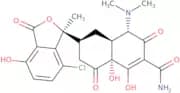
CAS :Isochlortetracycline is a tetracycline antibiotic with a mode of action that inhibits bacterial protein synthesis by binding to the 30S ribosomal subunit. It is used for treating bacterial infections in both humans and animals.Formule :C22H23ClN2O8Degré de pureté :Min. 95%Couleur et forme :Off-White PowderMasse moléculaire :478.88 g/molErythromycin thiocyanate
CAS :<p>Erythromycin thiocyanate is a macrolide antibiotic derivative with action on bacterial protein synthesis inhibition and is used for research and pharmaceutical applications.</p>Formule :C37H67NO13•CHNSDegré de pureté :Min. 95%Couleur et forme :PowderMasse moléculaire :793.02 g/molFusidic acid
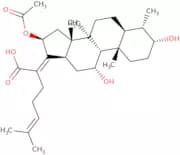
CAS :<p>Inhibitor of protein synthesis; steroid antibiotic</p>Formule :C31H48O6Degré de pureté :Min. 95 Area-%Couleur et forme :White Off-White PowderMasse moléculaire :516.71 g/molCeftibuten dihydrate
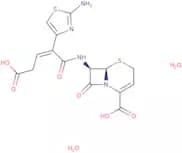
CAS :<p>Ceftibuten dihydrate is a third-generation cephalosporin antibiotic with action on bacterial cell wall synthesis and is used for treating respiratory tract infections, otitis media, and urinary tract infections.</p>Formule :C15H14N4O6S2•(H2O)2Degré de pureté :Min. 95%Couleur et forme :PowderMasse moléculaire :446.46 g/molMaduramicin ammonium
CAS :<p>Maduramicin ammonium is an anticoccidial agent with action on protozoal parasites by disrupting ion gradients and is used for preventing coccidiosis in poultry.</p>Formule :C47H83NO17Degré de pureté :Min. 95%Couleur et forme :PowderMasse moléculaire :934.16 g/molAvermectin B1a (>85%)
CAS :<p>Avermectin B1a (>85%) is a macrolide anthelmintic and is used for the treatment of parasitic infections. It enhances the effects of glutamate at the glutamate-gated chloride channels, causing paralysis and death of the parasite</p>Formule :C48H72O14Degré de pureté :>85% B1ACouleur et forme :White PowderMasse moléculaire :873.08 g/molCefaclor
CAS :<p>Inhibitor of bacterial cell wall biogenesis; cephalosporin</p>Formule :C15H14ClN3O4SDegré de pureté :Min. 95 Area-%Couleur et forme :White PowderMasse moléculaire :367.81 g/molMithramycin A
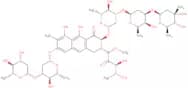
CAS :<p>Antineoplastic antibiotic; RNA synthesis inhibitor</p>Formule :C52H76O24Degré de pureté :Min. 95%Couleur et forme :Yellow PowderMasse moléculaire :1,085.15 g/molDequalinium chloride
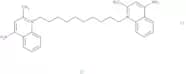
CAS :<p>Dequalinium chloride is a quaternary ammonium compound that has been discovered to be an inhibitor of the cytopathic effects of some syndrome viruses. It is able to inhibit the replication of the virus in various clinical isolates and in cell culture models. Dequalinium chloride also inhibits acetylcholine receptor-mediated endocytosis, which is one of the mechanisms by which cells resist infection. The mechanism by which dequalinium chloride inhibits acetylcholine receptor-mediated endocytosis is not yet known, but it has been suggested that it might be due to its inhibitory activity on mitochondrial uncoupler proteins. This property may make dequalinium chloride an effective treatment against bacterial infections and respiratory diseases such as cystic fibrosis and asthma.</p>Formule :C30H40Cl2N4Degré de pureté :Min. 95%Couleur et forme :PowderMasse moléculaire :527.57 g/molEnrofloxacin lactate
CAS :Enrofloxacin lactate is a synthetic antimicrobial agent, which is derived from the fluoroquinolone class of antibiotics. It is sourced through chemical synthesis, wherein the base compound, enrofloxacin, is combined with lactate to enhance its pharmacokinetic properties, particularly solubility and bioavailability. Its mode of action is the inhibition of bacterial DNA gyrase and topoisomerase IV, enzymes crucial for DNA replication, transcription, and repair in susceptible bacteria. This interference ultimately leads to bacterial cell death, making enrofloxacin lactate a bactericidal agent.Degré de pureté :Min. 95%lsoniazid
CAS :<p>Lysostaphin is an antimicrobial enzyme with a mode of action that cleaves the cell wall of Staphylococcus aureus. It is used for treating staphylococcal infections and in research applications.</p>Formule :C6H7N3ODegré de pureté :Min. 95%Couleur et forme :White PowderMasse moléculaire :137.14 g/molPazufloxacin hydrochloride
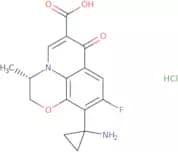
CAS :<p>Pazufloxacin hydrochloride is a synthetic antibacterial agent, which is derived from the fluoroquinolone class of antibiotics with a broad-spectrum activity against various bacterial pathogens. This compound, sourced through chemical synthesis, functions primarily by inhibiting bacterial DNA gyrase and topoisomerase IV, which are critical enzymes for DNA replication, transcription, repair, and recombination. The inhibition of these enzymes leads to the disruption of bacterial DNA processes, ultimately resulting in bacterial cell death.</p>Formule :C16H15FN2O4•HClDegré de pureté :Min. 95%Masse moléculaire :354.76 g/molHerbicidin C
CAS :<p>Herbicidin C is an antibiotic, which is derived from a microbial source, specifically from certain strains of actinobacteria. This compound functions as an inhibitor, interfering with specific metabolic pathways within target organisms. Its mode of action involves disrupting the synthesis of critical proteins, which are essential for cell survival and growth.</p>Formule :C17H21N5O9Degré de pureté :Min. 95%Masse moléculaire :439.38 g/molCarbomycin
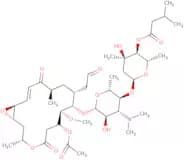
CAS :<p>Carbomycin is a macrolide antibiotic, which is derived from the bacterium Streptomyces halstedii. This antibiotic functions by binding to the 50S ribosomal subunit, thereby inhibiting bacterial protein synthesis. Through this mechanism, carbomycin effectively disrupts the growth and replication of susceptible bacterial strains, making it a potent tool in combating bacterial infections.</p>Formule :C42H67NO16Degré de pureté :Min. 95%Masse moléculaire :841.98 g/molCefditoren acid sodium
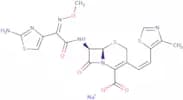
CAS :Cefditoren acid sodium is an antibacterial agent that belongs to the class of third-generation cephalosporins, which is derived from Acremonium fungus and produced through chemical synthesis. This compound acts by inhibiting bacterial cell wall synthesis, leading to cell lysis and death. It achieves this by binding to specific penicillin-binding proteins (PBPs) located inside the bacterial cell wall. The interruption of peptidoglycan synthesis in the cell wall is crucial for maintaining bacterial cell integrity, and its inhibition results in the bactericidal activity of cefditoren acid sodium. It is effective against a range of Gram-positive and Gram-negative bacteria. The key applications of this compound include the treatment of bacterial infections such as respiratory tract infections, skin infections, and other conditions caused by susceptible bacteria. Its spectrum of activity and pharmacokinetic properties make it suitable for situations where third-generation cephalosporins are indicated. Understanding the specific interaction with PBPs and the resistance mechanisms is crucial for optimizing its clinical use and managing antibiotic resistance.Formule :C19H17N6NaO5S3Degré de pureté :94%MinMasse moléculaire :528.56 g/molAmpicillin - Bio-X ™
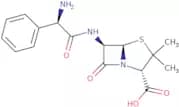
CAS :<p>Ampicillin is a β-lactam antibiotic with a broad spectrum of activity against Gram-positive and Gram-negative bacteria. It is used in the treatment of bacterial infections, including those caused by methicillin-resistant Staphylococcus aureus (MRSA), Streptococcus pneumoniae, and Listeria monocytogenes. Ampicillin binds to penicillin-binding proteins in the bacterial cell wall by competitive inhibition. It prevents the formation of an antibiotic-inhibitor complex with the enzyme cell wall synthesis that is required for cell wall biosynthesis, inhibiting protein synthesis and cell division.</p>Formule :C16H19N3O4SDegré de pureté :Min. 95%Couleur et forme :PowderMasse moléculaire :349.41 g/molCefatrizine
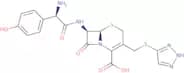
CAS :<p>Cefatrizine is a broad-spectrum antibiotic, which is a semisynthetic cephalosporin derived from cephalosporin C, a natural product originating from the fungus Acremonium chrysogenum. It exerts its mode of action through the inhibition of bacterial cell wall synthesis, a critical component for bacterial growth and replication. Specifically, cefatrizine targets and binds to penicillin-binding proteins (PBPs) located inside the bacterial cell wall, leading to the inhibition of peptidoglycan synthesis. This disruption results in cell lysis and ultimately bacterial cell death.</p>Formule :C18H18N6O5S2Degré de pureté :Min. 95%Masse moléculaire :462.5 g/mol