Synthèse de peptides
50 produits trouvés pour "Synthèse de peptides".
- Tri par prix ascendant
- Tri par prix descendant
- Puretés inférieures
- Puretés supérieures
- Livraison estimée la plus rapide
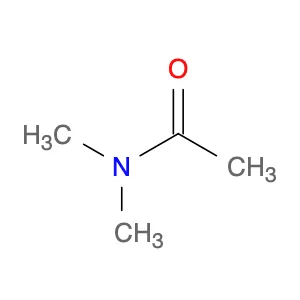
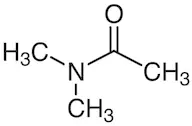
N,N-Dimethylacetamide
CAS :Produit contrôléFormule :C4H9NODegré de pureté :>99.0%(GC)Couleur et forme :Colorless to Almost colorless clear liquidMasse moléculaire :87.12N,N-Diisopropylethylamine (ca. 10% in N,N-Dimethylformamide) [for Detection of Primary Amines]
CAS :Formule :C8H19NCouleur et forme :Colorless to Light yellow clear liquidMasse moléculaire :129.25N,N-Dimethylacetamide
CAS :Produit contrôléFormule :C4H9NODegré de pureté :98%Couleur et forme :LiquidMasse moléculaire :87.1204Ref: IN-DA000WIF
100g20,00€250g24,00€500g24,00€1kg28,00€5kg58,00€10kg89,00€25kg167,00€50kg259,00€100kg555,00€LL-37 TFA
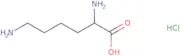
LL-37 TFA is a reagent, complex compound and useful intermediate for the fine chemical and pharmaceutical industries. It is also an important building block for the synthesis of other chemicals. LL-37 TFA has CAS No. 71428-08-9, which is a speciality chemical that can be used in research as well as in many different reactions. The versatility of this compound makes it a very useful building block for the synthesis of other chemicals.Formule :C205H340N60O53•xC2HF3O2Degré de pureté :Min. 95 Area-%Couleur et forme :PowderMasse moléculaire :4,493.25 g/molPoly-L-lysine hydrochloride, MW 10000 - 30000
CAS :Poly-L-lysine hydrochloride, MW20000 is a water soluble polymer with an average molecular weight of 20000 Da. It is used in the synthesis of peptides and proteins due to its high purity, high quality, and low cost. Poly-L-lysine hydrochloride, MW20000 has been shown to bind to a wide range of surfaces such as glass, plastic, silicon dioxide, and stainless steel. This makes it useful for surface modification. Poly-L-lysine hydrochloride can be used as a scaffold for chemical reactions or as an intermediate in the synthesis of complex compounds.
Couleur et forme :PowderPexiganan acetate
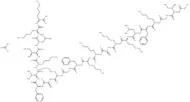
CAS :Produit contrôléPexiganan acetate is the acetate salt form of a polymyxin B derivative that has potent antimicrobial activity against both Gram-positive and Gram-negative bacteria. It has been shown to be effective in the treatment of tissue infections, especially those caused by human pathogens such as Staphylococcus aureus, Pseudomonas aeruginosa, and Escherichia coli. Pexiganan also has significant activity against Mycobacterium tuberculosis and other mycobacteria. The mechanism of action for pexiganan is not fully understood but it may involve the inhibition of bacterial cell wall synthesis, or the disruption of bacterial membranes. Pexiganan was originally isolated from a marine sponge off the coast of Australia in 1961. It had been classified as an antimicrobial peptide (AMP) because of its chemical structure, which includes a polymyxin B moiety. Pexiganan’s AMP classification was later challenged when researchers found that it did
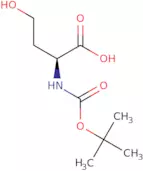
Formule :C122H210N32O22•(C2H4O2)xDegré de pureté :Min. 95%Couleur et forme :PowderMasse moléculaire :2,477.18 g/molN-Boc-L-homoserine
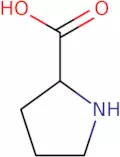
CAS :N-Boc-L-homoserine is a lactam with an alkyl group, which makes it a useful synthetic intermediate for the synthesis of various products. It has been used in the synthesis of β-unsaturated ketones and conjugates. N-Boc-L-homoserine is also found naturally in nature and can be found as its two isomers, L-homoserine and D-homoserine. This compound has been shown to have histone deacetylase inhibition activity, which may be due to its ability to inhibit histone acetyl transferase. N-Boc-L-homoserine is synthesized from butyric acid, which is a tetrapeptide that contains four amino acids: valine, leucine, proline, and hydroxyproline.Formule :C9H17NO5Degré de pureté :Min. 95%Couleur et forme :PowderMasse moléculaire :219.24 g/molDL-Proline
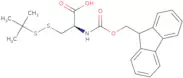
CAS :A useful as an intermediate in the synthesis of peptides, proteins, and other organic molecules. It can be used as a reagent or as an additive to other chemicals.Formule :C5H9NO2Degré de pureté :Min. 99 Area-%Masse moléculaire :115.13 g/molFmoc-L-Cys(StBu)-OH
CAS :Fmoc-L-Cys(StBu)-OH is a synthetic molecule that is used in pharmaceutical formulations. It can be synthesized from Fmoc-L-Cys and L-serine methyl ester by the chemical ligation of the two molecules. The chloride group at the end of this molecule provides a functional group for conjugation with other biomolecules, such as fatty acids. This molecule has been shown to have high purity with an isolated yield of about 98%.
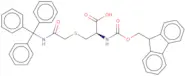
Formule :C22H25NO4S2Degré de pureté :Min. 98 Area-%Couleur et forme :PowderMasse moléculaire :431.57 g/molFmoc-Cys-(CAMTrt)-OH
CAS :Fmoc-Cys-(CAMTrt)-OH is an amino acid derivative, which is a synthetic compound essential for peptide synthesis. It is derived from natural cysteine, an amino acid found in proteins, and is modified with an Fmoc (9-fluorenylmethoxycarbonyl) protective group and a CAMTrt (trityl sulfonium ion) moiety. This derivative is used primarily in solid-phase peptide synthesis, where the Fmoc group protects the amine during chain elongation, and the CAMTrt group safeguards the thiol function of cysteine, preventing unwanted side reactions during synthesis.
Formule :C39H34N2O5SDegré de pureté :Min. 98 Area-%Masse moléculaire :642.76 g/molL-Lysyl-L-phenylalanyl-L-lysine trifluoroacetate
CAS :Please enquire for more information about L-Lysyl-L-phenylalanyl-L-lysine trifluoroacetate including the price, delivery time and more detailed product information at the technical inquiry form on this page
Formule :C21H35N5O4•(C2HF3O2)xDegré de pureté :Min. 95%Couleur et forme :PowderN3-Orn(Boc) cyclohexylamine
CAS :N3-Orn(Boc) cyclohexylamine is a chemical intermediate that is used in the synthesis of complex compounds. It can be used as a building block or an intermediate in the synthesis of many fine chemicals, such as pharmaceuticals, agrochemicals, and fragrances. N3-Orn(Boc) cyclohexylamine is also used in reactions involving amines and alcohols to produce useful scaffolds. This chemical product has been shown to be safe for human use with no significant adverse side effects at doses up to 100mg/kg body weight.
Formule :C10H18N4O4•C6H13NDegré de pureté :Min. 95%Couleur et forme :PowderMasse moléculaire :357.4 g/mol2-Chlorotrityl chloride resin - (100-200mesh)
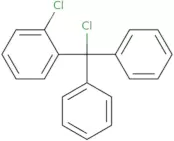
CAS :Please enquire for more information about 2-Chlorotrityl chloride resin - (100-200mesh) including the price, delivery time and more detailed product information at the technical inquiry form on this pageFormule :C19H14Cl2Couleur et forme :Yellow PowderMasse moléculaire :313.22Fmoc-Thr(tBu)-D-Ser(Psi(Me,Me)pro)-OH
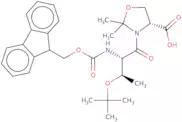
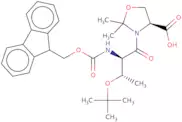
Fmoc-Thr(tBu)-D-Ser(Psi(Me,Me)pro)-OH is a speciality chemical that is used as a reagent for peptide synthesis. It is also useful in the synthesis of complex compounds and scaffolds. This compound has high quality with a CAS number of 56610-81-8. Fmoc-Thr(tBu)-D-Ser(Psi(Me,Me)pro)-OH is a versatile building block that can be used in reactions involving amines and carboxylic acids. Fmoc-Thr(tBu)-D-Ser(Psi(Me,Me)pro)-OH is an intermediate that can be used in the synthesis of many different compounds.
Formule :C29H36N2O7Degré de pureté :Min. 95%Couleur et forme :PowderMasse moléculaire :524.61 g/molH-L-Cys(mdnpe)-OH
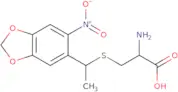
CAS :A novel protected cysteine that can be cleaved by photolysis.Formule :C12H14N2O6SDegré de pureté :Min. 95%Masse moléculaire :314.32 g/molFmoc-N-Me-Asp(OtBu)-OH
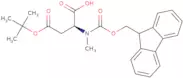
CAS :Fmoc-N-Me-Asp(OtBu)-OH is a synthetic peptide with potential immunosuppressive properties. It has been shown to inhibit the proliferation of human lymphocytes in response to lipopolysaccharides (LPS) and also to suppress the release of cytokines such as IL-1β, IL-6, and TNFα. The effects were dose dependent and could be reversed by the addition of a neutralizing antibody. This peptide can be used as an immunosuppressant in clinical trials that are investigating treatments for myasthenia gravis. Fmoc-N-Me-Asp(OtBu)-OH has been synthesised using chemical synthesis methods from commercially available reagents.Formule :C24H27NO6Degré de pureté :Min. 98 Area-%Couleur et forme :PowderMasse moléculaire :425.47 g/molFmoc-Asp(OtBu)-D-Ser(Psi(Me,Me)pro)-OH
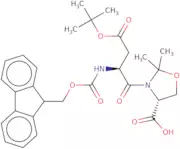
Fmoc-Asp(OtBu)-D-Ser(Psi(Me,,Me)pro)-OH is a high quality, reagent, complex compound, useful intermediate, fine chemical, useful scaffold, and speciality chemical that is used in the synthesis of peptides and other organic compounds. It can be used as a reaction component for the synthesis of peptides and other organic compounds. This building block is versatile with many different functional groups and can be used in a wide variety of reactions. Fmoc-Asp(OtBu)-D-Ser(Psi(Me,,Me)pro)-OH is also a reaction component that can be used to make various drugs or pharmaceuticals.Formule :C29H34N2O8Degré de pureté :Min. 95%Couleur et forme :White PowderMasse moléculaire :538.59 g/molFmoc-4-phosphomethyl-L-phenylalanine
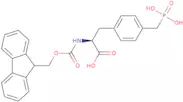
CAS :Fmoc-4-phosphomethyl-L-phenylalanine** is a specialized amino acid derivative used primarily in the field of peptide synthesis. It is a synthesized compound that serves as a building block for creating phosphorylated peptides. The compound is characterized by the presence of a phosphomethyl group attached to the phenylalanine side chain, along with a 9-fluorenylmethoxycarbonyl (Fmoc) group for temporary N-terminal protection during peptide assembly.This product plays a crucial role in the synthesis of peptides by allowing the incorporation of a phosphomethyl moiety, which is crucial for mimicking the phosphorylation of proteins—a key post-translational modification. Through its well-designed chemical structure, it facilitates the formation of peptide bonds while maintaining the integrity of sensitive side chain functionalities during synthesis.Fmoc-4-phosphomethyl-L-phenylalanine is widely used in biochemical and pharmaceutical research where the study of protein phosphorylation is paramount. It provides researchers with the means to construct peptides that closely resemble the natural phosphorylated proteins found within biological systems, thereby enabling more accurate studies of protein function and interaction. This makes it an invaluable tool in the exploration of cellular signaling pathways and protein regulation mechanisms.Formule :C25H24NO7PDegré de pureté :Min. 95%Masse moléculaire :481.43 g/molFmoc-D-allo-isoleucine
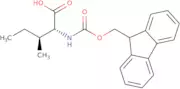
CAS :Fmoc-D-allo-isoleucine is a β-amino acid that is used in the synthesis of calpinactam, a multidrug used to treat tuberculosis. The chemical structure of Fmoc-D-allo-isoleucine has been analyzed by spectroscopic methods and found to be labile. This product is susceptible to hydrolysis and can undergo modifications such as dehydration, oxidation, or racemization. Fmoc-D-allo-isoleucine has shown antimycobacterial activity when tested against M. tuberculosis.Formule :C21H23NO4Degré de pureté :Min. 95%Couleur et forme :PowderMasse moléculaire :353.41 g/molFmoc-D-allo-Thr(tBu)-L-Ser(Psi(Me,Me)pro)-OH
Fmoc-D-allo-Thr(tBu)-L-Ser(Psi(Me,Me)pro)-OH is a reagent that is used as an intermediate in the synthesis of complex compounds. It is also a fine chemical that can be used to prepare speciality chemicals. Fmoc-D-allo-Thr(tBu)-L-Ser(Psi(Me,Me)pro)-OH has CAS No. and can be used as a reaction component in various reactions. This compound is versatile and can be used as a building block for other compounds.Formule :C29H36N2O7Degré de pureté :Min. 95%Couleur et forme :PowderMasse moléculaire :524.61 g/mol

![N,N-Diisopropylethylamine (ca. 10% in N,N-Dimethylformamide) [for Detection of Primary Amines]](https://static.cymitquimica.com/products/3B/thumb-webp/D2937.webp)