Hétérocycles soufrés (S)
Ici, vous trouverez une classe de composés organiques contenant un atome de soufre dans l'anneau hétérocyclique. Les hétérocycles contenant du soufre sont cruciaux dans le développement de produits pharmaceutiques, agrochimiques et de matériaux en raison de leurs propriétés chimiques uniques et de leurs activités biologiques. Ces composés sont largement utilisés en chimie médicinale et en science des matériaux. Chez CymitQuimica, nous offrons une sélection variée d'hétérocycles contenant du soufre de haute qualité pour soutenir vos recherches et applications industrielles.
Sous-catégories appartenant à la catégorie "Hétérocycles soufrés (S)"
1000 produits trouvés pour "Hétérocycles soufrés (S)"
Trier par
Degré de pureté (%)
0
100
|
0
|
50
|
90
|
95
|
100
2-Vinylthiophene (Stabilized with BHT)
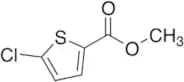
CAS :Produit contrôlé<p>Stability Light Sensitive<br>Applications 2-VINYLTHIOPHENE (cas# 1918-82-7) is a useful research chemical.<br></p>Formule :C6H6SCouleur et forme :NeatMasse moléculaire :110.17Methyl 5-chlorothiophene-2-carboxylate
CAS :Produit contrôlé<p>Applications Methyl 5-chlorothiophene-2-carboxylate (cas# 35475-03-7) is a useful research chemical.<br></p>Formule :C6H5ClO2SCouleur et forme :NeatMasse moléculaire :176.6212-Amino-4,5-dimethylthiophene-3-carbonitrile
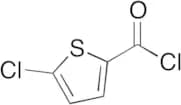
CAS :Produit contrôlé<p>Applications 2-Amino-4,5-dimethylthiophene-3-carbonitrile is a useful research chemical for organic synthesis and other chemical processes.<br>References Rahman, K. M. M., et al.: Pakistan J. Sci. Ind. Res., 46, 95 (2003); Madhavi, K., et al.: Res. J. Pharm. Biol. Chem. Sci., 8, 387 (2017)<br></p>Formule :C7H8N2SCouleur et forme :NeatMasse moléculaire :152.215-Chloro-2-Thiophenecarbonyl Chloride (>90%)
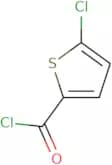
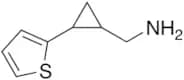
CAS :Produit contrôlé<p>Stability Hygroscopic<br>Applications 5-Chloro-2-Thiophenecarbonyl Chloride is a reagent in the synthesis of indolinyl-thiazole based inhibitors of cellular lipid uptake. Also used in the preparation of anticoagulants and such related promising drug candidates.<br>References Dockendorff, C. et al.: ACS Med. Chem. Lett.., 6, 375 (2015);<br></p>Formule :C5H2Cl2OSDegré de pureté :>90%Couleur et forme :NeatMasse moléculaire :181.04(2-(Thiophen-2-yl)cyclopropyl)methanamine Hydrochloride
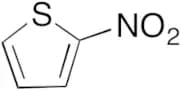
CAS :Produit contrôléFormule :C8H11NS·HClCouleur et forme :NeatMasse moléculaire :189.7062-Nitrothiophene (Technical Grade)
CAS :Produit contrôlé<p>Applications 2-Nitrothiophene is a useful compound in the synthesis of thiophene containing compounds.<br>References Sun, Xin, et al.: J. of Polymer Sci., Part A:, 56(7), 776-782 (2018)<br></p>Formule :C4H3NO2SCouleur et forme :NeatMasse moléculaire :129.149,10-Dihydro-4H-benzo[4,5]cyclohepta[1,2-b]thiophen-4-one
CAS :<p>Please enquire for more information about 9,10-Dihydro-4H-benzo[4,5]cyclohepta[1,2-b]thiophen-4-one including the price, delivery time and more detailed product information at the technical inquiry form on this page</p>Formule :C13H10OSDegré de pureté :Min. 95%Masse moléculaire :214.28 g/molMethyl3-iodothiophene-2-carboxylate
CAS :<p>Methyl3-iodothiophene-2-carboxylate is a chemical compound that is involved in the biosynthesis of eicosanoids. It can be synthesized by the cyclization of the corresponding lactam to produce an intermediate, which is then converted to methyl3-iodothiophene-2-carboxylate by hydrolysis or reduction. This compound has been shown to inhibit malaria parasites such as Plasmodium falciparum and Plasmodium vivax. Methyl3-iodothiophene-2-carboxylate also inhibits the growth of bacteria such as Staphylococcus aureus and Bacillus subtilis. The mechanism of action is believed to be due to its ability to inhibit protein synthesis by binding with ribosomes in prokaryotic cells.END></p>Formule :C6H5IO2SDegré de pureté :Min. 95%Masse moléculaire :268.07 g/mol6-Methoxy-2-(4-methoxyphenyl)benzo[b]thiophene
CAS :<p>6-Methoxy-2-(4-methoxyphenyl)benzo[b]thiophene (6MBT) is a mesomorphic, acid catalyst that has been used to synthesize polyphosphoric acid. It reacts with chloride to form 6-chloro-2-(4-methoxyphenyl)benzo[b]thiophene, which can be converted to the desired product by sulfoxide. The reaction time for this process is relatively short and the yield is high. 6MBT can also be used as a semiconductor in devices such as solar cells and electronic displays. The photoelectric effect of 6MBT was demonstrated in 1972, when it was found that electron emission from a photocurrent could be obtained at room temperature. This property has been shown to be due to the molecule's absorption of light energy and subsequent conversion into electrical energy.</p>Formule :C16H14O2SDegré de pureté :Min. 95%Couleur et forme :PowderMasse moléculaire :270.35 g/mol2,3-Dichlorothiophene
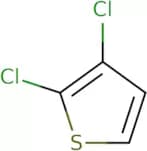
CAS :<p>2,3-Dichlorothiophene is a heterocyclic compound that can be used as an intermediate in organic synthesis. The compound has two isomers, 2,2-dichlorothiophene and 2,3-dichlorothiophene. The first isomer reacts with water to form a protonated species and the second isomer reacts with chlorine to form a protonated species. The thermodynamic parameters for the reaction of 2,3-dichlorothiophene with chlorine are more favorable than those for the reaction of 2,2-dichlorothiophene with chlorine. This means that the equilibrium lies to the right when 2,3-chlorothiophene is reacted with chlorine (to form 2,3-dichloroethane), but not when 2,2-chlorothiophene is reacted with chlorine (to form chloroform).</p>Formule :C4H2Cl2SDegré de pureté :Min. 95%Couleur et forme :Clear LiquidMasse moléculaire :153.03 g/mol3,6-Dichlorobenzo[b]thiophene-2-carboxylic acid
CAS :<p>3,6-Dichlorobenzo[b]thiophene-2-carboxylic acid is an extracellular metabolite that is involved in the metabolism of muscle. It is produced as a byproduct of the reaction catalyzed by dehydrogenase, which converts 3,6-dichlorobenzo[b]thiophene to 2-carboxybenzothiophene. This compound has been shown to inhibit the enzyme histidine carboxylate synthetase, which is involved in branched-chain amino acid synthesis. The enzyme can be inhibited by either a wild type or an analog of 3,6-dichlorobenzo[b]thiophene-2-carboxylic acid.</p>Formule :C9H4Cl2O2SDegré de pureté :Min. 95%Masse moléculaire :247.1 g/mol5-Chlorothiophene-2-carbonyl chloride
CAS :<p>Intermediate in the synthesis of rivaroxaban</p>Formule :C5H2Cl2OSDegré de pureté :Min. 95%Couleur et forme :Clear LiquidMasse moléculaire :181.04 g/mol2,2-(Bromoethyl)thiophene
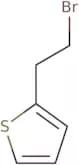
CAS :<p>Oripavine is a naturally occurring alkaloid that can be synthesized from 2,2-bromoethane and potassium carbonate. It has been used for the treatment of Parkinson's disease. Oripavine is an intermediate in the synthesis of rotigotine, a dopamine agonist used to treat Parkinson's disease. The reaction mechanism involves the addition of bromine to 2,2-bromoethane followed by hydrochloric acid treatment to form oripavine. The reaction proceeds with the formation of hydrogen chloride and potassium bromide. The product can then be reacted with a Grignard reagent or allyl group to produce rotigotine.</p>Formule :C6H7BrSDegré de pureté :Min. 95%Masse moléculaire :191.09 g/mol4-Fluorothiophenol
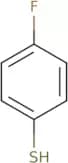
CAS :<p>4-Fluorothiophenol is a reactive chemical that can be used as a monomer for the synthesis of polymers. It has been shown to polymerize with acrylonitrile and methacrylate in the presence of an initiator to form polyacrylonitrile and polymethacrylate, respectively. 4-Fluorothiophenol reacts with unsaturated fatty acids to form thiolates, which are useful intermediates in organic synthesis. 4-Fluorothiophenol also reacts with sulfur transfer agents such as thiourea or mercaptoethanol, leading to S-sulfides that are useful intermediates in organic synthesis. These reactions can be followed by kinetic energy spectroscopy (photoelectron) and nuclear magnetic resonance spectroscopy (NMR). 4-Fluorothiophenol has been shown to undergo intramolecular hydrogen transfer reactions with second order rate constants ranging from</p>Formule :C6H5FSDegré de pureté :Min. 95%Masse moléculaire :128.17 g/mol2-(2-Nitroanilino)-5-methylthiophene-3-carbonitrile
CAS :<p>2-(2-Nitroanilino)-5-methylthiophene-3-carbonitrile is a crystalline compound that belongs to the group of small molecules. It has a molecular weight of 153.2 g/mol and a melting point of 281 °C. The compound has three different crystalline forms, including a monoclinic form, which is thermodynamically stable at room temperature. 2-(2-Nitroanilino)-5-methylthiophene-3-carbonitrile can be used as a model system for studying influenza virus and as an inhibitor of influenza virus replication. 2-(2-Nitroanilino)-5-methylthiophene-3-carbonitrile also inhibits the activity of carbamazepine, which is an anti epileptic drug, by binding to its active site on the molecule.</p>Formule :C12H9N3O2SDegré de pureté :Min. 95%Couleur et forme :PowderMasse moléculaire :259.29 g/mol3-Chlorothiophene-2-carbonylchloride
CAS :<p>3-Chlorothiophene-2-carbonylchloride (3C2CC) is a heterobicyclic compound that is a ligand for the amine receptor. It is also used as an intermediate in the synthesis of other heterocycles. 3C2CC has been shown to interact with amines to form a nitrene, which can be detected by luminescence or x-ray diffraction techniques. 3C2CC interacts with chloride ions to form a crystal that has a different x-ray diffraction pattern from the one obtained from chloride alone. The crystal structure of this complex was determined using x-ray crystallography.</p>Formule :C5H2Cl2OSDegré de pureté :Min. 95%Couleur et forme :PowderMasse moléculaire :181.04 g/mol4-Bromo-2-nitrothiophene
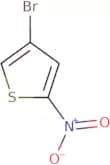
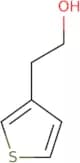
CAS :<p>Please enquire for more information about 4-Bromo-2-nitrothiophene including the price, delivery time and more detailed product information at the technical inquiry form on this page</p>Formule :C4H2BrNO2SDegré de pureté :Min. 95%Masse moléculaire :208.03 g/mol3-Thiopheneethanol
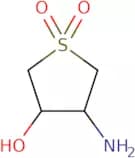
CAS :<p>3-Thiopheneethanol is a synthetic polymer that can be used as an insoluble polymer. It has been shown to undergo chemical reactions with hydroxy groups, which form a polymer film. The untreated control group did not show any change in the film thickness, but the electrochemical methods group showed a significant increase in the film thickness. 3-Thiopheneethanol may have potential applications in medical devices and sensors. The detection time of 3-thiopheneethanol was found to be longer than that of other polymers, such as polystyrene sulfonic acid (PSSA).</p>Formule :C6H8OSDegré de pureté :Min. 95%Masse moléculaire :128.19 g/mol4-Aminotetrahydrothiophene-3-ol 1,1-dioxide
CAS :<p>Please enquire for more information about 4-Aminotetrahydrothiophene-3-ol 1,1-dioxide including the price, delivery time and more detailed product information at the technical inquiry form on this page</p>Formule :C4H9NO3SDegré de pureté :Min. 95%Masse moléculaire :151.19 g/mol3-Bromo-2,4-dimethylthiophene
CAS :<p>3-Bromo-2,4-dimethylthiophene is a reactive chemical that can reversibly change its color in the presence of uv light. The isomers of 3-bromo-2,4-dimethylthiophene are easily separated by uv irradiation and are characterized by their different spectral properties. This compound fluoresces with a maximum at 370 nm under a uv light source and has an absorption maximum at 360 nm. The photochromic properties of 3-bromo-2,4-dimethylthiophene are related to changes in the crystalline phase and light source. 3-Bromo-2,4-dimethylthiophene is used as a photochromic agent for uv radiation protection in glasses and contact lenses.</p>Formule :C6H7BrSDegré de pureté :Min. 95%Masse moléculaire :191.09 g/mol



![9,10-Dihydro-4H-benzo[4,5]cyclohepta[1,2-b]thiophen-4-one](/_next/image/?url=https%3A%2Fstatic.cymitquimica.com%2Fproducts%2F3D%2Fthumb-webp%2FFD21990.webp&w=3840&q=75)


![6-Methoxy-2-(4-methoxyphenyl)benzo[b]thiophene](/_next/image/?url=https%3A%2Fstatic.cymitquimica.com%2Fproducts%2F3D%2Fthumb-webp%2FFM25206.webp&w=3840&q=75)
![3,6-Dichlorobenzo[b]thiophene-2-carboxylic acid](/_next/image/?url=https%3A%2Fstatic.cymitquimica.com%2Fproducts%2F3D%2Fthumb-webp%2FFD57151.webp&w=3840&q=75)